Overview

The Mississippi Kite is a graceful, medium-sized raptor found across the central and southern United States during the breeding season and wintering in South America. It is known for its buoyant, acrobatic flight and slender, pointed wings that allow it to soar effortlessly in search of insects. These kites often hunt in groups over fields, woodlands, and urban areas, catching prey on the wing and consuming it while airborne. Populations have expanded northward in recent decades, partly due to their adaptability to suburban environments.

They are primarily monogamous, forming long-term pair bonds and returning to the same nesting territories year after year. Nests are constructed high in trees, sometimes in colonies, and both parents share incubation and chick-rearing duties. Mississippi Kites have a distinctive pale gray plumage with darker wingtips and a subtle mask around the eyes. Though generally quiet, they produce high-pitched whistles and chattering calls during courtship and when defending nests.

These raptors migrate in large flocks, traveling thousands of miles between North and South America along well-established flyways. Their diet consists mainly of large insects, such as cicadas, grasshoppers, and dragonflies; however, they also opportunistically take small vertebrates. As insect specialists, they provide important pest control services in agricultural landscapes. Overall, the population is considered stable, and the species is not currently threatened.

Taxonomy

Kingdom
Phylum
Class
Family
Genus
Type

Physical Description:

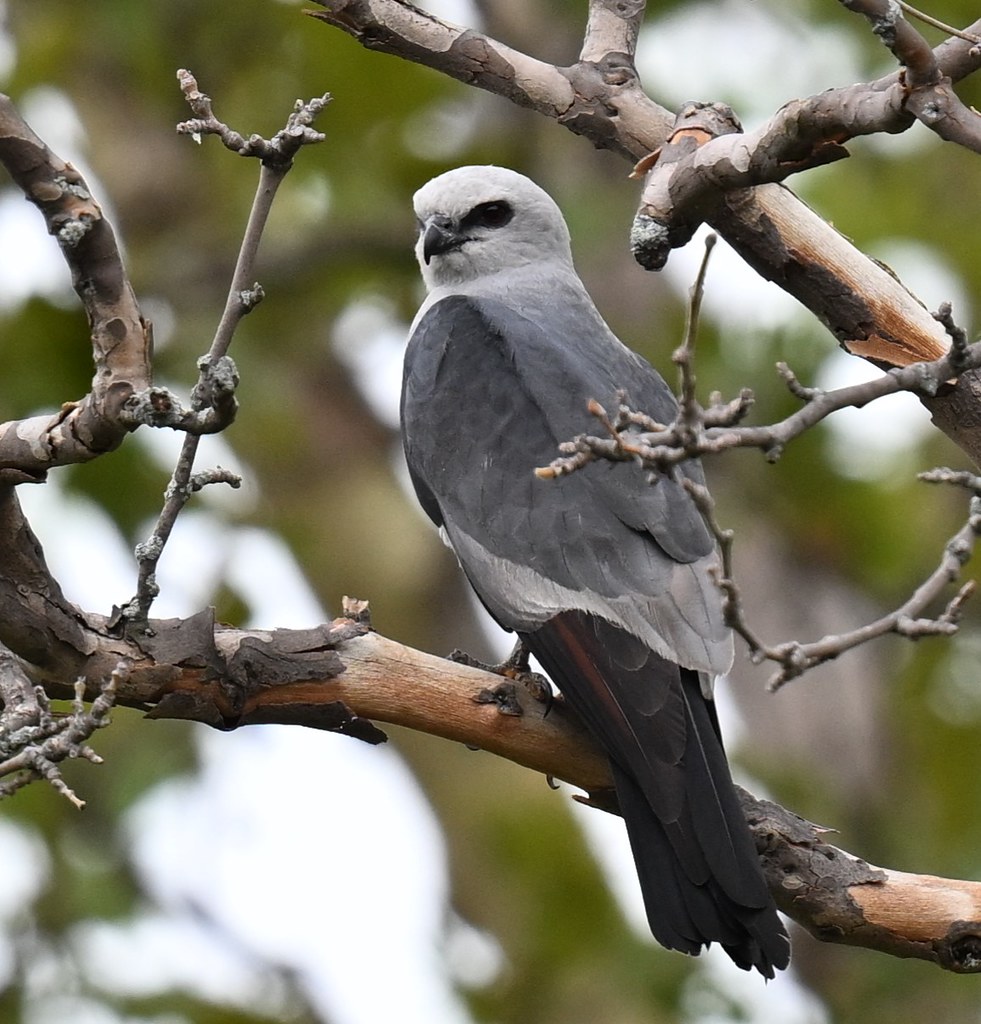
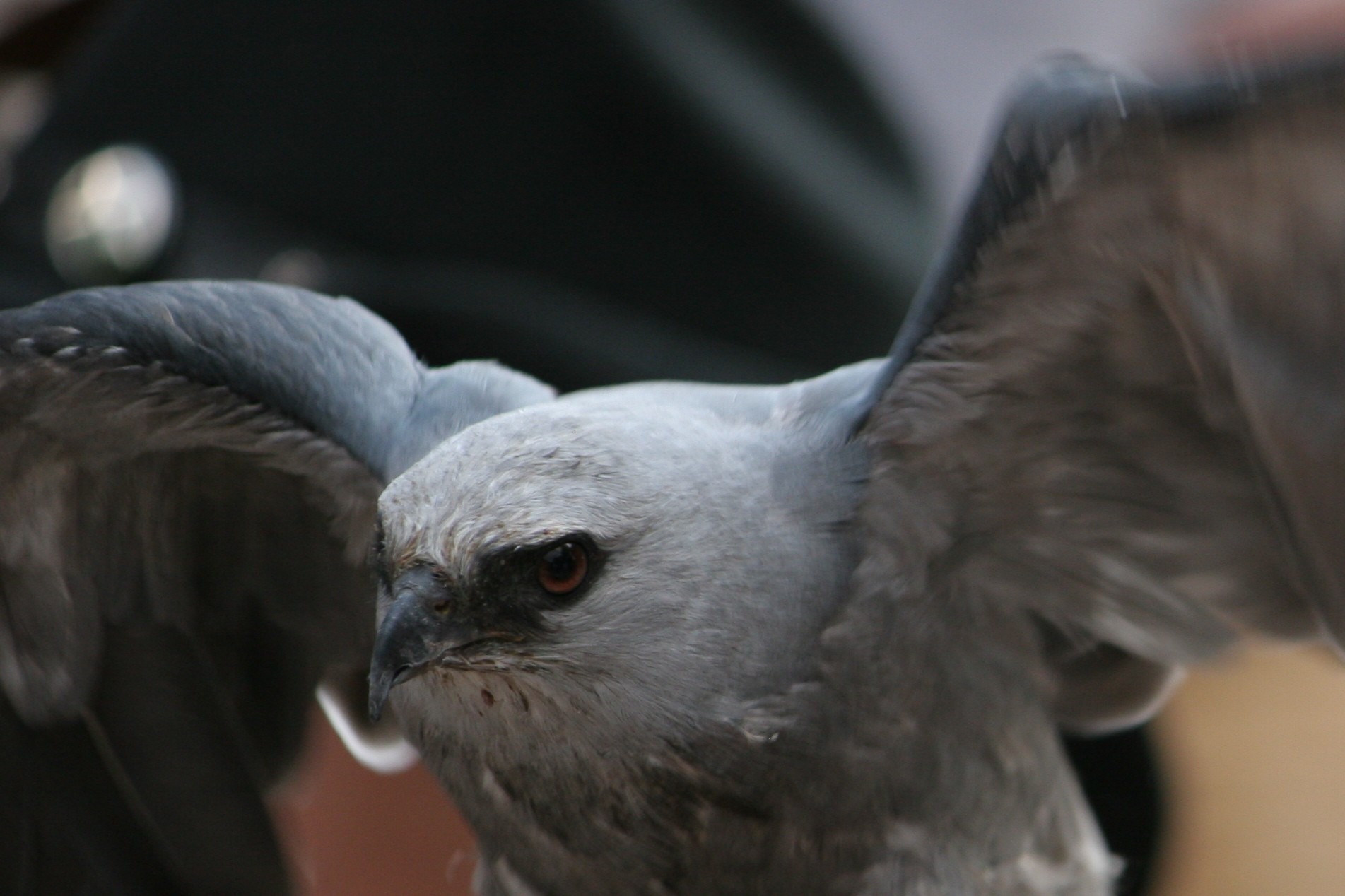
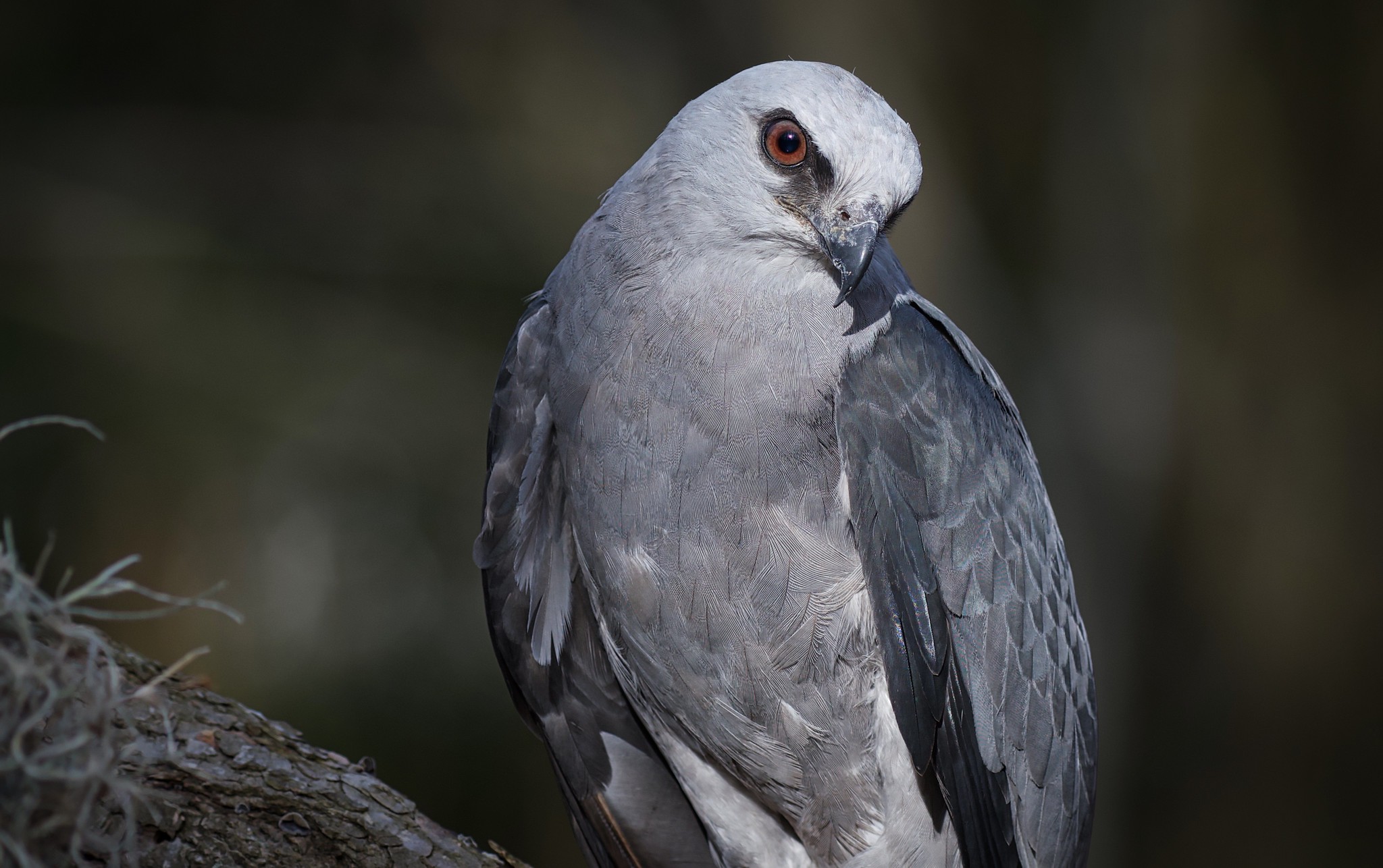
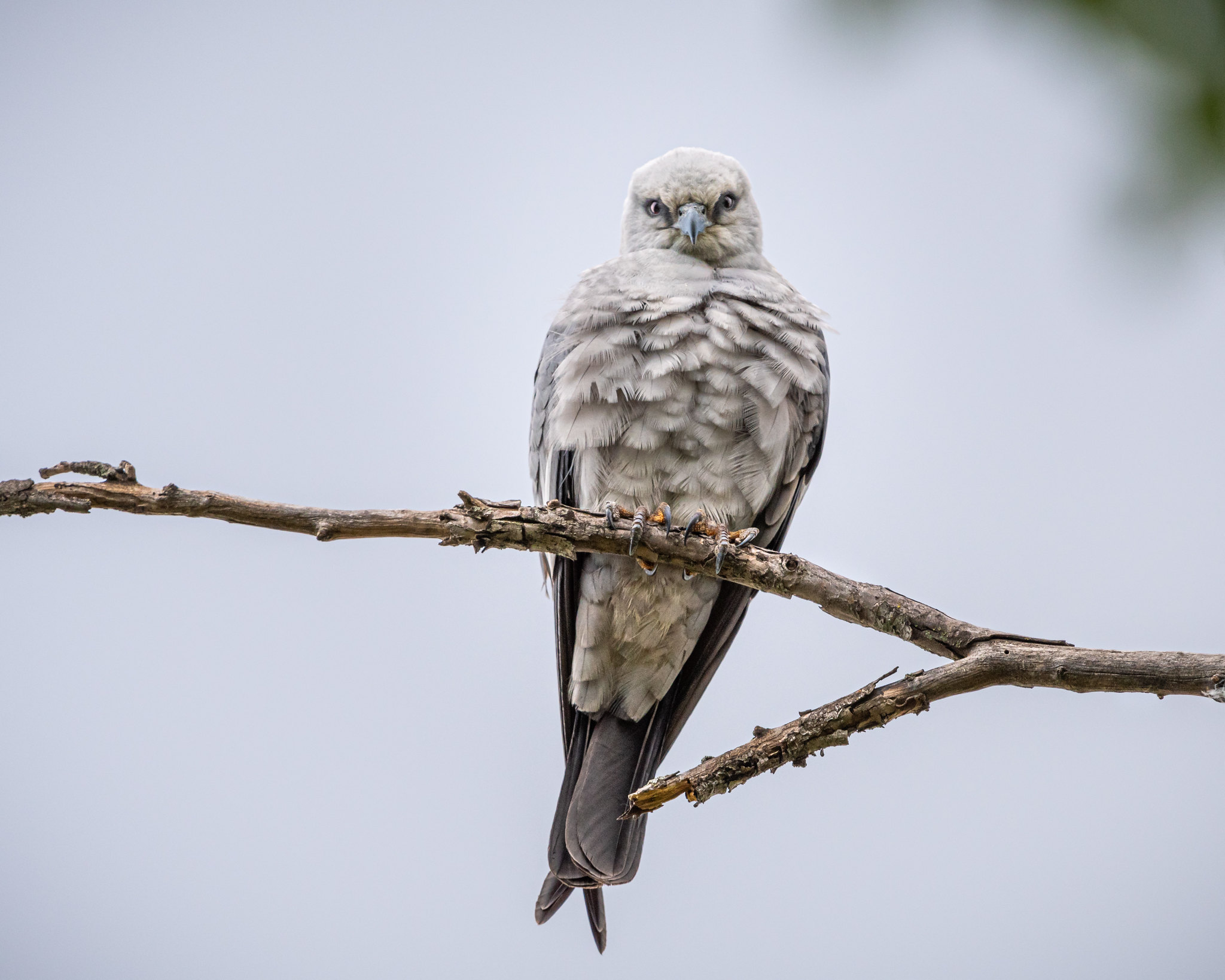
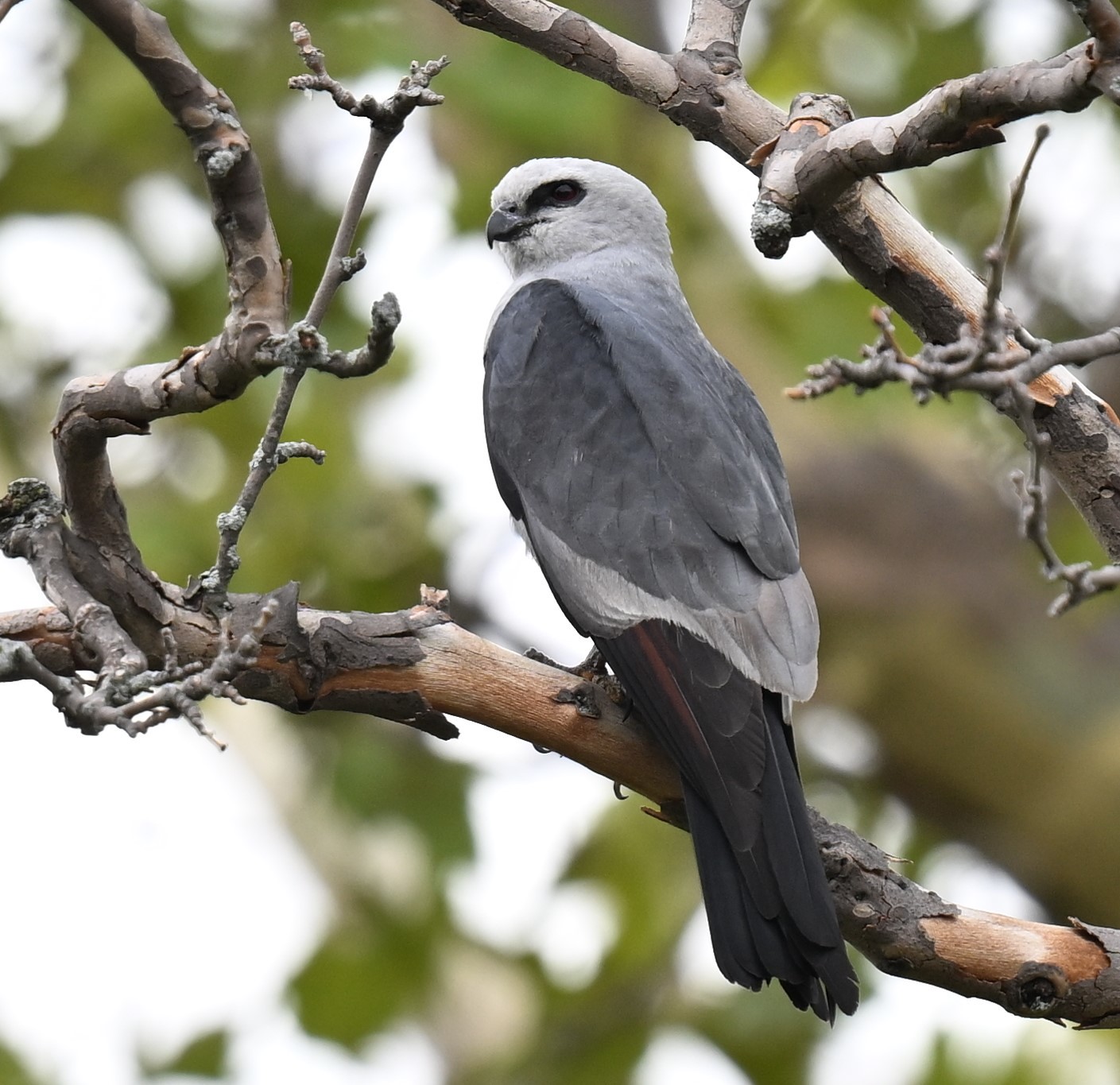
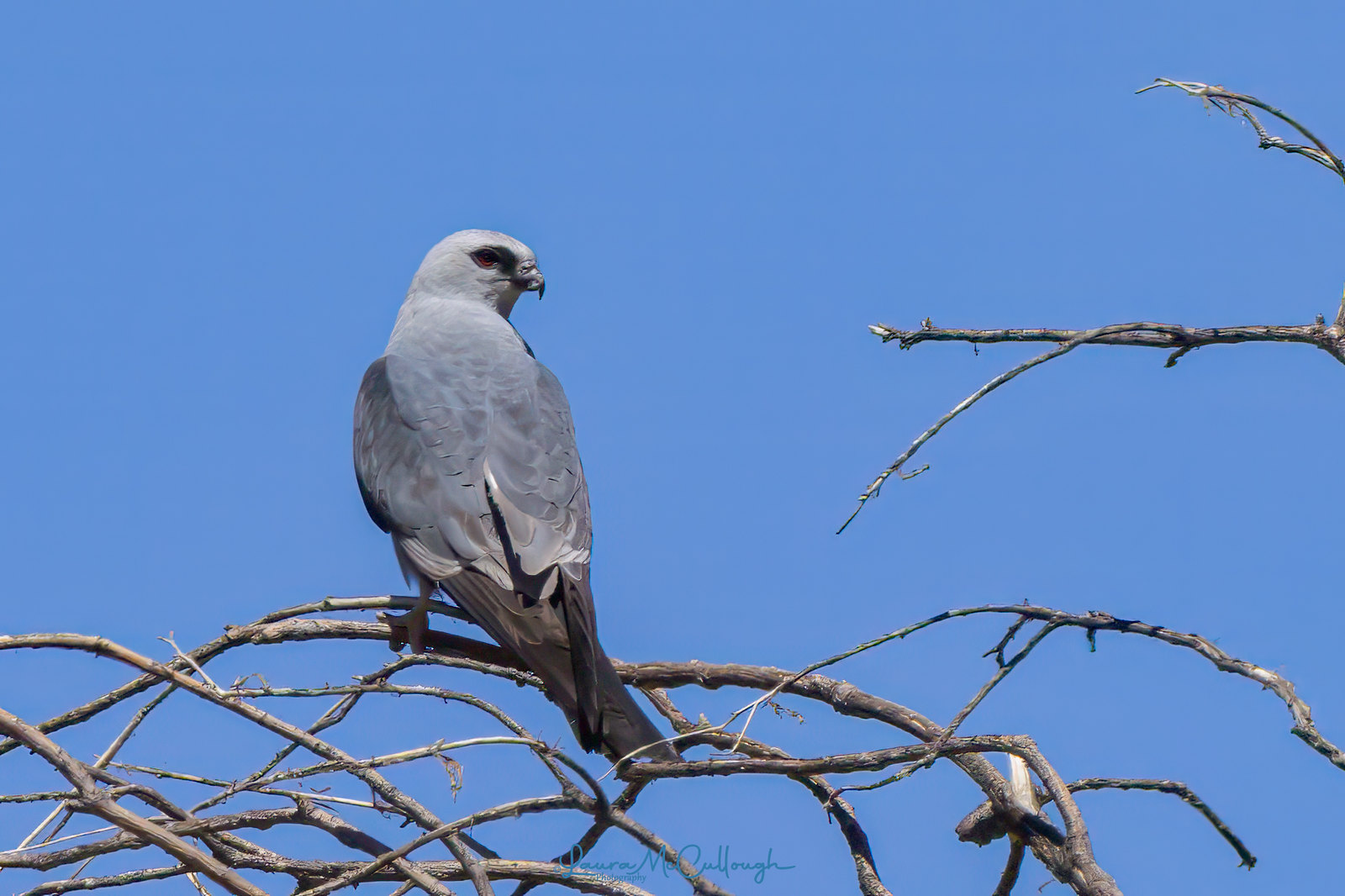
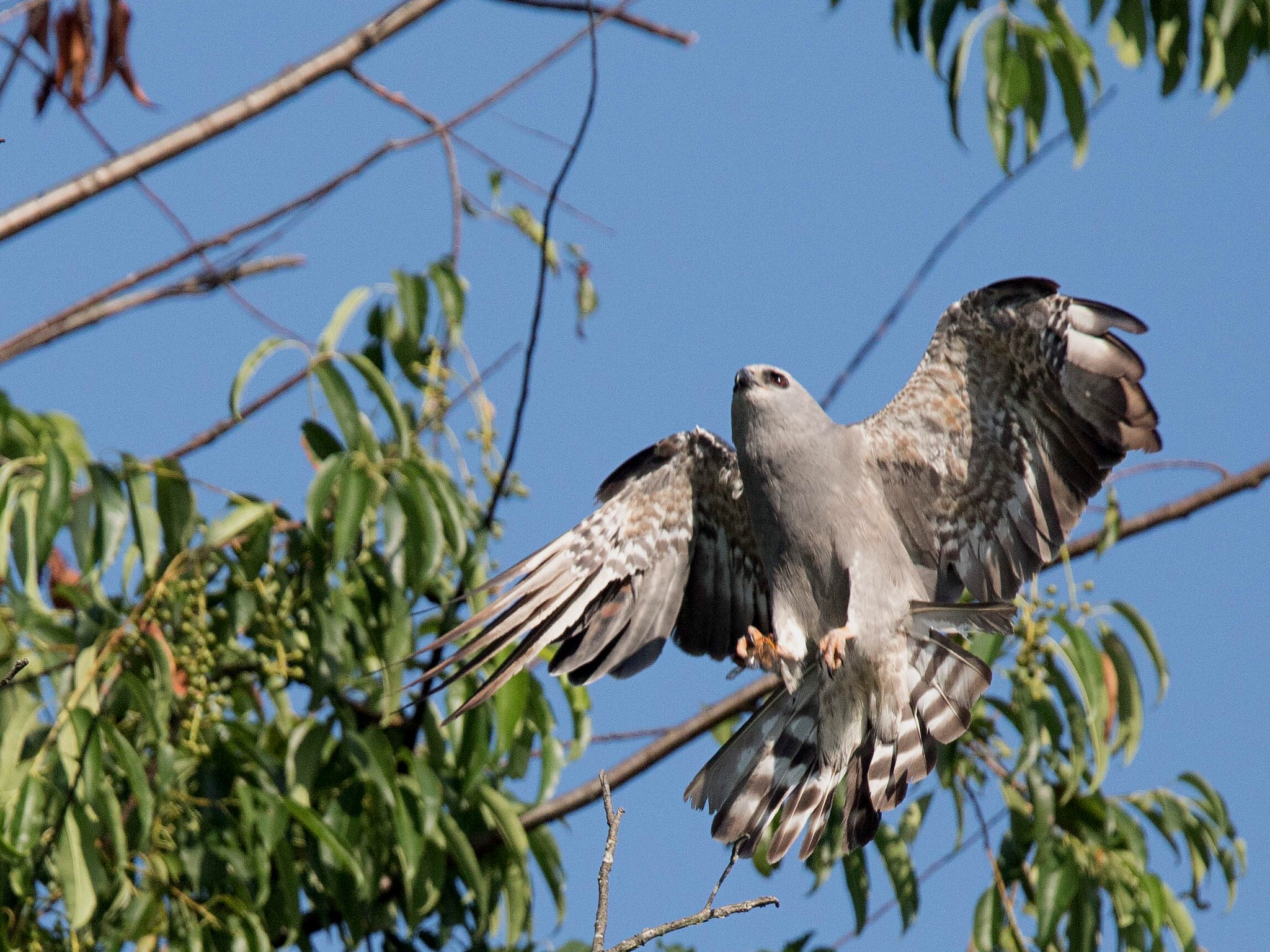
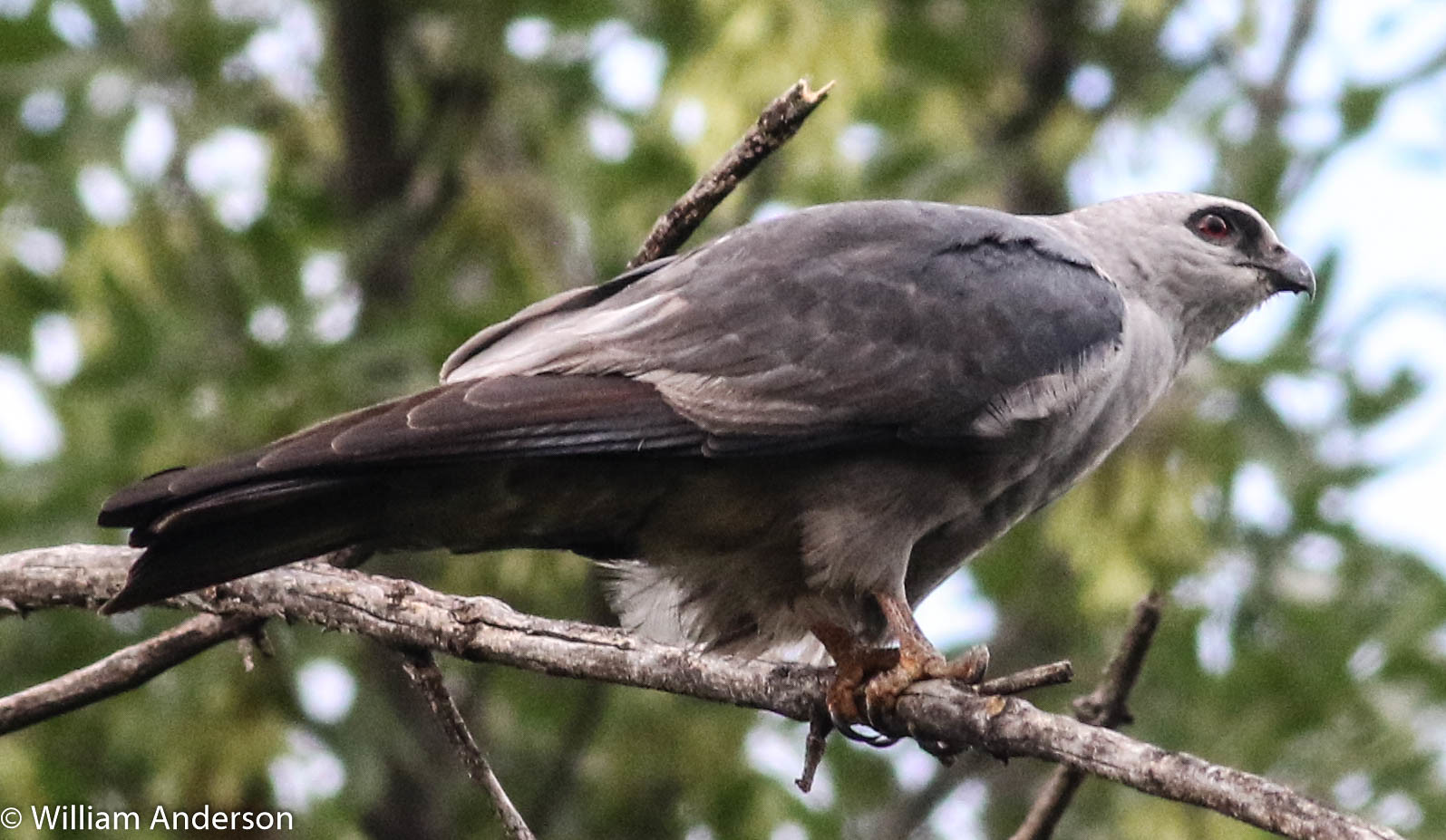
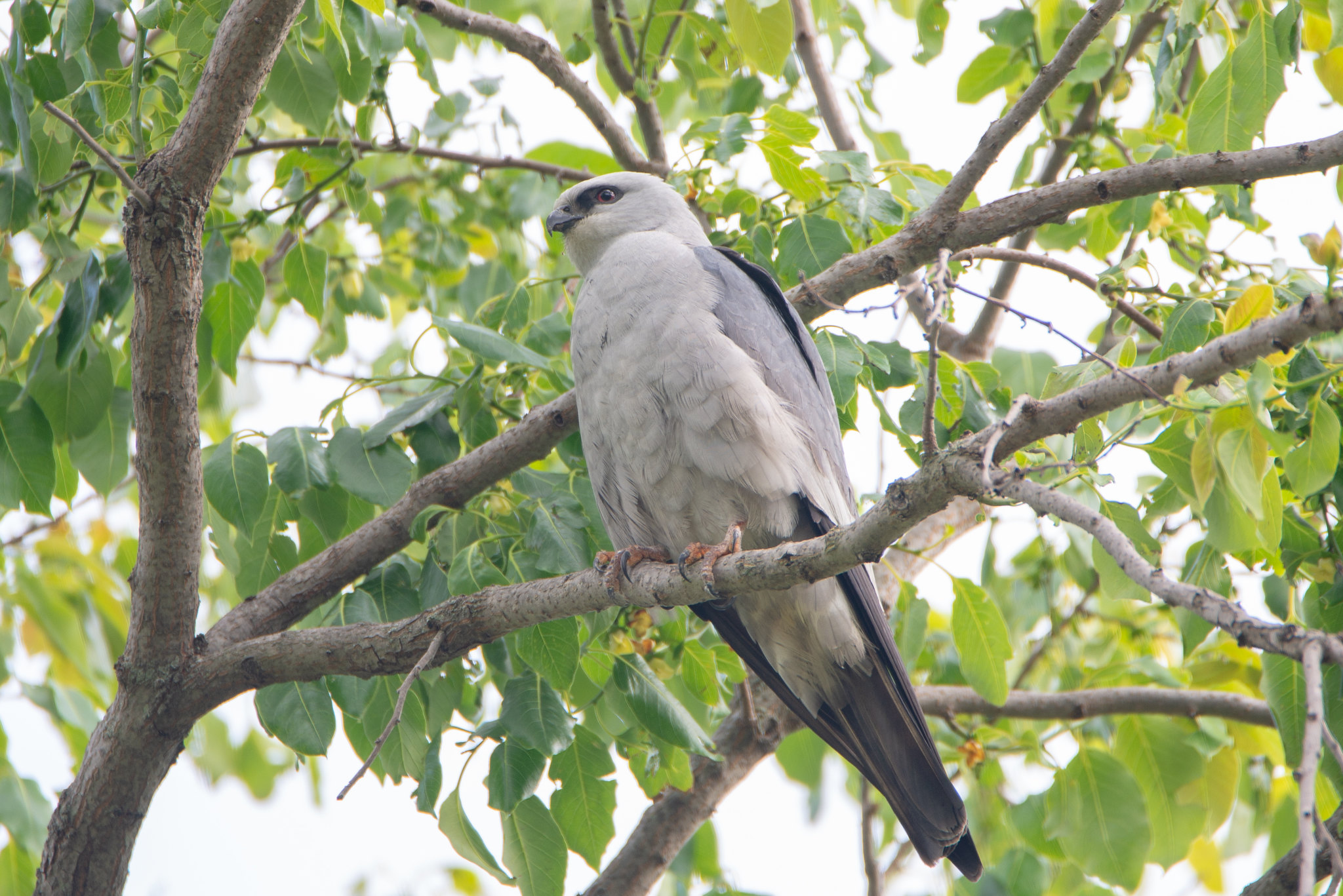
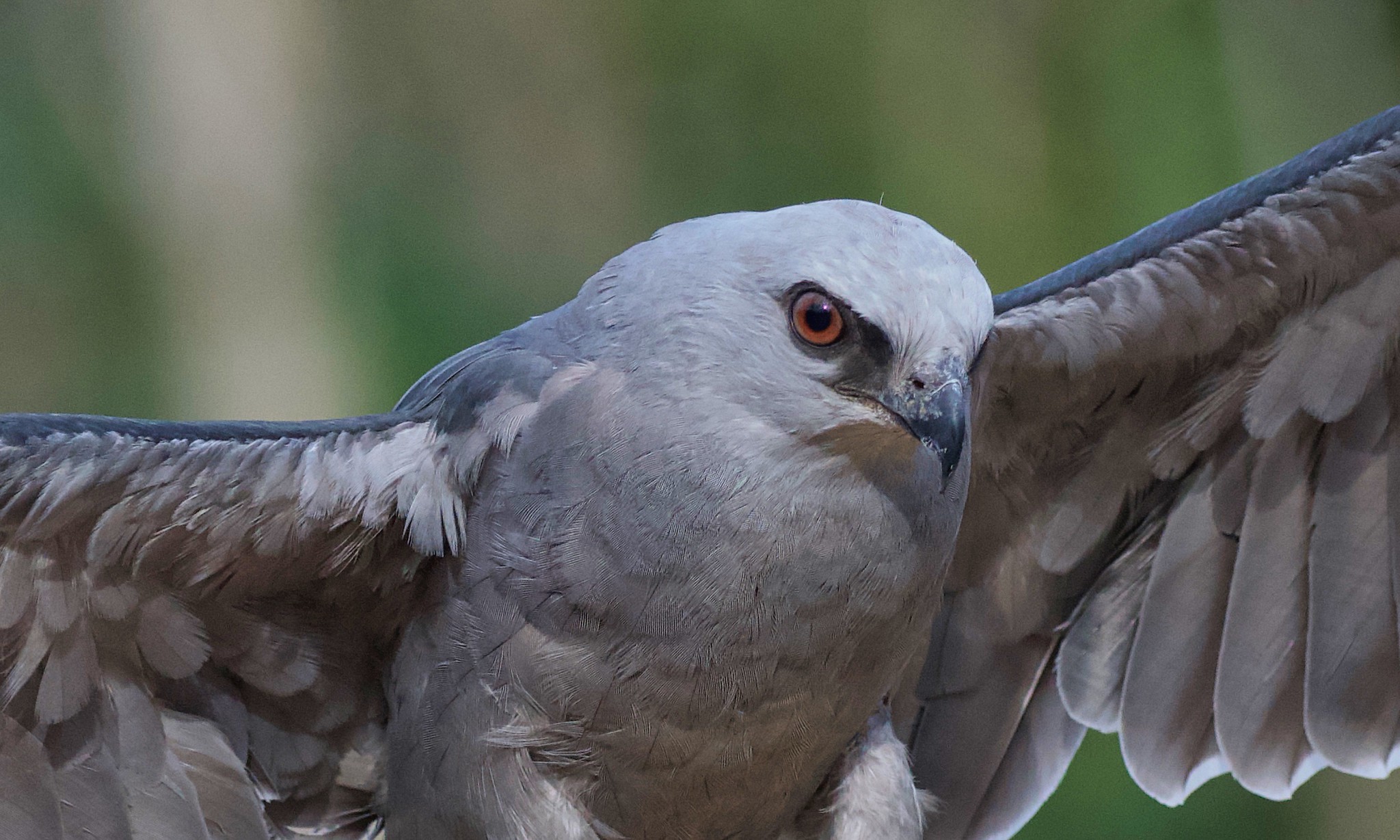
Adult Mississippi Kites have sleek plumage with a pale gray head and underparts contrasting with darker gray back and upperwings. Their wingtips are black and sharply pointed, accentuating their streamlined shape as they fly. The tail is relatively long, square-tipped, and uniformly dark gray in color. The eyes are deep red, giving a striking appearance against the pale face.

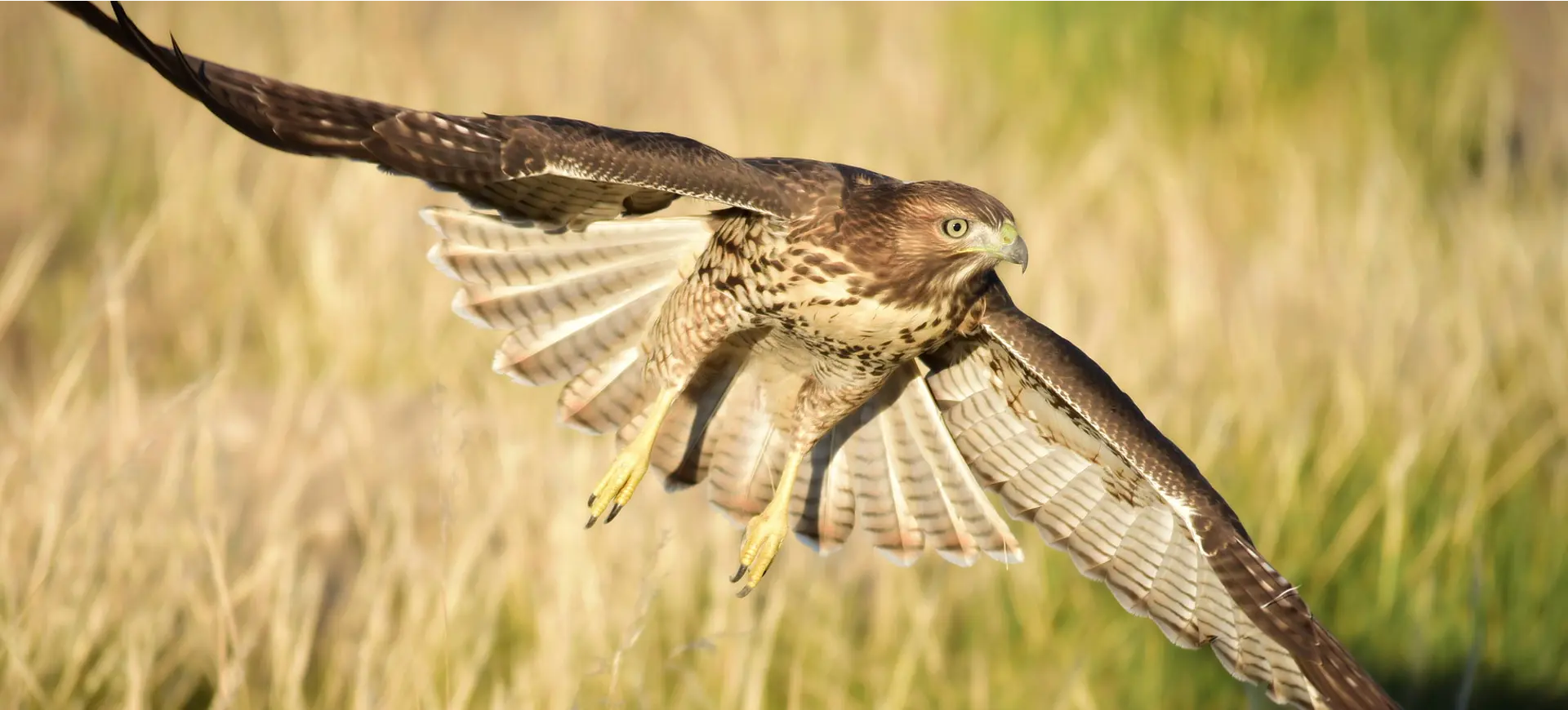
Juveniles are mottled brown above with streaked underparts, gradually acquiring adult plumage over their first year. The legs are short and yellow, adapted for grasping prey in flight rather than perching extensively. Their hooked beak is black, small, and sharply curved for tearing insect exoskeletons. Males and females are similar in appearance, with minimal sexual dimorphism.

Lifespan: Wild: ~8 Years || Captivity: ~15 Years

Weight: Male & Female: 9–13 oz (255–368 g)

Height: Male & Female: 13–15 in (33–38 cm)

Wingspan: Male & Female: 36–39 in (91–99 cm)

Top Speed: 40 mph (64 km/h)

Native Habitat:

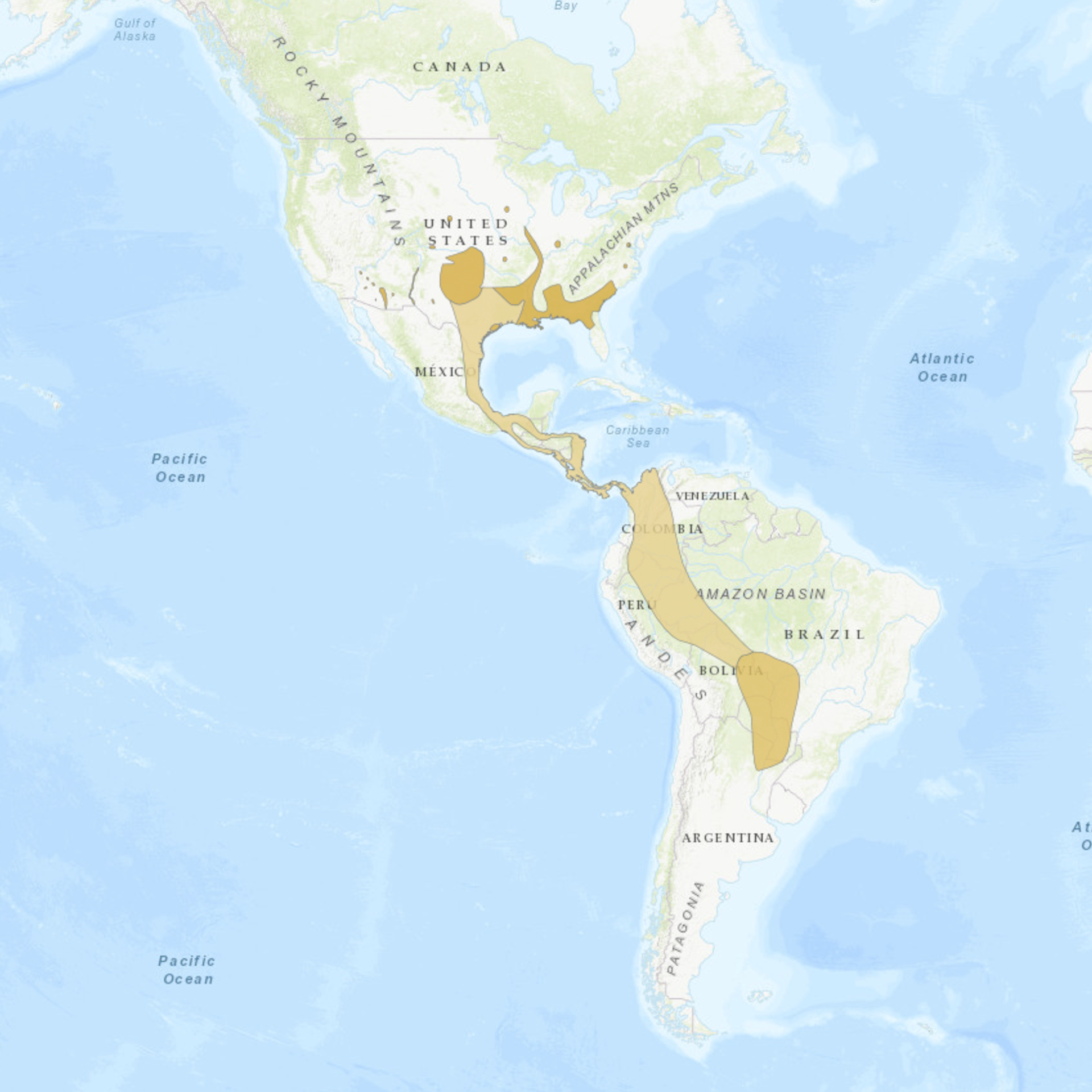
Breeding habitats include open woodlands, riparian corridors, shelterbelts, and urban areas with tall trees suitable for nesting. They prefer landscapes with a mosaic of mature trees for nesting and open areas for foraging. In the southern Great Plains, kites commonly nest near rivers and streams bordered by cottonwoods and pecans. Urban expansion has provided new nesting opportunities as they readily use ornamental trees and parks.

Wintering habitats in South America include savannas, forest edges, and wetlands across southern Brazil, Paraguay, Argentina, and northern Bolivia. They often roost communally in large trees near feeding grounds. Habitat selection emphasizes areas with abundant aerial insect prey. Seasonal shifts in habitat reflect both breeding and migration requirements.

Biogeographical Realms:
Diet:

Diet & Feeding Habits:

Mississippi Kites are specialized aerial insectivores that capture most of their prey on the wing with agile, swooping maneuvers. Their diet is dominated by large insects, including cicadas, grasshoppers, beetles, and dragonflies, which they consume while flying or perched in trees. They occasionally hunt small birds, lizards, frogs, or mammals when insect abundance is low. Foraging often occurs in flocks, particularly when prey concentrations are high during emergence events.

They rely heavily on thermals to soar effortlessly and locate prey from high altitudes. Feeding territories can include farmland, pastures, and suburban areas where insects are plentiful. Kites regurgitate indigestible parts, such as insect wings and legs, in pellets beneath their roosts and nests. During migration, they continue hunting en route to replenish energy reserves.

Mating Behavior:

Mating Description:

Mississippi Kites are monogamous and often return to the same nesting sites each breeding season. Courtship involves aerial displays, including steep dives, calling, and mutual soaring, by pairs. Nest construction is carried out by both sexes, with the male delivering sticks and the female arranging them into a shallow platform. Nests are typically placed high in the canopy to avoid predators.

The female lays 1–2 eggs, which are incubated for about 30–32 days. Both parents share incubation duties and care for the chicks after they hatch. Young fledge at around 30–35 days but remain near the nest, dependent on adults for several weeks. Families often migrate together during southward journeys.

Reproduction Season:

Year-round
Birth Type:

Pregnancy Duration:

~32 Days (Incubation)

Female Name:

Hen

Male Name:

Cock

Baby Name:

Chick

Social Structure Description:

Mississippi Kites are highly social outside of breeding, often hunting in flocks and roosting communally. Breeding pairs defend territories immediately around the nest but tolerate proximity to neighbors. During migration, large groups form loose flocks that travel and forage together. Juveniles frequently associate with nonbreeding adults in communal areas.

Communication includes high-pitched whistles, chattering calls, and visual displays. Pair bonds are strong and often persist across years. Families remain loosely associated until migration begins in late summer. Social behavior contributes to efficient foraging and predator avoidance.

Groups:

Kettle
Conservation Status:
Population Trend:
Wild: >880,000 || Captivity: Unknown

Overall, Mississippi Kite populations are stable or increasing, likely due to their adaptability to suburban and agricultural environments. Range expansions into the Midwest have been well documented, with successful breeding established beyond historical limits. Large breeding populations occur in Texas, Oklahoma, and Kansas. Wintering populations are widely distributed but poorly quantified due to remote habitats.

Urbanization has benefited the species by providing new nesting sites and an abundance of insect prey. Mortality from severe weather events, collisions, and occasional pesticide poisoning occurs but does not appear to impact overall numbers. Long-term monitoring indicates continued stability, with localized fluctuations attributed to weather and habitat changes.

Population Threats:

Primary threats include habitat loss resulting from tree removal and the conversion of woodlands to intensive agriculture or urban development. Severe storms and hurricanes can destroy nests and reduce reproductive success. Pesticide use near nesting and foraging sites may reduce prey abundance or cause secondary poisoning. Collisions with vehicles and structures occasionally result in injury or mortality.

Climate change may alter insect emergence patterns, affecting food availability during breeding and migration. Direct persecution is rare but occasionally occurs near nesting colonies perceived as nuisances. Conservation measures emphasize habitat retention and minimizing the impacts of pesticides.

Conservation Efforts:

Mississippi Kites benefit from habitat conservation initiatives that protect riparian corridors and mature tree stands. Outreach programs educate landowners and municipalities about the species’ value as a natural pest controller. Nest protection guidelines recommend retaining canopy trees during development projects. Monitoring programs track population trends, migration, and breeding success.

Legal protection under the Migratory Bird Treaty Act prohibits the disturbance, collection, or harm of migratory birds. Research on migration ecology informs conservation planning across international boundaries. Collaboration with South American partners supports the protection of wintering habitats. Public engagement promotes coexistence and appreciation of this charismatic raptor.

Additional Resources:

Fun Facts

  • They migrate thousands of miles between North and South America.
  • They catch insects in flight and eat them while soaring.
  • Juveniles have brown, streaked plumage before they molt into their adult gray plumage.
  • They often nest in urban areas with tall shade trees.
  • Their red eyes help them spot prey from a distance.
  • Mississippi Kites are known for their graceful, buoyant flight.
  • They can live over a decade in the wild.
  • Both parents share all nesting duties equally.
  • They sometimes hunt in groups, especially during insect emergences.
  • They provide natural pest control by consuming large numbers of insects.