Overview

The Texas horned lizard (Phrynosoma cornutum) is a spiny-bodied reptile native to the southern United States and northern Mexico. It is best known for its flattened, wide-body covered in sharp scales and its distinctive crown of horn-like projections on its head. When threatened, it can squirt blood from its eyes as a defense mechanism, a unique trait among North American reptiles. This species is also well-adapted to arid environments, relying on camouflage and stillness to avoid predators.

Primarily an insectivore, the Texas horned lizard feeds almost exclusively on ants, particularly harvester ants, but will consume other small invertebrates when available. Its diet makes it vulnerable to habitat changes, especially those that impact ant populations, such as pesticide use and urban expansion. The lizard’s ability to drink water through capillary action by absorbing moisture through its skin is an adaptation to its dry habitat. It is a diurnal species, most active in the morning and late afternoon when temperatures are moderate.

Texas horned lizards are often mistaken for toads due to their squat bodies and rough, bumpy skin, leading to the common nickname “horny toad.” Despite their fierce appearance, they are relatively slow-moving and rely more on passive defense mechanisms than speed. They hibernate during colder months by burrowing into loose soil or leaf litter to avoid harsh conditions. Their populations have declined due to habitat loss, invasive fire ants outcompeting native ants, and human collection for the pet trade.

Taxonomy

Kingdom
Phylum
Class
Order
Genus
Type

Physical Description:

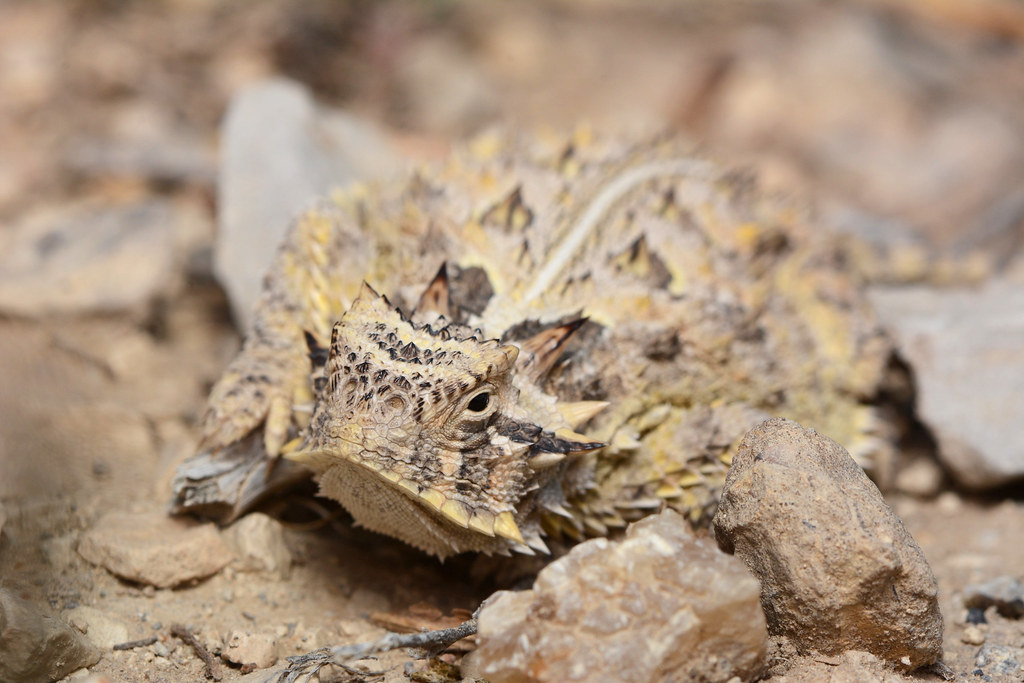
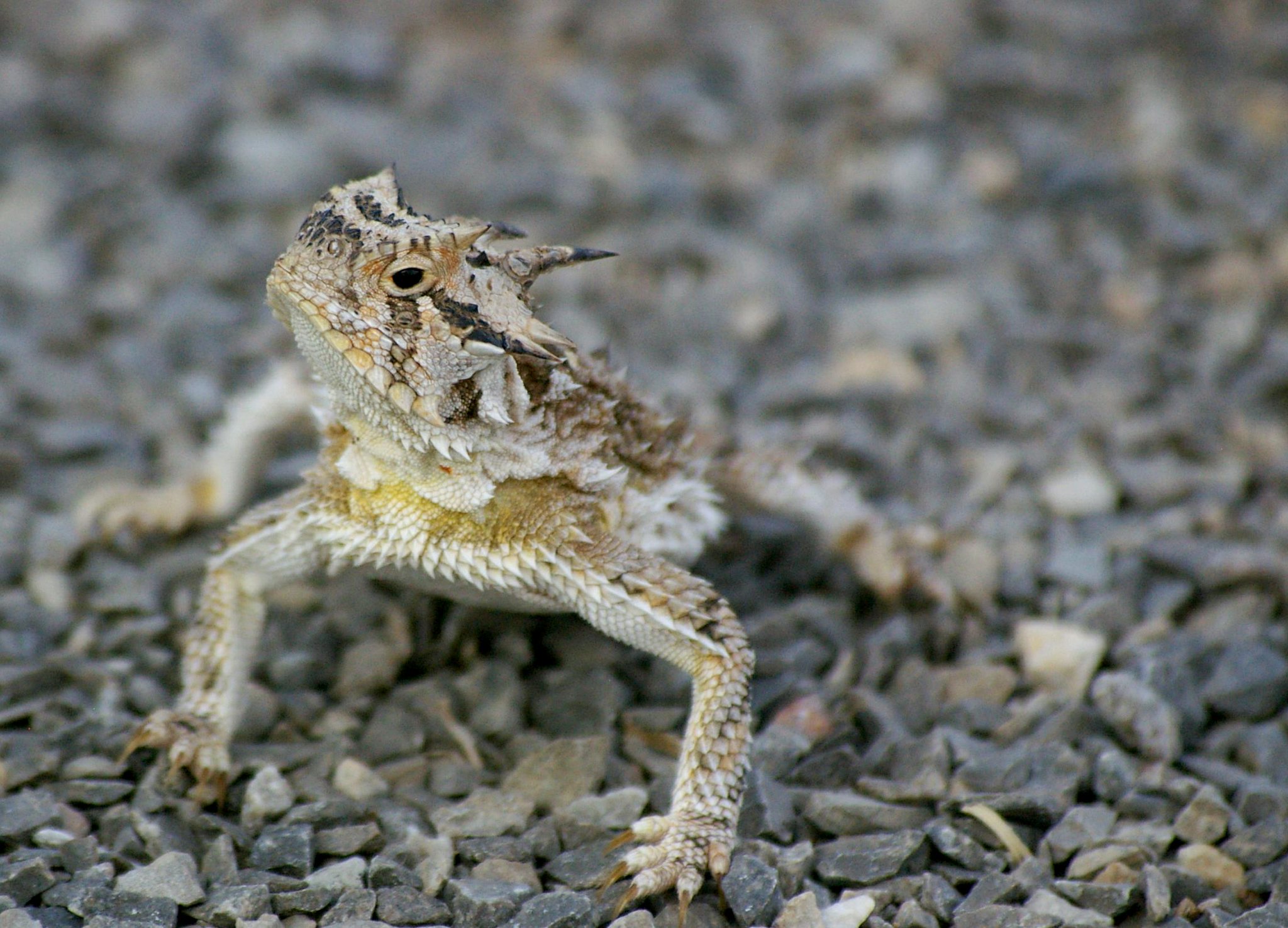
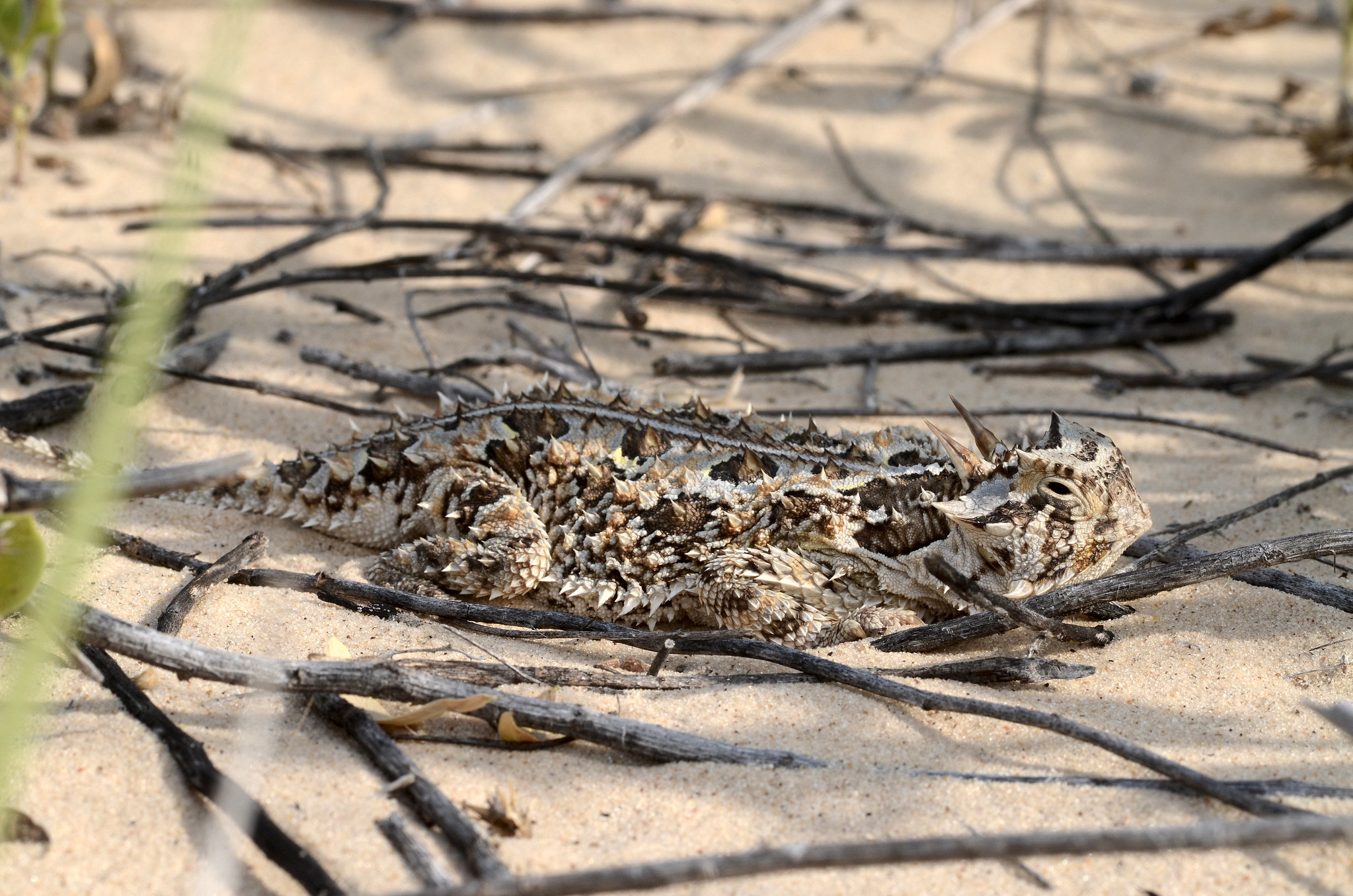
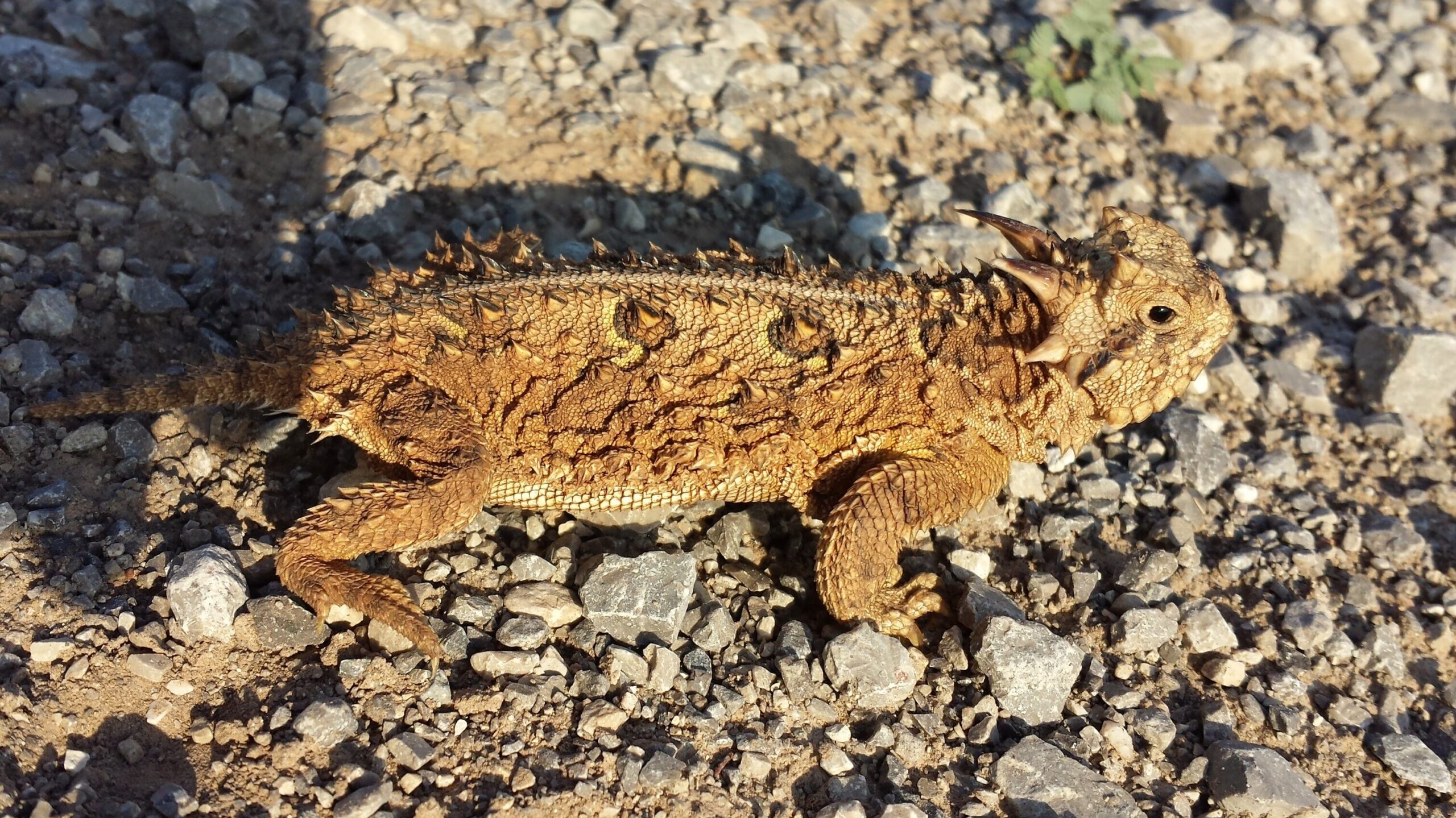
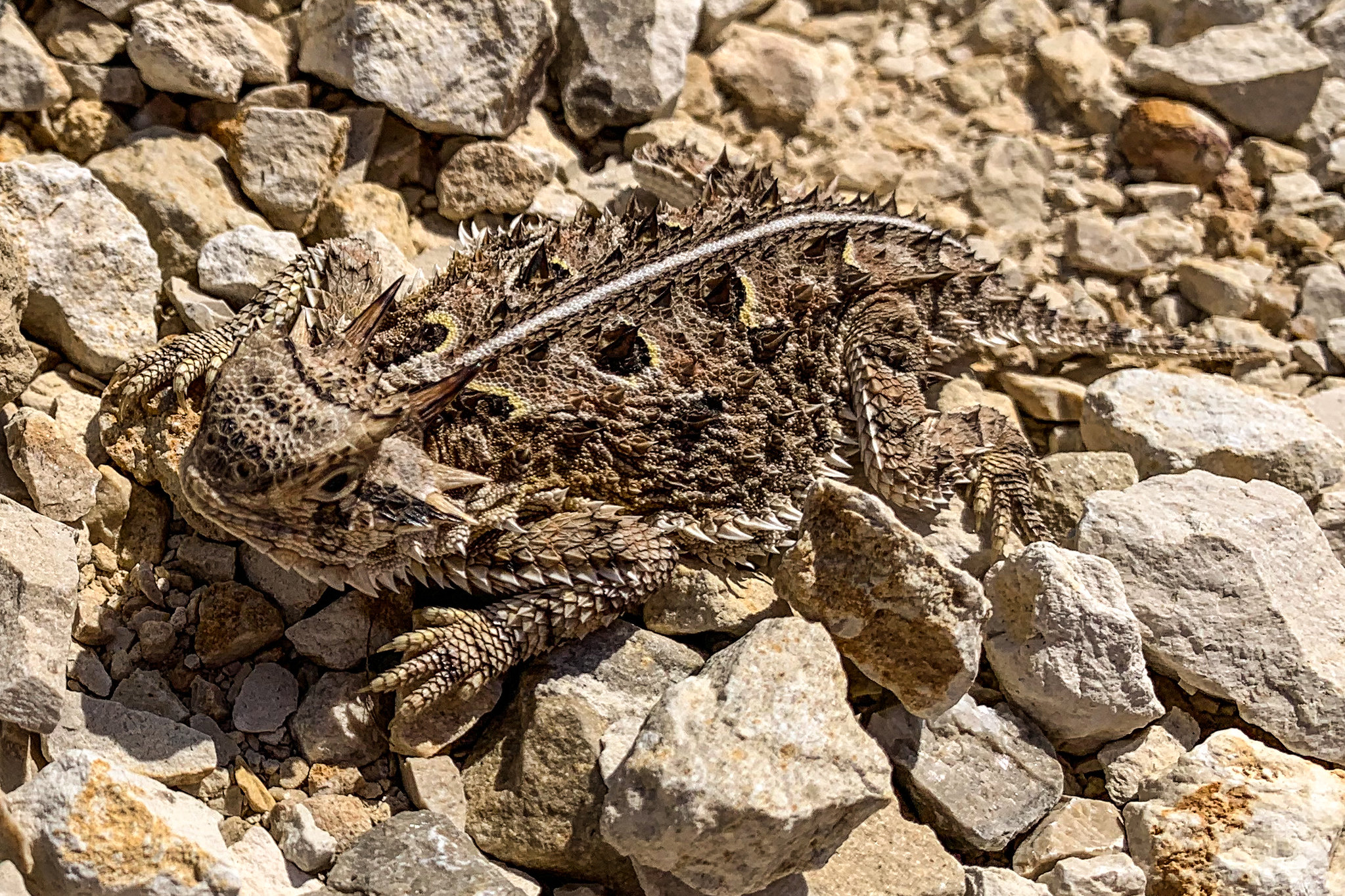
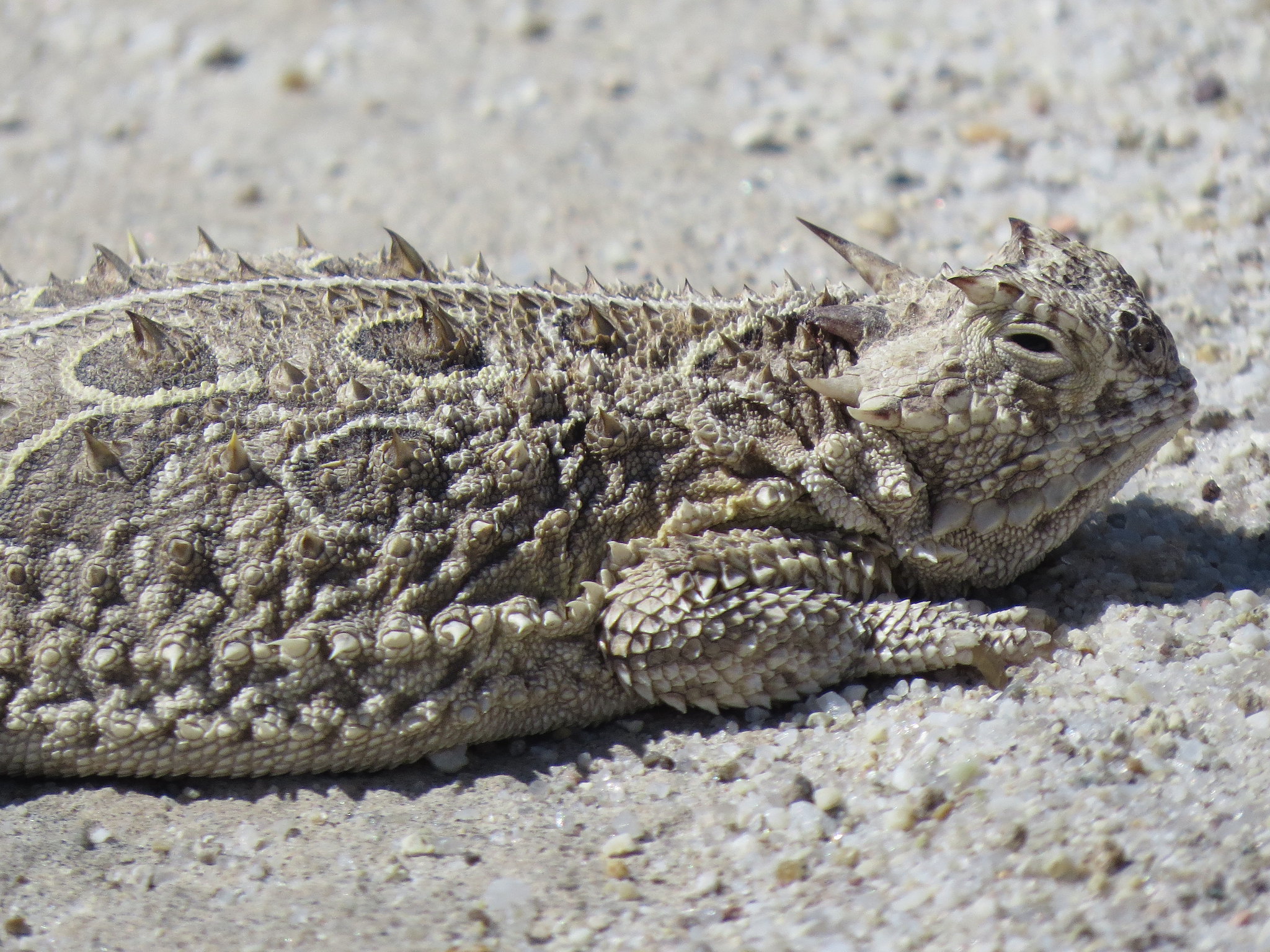
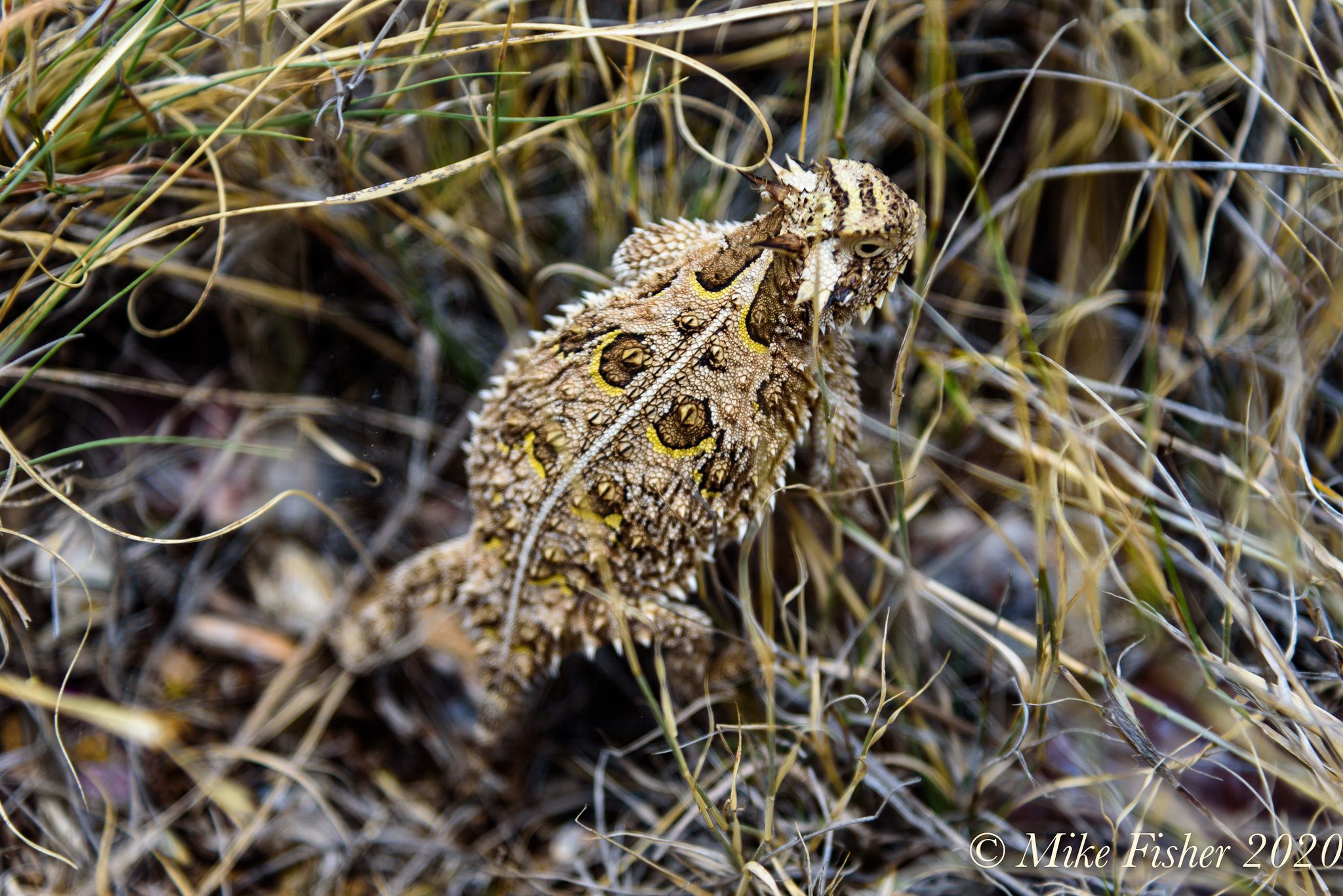
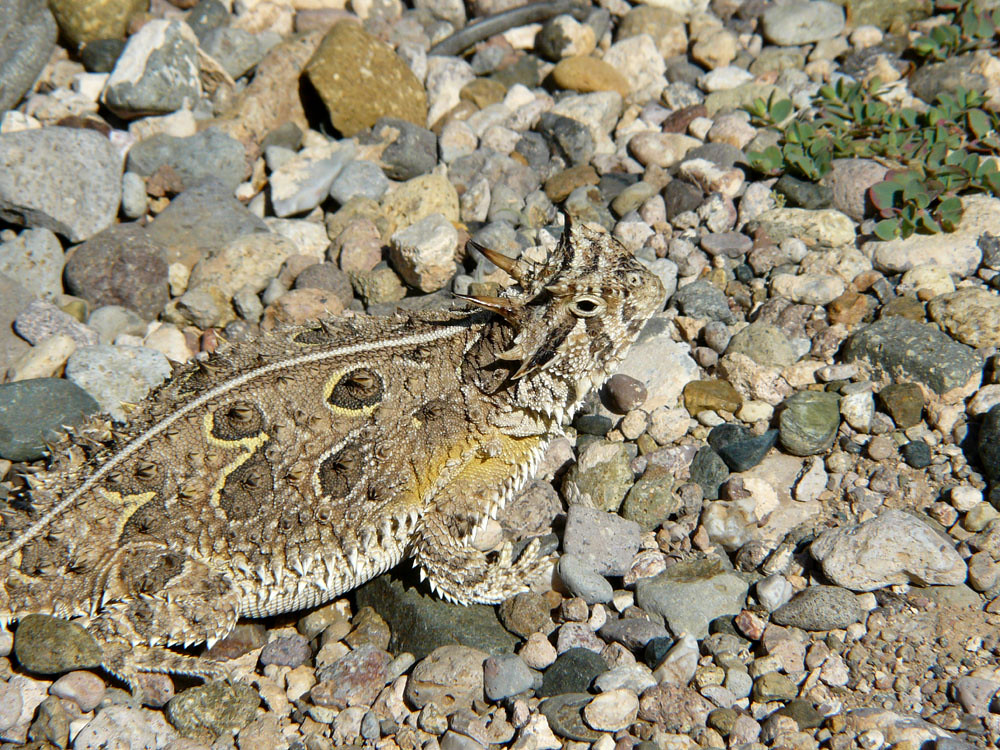
The Texas horned lizard has a broad, flattened body covered in rough, spiny scales that help deter predators. Its coloration ranges from light brown to reddish-brown with darker blotches, allowing it to blend into sandy or rocky environments. The most striking feature is its crown of large, backward-pointing horns on its head and extensions of its skull. Its short, stout legs are well-suited for digging, and it has a short, tapered tail.

Its belly is lighter in color, typically pale yellow or white, with smooth scales that contrast with the rough dorsal surface. The eyes are relatively small with round pupils, and a distinctive ridge above each eye enhances its armored appearance. Males are generally smaller than females, with narrower bodies and slightly longer tails. When threatened, the lizard can puff up its body to appear larger, making it harder for predators to swallow.

Lifespan: Wild: ~5 Years || Captivity: ~10 Years

Weight: Male: 1.4–3 oz (40–85 g) || Female: 1.6–3.5 oz (45–100 g)

Length: Male: 2.7–3.9 in (7–10 cm) || Female: 3.1–4.5 in (8–11.5 cm)

Top Speed: 3 mph (4.8 km/h)
Native Habitat:

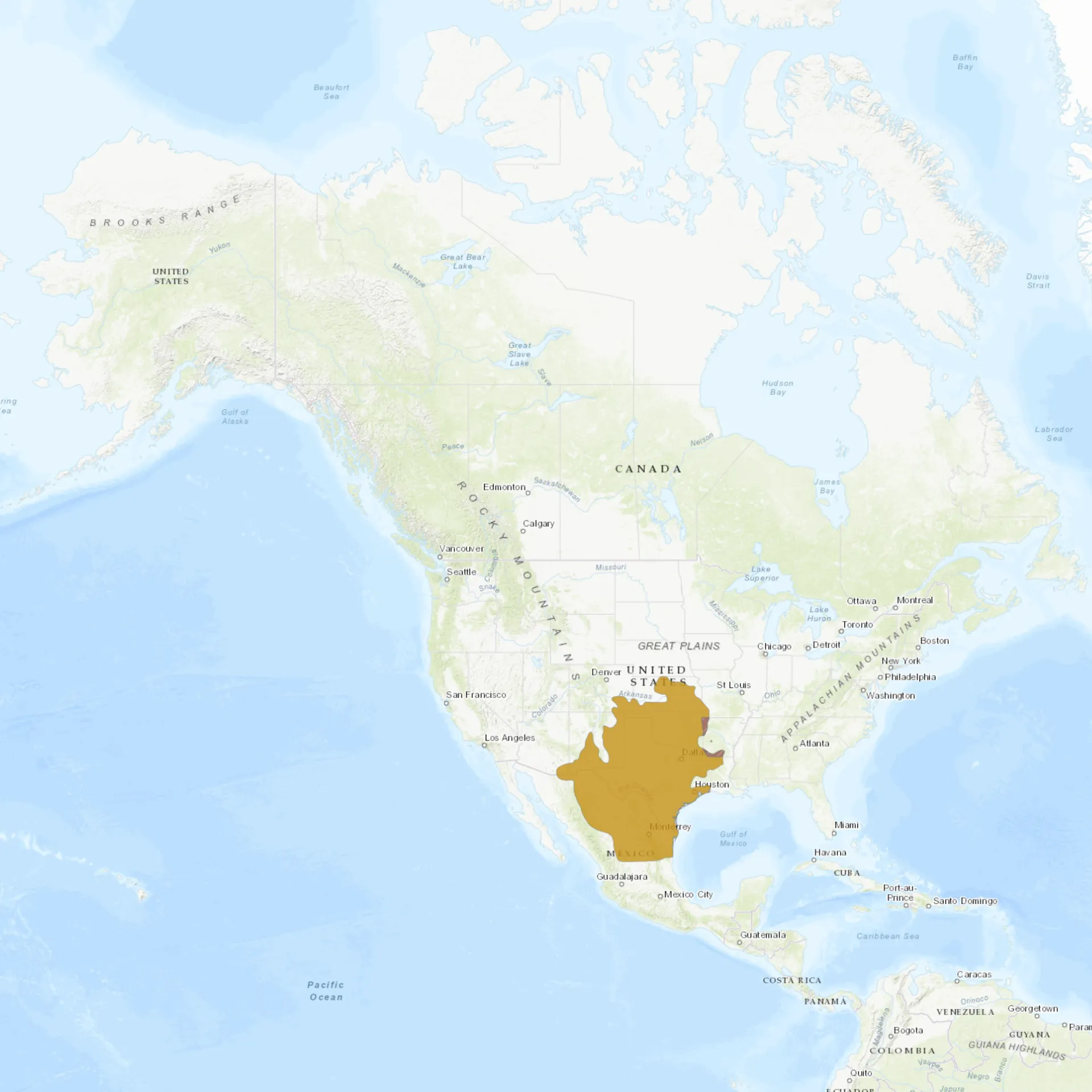
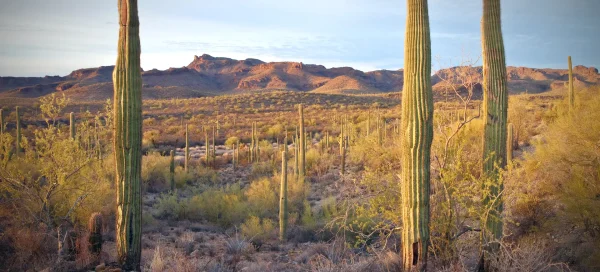
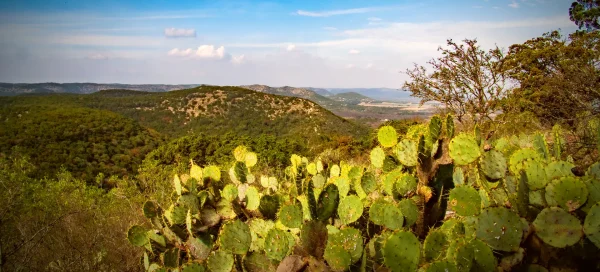
The Texas horned lizard primarily inhabits arid and semi-arid regions, including deserts, grasslands, and scrublands. It prefers sandy or loose soils, which facilitate burrowing, an important behavior for thermoregulation and protection from predators. Vegetation in its habitat typically consists of low shrubs, cacti, and sparse grasses, which provide some cover while allowing sufficient sunlight for basking. It thrives in areas with abundant harvester ants, its primary food source.

This species is most commonly found in open environments with minimal tree cover, as it relies on ground camouflage rather than climbing. It can also be found along road edges, agricultural fields, and suburban yards where conditions are favorable. However, habitat fragmentation and urban development have significantly reduced its range in some areas. Conservation efforts focus on maintaining native plant and insect populations to support sustainable lizard habitats.

Climate Zones:
Biomes:
Biogeographical Realms:
Continents:
Countries:
Diet:

Diet & Feeding Habits:

The Texas horned lizard is a specialized insectivore with a strong preference for harvester ants (Pogonomyrmex spp.), which comprise most of its diet. Despite their tough exoskeletons and venomous stings, specialized jaw structures and digestive systems have evolved to process these ants. When harvester ants are scarce, the lizard will eat other small insects, including beetles, termites, grasshoppers, and spiders. It hunts by ambush, sitting motionless and waiting for prey to come close before striking.

This species highly depends on its environment for hydration, absorbing dew and rainwater through capillary action in its skin. Its feeding habits are negatively impacted by the spread of invasive fire ants, which outcompete native ant species and are not a preferred food source. Due to urbanization and pesticide use, harvester ant populations have declined, reducing the availability of the lizard’s primary food source. In captivity, it requires a diet of live insects, but feeding it improperly can lead to health issues, making it a challenging species to care for.

Mating Behavior:

Mating Description:

The Texas horned lizard follows a seasonal reproductive cycle, mating in late spring and early summer. Males use visual displays and physical posturing to attract females, often performing head bobbing and circling movements. After mating, the female buries her eggs in loose soil, where they incubate for about two months. Temperature plays a crucial role in determining the development rate of embryos, with warmer conditions accelerating hatching.

Females lay between 13 and 45 eggs, depending on their size and environmental conditions. The eggs hatch in late summer, and the hatchlings are independent from birth, receiving no parental care. Young lizards are vulnerable to predation by birds, snakes, and mammals, making survival rates relatively low. Growth is rapid in the first year, allowing them to reach reproductive maturity within one to two years.

Reproduction Season:

Year-round
Birth Type:

Pregnancy Duration:

~44 Days

Female Name:

Cow

Male Name:

Bull

Baby Name:

Hatchling

Social Structure Description:

The Texas horned lizard is a largely solitary species, with individuals maintaining separate territories and interacting primarily during the breeding season. They rely on camouflage and a sit-and-wait hunting strategy rather than cooperative behaviors, reducing the need for social interactions. While males may engage in aggressive displays or physical confrontations over mates, these encounters are brief and rarely result in serious injury. Adults do not form social bonds outside of mating, and hatchlings are completely independent from birth.

These lizards communicate through body language, including head bobbing, posturing, and flattening their bodies to signal dominance or submission. They do not establish permanent burrows but will dig shallow depressions in loose soil for thermoregulation and protection. During colder months, they enter a state of brumation, burying themselves beneath the surface to survive harsh temperatures. Unlike some lizard species, Texas horned lizards do not exhibit cooperative behaviors such as group foraging or communal nesting.

Groups:

Lounge
Conservation Status:
Population Trend:
Wild: Unknown || Captivity: Unknown

The Texas horned lizard population has declined significantly in parts of its historical range, particularly in the eastern portions of Texas, Oklahoma, and Louisiana. Habitat destruction due to urbanization, agriculture, and road development has fragmented populations, reducing their ability to migrate and find suitable food sources. Introducing invasive fire ants has also contributed to population declines, as these aggressive ants outcompete native harvester ants, the lizard’s primary food source. Despite these challenges, the species remains relatively stable in certain arid regions of Texas, New Mexico, and northern Mexico, where habitat conditions remain favorable.

Accurate population estimates are difficult to determine due to the species’ cryptic nature and reliance on well-camouflaged behavior. Some localized conservation efforts, including habitat restoration and reintroducing captive-bred individuals, have helped stabilize numbers in select areas. The species is more abundant in protected regions where harvester ants are still prevalent, but populations continue to decrease in areas impacted by human activity. Further declines are likely without conservation interventions, making continued monitoring and habitat protection essential for long-term survival.

Population Threats:

Habitat loss due to urbanization, agriculture, and road construction is one of the primary threats to the Texas horned lizard population. As natural grasslands and desert habitats are converted into residential and commercial developments, the lizards lose critical burrowing and foraging areas. Pesticide use in farming and landscaping also negatively impacts their populations by reducing insect availability, particularly harvester ants, their primary food source. Additionally, habitat fragmentation isolates populations, limiting genetic diversity and making local extinctions more likely.

The spread of invasive fire ants (Solenopsis invicta) has significantly impacted Texas horned lizard populations by outcompeting native harvester ants and directly attacking hatchlings. Increased road mortality is another major threat, as the lizards frequently bask on warm pavement and are often struck by vehicles. Illegal collection for the pet trade and use in novelty souvenirs have further reduced numbers in some areas. Climate change poses an additional risk by altering temperature and precipitation patterns, potentially making some habitats unsuitable for the species.

Conservation Efforts:

Several conservation initiatives have been implemented to protect the Texas horned lizard, focusing primarily on habitat restoration and species monitoring. Efforts include preserving and restoring native grasslands and desert habitats to ensure a stable environment for the lizards and their primary food source, harvester ants. Some conservation groups and state agencies, such as the Texas Parks and Wildlife Department, have introduced breeding and reintroduction programs to help bolster wild populations in areas where they have declined. Public education and outreach programs aim to raise awareness about the species’ ecological role and threats.

Legislative protections, such as state-level conservation statuses and restrictions on the collection, have helped limit these lizards. The capture and trade of conservationists are also working to control invasive fire ant populations, which have disrupted the lizard’s food supply and directly harmed hatchlings. Research efforts focus on studying population trends, habitat requirements, and genetic diversity to guide conservation strategies effectively. Continued collaboration between government agencies, research institutions, and conservation organizations is essential to ensuring the long-term survival of the Texas horned lizard.

Additional Resources:

Fun Facts

  • The Texas horned lizard can squirt blood from its eyes as a defense mechanism against predators, including canines and birds of prey.
  • It primarily feeds on harvester ants, consuming hundreds daily, but it also eats other insects when available.
  • Despite being called a “horny toad,” it is a true lizard, not a toad or amphibian.
  • Its flat, spiny body helps it blend into its surroundings, making it difficult for predators to spot.
  • This lizard can puff up its body to appear larger, making it harder for snakes and other predators to swallow.
  • It absorbs water through its skin using specialized channels that direct moisture to its mouth.
  • The Texas horned lizard is the official state reptile of Texas, recognized for its cultural and ecological importance.
  • It brumates during colder months by burrowing into loose soil, similar to hibernation in mammals.
  • The expansion of invasive fire ants has reduced its primary food source, contributing to population declines.
  • Unlike some lizards, it cannot regrow its tail if lost to a predator.