
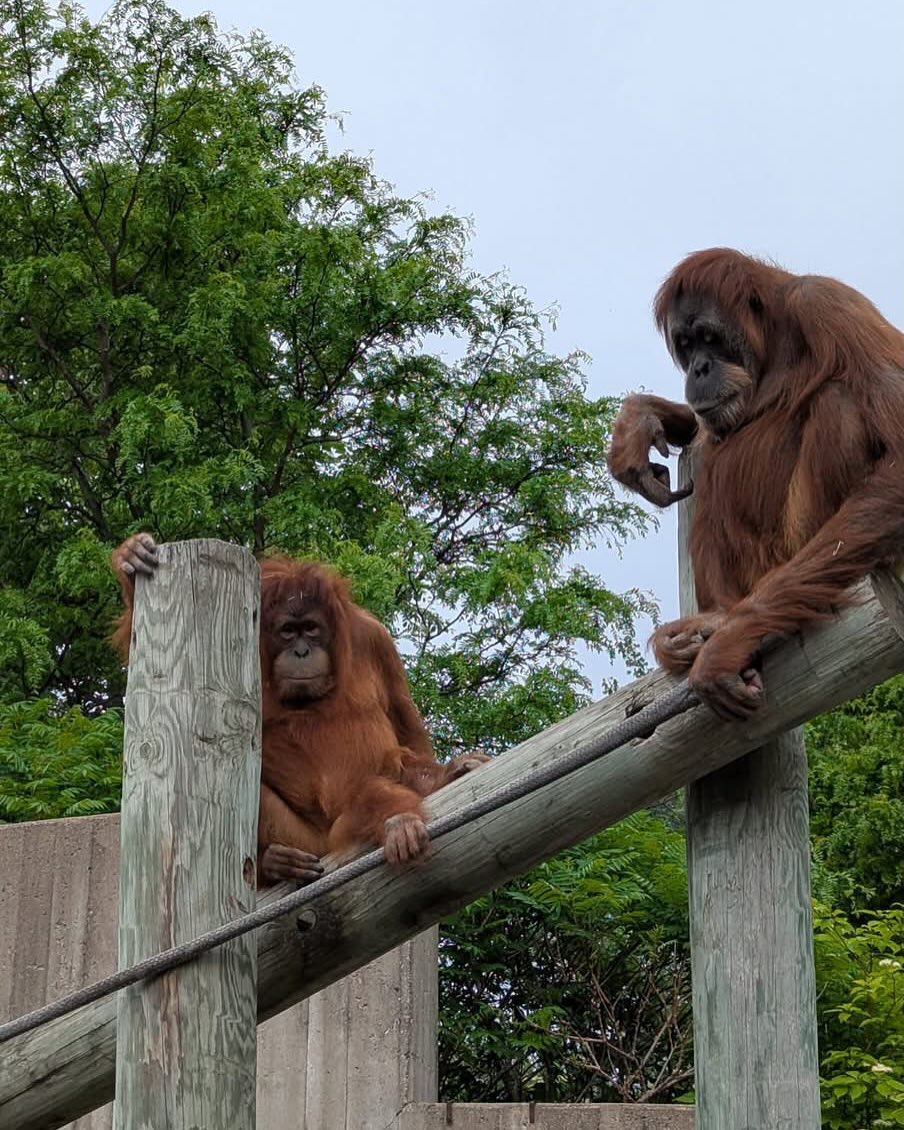
- The bond between orangutans, specifically focusing on the relationship between Markisa and her daughter Kemala and its significance for animal behavior studies.
- The importance of habitats and environmental enrichment in zoos, highlighting the setup observed by Zookeeper Megan.
- An exploration of orangutan behavior, with emphasis on young orangutans like Kemala developing skills such as climbing.
- The role of zoos in wildlife conservation and education, discussing how interactions and observations contribute to these goals.
- The critical role of zookeeper observations and documentation in understanding and enhancing the lives of zoo animals.
The bond between animals provides invaluable insights into their behavior and psychology. Observing Markisa and her daughter Kemala, an orangutan duo, enjoying quality time reveals much about their familial dynamics and social interactions. Orangutans, native to the forests of Borneo and Sumatra, share approximately 97% of their DNA with humans, making them vital subjects for behavioral studies. Their relationships, characterized by strong maternal bonds, mirror many aspects of human familial interactions. Markisa, as a mother, plays a pivotal role in Kemala’s development, modeling behaviors and ensuring her young learns essential survival skills.
Zoo environments designed for orangutans are key for facilitating these interactions and fostering development. Modern zoos emphasize creating spaces that mimic natural habitats. The design ensures the animals have opportunities to express natural behaviors, essential for both psychological and physical health. Observations made by Zookeeper Megan captured crucial moments between Markisa and Kemala, highlighting the importance of strategic habitat design, which includes climbing structures and ropes to support activities like that of young Kemala displaying her climbing ability.
Orangutan behavior is a fascinating field of study. For instance, Kemala’s focused climbing showcases a critical developmental stage. Physical activities like climbing are not merely play; they are fundamental for building strength, coordination, and confidence. Such skills are necessary for wild orangutans needing to navigate complex forest canopies to forage and evade predators. These behaviors, documented and analyzed in zoo settings, lend valuable insights into the species’ natural history.
Zoos play a vital role in wildlife conservation and education. They serve as bastions for endangered species such as orangutans, threatened by habitat destruction and illegal wildlife trade. By observing orangutans like Markisa and Kemala, zoos offer the public a window into the life of these endangered primates, raising awareness and fostering a connection that can translate into conservation action. Moreover, zoos often support in-situ conservation projects, channeling resources and expertise to preserve habitats and support local communities.
Zookeepers like Megan are essential in the management and study of zoo animals. Their observations and documentation are critical, offering data that inform husbandry practices, enhance animal welfare, and contribute to scientific understanding. The moments captured by Megan aren’t just heartwarming; they are part of a broader effort to continually improve the quality of life for animals in captivity and to ensure their survival for generations to come.
*****
Source Description
Markisa and Kemala were spotted enjoying some quality mother-daughter time together. Just hanging out and taking it easy.
Later, Kemala showed off her climbing skills, making her way across the ropes with focus and determination!
📸: Big thanks to Zookeeper Megan for capturing these moments!
