
- Overview of Jaya’s Journey: From Arrival to Transformation
- The Biological Significance of Flanging in Male Orangutans
- Social Behavior and Personality Traits of Sumatran Orangutans
- The Importance of Orangutan Conservation and the Role of Zoos
- Celebrating Orangutan Caring Week: Advocacy and Awareness
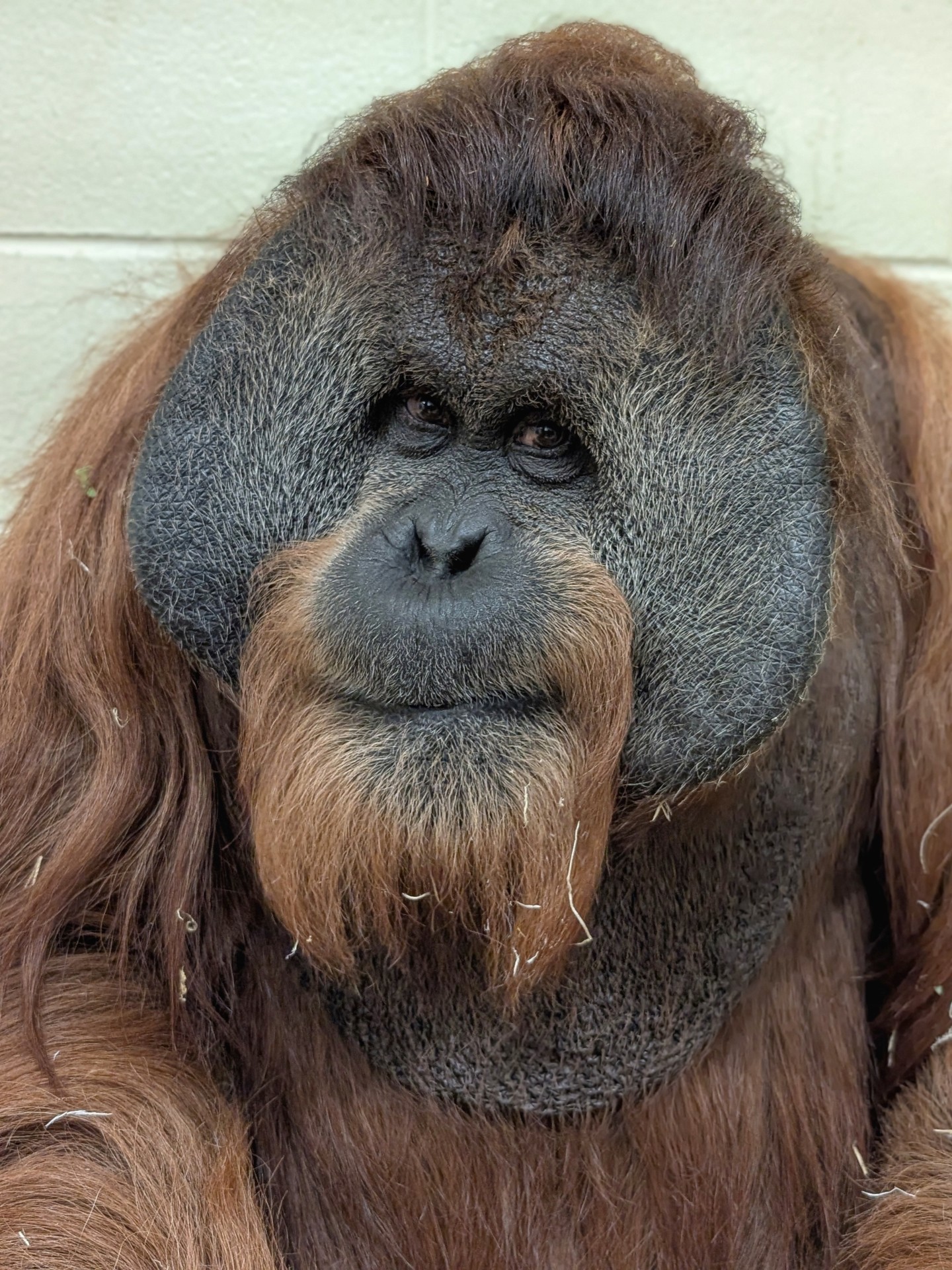
Meet Jaya, our male Sumatran orangutan at the DZCA. He has undergone a remarkable transformation since his arrival in 2019. When Jaya first joined us, he was an unflanged male, lacking the physical characteristics typically associated with adult male orangutans. Fast forward to the present day, and he is now showcasing his mature cheek pads, or “flanges,” signifying his growth and development.
Flanging is an essential stage in the life of male orangutans and is directly linked to their social standing and mating opportunities. As males mature, they develop these larger cheek pads as a secondary sexual characteristic. This feature can signal health and vitality to potential mates. In Jaya’s case, these cheek pads have not only become a visual highlight but symbolize his journey from adolescence into adulthood.
Jaya’s physical attributes—his long limbs, distinctive “billy-goat” beard, and soulful eyes—make him stand out among his peers. While he tends to be more introverted and prefers to nest high and out of sight, he also displays a joyful and playful side that captivates visitors and caregivers alike. This duality is characteristic of many Sumatran orangutans, who can exhibit both reserve and exuberance depending on the circumstances.
Understanding Jaya’s behavior provides insight into the social dynamics of these great apes. Orangutans are generally solitary animals, especially males. They spend a considerable amount of their time alone in the wild, which fosters a more introverted personality type, similar to what we observe with Jaya. However, they are also intensely intelligent and curious beings. This combination of traits can sometimes lead to unexpected behaviors, adding a delightful layer to their personality. Observations of Jaya’s interactions within the zoo reveal his capacity for playful antics, offering a glimpse into the cognitive abilities of orangutans.
Orangutan Caring Week serves as a vital reminder of the unique challenges faced by orangutans. It emphasizes the need for increased awareness and conservation efforts for these endangered species. Habitat loss due to deforestation, illegal wildlife trade, and human-wildlife conflict are major threats to their survival. Implementing conservation strategies not only protects orangutans like Jaya but also contributes to the conservation of the rich biodiversity found in their natural habitats.
Zoos play a crucial role in wildlife conservation, acting as sanctuaries for species that are often threatened in the wild. Facilities like DZCA provide invaluable opportunities for research, education, and public engagement. By housing animals such as Jaya, these institutions contribute to broader conservation initiatives while fostering a connection between humans and wildlife. The educational outreach sparked by Orangutan Caring Week encourages visitors to learn more about the plight of orangutans and what actions can be taken to help them.
Jaya’s evolution and the awareness it generates encapsulate the broader narrative of conservation in action. His story offers an educational platform to discuss important ecological issues while also spotlighting the unique characteristics of Sumatran orangutans. Awareness campaigns can fundamentally change how people perceive and interact with wildlife, urging them to adopt more sustainable practices that benefit both the environment and its inhabitants.
As we celebrate Orangutan Caring Week, remember the importance of advocating for orangutans and their habitats. Whether through volunteer work, donations, or simply spreading the word about their conservation, there are numerous ways to support these incredible animals. Each small effort contributes to a larger movement aimed at ensuring the survival of orangutans like Jaya. With your commitment to this cause, we can look forward to a future where orangutans thrive in their natural environments, free from the threats posed by human encroachment.
Photography by Animal Care Specialist Christa K. and Volunteer Photographer Mark Rinker captures Jaya’s unique presence, bringing his story to a wider audience. These images serve not only as a record of his transformation but also as a catalyst for raising awareness about the challenges faced by Sumatran orangutans. Every photograph shows the beauty of Jaya, his physicality, and the joy he brings to those around him.
The journey of Jaya underscores the connection between individual animals like him and the broader conservation movement. By learning about his development, we engage with the realities of wildlife today and understand the various factors influencing survival. The knowledge gained from observing Jaya and his peers informs the best practices for care and breeding in captivity, which can be extrapolated to conservation strategies in the wild.
The significant and ongoing transformation of Jaya exemplifies the complexities of orangutan development. Understanding his life stages not only highlights an individual story but also paints a picture of the biological and social intricacies that define Sumatran orangutans. Through this engagement with Jaya’s story, zoo visitors can delve into discussions about genetics, behavior, and ecological balance while forming a personal connection to the pressing issues surrounding wildlife conservation.
The duality of Jaya’s personality—his preference for solitude intermingled with moments of play—reflects the adaptability of orangutans in navigating different environments. In their natural habitats, the challenges of finding food and shelter often necessitate periods of solitary reflection or playful practice. Jaya offers a glimpse into how environmental pressures shape behavior and socialization patterns among orangutans.
Zoos can enhance their educational programs by featuring stories like Jaya’s. This not only enriches visitor experiences but also cultivates empathy and interest in conservation efforts. Educational sessions centered around orangutan transformation provide an interactive platform for discussing the many facets of animal care, the intricacies of breeding programs, and the ethical responsibilities of zoos.
Jaya stands as a testament to the importance of focusing on individual animal stories in the larger conservation context. His journey allows us to celebrate the resilience of wildlife and capture the attention of the community regarding paramount issues of habitat loss and species extinction. Educators and caretakers alike can draw on Jaya’s experiences to foster a greater understanding of species preservation.
The spotlight on orangutans during Orangutan Caring Week serves as a call to action for everyone, reminding us that our choices and actions contribute to the future of these magnificent primates. Whether it’s through supporting sustainable palm oil initiatives, advocating for wildlife protection policies, or simply sharing what you’ve learned about orangutans with family and friends, each effort adds value.
In essence, the story of Jaya encapsulates both the triumphs and challenges faced by Sumatran orangutans today. His development from an unflanged adolescent to a mature male provides a vivid illustration of the importance of individual lives in our collective conservation efforts. Through this lens, we see that every orangutan’s journey is intertwined with the health of ecosystems and the commitment we share to protect and understand their world.
As we highlight Jaya and the other remarkable orangutans at DZCA throughout Orangutan Caring Week, we recognize the vital role you play in shaping a future where these incredible apes can live safely and sustainably in their natural environments.
*****
Source Description
🦧 Meet Jaya, our male Sumatran orangutan, who has gone through an incredible transformation over the last few years. When he arrived at DZCA in 2019, he was an unflanged male, but today, he’s proudly showing off his large cheek pads (or “flanges”), a sign of maturity in male orangutans.
With his long limbs, distinctive “billy-goat” beard and soulful eyes, Jaya is truly one-of-a-kind. While he’s more of an introvert who prefers nesting high and out of view, he also has a wonderfully silly side.
Orangutan Caring Week reminds us how special these great apes are. Stay tuned this week as we spotlight more of the incredible orangutans who call DZCA home!
📸: Animal Care Specialist, Christa K., and Volunteer Photographer Mark Rinker
