
- Overview of Trillium, the new trumpeter swan at the zoo, including its habits and personality.
- Detailed exploration of the feeding behavior of trumpeter swans, with a focus on their dietary habits and preferred food sources.
- The importance of wildlife conservation efforts for trumpeter swans and how zoos contribute to these efforts.
- Insights into the role of zookeeper Deanna in managing and caring for the trumpeter swans.
- Educational aspects of observing wildlife feeding behavior and how this knowledge benefits conservation and environmental education.
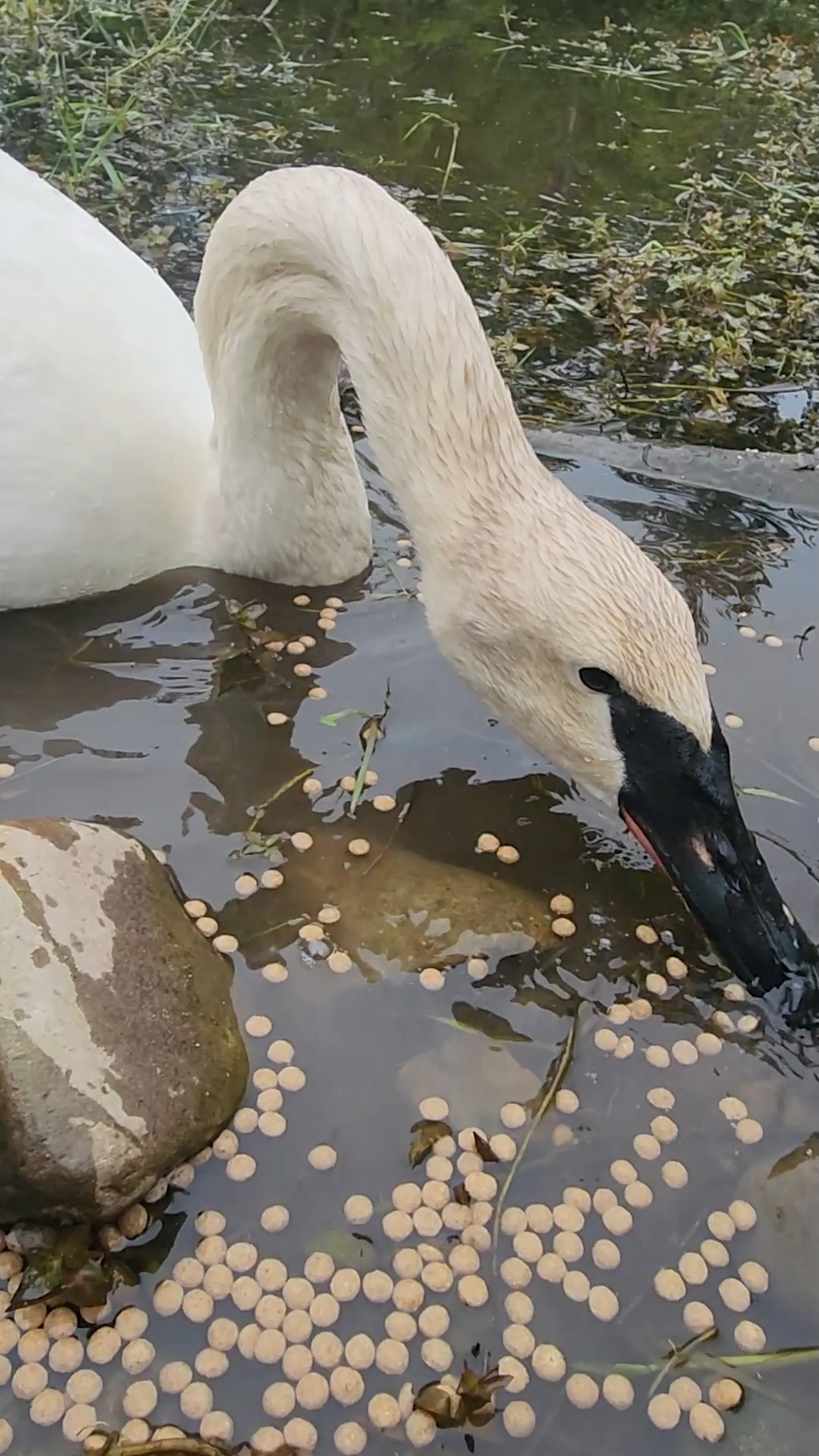
Trillium, the latest addition to our zoo, is a captivating trumpeter swan with a penchant for snacking unlike any other. This elegant bird, known for its graceful demeanor and formidable presence, has captured the hearts of visitors and staff alike, thanks to its dedication to its meals. Observed mid-meal by Keeper Deanna’s camera, Trillium offers a front-row seat to the charming ritual of swan feeding. The rustle and crunch of aquatic vegetation as Trillium enjoys its meal provide an enchanting soundtrack that reminds us of the simple pleasures of observing nature.
Trumpeter swans, Cygnus buccinator, are among the largest waterfowl species, celebrated for their striking beauty and powerful bugling call. These magnificent birds primarily feed in water, dipping their long necks with elegance to forage for a variety of aquatic plants, roots, and tubers. Their feeding behavior is a ballet akin to nature’s choreography, as they dabble or upend in search of sustenance. While their diet predominantly consists of aquatic offerings, they are equally adept at grazing on land, favoring grasses and grains when an opportunity arises.
Trillium’s dedication to snacking underscores a broader conversation about the vital ecological role these birds play. Trumpeter swans were once near extinction due to overhunting and habitat loss. Today, wildlife conservation efforts have brought them back from the brink. Zoos play a crucial role in these efforts by providing safe havens for these birds, protecting them from threats, and educating the public about the importance of preserving their habitats.
The involvement of zookeepers, such as the dedicated Deanna, is critical to the success of these efforts. Caretakers provide not only nourishment but also a bond with the animals. This relationship enables them to monitor the swans’ health and adapt feeding routines to meet individual needs. Zookeepers use their expertise to simulate natural feeding conditions, ensuring the birds remain healthy and exhibit natural behaviors.
Observing feeding behavior in swans like Trillium provides a window into their ecological niche. Their diet mainly consists of submerged aquatic vegetation, which not only meets their nutritional needs but also helps maintain healthy wetland ecosystems. By consuming plant matter, swans help control aquatic vegetation, contributing to ecological balance.
Educating the public about these behaviors is crucial for fostering appreciation and support for wildlife conservation. Visitors to zoos witness firsthand the majesty of swans like Trillium and learn about the intricacies of swan ecology. This knowledge promotes environmental stewardship and encourages actions that contribute to conservation efforts worldwide.
Through well-documented observations and engaging presentations, zoos elevate public understanding of animal behaviors. The insights gained from such experiences shape attitudes toward conservation, sparking interest in protecting wildlife habitats. This engagement is invaluable in the ongoing fight to preserve biodiversity.
In conclusion, the story of Trillium and its snacking habits is more than just an adorable snapshot of a day in the life of a swan. It reflects a profound narrative of resilience, care, and the enduring connection between humans and nature. As zoos continue to champion conservation initiatives, the lessons drawn from observing and understanding wildlife behaviors become a powerful tool in promoting the conservation of our planet’s most vulnerable species.
*****
Source Description
Trillium, our new trumpeter swan, is a very dedicated snacker. Caught mid-meal, happily munching inches from the keeper camera near the water’s edge. Sound on for adorable crunchies!
Trumpeter swans primarily feed in the water. They usually dip their long necks underwater to forage for aquatic plants, roots, and tubers. They can also graze on land, especially grasses and grains, but most of their feeding happens by dabbling or upending in shallow water.
📹: Keeper Deanna
