
Summary of Minnesota Zoo Autumn Brings a New Addition: Bolivian Gray Titi Monkey Otoño:
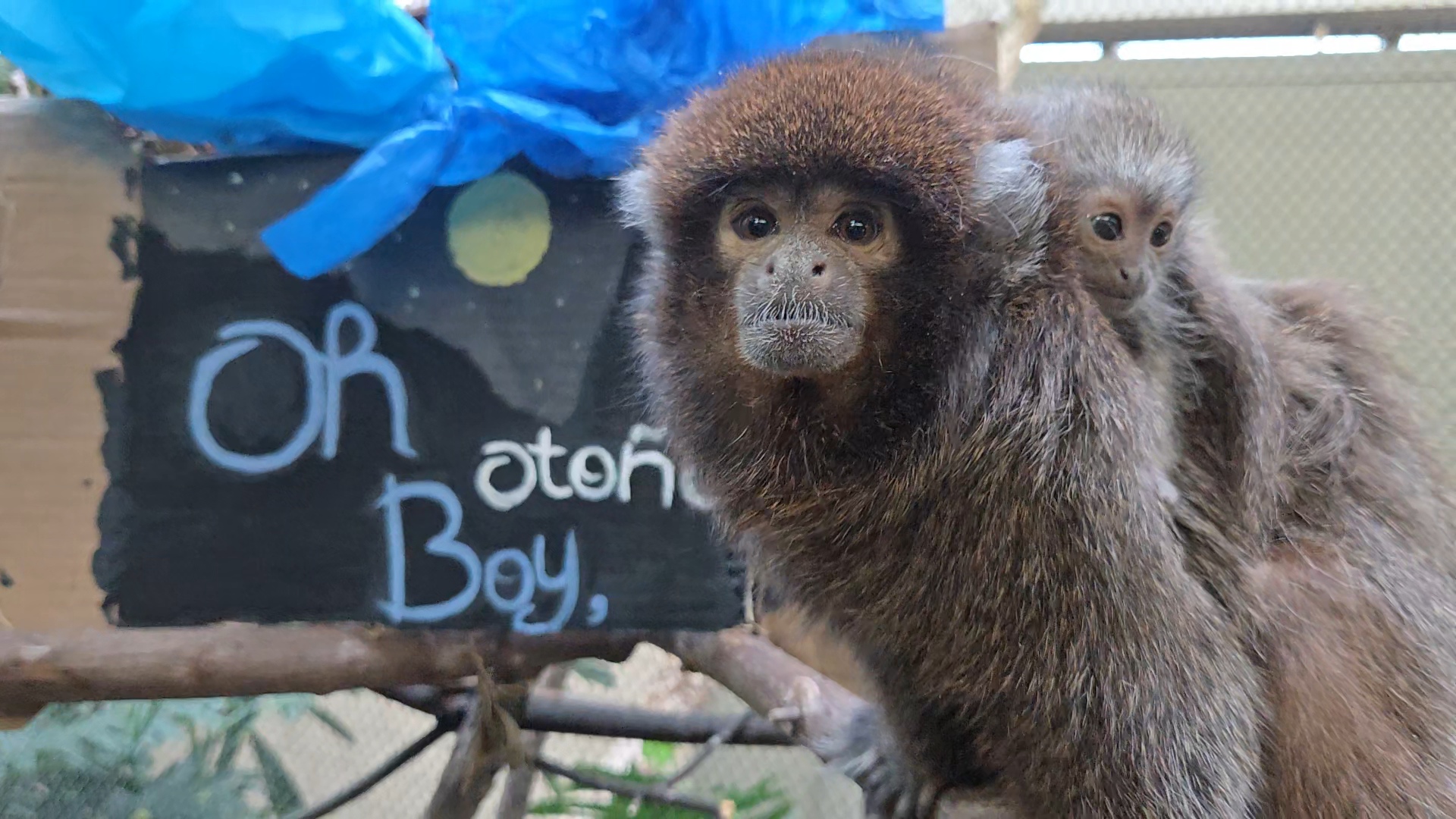
The Minnesota Zoo has welcomed a Bolivian gray titi monkey named Otoño, born on November 1, 2025. Otoño’s name means “autumn” in Spanish. His parents, Carroll and Beni, are attentive co-parents, with Beni often carrying Otoño on his back. These monkeys are native to Bolivia and Brazil and are known for their strong family bonds. The sex of Otoño was confirmed to be male after a month, following a successful health exam. Visitors can see Otoño and his family at the zoo’s Tropics Trail, along with pygmy marmosets, but are asked to speak softly as he adapts to his new environment.
- The introduction of Otoño, the Bolivian gray titi monkey, at the Minnesota Zoo.
- The natural behaviors and characteristics of titi monkeys, with an emphasis on family dynamics.
- The significance of the binocular visual capabilities of titi monkeys.
- The conservation status of the Bolivian gray titi monkey and efforts to protect their habitat.
- The experience of visiting the titi monkey exhibit at the Minnesota Zoo.
The Minnesota Zoo has recently celebrated a significant addition to its family: a Bolivian gray titi monkey named Otoño, born to parents Carroll and Beni on November 1, 2025. With a name that translates to ‘autumn’ in Spanish, Otoño brings a fresh sense of excitement not only to visitors but also to the zookeepers and the animal care team. This introduction highlights the continuous efforts of zoos to facilitate breeding programs and promote awareness about species conservation.
Bolivian gray titi monkeys are remarkable for their strong family ties. Carroll and Beni, as first-time parents, exemplify the co-parenting habits typical of their species. Zookeepers have observed Beni, the attentive father, carrying Otoño on his back nearly all day. This behavior is essential for the survival of the young, as the primary caregiving consistently seen in titi monkeys ensures that the infant is protected and learns the nuances of social interactions safely.
Titi monkeys, belonging to the family Pitheciidae, are native to the dense tropical forests of Bolivia and parts of Brazil. Their social structure is complex; they live in small groups often composed of a mated pair and their offspring. The grooming behavior observed between Carroll and Beni is not merely for hygiene but serves to reinforce social bonds. Grooming promotes a sense of security and stability within the family. Visitors to the zoo may notice these interactions, providing a glimpse into the sophisticated social lives of these primates.
An interesting aspect of titi monkeys is their visual capabilities. They possess binocular vision, which reflects the evolutionary adaptations that allow them to thrive in their arboreal habitats. This ability helps them estimate distance accurately, crucial for navigating the branches of trees. Their diet primarily consists of fruits, nuts, and insects, which they forage from their surroundings. Observing Otoño as he grows will offer insights into how these visual skills develop, aiding in his ability to explore both his environment and social dynamics.
Despite their engaging behaviors and the appeal of their social structures, Bolivian gray titi monkeys face numerous threats in the wild, chiefly due to habitat destruction and illegal wildlife trade. Listed as “Near Threatened” by the International Union for Conservation of Nature (IUCN), their numbers are dwindling. Conservation efforts are vital to preserve their natural habitats and ensure the continuity of their populations. These initiatives often involve habitat restoration, community education, and legal protection against poaching.
Organizations and research groups are collaborating to monitor the health of existing populations in the wild. By studying these groups, scientists can gather data on their behaviors and interactions, which can be critical for formulating conservation strategies. Additionally, zoo programs aimed at breeding titi monkeys contribute to genetic diversity in captivity, ensuring a sustainable population that can aid in possible future reintroduction efforts.
Visitors at the Minnesota Zoo can observe Otoño and his family at the Tropics Trail exhibit. This habitat resembles the natural environment of titi monkeys, featuring lush vegetation and climbing structures that mimic the sprawling treetops of their native habitats. The design encourages natural behaviors, allowing these monkeys to exhibit social interactions and grooming rituals authentically.
When visiting, it is important to engage with the environment respectfully. Soft voices are recommended while observing Otoño and his family as they acclimate to their surroundings. This approach minimizes stress for the animals, making the experience enjoyable for both the monkeys and the observers. Educators and zookeepers are available to provide further insights, making visits not only an encounter with wildlife but an educational opportunity as well.
Otoño’s arrival signifies a commitment to preserving species and educating the public about their significance. Each encounter serves to remind visitors of the intricate web of life that includes these fascinating primates. Learning about Otoño and his family adds greater awareness of the importance of wildlife conservation, inspiring future generations to value biodiversity and take action to protect these species.
With these considerations in mind, the Minnesota Zoo continues to play a pivotal role in wildlife education and conservation. Otoño epitomizes this mission—a symbol of hope and a call to action for species preservation. Each visit enhances understanding and appreciation for the remarkable lives of titi monkeys.
Through the efforts of the Minnesota Zoo and its dedicated staff, Otoño will not only thrive in his new environment but also serve as an ambassador for the Bolivian gray titi monkey, shedding light on their importance in the ecosystem and the urgent need for their protection in the wild.
