
- The history and significance of the Sichuan golden snub-nosed monkey breeding program.
- Details about the baby female monkey and her parents.
- The importance of community involvement in naming the new addition.
- The role of zoos in species conservation and genetic diversity.
- Future prospects for the Sichuan golden snub-nosed monkey population.
The Sichuan golden snub-nosed monkey is a critically endangered species endemic to the mountainous region of China, predominantly in Sichuan province. The breeding program designed for these monkeys is not merely an attempt to increase their numbers; it plays a crucial role in enhancing genetic diversity and ensuring a sustainable future for the species.
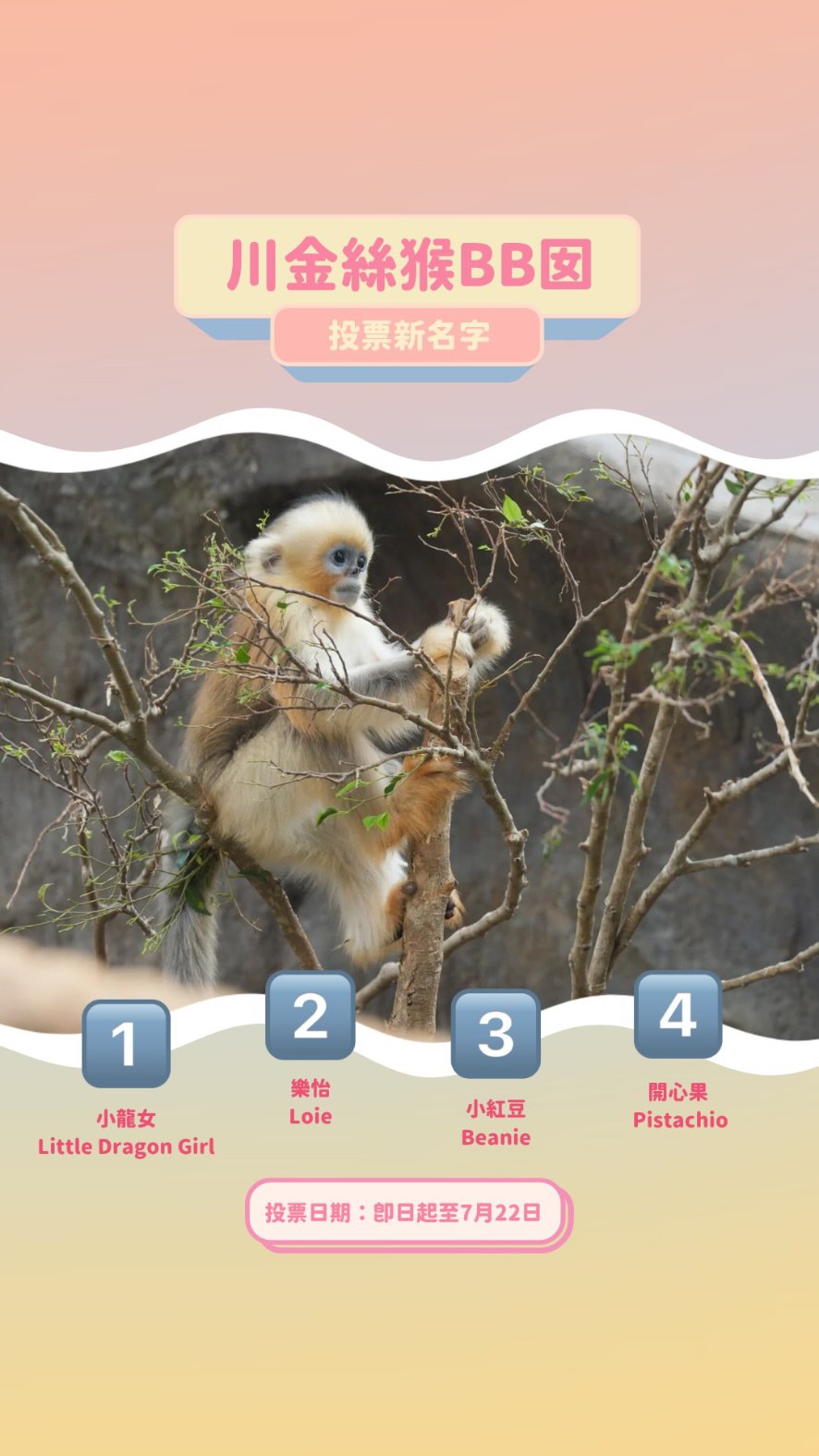
The baby monkey in focus during this article is nearly six months old. This delightful infant, born on January 16 of this year, continues to capture the attention of both caretakers and visitors alike. Her parents, affectionately named “Qi Qi” and “Le Le,” arrived in Hong Kong from Chengdu Zoo in 2012 and 2015, respectively. This breeding initiative serves to maintain genetic diversity, combating the threats posed by habitat loss and hunting.
Community involvement appears critical in nurturing a sense of belonging and responsibility towards wildlife. With the caretakers spending six months bonding and caring for the baby monkey, they have proposed four names, inviting the public to participate in the naming process. Through social media channels, including Facebook and Instagram, fans of the zoo can cast their votes. This engagement ensures that the community feels connected to the animal and its journey.
The proposed names—Xiao Long Nü, Le Yi, Xiao Hong Dou, and Kai Xin Guo—each carry meaningful associations. Xiao Long Nü, or “Little Dragon Girl,” signifies strength and vitality, reflecting the baby’s birth year in the Chinese zodiac. Le Yi, meaning joy and comfort, emphasizes the hope for her happy upbringing. Xiao Hong Dou, or “Little Red Bean,” is a nod to her being the only female among her siblings, thus standing out beautifully against her brothers. Lastly, Kai Xin Guo, or “Pistachio,” signifies the joy she brings to everyone around her. Each name evokes a sense of community spirit and pride.
Zoos, while often viewed simply as places of entertainment, have a much broader function in the realm of wildlife preservation. They provide critical habitats for animal species in decline and undertake vital research on reproduction and genetic diversity. In the case of the Sichuan golden snub-nosed monkeys, a successful breeding program can help offset the challenges posed by reduced genetic pools caused by urbanization and environmental changes.
As the management continues to oversee the development of this delightful baby monkey, they remain steadfast in their commitment to conservation and education. By initiating programs that engage the public via naming contests, Zoos foster a sense of empowerment and responsibility in citizens. Each vote symbolizes a shared commitment to wildlife conservation, an effort that nurtures the natural environments that many species depend on.
The broader implications for the Sichuan golden snub-nosed monkeys hinge on the success of breeding programs. As the population grows, further genetic research will prove invaluable in creating robust populations. The goals for the future include not just increasing numbers in captivity, but also restoring the habitats from which they have been displaced. Conservation strategies must be multifaceted, addressing habitat preservation and community education, thereby paving the way for sustainable populations long term.
In conclusion, the journey of the Sichuan golden snub-nosed monkey baby girl continues as she grows and becomes a symbol of hope in conservation efforts. Her naming is not simply about choosing a name; it represents a community united in the care and nurturing of our planet’s precious wildlife. Each individual has a role to play in conservation, from raising awareness to endorsing sustainable practices. The Sichuan golden snub-nosed monkey has become more than a species at risk; it represents the interconnection of all life on Earth and the shared responsibility we hold for its protection.
*****
Source Description
【
🐵川金絲猴BB囡就快半歲啦💕!係時候要為佢改名啦!護理團隊經過接近半年時間同BB相處之後,提出咗四個名字建議,大家快啲投出保貴嘅一票✅,為佢揀一個最有代表性嘅名字啦🥰!
🎞️想當年,川金絲猴BB囡嘅爸爸媽媽「其其」「樂樂」都係嚟自成都動物園,並喺2012年同2015年分別抵達香港,為公園同成都動物園展開繁殖計劃🐵,以保持物種基因多樣性👌🏻。由2017年4月17日第一胎BB「樂其」順利誕生🤰🏻,到今年1月16日誕生第四胎,川金絲猴喺香港嘅繁衍象徵住公園同成都動物園之間合作嘅新里程碑。👏🏻
🥰唔知大家仲記唔記得「樂奇」、「小花生」同「小黃豆」呢?✈️佢哋已經移居咗去成都動物園,歡迎大家去探下佢哋啊!☺️
🔥投票日期:即日起至7月22日🔥
1️⃣小龍女
龍年出世嘅雌性幼猴,亦寓意龍精虎猛。
2️⃣樂怡
樂怡二字都有喜悦、愉快、和悦、舒適嘅意思,希望金絲猴BB生活每天都快快樂樂、舒適同愉快。
3️⃣小紅豆
作為川金絲猴家庭唯一雌性幼猴,B囡係「萬綠叢中一點紅」,而且B囡有兩位哥哥名字都係豆類,可以襯返哥哥個名。
4️⃣開心果
寓意B囡出生為大家帶來無限嘅歡樂同喜悅,就好似大家嘅「開心果」一樣。
大家只要選擇你哋鍾意嘅名就得啦!🤗我哋會參考Facebook同Instagram聯同嘅投票結果,喺下一條川金絲猴BB成長日記中公布BB囡嘅名字📣!
[ Let’s vote for a new name for our Sichuan golden snub-nosed monkey baby girl! 🎉
🐵 The Sichuan golden snub-nosed monkey baby girl is almost six months old! 💕 It’s time to give her a name! After spending nearly six months with the baby, the caretakers have suggested four names. Let‘s vote ✅ to choose the most representative name! 🥰
🎞️ Did you know? The baby’s parents, ’Qi Qi‘ and ’Le Le‘, came from Chengdu Zoo and arrived in Hong Kong in 2012 and 2015, respectively, to start a breeding program to maintain genetic diversity. 🐵 The first baby, ’Lokie‘, was born on April 17, 2017, and this year, the fourth baby was born on January 16—marking a new milestone in the cooperation between the park and Chengdu Zoo. 👏🏻
🥰 Do you remember ’Lokie‘, ’Little Peanut‘, and ’Yellow Bean‘? ✈️ They have moved to Chengdu Zoo, and everyone is welcome to visit them! ☺️
🔥 Voting dates: Now until July 22 🔥
