
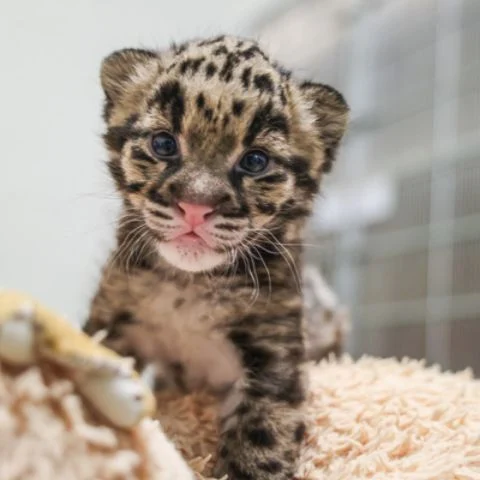
Summary of Nashville Zoo Celebrates 50th Clouded Leopard Birth:
Nashville Zoo has welcomed a female clouded leopard cub, born on March 18, marking the 50th clouded leopard born there since 1991. The cub weighs just over two pounds and is the first of its kind born at an AZA-accredited zoo this year. Hand-rearing was chosen for the cub’s survival, which aligns with conservation efforts due to the species’ decline. The zoo’s director emphasizes the importance of this birth for both conservation and raising awareness about clouded leopards, which are considered vulnerable due to habitat loss, poaching, and the illegal pet trade. Nashville Zoo is also contributing to a collaborative breeding program and currently houses 17 clouded leopards, promoting population growth of this elusive species.
- Nashville Zoo celebrates the birth of its 50th clouded leopard cub, highlighting its conservation efforts.
- The birth of the cub represents a significant milestone for the zoo’s clouded leopard breeding program.
- Clouded leopards are classified as vulnerable, with threats from habitat loss and poaching.
- The zoo utilises hand-rearing methods to enhance the survival and breeding success of clouded leopards.
- Collaborative efforts within the Association of Zoos and Aquariums strengthen the species’ conservation status.
Nashville Zoo recently welcomed a significant addition to its family—a female clouded leopard cub born on March 18, weighing over two pounds. This cub marks the 50th clouded leopard born at the zoo since its first successful breeding in 1991. The accomplishment is not just a celebration of new life; it is a testament to over three decades of dedicated conservation efforts. The cub is notable for being the first clouded leopard born this year at an Association of Zoos and Aquariums (AZA)-accredited zoo, stressing the importance of Nashville Zoo’s role in the broader context of wildlife conservation.
This latest cub is the fourth offspring of Jewels and Bruce, two clouded leopards housed at the zoo. Given the clouded leopard population is rapidly declining, each cub’s survival is imperative. Thus, in accordance with the AZA Species Survival Plan recommendations, the zoo has opted for hand-rearing the cub. Visitors can observe this new addition by stopping by the HCA Healthcare Veterinary Center and peering through the nursery windows.
Heather Schwartz, the Director of Veterinary Services at Nashville Zoo, remarked, “A successful birth of this rare species is a huge accomplishment in our conservation efforts.” The statement emphasizes the zoo’s contribution to clouded leopard population growth as well as its aim to heighten awareness regarding this species and its endangered status.
Last year, Nashville Zoo experienced further successes with the birth of another cub and the acquisition of three additional clouded leopards, named Gemma, Meru, Joker, and Quinn. These animals are on view for the public and are currently residing in the zoo’s Critter Encounter and Bamboo Forest areas. As part of the AZA’s Species Survival Plan program, these cubs have been paired to optimize the chances of successful reproduction as they mature together.
Nashville Zoo is home to 17 out of the 64 clouded leopards managed by the AZA, making it a significant contributor to the conservation of this species. One pivotal factor behind the zoo’s successful breeding program is the hand-rearing technique used for cubs. This method helps to prevent parental neglect or predation—issues that can occur in clouded leopard delivery in captivity. The reduced stress levels that come from hand-rearing facilitate acclimatization to exhibit environments, which is crucial since clouded leopards are inherently cautious animals.
Hand-raising cubs at an early age also benefits future breeding efforts. By fostering social interactions and reducing potential aggression, the likelihood of successful breeding events improves significantly. This hands-on approach is a crucial aspect of Nashville Zoo’s ongoing commitment to species conservation.
Clouded leopards, scientifically known as Neofelis nebulosa, are native to the tropical lowlands of Southeast Asia. They inhabit various countries, including Nepal and Bangladesh. Classified as vulnerable to extinction by the International Union for the Conservation of Nature (IUCN), clouded leopards face significant threats primarily from habitat destruction, poaching, and the illegal pet trade. Precise population figures remain elusive, as researchers suggest there are roughly 10,000 individuals left in the wild. The clouded leopard’s elusive nature complicates conservationists’ efforts to monitor populations accurately. A decline in animal sightings and fewer pelts found in illegal markets serve as unsettling indicators of this species’ precarious status.
In response to these challenges, Nashville Zoo actively participates in the Clouded Leopard Species Survival Plan. This program aims to protect the species through coordinated breeding efforts, assisted reproduction, advanced veterinary care, and specialized husbandry techniques tailored explicitly to the clouded leopard’s needs.
Another critical aspect of Nashville Zoo’s conservation program is its educational outreach. By engaging the public in awareness initiatives, the zoo aims to communicate the urgency surrounding the conservation of the clouded leopard. Visitors can view the new cub, as well as the other clouded leopards, while learning about the threats they face. Educational programs encompass species information, conservation strategies, and actions that individuals can take to protect wildlife. This educational focus is fundamental to increasing public engagement and participation in conservation efforts.
In addition, Nashville Zoo’s breeding program operates within a larger collaborative network. The Arizona-based organization facilitates partnerships among member institutions, which allows for the sharing of genetic material and the pooling of resources. This cooperative approach fosters a more robust breeding strategy and allows the program to capitalize on the strengths and expertise of various zoos.
The results of this collaboration are manifold. By ensuring genetic diversity, the overall health and viability of clouded leopard populations in captivity can be enhanced. This strategic movement toward collaboration supports the long-term survival of the species.
Moreover, the zoo’s veterinary team employs state-of-the-art techniques for reproductive health and cub raising. Expertise in veterinary medicine is crucial for monitoring health issues that could arise among pregnant females and their offspring. With the intricate challenges clouded leopards present due to their natural behavior and health requirements, a specialized veterinary approach is essential.
As more individuals learn about the importance of clouded leopards, knowledge can foster advocacy. By spotlighting endangered species like the clouded leopard, Nashville Zoo aims to cultivate an environment where community members can act as stewards for wildlife. They take part in initiatives, and campaigns can enhance local efforts to conserve habitats.
The integration of conservation efforts, education, and collaboration at Nashville Zoo demonstrates a comprehensive approach to species management. The recent birth of the 50th clouded leopard cub epitomizes the zoo’s commitment to building a sustainable future for a species that would otherwise be vanishing from our planet.
With ongoing threats to wildlife around the globe, zoos play a pivotal role in conservation. Nashville Zoo exemplifies the potential for modern zoos to serve as vital sanctuaries for endangered species. Through breeding, veterinary care, and public education, they contribute significantly to reversing the trends of decline.
As society grapples with environmental issues, the continued success of clouded leopard births at Nashville Zoo becomes a beacon of hope. It emphasizes the importance of organized efforts in wildlife conservation and illustrates how urban zoos can serve as critical hubs for education, breeding, and research. This ensures that endangered species can survive and thrive in ways that benefit both the animals and future generations.
With the arrival of this first clouded leopard cub of the year, Nashville Zoo not only adds another vital member to its breeding program but also enhances its status as a leader in conservation efforts. The community’s involvement and the zoo’s innovative practices converge to create a sustainable path forward for the clouded leopard and other vulnerable species facing existential threats. The ongoing narrative of clouded leopards at Nashville Zoo will undoubtedly resonate for years to come, reinforcing its legacy as a significant player in global wildlife conservation.
