
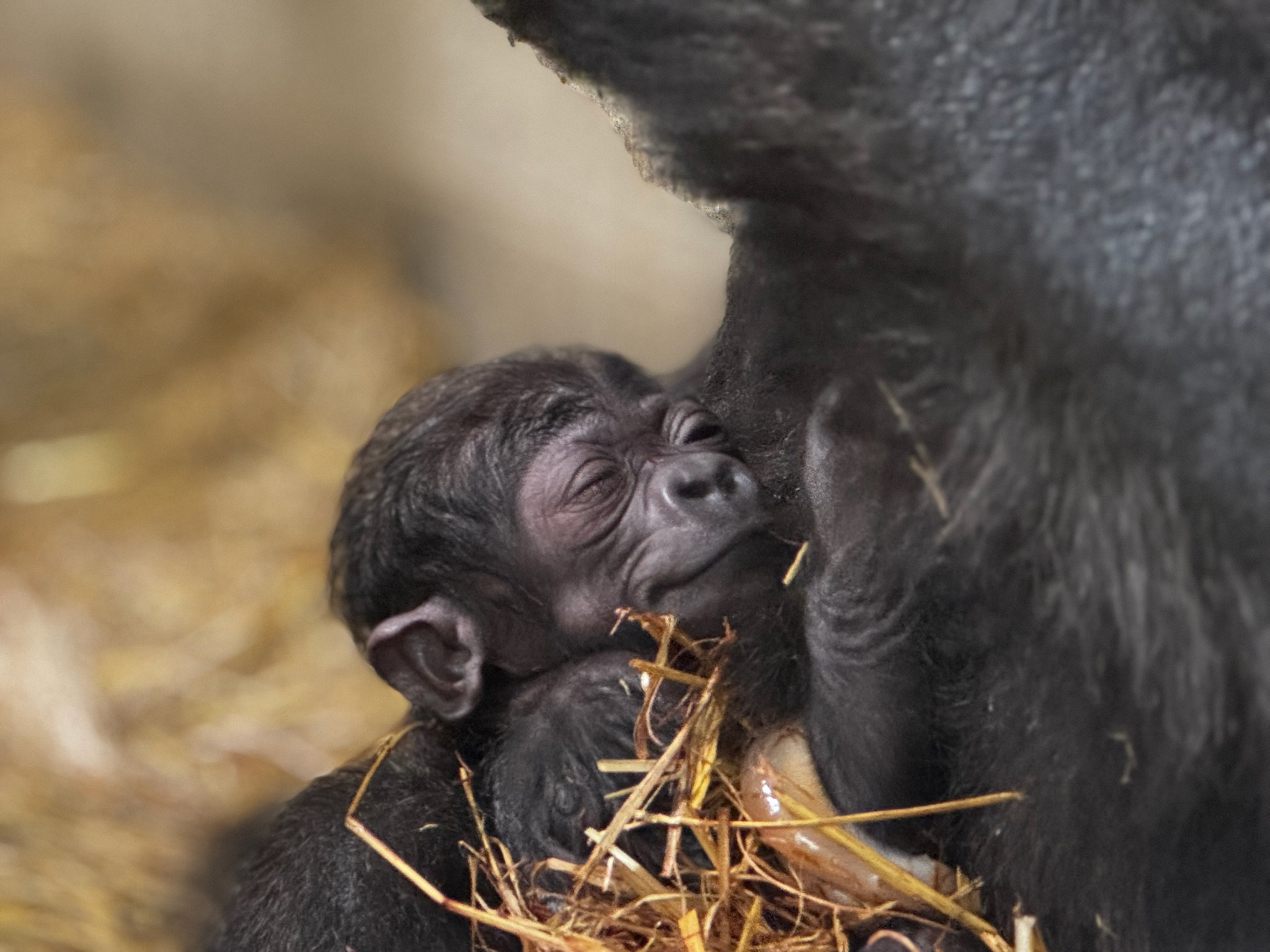
Summary of There’s a New Baby Boy in Cincinnati Zoo’s Gorilla World!:
The content highlights the recent birth of a baby gorilla at the Cincinnati Zoo, with 23-year-old silverback Mbeli being the first-time father, who will protect the family while remaining mostly hands-off. Mom Gladys and the baby are bonding privately, and the zoo is inviting name suggestions from the public through social media.
There are about 765 gorillas in zoos globally, with Western lowland gorillas critically endangered in the wild. The Cincinnati Zoo supports conservation efforts, including a project in the Republic of Congo aimed at facilitating coexistence between gorillas and local communities. While Gladys and her baby are in private, other gorillas are visible to visitors daily from 10 a.m. to 5 p.m., with members able to enter at 9 a.m.
- Cincinnati Zoo welcomes a new baby boy gorilla, enhancing its Gorilla World exhibit.
- The baby’s father, Mbeli, is a 23-year-old silverback and a first-time parent, taking on a protective role.
- Gorilla conservation is essential, highlighting the critically endangered status of western lowland gorillas.
- Community engagement and conservation efforts in the Republic of Congo improve the coexistence of gorillas and humans.
- Public involvement is encouraged in naming the new baby, linking visitors to ongoing conservation initiatives.
The birth of a new baby boy gorilla at the Cincinnati Zoo has sparked excitement among visitors and conservationists alike. This new addition to the Gorilla World exhibit symbolizes hope for the future of the western lowland gorilla species, as it faces numerous challenges in the wild. As we explore this significant event, we will delve into the biological, social, and conservation-related aspects surrounding this new life.
The father of the baby, Mbeli, is a 23-year-old silverback gorilla, marking his first experience as a parent. Though he is relatively young, Mbeli has embraced his role within the family group in a responsible manner. Silverback gorillas typically assume a protective role, safeguarding their family from outside threats. In this instance, Mbeli will remain somewhat aloof but vigilant. While the bond between a silverback and his offspring may not be as hands-on as that of a human, the presence of the father is crucial. His authority serves to maintain stability within the social hierarchy of the group, ensuring Gladys and her baby are safe and that their interactions with other gorillas are manageable and secure.
The rearing of young gorillas is predominantly the responsibility of the mothers, and this case is no different. Gladys, the baby’s mother, is currently bonding with her newborn in a behind-the-scenes area, away from the public gaze. This approach allows the two to establish an intimate connection without the distractions and pressures often presented in more public settings. Typical bonding processes in gorillas involve physical closeness, vocalizations, and grooming behaviors, which are vital for developing a strong emotional attachment. The public is invited to suggest names for the baby gorilla through the zoo’s social media platforms. Engaging the community in naming contributes to a greater sense of ownership and connection to the zoo and its inhabitants.
According to conservation databases, there are approximately 765 gorillas in zoos worldwide. Of these, about 360 are managed under the Gorilla Species Survival Plan (SSP). The SSP aims to maintain genetic diversity and ensure a healthy population of gorillas in captivity. In contrast, wild populations of western lowland gorillas are critically endangered, with estimates suggesting fewer than 175,000 individuals remain in their natural habitats. Factors contributing to their declining numbers include habitat loss, poaching, and disease. The Cincinnati Zoo recognizes the urgency of these issues and actively supports conservation efforts to protect these magnificent creatures.
Wild gorilla populations are under threat primarily from human activities. Deforestation for agriculture, illegal logging, and mining operations have decimated their natural habitats. Along with habitat degradation, hunting for bushmeat has posed a severe risk to gorilla populations. Therefore, understanding and addressing the challenges these animals face is vital. The zoo has partnered with the Nouabalé-Ndoki Project in the Republic of Congo, which plays a significant role in gorilla conservation. This initiative includes the Mbeli Bai Study, one of the longest-running field studies involving wild western lowland gorillas.
The Mbeli Bai Study contributes to our understanding of gorilla social structures, behavior, and ecological needs. Through extensive research, local education programs, and health interventions, the study fosters a balanced coexistence between local communities and gorillas. Education is a crucial component in reengineering perceptions of wildlife, especially in regions where poaching and habitat destruction are prevalent. Additionally, the Cincinnati Zoo supports Congolese gorilla researcher Prospere Teberd, who is working as a Hoffman Coexistence Impact Fellow. His role focuses on developing ecotourism programs that benefit both the local communities and gorilla populations.
Ecotourism can provide financial incentives for local communities to protect their surrounding wildlife rather than exploit it for short-term gains. By promoting sustainable tourism practices, communities can gain economic benefits while fostering an appreciation for the natural world. Community-centric approaches are key to successful conservation efforts, creating a sense of responsibility among the local population.
While Gladys and her baby thrive away from the public eye, visitors can appreciate other gorillas during regular zoo hours. The Cincinnati Zoo operates from 10 a.m. to 5 p.m. daily, giving attendees the chance to observe the social behaviors and interactions of adult gorillas. Members of the zoo receive early entry privileges, which allows them to arrive at 9 a.m. and engage with the variety of wildlife the zoo showcases. Observing gorillas in their living quarters aids in understanding their behaviors and social dynamics.
Gorillas demonstrate fascinating social structures. They live in groups led by a silverback, made up of several females and their offspring. Each member of the group plays a specific role, contributing to its stability and cohesion. For instance, younger gorillas often engage in play and learning activities that serve to socialize and prepare them for adult roles. The social fabric of a gorilla troop is intricate; adult females and juveniles typically engage in nurturing interactions, enriching the upbringing of new offspring.
Another essential aspect of gorilla care is their diet, which consists mainly of plant material such as leaves, fruits, and flowers. The goal of maintaining a proper diet is to replicate their natural foraging behavior in the wild. Zoos employ nutritionists familiar with the dietary needs of these animals, ensuring they receive a balanced mix of nutrients essential for their health, growth, and longevity.
In zoos, the welfare of the animals is paramount. Staff members undergo extensive training to learn about the animals they care for and to implement individualized care that reflects their specific needs. Animal care teams observe gorillas’ behavior, social interactions, and health regularly. This vigilance facilitates early identification of any health concerns, allowing for prompt veterinary intervention when necessary.
Gorillas possess cognitive abilities comparable to those of humans, enabling them to perform complex tasks and understand their environment in various ways. Studies have shown that gorillas can use tools, solve problems, and even communicate using sign language in some instances. These intellectual capabilities make them fascinating subjects for ongoing research, ultimately guiding conservation strategies. Additionally, studies on their social interactions contribute invaluable insights into their emotional lives.
The Cincinnati Zoo plays a critical role in raising awareness about the challenges facing western lowland gorillas. By highlighting the birth of the new baby boy and involving the public in the naming process, the zoo fosters a connection between visitors and wildlife. Such efforts serve to instill a sense of stewardship and encourage advocacy for conservation initiatives both locally and globally.
In summary, the arrival of a new baby boy gorilla in the Cincinnati Zoo’s Gorilla World is more than just an event; it represents a hopeful glimpse into the future of a species grappling with survival in an increasingly human-dominated world. With effective management, community engagement, and dedicated research, there is potential for improved outcomes for gorilla populations both in captivity and the wild. The zoo’s multifaceted approach not only enhances the visitor experience but also plays a crucial role in a broader conservation narrative essential for the survival of these magnificent animals.
