
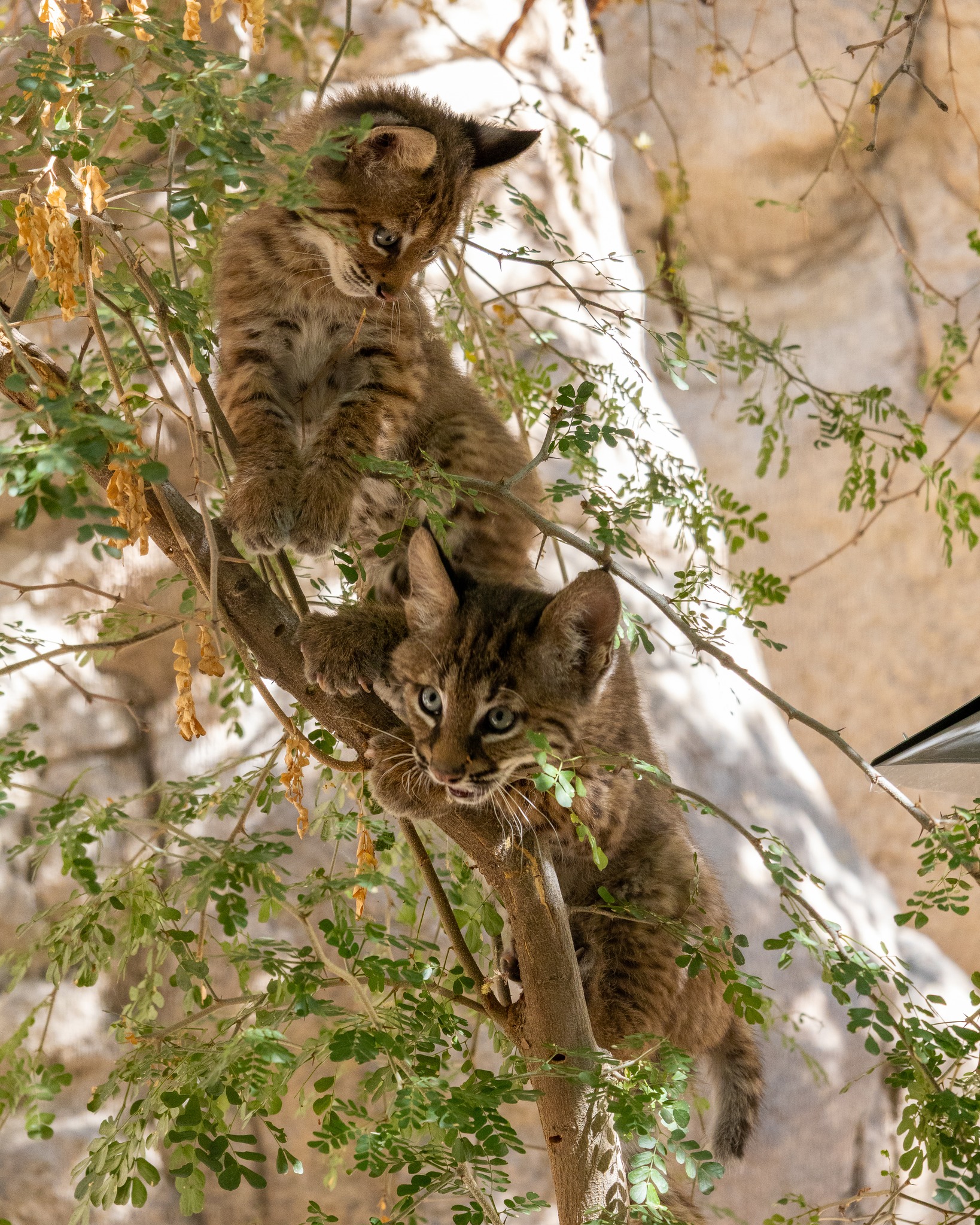
- The story behind the rescue of JoAnn and David, the bobcat siblings.
- The role of The Living Desert in wildlife conservation.
- The importance of animal ambassador programs.
- Bobcat behavior and ecological significance.
- The continued efforts in wildlife rehabilitation and education.
The recent heartwarming story of JoAnn and David, two bobcat siblings rescued from an uncertain fate, showcases the power of community and conservation efforts in wildlife protection. Found abandoned in a cardboard box on a driveway in Oregon, these kittens were only four weeks old and had no mother nearby to care for them. Their chances of survival in the wild were slim, but a collaborative response from the Oregon Department of Fish and Wildlife and The Living Desert opened a new chapter for these adorable animals.
On May 1, two Animal Care Curators from The Living Desert made the journey to Oregon to safely bring the siblings back to their new home. The urgency of the situation demanded swift action; without intervention, the bobcats could have faced dire consequences. This rescue reflects the crucial role of animal care programs and the proactive measures often required to aid wildlife in distress.
Upon arrival, JoAnn and David were placed in the care of dedicated staff members at The Living Desert. Over the next several weeks, they underwent a rigorous rehabilitation process including bottle feeding and constant monitoring. Caretakers worked diligently to nurture the kittens, ensuring their growth and health during this vulnerable stage of life. The commitment shown by the team illustrates how wildlife facilities like The Living Desert can contribute significantly to animal welfare and species preservation.
As these bobcats transitioned to life in Eagle Canyon, they began to exhibit their natural behaviors, showcasing their agility and playful spirit. At just ten weeks of age, their instincts have emerged, allowing them to explore their environment, climb structures, and engage in activities that mimic hunting, such as pouncing and sprinting. This playful behavior is characteristic of young bobcats and is crucial for their development, as it helps them learn essential skills needed for survival.
The decision to keep JoAnn and David at The Living Desert rather than attempting to release them into the wild is a testament to responsible wildlife management. Because of their early experience without a mother, they lack the necessary skills to thrive independently. The Living Desert has embraced these bobcats as lifelong residents and ambassadors for their species. They will play an essential role in educating visitors about the ecological importance of bobcats and the need for wildlife conservation efforts.
Animal ambassador programs, like that at The Living Desert, serve multiple essential functions. Firstly, they raise public awareness about the challenges that different species face in their natural habitats. By bringing these kittens into a controlled yet engaging environment, visitors can witness firsthand the behaviors of bobcats, fostering a deeper understanding and appreciation for wildlife. Such experiences can ignite a passion for conservation, encouraging individuals to support preservation initiatives.
Additionally, educational programs featuring animal ambassadors help highlight the interdependence of wildlife and ecosystem health. Bobcats, as apex predators, play a significant role in maintaining the balance of their habitats. By controlling populations of small mammals, they contribute to the overall health of their ecosystems. Understanding these relationships is fundamental in fostering a commitment to wildlife conservation.
Bobcats, known for their adaptability and stealth, thrive in a variety of habitats, including forests, deserts, and suburban areas. Their unique physical characteristics, such as tufted ears and short tails, not only enhance their hunting capabilities but also serve as identifiers for the species. Weighing between 20 to 30 pounds, they are generally solitary creatures, relying on stealth and patience to ambush prey.
The ecological significance of bobcats extends beyond their hunting behaviors. They contribute to the control of rodent populations, which in turn affects the overall health of plant communities. An imbalance in citizen ecosystems can lead to challenges such as overgrazing and the proliferation of certain plant species at the expense of others. Therefore, the bobcat’s role as a predator is critical to maintaining biodiversity.
Efforts like those exhibited at The Living Desert do not just stop at the care of individual animals. They are part of broader wildlife rehabilitation initiatives that focus on protecting various species and restoring their habitats. Rehabilitation facilities across the country play a critical role in educating the public, providing resources for wildlife conservation, and actively participating in legislative efforts to protect wildlife and their natural environments.
Through teaching, rehabilitation, and responsible animal care, organizations contribute to a culture of conservation. The Living Desert, specifically, emphasizes this mission by integrating conservation principles into every aspect of their operations. Their commitment to wildlife protection and education serves as a model for other facilities.
JoAnn and David symbolize hope and resilience in a world where wildlife faces significant pressures from habitat loss, climate change, and human encroachment. Their story illustrates the importance of community involvement in wildlife protection. The dedication of the Oregon Department of Fish and Wildlife and The Living Desert showcases how swift action can save lives and foster positive outcomes for vulnerable species.
Moreover, the heartfelt gesture of naming the kittens after beloved supporters highlights the critical role of community in sustaining wildlife initiatives. Names inspired by individuals who cherished nature emphasize the connection between humans and wildlife, reinforcing the sentiment that conservation is a collective responsibility.
As visitors come to The Living Desert to meet JoAnn and David, it serves as a reminder that every small action counts. Awareness and education can lead to profound changes in how society views and interacts with wildlife. These interactions can inspire future conservationists and instill a sense of responsibility toward protecting natural habitats.
The Living Desert provides a unique opportunity for people to connect with wildlife in a meaningful way. By highlighting the story of these bobcat siblings, the facility not only promotes understanding but also invites visitors to partake in the ongoing conversation about wildlife conservation. JoAnn and David will serve as ambassadors, encouraging everyone to think critically about their impact on the environment and the animals that inhabit it.
Wildlife conservation is a dynamic field that requires dedicated efforts from individuals, organizations, and communities. The story of JoAnn and David underscores a critical message: when threatened wildlife is provided with a safe haven and supportive community, they can thrive even in captivity. By championing education, rehabilitation, and responsible animal care, facilities like The Living Desert illuminate a path forward in conservation.
Offering a window into the lives of these bobcats not only enhances the visitor experience but also plays a part in the greater narrative of wildlife preservation. JoAnn and David’s journey is a testament to the importance of compassionate action in the face of adversity. Through their continued engagement and nurturing at The Living Desert, they will help foster an appreciation for all wildlife and inspire audiences to join in the efforts to protect their habitats and ancestry.
Every visitor contributes to a larger movement that champions wildlife rehabilitation and education. By choosing to support and engage with facilities dedicated to animal care, individuals play an active role in preserving the rich biodiversity of our planet. It is through initiatives focused on awareness, advocacy, and species preservation that we can create a future where wildlife like JoAnn and David can thrive again in their natural environments.
In this interconnected world, the stories of rescued animals become a reflection of our collective commitment to the environment. The success of species conservation hinges on continued education and community involvement. With ongoing support and awareness, we can build a future where all species, including bobcats, can flourish in harmony with humans. JoAnn and David are just the beginning of that journey, set to inspire generations to come.
*****
Source Description
Paws what you’re doing! There’s an adorable new duo at The Living Desert. 🐱🧡🐱
Two months ago, these bobcat siblings were found abandoned in a cardboard box on a driveway in Oregon. At only 4 weeks old and with no mother in sight, they had no chance of survival on their own, and their future looked uncertain — but their story was just beginning.
A new path forward was made possible thanks to the quick action of the Oregon Department of Fish and Wildlife and The Living Desert. On May 1, two of our dedicated Animal Care Curators traveled to Oregon and safely drove them back to their new home.
Since retrieving the siblings, our expert team has bottle-fed, monitored, and nurtured every step of the way to ensure their health and wellbeing. Because of the circumstances in which they were found, these bobcats can’t return to the wild. Instead, they’ll spend their lives here under our care — growing, playing, and serving as ambassadors for their species.
Now at 10 weeks of age, the kittens are officially in Eagle Canyon, and you won’t want to miss them! They’ve started exploring their permanent habitat, showing off their best climbing moves, pouncing skills, and non-stop kitten zoomies. 🐾
Thanks to a heartfelt gesture from longtime Zoo supporters, these kittens were given names that honor the memory of two cherished parents whose legacy of love lives on here at the Zoo.
Welcome home, JoAnn and David. 💛
