
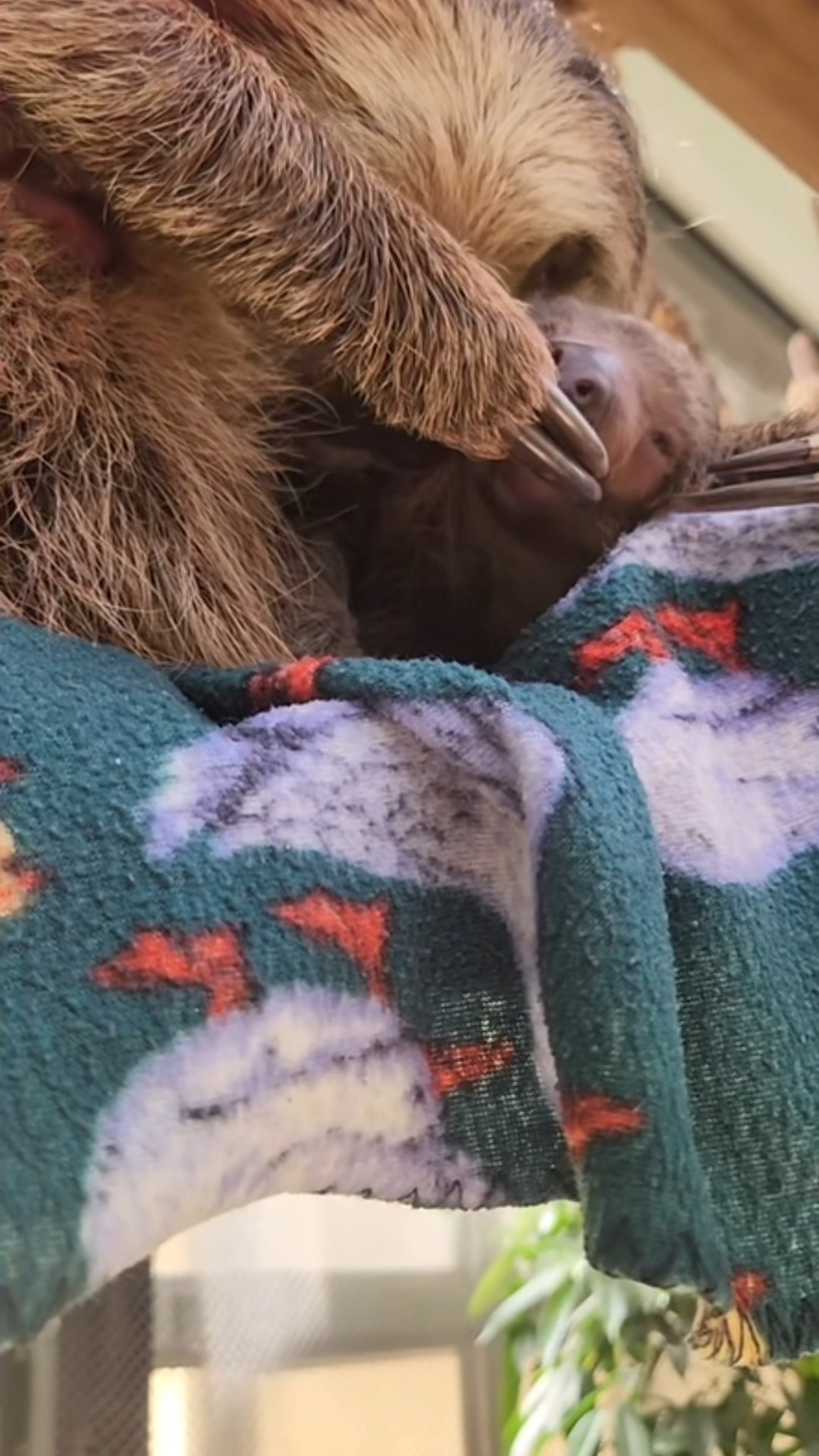
- Introduction to Beanie, the two-toed sloth, and her significance at Harmony Hideaway.
- The process and importance of animal relocation within zoos.
- Details about Beanie’s pregnancy and birthing process.
- The role of zoo veterinary staff during and after the birth.
- Conservation efforts related to two-toed sloths and the Species Survival Plan.
Beanie, the two-toed sloth, checked into our Harmony Hideaway exhibit this past Tuesday, and she gave birth shortly thereafter, creating a wave of enthusiasm among our veterinary and animal care staff. As a first-time mother, Beanie represents not only a captivating addition to our zoo but also highlights the vital work involved in wildlife conservation and species preservation.
The relocation of animals between facilities is a technique grounded in significant planning and risk assessment. Beanie was recommended for relocation from the Roger Williams Park Zoo based on a Species Survival Plan. This coordinated effort aims to manage captive populations, fostering genetic diversity and ensuring the survival of species that may face threats in the wild. During her time at Roger Williams, Beanie became pregnant, and officials deemed it safest to transfer her midway through her pregnancy. Such timing allows her enough space to acclimate to her new environment while still being far along enough in her gestation to minimize stress on both mother and baby.
As a two-toed sloth, Beanie is part of a species known for its slow metabolism and unique adaptations for life in the trees. These remarkable creatures are native to Central and South America, spending most of their lives suspended upside down from foliage. Their slow movements, coupled with a diet primarily of leaves, allow them to conserve energy. Unlike their three-toed counterparts, two-toed sloths have a specialized diet that includes a variety of leaves, fruits, and flowers, which provide essential nutrients for both mothers and their young.
Upon arrival at Harmony Hideaway, Beanie underwent a thorough examination by our veterinary team. Regular monitoring was crucial throughout her pregnancy to ensure the wellbeing of both her and the fetus. During her gestation, which lasts about 11 months, caretakers provided a low-stress environment with abundant foliage and climbing structures that mimic the sloth’s natural habitat. This careful observation and support system worked to eliminate potential complications during and post-delivery.
The birthing process for sloths can be delicate. Beanie’s labor, though private, was closely observed by our trained staff from a distance to ensure she remained comfortable. The moment the baby appeared was described as breathtaking, echoing the joy that comes with the arrival of new life in conservation settings. Following birth, bonding time is crucial. Therefore, we have temporarily closed the vestibule and walkthrough area of Harmony Hideaway. Visitors can still enjoy glimpses of mother and child through a specially positioned LEGO sloth in our main path. This approach maintains the necessary privacy for Beanie while allowing our community to connect with this beautiful event.
The role of zoo veterinarians in such situations extends beyond immediate care. They are responsible for ongoing assessments that include monitoring the newborn’s health and ensuring that Beanie is providing proper nutrition. In the days following birth, staff will evaluate the baby’s development, focusing on factors like weight gain, feeding patterns, and overall engagement with Beanie. The zoo has protocols in place for postpartum care that reflect the latest research in animal welfare and behavior.
The two-toed sloth species is currently categorized as “Least Concern” on the International Union for Conservation of Nature (IUCN) Red List. However, deforestation and habitat loss pose significant risks to their populations. Conservation efforts involving the Species Survival Plan are crucial for maintaining genetic diversity and establishing insurance populations that can potentially reintroduce sloths back to their natural habitats in the future. By sharing the story of Beanie and her offspring, we raise awareness about the threats faced by sloths in the wild and inspire action to protect their habitats.
Each birth in a zoo has the potential to galvanize interest in animal conservation. As members of the public learn about Beanie and her baby, they also become more aware of the broader ecological issues affecting wildlife. Education around two-toed sloths showcases their importance in the ecosystem, such as their role in seed dispersal. As they consume leaves, they unintentionally aid in plant growth and regeneration.
Our commitment to sharing updates about Beanie and her baby is reflective of this philosophy. By following our channels, patrons can stay informed about the development of the newborn, routine visits, and activities surrounding both mother and child. Images and videos will serve to deepen connections between guests and our wildlife, fostering a supportive community invested in animal welfare and conservation.
The scientific knowledge surrounding two-toed sloths continues to evolve. Ongoing research examines their physiology, behavior, and adaptations that allow them to thrive within their environments. Learning about their slow metabolism highlights the delicate balance needed for survival in a habitat where resources can be limited.
In conclusion, the birth of Beanie’s baby represents not just a moment of joy for our team and visitors but serves as a reminder of the broader responsibilities zoos have toward wildlife conservation, animal welfare, and education. This experience emphasizes the significance of supporting species survival plans that help protect not only sloths but many other animals facing similar threats. As we watch Beanie nurture her new life, we celebrate both the beauty of wildlife and the roles that dedicated organizations play in preserving it for future generations.
*****
Source Description
A new resident checked into our Harmony Hideaway exhibit on Tuesday. Beanie, the two-toed sloth, gave birth, much to the joy of our veterinary and animal staff members on hand to witness this mini miracle! 🦥
We will be keeping Harmony Hideaway’s vestibule and walkthrough portion closed while mother and baby spend critical bonding time together. You may be able to spy them from outside the exhibit from the vantage point of the LEGO sloth located on our main path. Once we’re confident that Beanie and the baby are doing well, we’ll reopen the exhibit.
Beanie became pregnant at her previous facility, the Roger Williams Park Zoo (@rwpzoo), according to a Species Survival Plan recommendation. She was then recommended to come to us midway through her pregnancy, which is generally the safest time for them to move; this gives them plenty of time to acclimate to their new home before delivery. We received Beanie knowing that she was pregnant and have been able to carefully monitor her throughout her pregnancy.
Be sure to follow us for the latest news and images of Beanie’s baby!
