
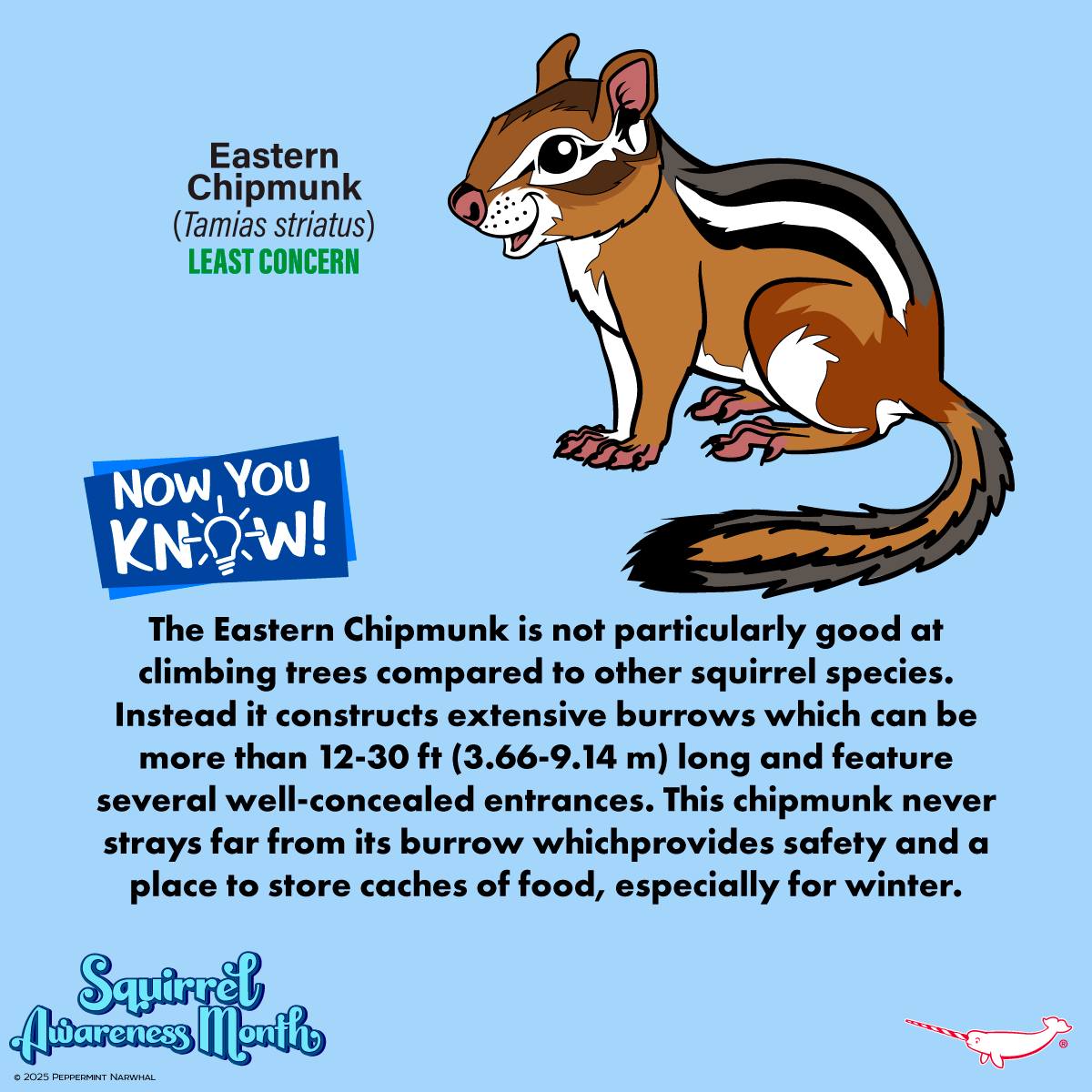
- The Eastern Chipmunk’s Physical Characteristics and Behavior
- Habitat and Burrow Construction
- Diet and Foraging Habits
- Comparisons with Other Squirrel Species
- Role in the Ecosystem and Conservation Efforts
The Eastern Chipmunk (Tamias striatus) is one of the most recognizable small mammals in North America. Characterized by its distinctive stripes and lively nature, it presents a fascinating blend of behaviors and adaptations that allow it to thrive in various environments. One particularly interesting aspect of this species is its limited ability to climb trees compared to other squirrels. Instead, the Eastern Chipmunk has adapted to life primarily on the ground, engaging in behaviors that enhance its survival strategies.
The Eastern Chipmunk exhibits a compact body shape, measuring roughly 8 to 10 inches long, including a short tail. Its fur features a mixture of reddish-brown, gray, and cream, adorned with five distinctive dark stripes running down its back. The coloration aids in camouflage, providing an essential advantage against potential predators. These chipmunks have a high metabolic rate, prompting them to engage in foraging behaviors throughout the day. They are diurnal animals, which means they are most active during daylight hours.
Chipmunks exhibit a series of instinctual behaviors that are critical for their survival. They communicate through various vocalizations, including chips and whistles, and display alert postures when sensing danger. When frightened, they can swiftly dive into their burrows, which they significantly depend on for shelter and safety.
The Eastern Chipmunk is particularly well-known for its extensive burrowing. These underground networks can reach lengths of 12 to 30 feet, featuring multiple entrances that remain well-concealed. The burrows serve multiple purposes: they provide a refuge from predators, regulate temperature, and store food. During the summer and fall months, chipmunks focus intently on gathering and caching food items within their burrows, ensuring they have the necessary resources to survive the winter months when food becomes scarce.
One reason the Eastern Chipmunk spends so much time close to its burrow is its relatively poor climbing ability. While other squirrel species, such as gray squirrels or flying squirrels, are adept at scaling trees, the Eastern Chipmunk prefers to forage on the ground and utilize its extensive burrow system for safety. Its physical adaptations, while distinct, result in a reliance on other survival strategies. This differs from tree-dwelling squirrels, whose ability to climb enables them to escape predators more easily and to find food sources located in higher elevations.
Foraging is a critical aspect of the Eastern Chipmunk’s daily life. Their diet is omnivorous, consisting largely of seeds, nuts, fruits, and occasionally insects. During the late summer and fall, they engage in vigorous foraging activity, during which they will collect and store food items in their burrows. Chipmunks possess cheek pouches that allow them to transport food efficiently. These cheek pouches can expand significantly, enabling chipmunks to carry multiple seeds at once back to their burrows.
The Eastern Chipmunk’s foraging habits also highlight their role in promoting seed dispersal. As they gather food, they often leave behind uneaten seeds, contributing to the growth of new plants. This mutualistic relationship with their environment underscores their significance in forest ecosystems.
In comparison to other squirrels, the Eastern Chipmunk’s behaviors and adaptations are fascinating. While tree squirrels are more mobile in various terrains, chipmunks have found a niche that capitalizes on ground foraging and burrowing. For instance, gray squirrels possess strong climbing abilities and often feed on acorns high up in trees. In contrast, the chipmunk mostly remains on the forest floor, where its striped fur helps it blend into the leaf litter, safeguarding it from predators.
In terms of social behavior, Eastern Chipmunks can be solitary creatures, especially during critical foraging periods. However, during the breeding season, males will exhibit territorial behaviors to attract females. Females will typically give birth to a litter of two to five young in early spring, after a gestation period of about 31 days. The young are weaned after about six weeks and remain in the burrow until they are ready to venture out on their own.
The Eastern Chipmunk plays an important role in the larger ecosystem. As both prey and forager, this small mammal contributes to the food web in important ways. Many predators, including owls, hawks, snakes, and domestic cats, rely on chipmunks as a food source. Meanwhile, chipmunks, through their burrowing and foraging activities, promote soil aeration and nutrient cycling. This activity supports plant growth and contributes to the overall health of forest ecosystems.
Conservation efforts are essential for maintaining healthy populations of Eastern Chipmunks. Habitat destruction, largely driven by human activities such as urban development and deforestation, poses a significant threat to their populations. Protecting natural habitats and ensuring they remain intact is critical for the survival of this species. Additionally, educating local communities about the importance of these animals can yield positive outcomes for their conservation.
Squirrel Awareness Month serves as an ideal opportunity to increase our understanding and appreciation of various squirrel species, including the Eastern Chipmunk. By highlighting their behaviors, ecological importance, and conservation needs, we can promote a greater connection with these fascinating animals. Initiatives focusing on local habitat preservation and the importance of biodiversity are key.
In summary, the Eastern Chipmunk (Tamias striatus) presents a fascinating case study of adaptation and behavioral ecology. Although it is not particularly skilled at climbing trees like other squirrels, its remarkable burrowing capabilities and dietary habits allow it to thrive in its environment. Understanding the role of the Eastern Chipmunk in ecosystems and the need for conservation can lead to more effective efforts to preserve not only this species but also the natural landscapes they inhabit. With continued education and awareness, the future of the Eastern Chipmunk can be secured alongside the diverse ecosystems they occupy.
*****
Source Description
Now You Know! – The Eastern Chipmunk (Tamias striatus) is not particularly good at climbing trees compared to other squirrel species. Instead it constructs extensive burrows which can be more than 12-30 ft (3.66-9.14 m) long and feature several well-concealed entrances. This chipmunk never strays far from its burrow which provides safety and a place to store caches of food, especially for winter.
Happy Squirrel Awareness Month!
Stay connected with us during Squirrel Awareness Month as we spotlight a number of squirrel species from different regions across North America.
If you didn’t know it was Squirrel Awareness Month,
then you need the…
2026 Animal Holiday Calendar – Now Shipping!
Shop
www.peppermintnarwhal.com
Int’l Shoppers visit our Etsy store:
www.etsy.com/shop/PeppermintNarwhal
