
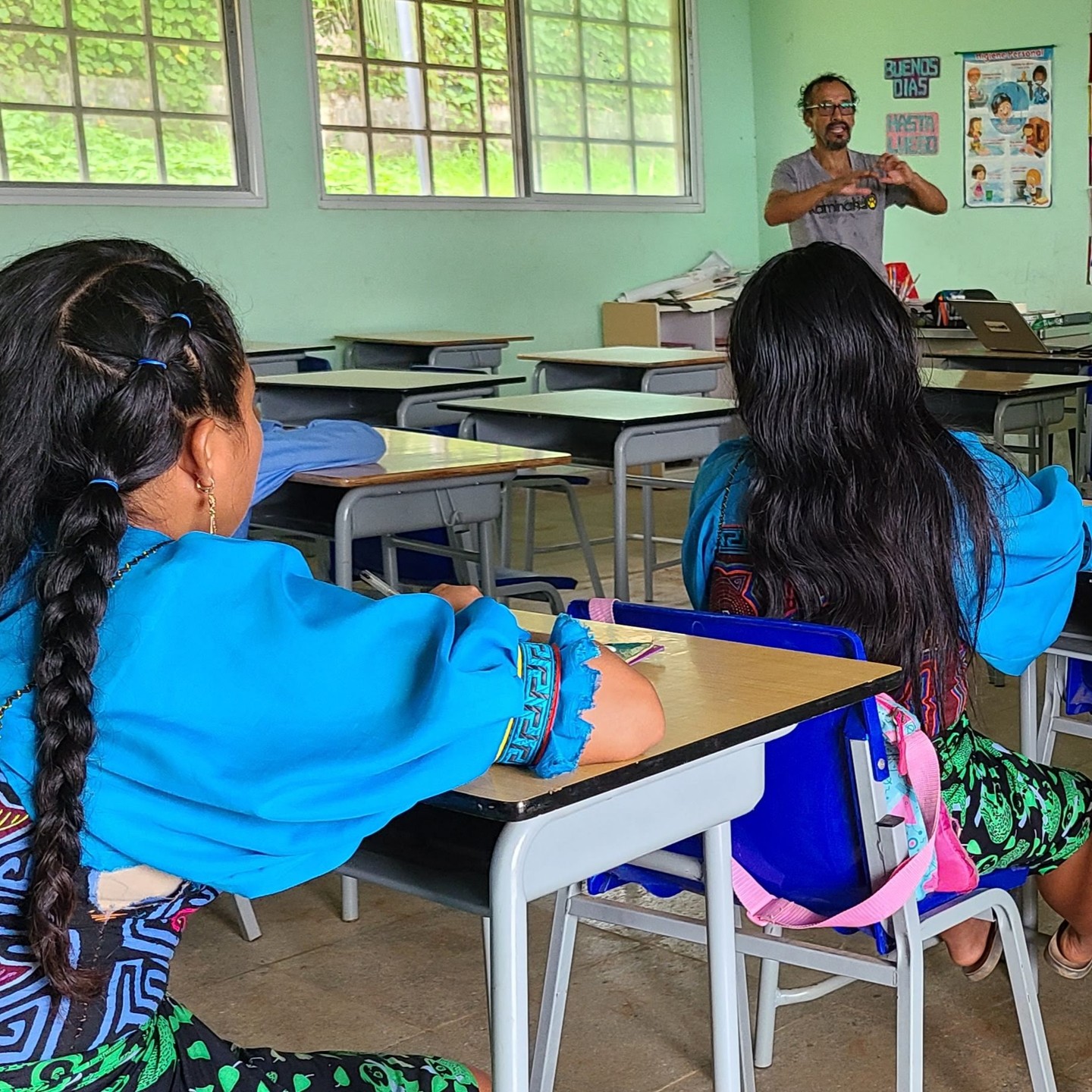
- Our conservation partner Kaminando’s role in environmental education in Panama.
- The significance of jaguars in Panama’s ecosystem and cultural heritage.
- Community outreach initiatives in Wichub Wala.
- The importance of educational materials in fostering conservation awareness.
- How individuals can contribute to jaguar conservation efforts.
Kaminando plays a vital role in the preservation of jaguars and their habitats in Panama. This nonprofit organization is engaged in multifaceted efforts, including research, community outreach, and environmental education. Protecting jaguars involves more than just safeguarding their habitat. It is also about creating a culture of awareness and respect for wildlife within local communities. Through these initiatives, Kaminando aims to build a sustainable future for both the jaguars and the people living alongside them.
The jaguar (Panthera onca) occupies a critical position in Panama’s ecosystem. These apex predators help regulate the populations of other species. By maintaining a balance within the ecosystem, jaguars contribute to the overall health and diversity of their habitat. Furthermore, they are also prevalent in the cultural narratives of many Indigenous communities in Panama. Understanding their ecological significance helps frame conservation efforts as essential not only for wildlife but also for cultural preservation.
Kaminando’s outreach initiatives in Wichub Wala, a small island community in Panama, are particularly noteworthy. The local school, which houses 42 children between the ages of 4 to 11, serves as a focal point for these efforts. Education is an essential tool for fostering the next generation of conservationists. By introducing children to the importance of biodiversity early on, Kaminando aims to cultivate empathy and a sense of connection to the natural world.
One of the most effective ways Kaminando is supporting education in Wichub Wala is by organizing a book drive. This initiative aims to provide the school with educational materials that focus on jaguars, nature, and conservation. The goal is to equip the children with knowledge that sparks curiosity and inspires them to become proactive stewards of their environment. When young people understand the importance of conservation, they are more likely to take action in the future.
Books play a key role in enhancing educational initiatives. They serve as gateways to understanding complex ecological concepts and inspire children to look at conservation challenges critically. Titles focused on wildlife, ecosystems, and the importance of preserving biodiversity can foster a sense of responsibility among the students. Not only do they gain knowledge, but they also develop emotional connections to the animals that inhabit their surroundings. This educational foundation is crucial for local students, as it lays the groundwork for future conservation efforts.
Community involvement is essential for the long-term success of conservation initiatives, especially in regions where wildlife interactions occur frequently. Increasing community awareness about human-jaguar coexistence reduces conflicts arising from competition for resources. Building respect for wildlife among local residents can be transformative. People are more likely to embrace conservation practices when they understand the benefits.
Kaminando’s community outreach goes beyond classrooms. The organization engages with families, explaining the importance of jaguar conservation and the need for coexistence. Interactive workshops and community discussions provide platforms for sharing cultural stories about jaguars, deepening local ties to wildlife. This connection enhances participation and empowers community members to take part in conservation activities.
Another vital aspect of Kaminando’s approach is its focus on research. Understanding the behaviors, habitats, and population dynamics of jaguars is crucial for effective conservation strategies. Data collected through studies inform policy and management decisions, creating a scientific basis for conservation efforts. Research initiatives help identify critical habitats and effective corridors, allowing for safer movement between populations.
As jaguars face threats from deforestation, poaching, and human encroachment, ongoing research increasingly becomes paramount. Conservationists employ camera traps, tracking devices, and genetic studies to gather information. This data helps to establish effective conservation programs and supports sustainable land-use planning in areas around jaguar habitats.
Educational outreach is not only about delivering knowledge but also about fostering a culture of stewardship. Through initiatives like the book drive, Kaminando is creating opportunities for both children and adults to learn and engage with conservation topics. Participants in these programs often become ambassadors for wildlife, sharing their newfound knowledge with others. This ripple effect can amplify the impact of conservation efforts over time.
The significance of jaguar conservation goes beyond just protecting a single species. It underscores the importance of habitats where various forms of life exist. Many species depend on the same ecosystem, which means that helping jaguars often leads to broader conservation benefits. This interconnectedness highlights the necessity of a holistic approach to wildlife conservation.
Individuals can play an active role in supporting Kaminando’s initiatives. Contributions in the form of books and school supplies are invaluable. Communities that promote reading not only foster academic skills but also create a more knowledgeable populace that can participate effectively in conservation efforts. By helping fill Kaminando’s bags with educational resources, supporters contribute directly to the goal of promoting community awareness and understanding of the environment.
Beyond this immediate need, there’s also the potential for supporting broader initiatives that enhance community capacity. Programs that incorporate local voices and perspectives are often more successful because they align with community needs and customs. When people are engaged in ecological discussions, conservation takes on a new meaning. It transitions from being an abstract concept to a personal and collective commitment.
Promoting coexistence between humans and jaguars is a significant challenge, but it is an essential endeavor. Initiatives like those implemented by Kaminando serve as models for how communities can evolve to live harmoniously with wildlife. These efforts mitigate the potential for conflict and foster a landscape where both humans and animals can thrive.
The impact of educational initiatives in remote communities like Wichub Wala transcends the classroom. Encouraging children to appreciate nature while empowering them to advocate for its protection fosters a sense of agency. Over time, these practices build resilience against environmental degradation and promote sustainable land use.
As jaguars face numerous challenges, proactive approaches taken by organizations like Kaminando will be crucial for their survival. Education is a long-term investment in the future of wildlife conservation. Teaching young generations about the intricacies of ecosystems helps create informed citizens who may later drive policy changes and community engagement.
Ultimately, the combination of research, community outreach, and environmental education establishes a foundation for effective jaguar conservation in Panama. With well-informed citizens, there is hope for a sustainable future where wildlife can coexist with human activities. By participating in conservation efforts, individuals can have a tangible impact on the preservation of both jaguars and their habitats for years to come.
The contributions to Kaminando’s initiatives, such as the book drive, represent both an investment in education and acknowledgment of the vital role that young people can play in conservation efforts. As children develop a profound respect for nature, they become stewards of their environment—a critical step in the journey to safeguard iconic species like the jaguar in Panama.
*****
Source Description
Our conservation partner @kaminando is taking action to protect jaguars in Panama through research, community outreach, and environmental education.
Part of their efforts include community outreach in the island community of Wichub Wala in Panama. The school on Wichub Wala currently has 42 children between the ages of 4-11 years old, and Kaminando is organizing a book drive to provide the school with educational materials to help increase awareness and understanding, foster empathy and a sense of connection, and inspire future conservationists.
Help fill Kaminando’s bags with books about jaguars, nature, and conservation, plus additional school supplies, for their visit to Wichub Wala in July, and help promote human and jaguar coexistence!
Click the link in our bio to see Kaminando’s wish list!
