
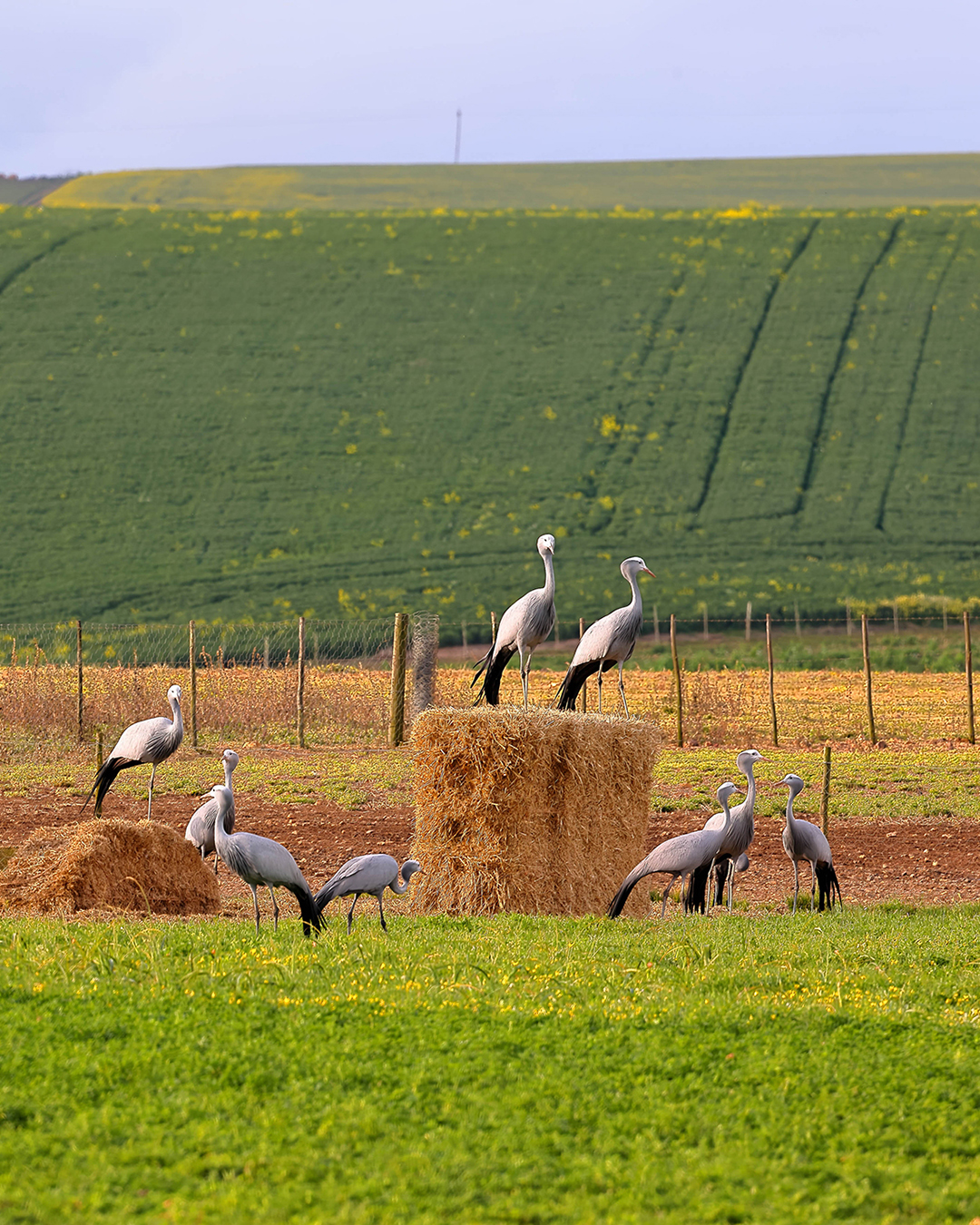
- Understanding the Blue Crane population in South Africa and their habitat
- The research initiatives led by Dr. Christie Craig and partners
- The significance of agricultural landscapes for Blue Cranes and population sustainability
- Insights gained from data analysis and monitoring efforts from 2018 to 2024
- The role of partnerships and funding in conservation efforts
The Blue Crane, South Africa’s national bird, has been a symbol of grace and beauty. However, recent studies have raised alarms about the decline in their population. The concerns are multi-faceted and largely related to the agricultural landscapes these birds inhabit. While the Blue Crane population appeared stable in previous years, research initiated in 2018 by Dr. Christie Craig revealed underlying issues that jeopardize their sustainability. This article will explore the habitat needs of the Blue Crane, the ongoing research conducted by Dr. Craig and the International Crane Foundation, and the lessons learned from monitoring efforts leading up to 2024.
Understanding the Blue Crane Population in South Africa and Their Habitat
Blue Cranes (Anthropoides paradiseus) primarily inhabit grassland and agricultural areas in South Africa. These birds prefer open spaces with sufficient food supply and water sources for breeding and feeding. Their dependence on agricultural landscapes has raised concerns regarding habitat loss due to urbanization and intensive farming practices. The ongoing alteration of these environments puts pressure on the Blue Crane population.
Historically, the Blue Crane population enjoyed a successful recovery from a low point in the mid-20th century due to conservation efforts. However, a stable population does not always mean a thriving one. The recent alarming signs hinted at declining numbers and challenges to their survival. These complexities prompted the need for focused research and monitoring to clarify the situation.
The Research Initiatives Led by Dr. Christie Craig and Partners
In 2018, Dr. Christie Craig, a dedicated researcher affiliated with the International Crane Foundation and the Endangered Wildlife Trust, took it upon herself to investigate the situation. Through collaboration with other wildlife organizations, she began an extensive research initiative centered around Blue Cranes. This included in-field observations, data collection, and partnership building to implement long-term monitoring strategies.
Dr. Craig’s work hinges on concerted efforts to understand the reasons behind the population’s decline. To piece together this conservation puzzle, she has employed various scientific techniques to gather data on population dynamics, nesting success, and habitat use. This research is critical, not only for Blue Cranes but also as a case study for similar species facing habitat loss.
The Significance of Agricultural Landscapes for Blue Cranes and Population Sustainability
Agricultural landscapes are central to the survival of many wildlife species, including the Blue Crane. These landscapes provide essential resources such as food and suitable nesting areas. However, agricultural practices are not uniform. Intensive crop production often leads to habitat fragmentation and loss. In South Africa, many Blue Cranes have been observed foraging in harvested fields and wetlands, making these areas pivotal for their survival.
The research conducted by Dr. Craig has highlighted how certain farming practices can either benefit or harm the Blue Crane population. Practices that promote biodiversity, such as the maintenance of wetlands and the use of cover crops, can contribute positively. Conversely, high levels of pesticide use and monoculture farming can make the environment less hospitable. The need for sustainable agricultural practices becomes evident when considering species like the Blue Crane that rely on these landscapes.
Insights Gained from Data Analysis and Monitoring Efforts from 2018 to 2024
As Dr. Craig’s research progressed, significant insights began to emerge from data collected between 2018 and 2024. Initial findings indicated that population trajectories were not as favorable as previously believed. The analysis revealed concerning trends: a decline in breeding success rates and increased mortality due to both natural and anthropogenic factors.
The findings prompted a reevaluation of conservation strategies tailored specifically to the needs of the Blue Crane. The ongoing monitoring showed that local environmental changes, such as alterations in water availability and habitat quality, had direct implications for the population’s prospects. Understanding these patterns has been crucial for implementing targeted conservation actions that can positively influence population health.
The Role of Partnerships and Funding in Conservation Efforts
One of the key components of successful conservation is collaboration among various stakeholders. Dr. Craig’s research is supported by several organizations, including the Leiden Conservation Foundation and funding from Eskom and the Hall Johnson Fellowship. Such collaboration underscores the importance of financial and institutional support in tackling wildlife conservation issues.
These partnerships allow for enhanced resource allocation and knowledge sharing, increasing the overall effectiveness of conservation strategies. Community engagement also plays a vital role. By raising awareness and involving local communities in conservation efforts, the chances of achieving sustainable outcomes rise significantly. The sponsorship provided by Tom and Kathy Leiden further emphasizes the importance of community involvement in wildlife conservation.
Webinar: A Conservation Puzzle: Why Are Blue Cranes Declining in South Africa?
The upcoming webinar on September 18 will present all of the valuable research and insights gained through Dr. Craig’s work. It serves as an educational platform for conservation enthusiasts and professionals alike. By sharing findings and discussing future challenges, the webinar aims to inform and inspire further conservation efforts.
For those interested in participating, following the profile link will secure your spot at this enlightening event. The conversation will cover the meticulous work undertaken to clarify the conservation puzzle surrounding Blue Cranes, highlighting the urgent need for collective action.
Various challenges remain for Blue Cranes in South Africa, from habitat loss to changing climatic conditions. This webinar presents an opportunity to explore these issues deeply and engage in meaningful discussions about the future of this magnificent bird. It not only emphasizes the critical situation of Blue Cranes but also serves as a reminder of our shared responsibility towards wildlife conservation.
Understanding the importance of the Blue Crane in South Africa transcends beyond the realm of mere statistics. It reflects the broader issues of environmental degradation, agricultural sustainability, and the urgent need for conservation. By participating in this webinar, attendees will gain valuable insights into how committed research and collaborative efforts can lead to more effective conservation strategies.
Monitoring and research are not just academic exercises; they inform on-the-ground actions that can change the fate of species at risk. The story of the Blue Crane demonstrates the interconnectedness of wildlife and human activity—what happens in agricultural fields directly affects wildlife health and biodiversity.
The webinar also underscores the significance of keeping the public informed. Building public awareness is crucial in fostering a conservation ethic within communities. The more people know about the challenges surrounding species like the Blue Crane, the more likely they are to get involved in conservation initiatives.
As scientific research continues to evolve, so does the technology and methods employed to monitor wildlife. Emerging techniques like satellite tracking and remote sensing can significantly enhance the ability to understand and conserve migratory species. This innovative approach has the potential to redefine monitoring strategies, offering more precise data that can guide conservation actions.
Participation in conservation requires a multi-faceted approach that draws upon scientific knowledge, community engagement, and policy advocacy. Every effort counts, and as more individuals and organizations unite, the impact multiplies. It is crucial in today’s world that we take active measures to protect valuable wildlife species.
The ongoing effort to conserve Blue Cranes is a testament to the power of dedication and collaboration. The groundwork laid by Dr. Christie Craig and her partners can serve as a model for dealing with other wildlife conservation challenges. The narrative of the Blue Crane in South Africa can inspire collective action, setting the foundation for a future where both agriculture and wildlife can coexist harmoniously.
With the week’s events unfolding, following the profile link will keep you updated on the webinar and related initiatives. Let’s join together in this crucial effort to protect the Blue Crane and other vulnerable species in South Africa and beyond. Together, we can make a difference.
*****
Source Description
✨ Follow our profile link to save your spot for our September 18 webinar!
The September From the Field webinar, A Conservation Puzzle: Why Are Blue Cranes Declining in South Africa?, delves into the research and monitoring undertaken by Dr. Christie Craig of the International Crane Foundation and @endangeredwildlifetrust
In South Africa, Blue Cranes rely heavily on agricultural landscapes. This raised concerns about the sustainability of the population, even though the species appeared to be doing quite well. In 2018, Christie began research on this issue, and by 2020, it became clear from data analysis that the Blue Crane population was not doing as well as previously thought. By 2024, we had some clues as to why the population was declining.
Join us on this journey of discovery, where we use research and monitoring to piece together the conservation story of Blue Cranes in South Africa. This work was supported by the Leiden Conservation Foundation, Eskom, and the Hall Johnson Fellowship.
Webinar sponsored by Tom and Kathy Leiden.
📸 Pieter Botha/International Crane Foundation and Endangered Wildlife Trust
