
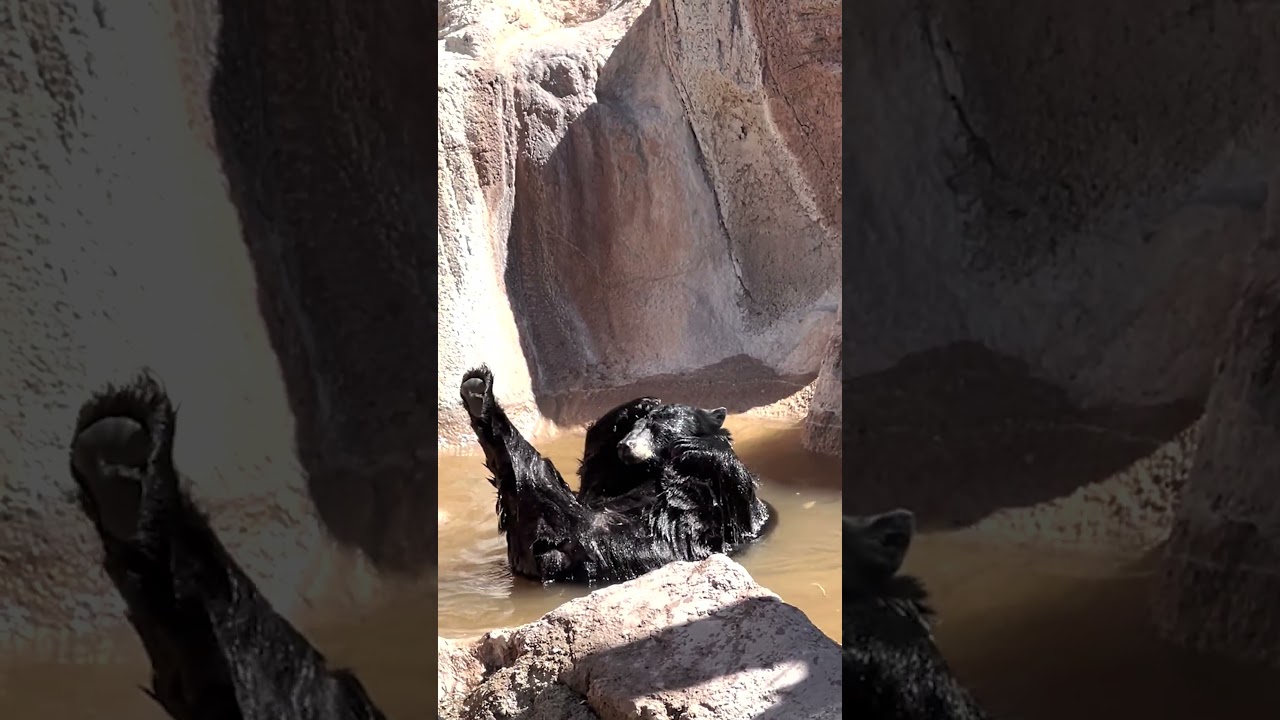
- Overview of Strawberry’s Spa Day: Highlighting the Occasion and Its Participants
- The Natural Behavior of Black Bears: Insights into Their Habits
- Zoo Management and Animal Welfare: How Facilities Enhance Animal Lives
- The Role of Wildlife Conservation in Arizona: Efforts and Initiatives
- The Importance of Environmental Stewardship in Preservation and Education
Strawberry, a well-loved black bear residing at the Arizona-Sonora Desert Museum, recently enjoyed a much-deserved spa day. This experience wasn’t just a delightful event for her; it also offered a fascinating glimpse into the natural behaviors and needs of black bears. These moments of care reveal much about the intersection of wildlife biology, animal welfare, and conservation efforts.
Overview of Strawberry’s Spa Day: Highlighting the Occasion and Its Participants
In the warmer months of Southern Arizona, providing animals like Strawberry with enrichment opportunities is crucial. Strawberry’s spa day featured cooling waters, which she bathed in leisurely, a treat much appreciated by the bear. This activity not only helps in temperature regulation but presents a form of environmental enrichment.
Environmental enrichment is essential in promoting natural behaviors. For Strawberry, splashing and playing in water replicates activities she would engage in within the wild. Such activities prevent boredom and ensure physical and psychological well-being.
The Natural Behavior of Black Bears: Insights into Their Habits
Black bears (Ursus americanus) possess diverse and adaptable behaviors. Known for being solitary, they are found across various North American habitats. These bears are omnivorous, with diets shifting according to seasonal availability. Berries, insects, and fish form significant components of their meals.
Water plays an essential role in their lives, serving not only as a source of food (e.g., fish) but also as a cooling haven. Observing Strawberry interact with water mirrors these natural inclinations, highlighting the importance of simulating wild environments within controlled settings.
Zoo Management and Animal Welfare: How Facilities Enhance Animal Lives
Effective zoo management prioritizes the welfare of animals through careful planning and resource allocation. Institutions like the Arizona-Sonora Desert Museum employ strategies to create habitats that mimic natural settings. Enrichment activities are central, involving feeding puzzles, sensory stimuli, and social interactions.
Staff members collaborate with wildlife specialists to design activities that stimulate both the physical and cognitive faculties of animals. For black bears, this includes providing opportunities for foraging, swimming, and other innate behaviors, seen clearly during Strawberry’s spa day.
Moreover, daily observations allow staff to monitor health signs and adjust programs accordingly. This level of personalized care contributes significantly to animal welfare, ensuring long, healthy lives.
The Role of Wildlife Conservation in Arizona: Efforts and Initiatives
Arizona’s unique ecosystems are crucial to diverse flora and fauna. Various organizations are involved in conservation efforts to protect these natural habitats. Programs often focus on habitat restoration, species reintroduction, and public education campaigns.
The Arizona-Sonora Desert Museum plays a pivotal role in these initiatives. By offering a space where people can connect directly with wildlife, they raise awareness about the importance of conservation. These efforts aim to preserve biodiversity and foster a sense of responsibility towards these ecosystems.
The Importance of Environmental Stewardship in Preservation and Education
Education is key in driving conservation efforts. Facilities like the Arizona-Sonora Desert Museum aim to inspire future generations through interactive experiences, such as witnessing Strawberry’s spa day. By educating visitors about animal behavior and the environment, these institutions cultivate a culture of stewardship.
Moreover, community engagement programs reach out to local residents, underscoring simple acts everyone can adopt to protect wildlife. Emphasizing responsible practices in daily life contributes massively to environmental preservation.
In summary, Strawberry’s spa day is more than mere leisure; it symbolizes the integrated approaches of zoology, conservation, and education. It showcases how curated experiences in animal care can enhance welfare while offering valuable insights into natural behaviors, all while emphasizing the critical role we play in safeguarding our planet’s biodiversity.
*****
Source Description
