
- Coral reefs as critical ecosystems and their role in marine biodiversity.
- The challenges and threats facing coral reefs globally.
- Overview of Coral Restoration Foundation and their impact on the Florida Barrier Reef.
- Volunteer efforts at Coralpalooza 2024 and the significance of hands-on conservation work.
- The importance of community engagement and education in coral reef protection.
Coral reefs are some of the most essential ecosystems on the planet, providing habitats, food, and protection for over 25% of all marine species. These vibrant underwater structures are not only crucial for marine life but also support more than 300 million people living in coastal communities around the globe. They contribute significantly to local economies through tourism, fisheries, and coastal protection. However, despite their importance, coral reefs are some of the most endangered ecosystems. Ongoing threats from climate change, pollution, ocean acidification, and biodiversity loss are leading to their decline at alarming rates.
Coral reefs are formed by colonies of tiny animals known as corals, which secrete calcium carbonate to create intricate structures. These ecosystems are extremely biodiverse, housing various species of fish, invertebrates, and algae that rely on the reef for survival. The interactions between these organisms contribute to the lifelong vitality of coral reefs, allowing them to thrive in nutrient-poor waters. The symbiotic relationship between corals and zooxanthellae, a type of algae, plays a vital role in their survival. The algae provide energy to corals through photosynthesis, while corals offer a safe habitat for their algal partners. This symbiosis illustrates the delicate balance present in these ecosystems.
However, coral reefs face numerous challenges. Climate change is arguably the most pressing threat, leading to rising sea temperatures, which induce coral bleaching. During bleaching events, corals expel their algal partners, resulting in loss of color and, ultimately, the death of the coral if conditions do not improve. Research indicates that ocean temperatures have increased by about 1.2°F (approximately 0.7°C) over the last century. This temperature rise has led to more frequent and severe coral bleaching events, significantly impacting the health of coral reefs worldwide.
Ocean acidification, another consequence of climate change, occurs when increased carbon dioxide is absorbed by the ocean, lowering its pH. This process affects the ability of corals to calcify, which is essential for building their structures. Studies show that ocean acidification can reduce coral growth rates by up to 30% in some cases. Additionally, pollution from agricultural runoff and plastics also poses a significant threat to coral reef health. Excess nutrients from fertilizers can lead to algal blooms, which can smother corals and deplete oxygen levels in the water.
The Coral Restoration Foundation (CRF) has taken commendable steps towards addressing these pressing issues facing coral reefs, particularly the Florida Barrier Reef. Established in 2007, CRF has become a leader in coral restoration research and techniques. Their mission focuses on rebuilding coral populations to restore damaged reefs and providing education on the importance of preserving these vital ecosystems. Through their active recruitment of volunteers, CRF engages the public in hands-on conservation work, fostering a sense of community and personal responsibility towards marine ecosystems.
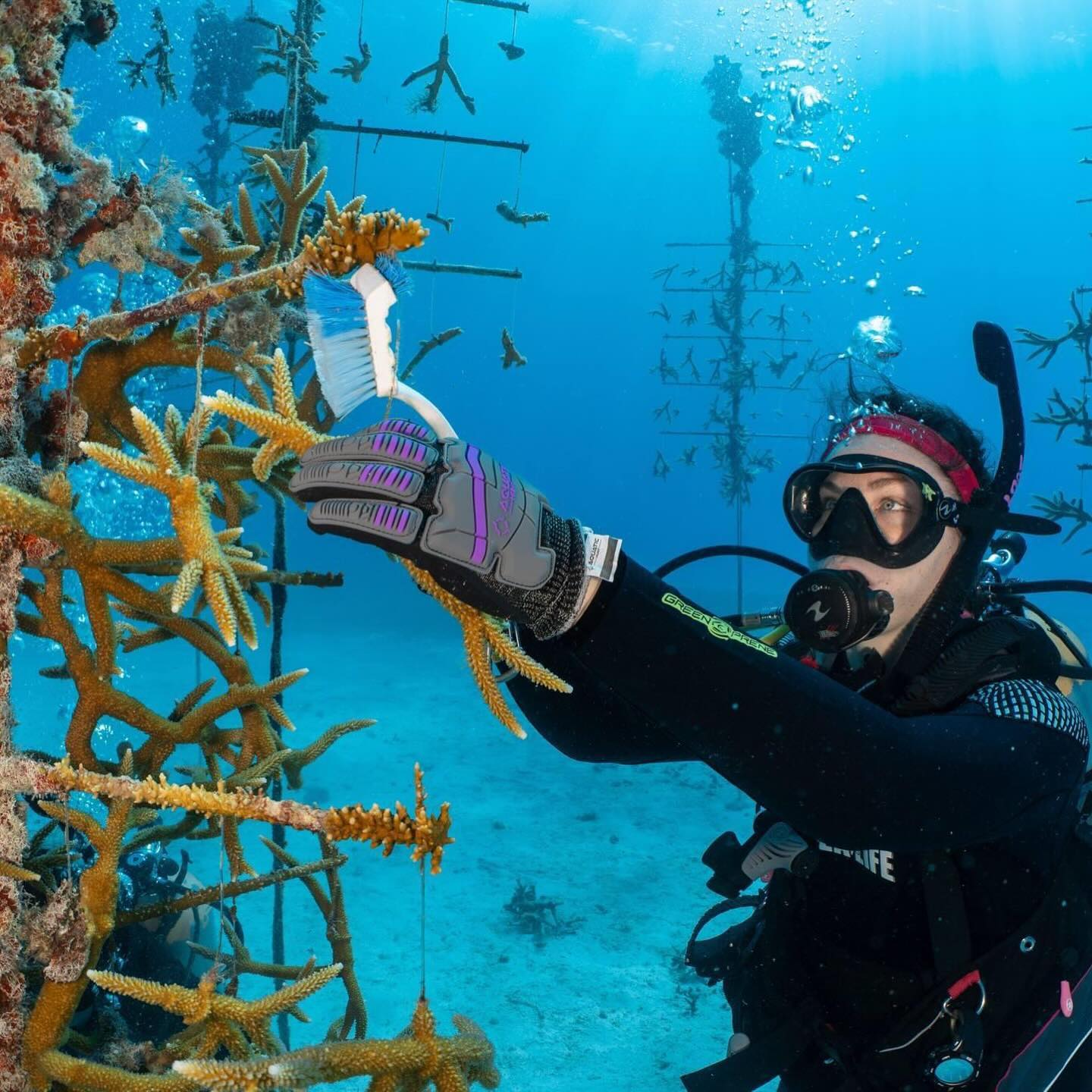
Earlier this month, our Aquarist team volunteered for CRF’s event, Coralpalooza 2024. This event brings together marine enthusiasts, volunteers, and conservationists to maintain coral nurseries and care for young corals slated for outplanting onto the barrier reef. During this event, volunteers participated in various important tasks, including transplanting corals from underwater nurseries to their natural reefs and performing health assessments to monitor coral growth and development.
By involving volunteers in conservation efforts, CRF not only aids in immediate restoration efforts but also fosters a deeper understanding of marine ecosystems among participants. Hands-on experiences, like those at Coralpalooza, facilitate educational outcomes, as volunteers learn about the biology of corals, the threats they face, and restoration techniques. This knowledge empowers individuals to become advocates for coral reef conservation in their communities.
Moreover, these collaborative efforts reflect the significant intersection of scientific research and community involvement. The work performed by volunteers directly contributes to the restoration of coral reefs while also serving to engage the community and raise awareness about conservation efforts. Each planted coral contributes to the overall health of the reef ecosystem, promoting biodiversity and providing essential habitats for marine life.
CRF employs innovative techniques such as coral gardening to restore damaged reefs. This process involves cultivating coral fragments in underwater nurseries to grow healthy corals that can be later transplanted back onto the reef. The team carefully selects species that exhibit resilience against environmental stressors, ensuring that the outplanted corals have a higher chance of survival in their natural habitat. Through ongoing research, CRF collaborates with academic institutions to gather data on coral health, reproductive success, and ecosystem dynamics.
Supporting these initiatives requires not just financial backing but also a commitment to continuous education. Public outreach programs and workshops conducted by CRF play a pivotal role in spreading awareness about the importance of coral reefs, and the challenges they face. School programs and community events provide a platform to learn about marine conservation and inspire the next generation of environmental stewards.
As climate change continues to impact marine ecosystems, the urgency for focused action increases. Coral reefs serve as natural barriers, protecting coastlines from erosion and storm impacts. Their loss not only jeopardizes marine biodiversity but also threatens the livelihoods of millions of people dependent on fishing and tourism. The economic ramifications of declining coral health extend far beyond individual communities, affecting global markets that rely on healthy oceans.
Beyond the immediate biological and economic implications, the decline of coral reefs signifies a loss of cultural heritage for many coastal communities. These reefs are often intertwined with local traditions and stories, highlighting the importance of preserving not just the biological aspects of these ecosystems but also their cultural significance.
Given these multifaceted challenges, the role of organizations like the Coral Restoration Foundation becomes increasingly vital. Their work exemplifies how scientific knowledge can be mobilized to create change. Furthermore, fostering public engagement through initiatives like Coralpalooza ensures that the message of conservation reaches a broader audience, inspiring collective action on both local and global scales.
Climate change’s far-reaching effects on oceanic ecosystems, including coral reefs, underline the need for immediate conservation efforts. The continuous monitoring of coral health and ecosystems, along with innovative restoration techniques pioneered by CRF, is crucial in mitigating these impacts. Ongoing research to enhance the resilience of coral species and ecosystems will play a significant role in long-term conservation strategies.
Investing in coral reef conservation not only ensures the health of marine ecosystems but also contributes to climate change mitigation efforts. Healthy coral reefs can absorb carbon dioxide, helping to alleviate some effects of rising atmospheric carbon levels. By taking action to preserve and restore coral reefs, we contribute to the overall health of our planet.
Community engagement, education, and volunteerism are critical components of these conservation efforts. Through dedicated work and collective action, it is possible to turn the tide against coral reef decline. Each individual can play an important role in supporting these initiatives, whether through volunteering, donating, or simply raising awareness about the urgent need for coral reef conservation.
The Coral Restoration Foundation deserves recognition for its tireless efforts and effective strategies to protect coral reefs and restore damaged ecosystems. As we continue to confront climate-related challenges, the collaborative spirit displayed at events like Coralpalooza illuminates the path forward. By working together, we can foster resilient marine ecosystems that not only survive but thrive in the face of adversity.
The urgency for action cannot be overstated. Coral reefs are not just beautiful underwater landscapes; they are essential for maintaining marine biodiversity, supporting local economies, and preserving cultural heritage. The collaborative efforts between organizations, volunteers, and scientists highlight the importance of community involvement in conservation work. By understanding the significance of coral reefs and their threats, individuals can foster a culture of stewardship that safeguards these precious ecosystems for future generations.
Engaging in volunteer initiatives like those organized by the Coral Restoration Foundation not only contributes to immediate restoration efforts but cultivates a deeper appreciation and understanding of the ocean and its ecosystems. The vibrancy and complexity of coral reefs reflect the interconnectedness of life, making it essential to protect and restore this vital resource for the benefit of both marine species and humanity.
*****
Source Description
Coral reefs are some of the most essential ecosystems in the world, but they’re also among the most endangered. @coralrestorationfoundation is leading efforts to restore the Florida Barrier Reef, and we are honored to collaborate with them.
Earlier this month our Aquarist team volunteered for Coral Restoration Foundation’s event, Coralpalooza 2024, to maintain coral nurseries and care for the young coral which will soon be outplanted onto the Barrier Reef.
Coral reefs provide habitats, food, and protection to over 25% of all marine species, and support more than 300 million people in communities across the world! With the threats of climate change, ocean acidification, pollution, and biodiversity loss, coral reefs are disappearing at alarming rates.
Thank you CRF for all you do to ensure these lungs of the ocean have a bright future. 💙
📸: Coral Restoration Foundation™
