
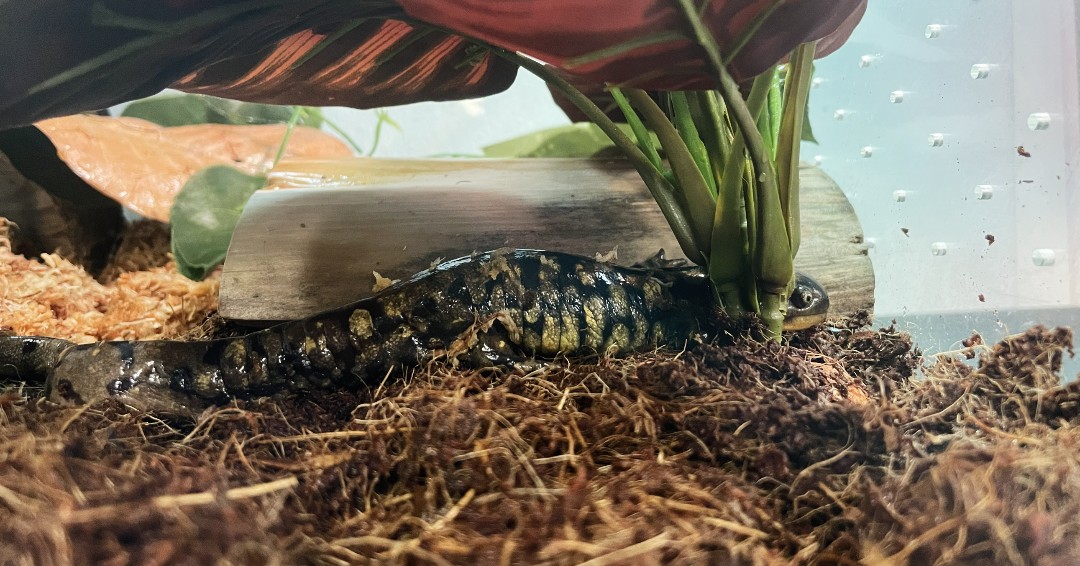
- Tiger salamanders require two distinct habitats: ponds for breeding and moist soil for burrowing.
- Their migration patterns, both short and long distances, play a significant role in their life cycle.
- In North Carolina, these amphibians thrive in sandy areas, particularly longleaf pine forests.
- Breeding ponds are critical to their reproduction, providing necessary vegetation and fish-free environments.
- Conservation efforts are essential for maintaining their habitats and ensuring their survival.
Tiger salamanders, specifically Ambystoma tigrinum, thrive in a dual habitat system that comprises ponds for breeding and moist soil for burrowing. This amphibian is not merely a fixture of the ecosystems in which it exists; it plays a vital role in maintaining ecological balance. The habitats that support tiger salamanders are uniquely interconnected and crucial for their lifecycle.
The need for two specific habitats is fundamental to their success. Breeding ponds serve as crucial sites for mating and egg-laying. Typically, these ponds are temporary wetlands that are free from fish. Fish predators can decimate salamander eggs and larvae, disrupting their life cycle. In these ponds, diverse aquatic vegetation provides the necessary cover for both adult salamanders during the breeding season and for their eggs.
Once mating occurs, female tiger salamanders lay hundreds of eggs that are deposited in clusters among the vegetation. These eggs hatch into larvae that will rely on the pond’s environment to develop. They remain in the water until they undergo metamorphosis, transitioning into adult forms capable of functioning on land. The terrestrial environment then becomes essential.
After leaving the ponds, adult tiger salamanders migrate to moist soils for burrowing. They often prefer sandy uplands like sandhills and flatwoods, where moisture is more readily available. Moist, loose soils enable them to dig burrows that provide shelter and protection from temperature extremes, predators, and evaporation. These burrows can also serve as overwintering sites, allowing them to escape harsh weather conditions. The combination of these habitats not only supports survival but facilitates feeding on various invertebrates found within the soil.
An intriguing aspect of their lifecycle is the distance they will migrate to find suitable breeding ponds. Tiger salamanders are known to travel varying distances, sometimes as brief as a few yards but can extend to half a mile or more in some cases. This behavior underscores their adaptability and need for safe spawning grounds. Patterns of migration may be influenced by factors such as rainfall and temperature, which affect their activity levels.
In North Carolina, tiger salamanders are often located in sandy uplands, particularly within longleaf pine forests. The longleaf pine ecosystem is a critical environment for these amphibians, providing not only abundant breeding ponds but also rich moist soils for burrowing. This area supports a diversity of flora and fauna, enhancing the overall biodiversity of the region. Moreover, the unique characteristics of sandy soils in these ecosystems contribute to the lifecycle of the tiger salamander, allowing it to thrive.
Breeding ponds tucked within these forests are essential for the viability of tiger salamander populations. Research indicates that temporary wetlands offer proper environmental conditions for young salamanders to mature. The absence of fish conservation lays the groundwork for these amphibians’ successful reproduction, while rich vegetation offers the necessary microbiological environment that promotes their growth and survival.
With increasing threats to wetlands and urban development, the conservation of these habitats is crucial. Human encroachment, pollution, and climate change significantly affect the availability and quality of suitable breeding ponds and moist soils. Without effective conservation measures, there is a risk of tiger salamander populations declining sharply.
Efforts to protect these habitats center on preserving existing pond resources and maintaining good water quality. Strategies may involve restoring wetlands that have been impacted by human activities, as well as creating awareness about the importance of these ecosystems. Protection efforts also extend to monitoring the populations in these areas to ensure their stability.
Moreover, citizen science initiatives can help gather valuable data regarding habitat use and migration patterns. Inputs from local communities are invaluable in determining the status of tiger salamander populations in specific regions. In turn, collaborative efforts can promote the development of policies aimed at preserving these critical habitats.
Understanding the ecological role of tiger salamanders provides significant insights into the health of their environments. As indicators of wetland quality and biodiversity, their presence reflects a balanced ecosystem. Furthermore, safeguarding the tiger salamander inevitably contributes to the conservation of other organisms that share the same habitats. It becomes increasingly clear that maintaining these dual habitats is not only about the survival of one species but also about the overall health and stability of entire ecosystems.
In summary, tiger salamanders epitomize the complex interdependencies between species and their habitats. Their requirement for both ponds and moist soil highlights the importance of diverse ecosystems in sustaining wildlife. As conservation efforts continue to grow, understanding the specific needs of species like the tiger salamander will be crucial for their survival and for maintaining biodiversity within our ecosystems. Acknowledging their migratory behaviors, the significance of breeding sites, and habitat conservation can lead to better management practices tailored to protect these unique and valuable amphibians.
*****
Source Description
Tiger salamanders need two habitats to thrive🦎—ponds for breeding and moist soil for burrowing. In North Carolina, they’re often found in sandy uplands like sandhills and flatwoods, with breeding ponds tucked into longleaf pine forests.
Each year, they migrate from land to water—sometimes just a few yards, sometimes up to half a mile—to reach clear, fish-free ponds. These temporary wetlands provide the vegetation they need for cover and egg-laying, making them essential for survival.
