
- The importance of habitat maintenance for animal welfare and visitor experience
- Detailed procedures involved in deep cleaning the otter habitat
- Team collaboration across departments in zoo management
- Educational aspects of otter behavior and health during maintenance
- Commitment to conservation and sustainable practices in zoos
Maintaining animal habitats is crucial for both the well-being of wildlife and the enjoyment of visitors. Clean and healthy environments contribute to the physical and psychological health of animals like the river otters. When habitats become degraded or messy, it not only affects the animals negatively but can also deter guests from fully experiencing the joy of observing these playful creatures.
Each year, zoos undertake deep cleaning procedures to refresh animal enclosures, ensuring they remain vibrant and inviting. This process is particularly important for otters, who are playful and exhibit complex behaviors that are highlighted in clean, engaging spaces. Such habitats enhance the interaction between animals and visitors, promoting educational opportunities.
The step-by-step procedures for deep cleaning an otter habitat include draining the exhibit, which allows staff to remove debris and waste effectively. For otters, whose bodies are constantly interacting with their environment, a thorough cleaning reduces harmful bacteria and parasites, directly contributing to their health. During this time, staff will scrub surfaces, replace substrate, and check for any needed repairs, ensuring the habitat is safe and functional.
Collaboration among various departments underpins the success of a habitat cleaning project. Animal care personnel, maintenance staff, and education teams come together to tackle this significant task. Animal care staff monitor the otters’ health, while maintenance teams provide expertise in facility upkeep. Education staff prepare informative materials for guests, turning their excitement about the otters into a learning experience. This combination of efforts maximizes efficiency and effectiveness, ensuring that both animal welfare and visitor engagement are prioritized.
While the habitat undergoes cleaning, the otters will temporarily need to be relocated. This is not only a precaution but also allows staff to clean without the distractions of animal presence. The staff takes care to minimize stress for the otters, understanding that animals thrive in stable situations. Behaviorally, otters are social and curious, requiring mental stimulation even when their habitats are disrupted. By designing alternative enrichment activities—such as providing toys or creating a temporary space with similar features—the staff helps maintain their well-being throughout the cleaning process.
Education is a vital component woven into the cleaning schedule. Throughout the deep-cleaning process, activities happen behind the scenes that can be translated into valuable lessons for guests. For example, discussing the cleaning process and its purpose enhances visitor understanding of animal care. Displays about otter biology, their role in ecosystems, and the effects of habitat pollution can enrich the educational experience. Staff can engage with visitors, explaining how habitat maintenance not only benefits the animals but also reflects the zoo’s commitment to conservation practices.
Conservation is increasingly critical as the threats to wildlife habitats grow. By emphasizing both animal welfare and the importance of ecosystems, these cleaning projects serve as a reminder of our broader responsibility to protect the environment. River otters, for instance, play significant roles in maintaining aquatic ecosystems. Their presence signifies a healthy ecosystem, while their absence can indicate environmental issues such as pollution or loss of habitat. Zoo initiatives like these help teach the public about contributing to conservation efforts, motivating them to make informed choices in their daily lives.
The logistics of conducting a deep clean reach beyond simple hygiene; they reflect a commitment to excellence in animal care. By scheduling cleaning during weekdays—a time when visitor numbers may be lower—staff can work efficiently while minimizing disruptions. Additionally, extensive planning ensures that necessary equipment, such as pressure washers and sanitizing agents, is available and ready for use, allowing for a seamless process.
Otters are particularly engaging animals, captivating guests with their playful nature. They display a range of social behaviors, from playful wrestling to cooperative activities, such as hunting and grooming. Understanding these behaviors can enhance appreciation for their needs and the manner in which their environments support these activities. Through education, guests can learn about the natural behaviors of river otters and how consistent habitat upkeep contributes to their overall happiness.
The teamwork displayed in habitat maintenance also illustrates the importance of communication. Regular meetings and updates among departments ensure all staff are aligned with objectives and timelines. This clear communication helps in addressing any challenges that may arise during the cleaning process. Whether it’s unexpected weather changes or equipment malfunctions, a collaborative approach facilitates quick problem resolution, ensuring a smooth operation.
During the cleaning period, visitors may still find engaging ways to connect with wildlife. For instance, educational programs might be provided, featuring talks about otter conservation and demonstrations on habitat restoration methods. Such outreach reinforces the zoo’s mission of fostering understanding and respect for wildlife. Besides knowledge transfer, it creates a connection between people and animals, promoting empathy and a desire for actionable conservation efforts.
In alignment with contemporary wildlife management practices, zoos work towards sustainable methodologies during cleaning. Eco-friendly cleaning agents, strategic waste disposal, and energy-efficient equipment are integral to minimizing environmental impacts. By adopting such practices, the zoo not only maintains animal habitats but also sets an example of ecological responsibility for guests and the community.
The preparation for habitat cleaning involves gathering data on the otters in residence. Understanding their individual characteristics helps guide operational planning. For example, knowing the preferences of specific otters aids in choosing appropriate alternative enrichment during the cleaning. Continuous monitoring translates data into actionable insights, which strengthens adaptability during the process.
Furthermore, the cleaning process leverages technology to enhance operational efficiency. Automated cleaning systems or digital inventory tracking can streamline logistics. Photographic documentation of conditions before and after cleaning can also serve as a valuable resource for both the animals’ health records and visitor displays showcasing behind-the-scenes care.
Children and families visiting the zoo particularly benefit from this clean-up initiative. They gain a clearer understanding of the role that zoos play in animal conservation and education. The northern river otter, native to various habitats across North America, serves as a relatable and engaging example. Young visitors can learn fun facts, like otters’ ability to hold their breath underwater for extended periods or how they communicate through a series of vocalizations.
Guests are encouraged to be involved in the zoo’s conservation ethos, reminding them that the responsibility toward wildlife is multifaceted. Simple actions—like reducing plastic use or participating in local clean-up efforts—can accumulate into significant contributions toward preserving natural habitats. By connecting personal choices to larger conservation goals, the cleaning initiative emphasizes a shared commitment to the environment.
By promoting transparency, the zoo retains visitor trust and fosters a deeper connection to the message of conservation. Guests appreciate learning about the behind-the-scenes work necessary for keeping animal habitats healthy. Open dialogue about animal care practices encourages repeat visits and nurtures ongoing interest in wildlife welfare.
In summary, the emphasis on rigorous habitat maintenance not only fulfills a practical requirement but also embodies a commitment to animal welfare and public education. Deploying holistic cleaning methods involves a spectrum of collaboration across departments, educational outreach, and a focus on conservation. The otters, with their charisma, exemplify the benefits of a well-maintained habitat, enriching visitor experience. The annual cleaning process, marked for November 10-12 this year, remains a pivotal event, driving home the essential message of environmental stewardship and wildlife conservation.
*****
Source Description
We made a mess, and now it’s time to clean up!
As part of our ongoing commitment to the care of the animals, next week we are doing our yearly deep clean of the otter habitat! This process involves draining the otter exhibit, and teams across multiple departments working together to freshen up the space – including the viewing spaces to ensure guests can watch all the fun antics of our resident otters throughout the winter and summer.
This does mean that on Monday, Tuesday, and Wednesday (Nov 10-12) the otters will not have access to their exhibit space while our staff works together to keep things moving as quick as possible.
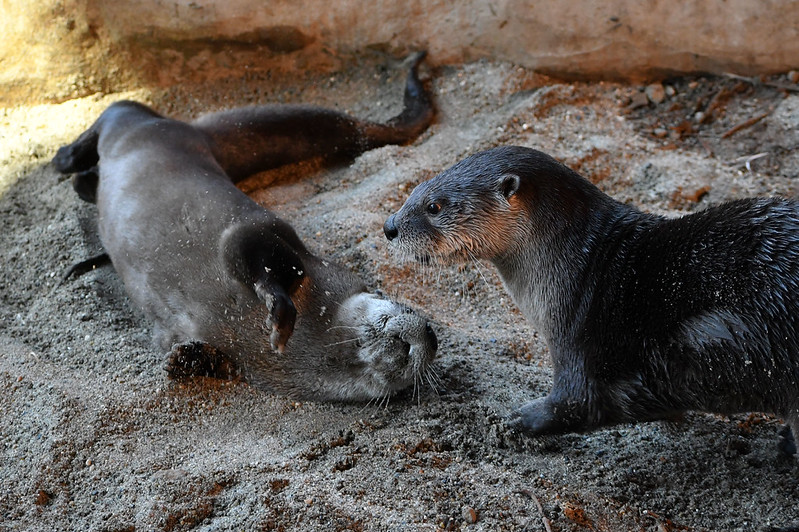
Pictured: River otters Moe and Wade roll around in the sand on habitat; River otter Cliff with sand coating his nose.
