
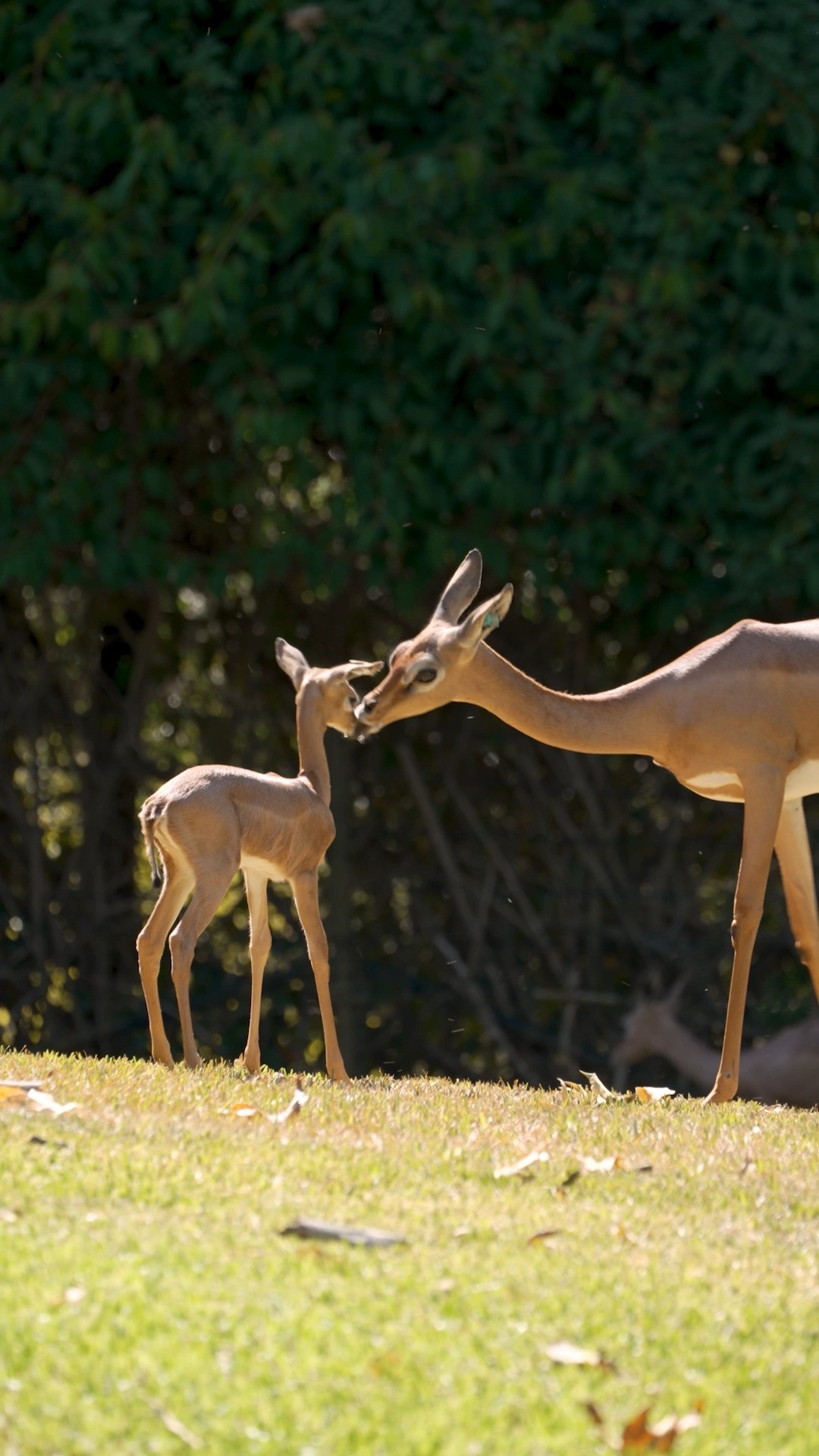
- The biology and physical characteristics of the gerenuk
- The behavior and habitat of the gerenuk
- The conservation status of the gerenuk
- The significance of the recent birth of Tiny Prancer
- Ways to support wildlife conservation efforts
The gerenuk (Litocranius walleri) stands out strikingly within the diverse world of antelopes. Characterized by its long neck, this species showcases a unique adaptation that enables it to browse on foliage that is typically out of reach for other herbivores. Adult gerenuks can reach a height of 3 to 4 feet at the shoulder and weigh between 70 to 120 pounds, although a newborn like Tiny Prancer currently weighs just around 6 pounds. This smaller size is due to its tender age. In terms of coloration, gerenuks display a light tan to reddish-brown coat, which provides excellent camouflage amidst the dry shrublands of East Africa.
Beyond their distinct appearance, the gerenuk’s adaptations extend to their limbs. Their long legs allow them to rise on their hind legs in a characteristic stance known as “bipedal browsing.” With this behavior, they can stretch their necks to graze on high branches or shrubs. Their elongated neck also aids in scanning the environment for potential predators, thereby enhancing their survival in the wild. Additionally, they possess large, expressive eyes and ears, which enhance their sensory perception.
The gerenuk’s social structure falls within a fission-fusion system, meaning they vary between solitary lifestyles and small groups. Males typically lead a more solitary existence, while females often form small herds with their young. These young are known for their playful behavior, hopping around and engaging in bounding leaps as they explore their surroundings. Tiny Prancer embodies this exuberance, exemplifying the playfulness typical among juvenile gerenuks. As they grow, they develop social bonds within these groups, which help them learn essential survival skills.
The habitat of the gerenuk primarily encompasses the arid savannas and shrublands of East Africa, spanning regions of Kenya, Tanzania, and Somalia. They are adept at navigating these dry, often hostile landscapes, where forage availability can fluctuate dramatically. The gerenuk applies foraging techniques that allow it to select leaves, shoots, and fruits, playing a vital role in their ecosystem as browsers. They possess a unique digestive system that allows them to extract maximum nutrition from sparse, fibrous plant material. Such adaptations have made them successful in an environment where food scarcity can be a critical issue for numerous species.
Despite their adaptability, the gerenuk faces significant threats in their natural habitat. Habitat destruction, driven largely by agricultural expansion, urban development, and livestock grazing, has reduced their range and food resources. Additionally, they are sometimes victims of hunting, both for subsistence and sport. According to the International Union for Conservation of Nature (IUCN), the gerenuk is currently classified as “Near Threatened.” This status indicates that while the species is not currently endangered, continued pressures could lead to further degradation of their populations.
The recent birth of Tiny Prancer highlights a glimmer of hope in the efforts to conserve this captivating species. The presence of new life, especially given the ongoing threats they face, serves as an important reminder of the delicate balance between human activity and wildlife survival. Each healthy birth represents progress in captive breeding programs aiming to enhance genetic diversity within the population. These initiatives are vital, as they not only bolster the numbers of species like the gerenuk but also support broader biodiversity efforts.
Zoo and wildlife park initiatives play an instrumental role in raising awareness about the plight of the gerenuk. Educational exhibits, animal encounters, and informative programming help to foster a connection between visitors and wildlife. The phenomenon of Tiny Prancer bouncing around in his habitat serves as a visceral example of the joy and vitality of animal life. Observers can witness this young calf’s antics and learn about the species’ ecological necessity, as well as the implications of human actions on their survival. Such educational outreach is crucial for inspiring future generations to cherish and protect wildlife.
To further support initiatives aimed at protecting the gerenuk and other species, individuals can participate in various conservation programs. Organizations dedicated to wildlife conservation often rely on volunteers for field research, habitat restoration, and educational campaigns. Additionally, donations to wildlife sanctuaries and preservation groups can help fund critical research and conservation projects. By becoming engaged community members, people can contribute to ensuring the survival of countless species.
The plight of the gerenuk underscores a larger narrative about the relationship between humans and the natural world. It highlights the need for increased awareness and proactive stewardship of wildlife and their habitats. The story of Tiny Prancer represents not only a new life in the African Woods habitat but also echoes the urgent call for collective action toward preserving the integrity of ecosystems globally.
Capturing the excitement surrounding this hoppy little calf, the Safari Park invites visitors to immerse themselves in the experience of watching Tiny Prancer grow. As they stroll through the African Woods habitats, guests have the chance to observe these beautiful animals and learn about their behaviors and needs. Each observation—a calf leaping, a mother nurturing, or a herd grazing—builds a narrative that emphasizes the interconnectedness of life and the responsibilities that come with it.
Understanding the biology and behavior of species like the gerenuk enriches our experience as observers and stewards of wildlife. The story of Tiny Prancer not only highlights the life cycle of this fascinating antelope but emphasizes the importance of nurturing future generations of wildlife. By taking part in conservation efforts, even in small ways, each individual can contribute to a more sustainable existence for the gerenuk and numerous other species striving to thrive in an increasingly altered world.
Active participation leads to a more informed public, advocating for wildlife conservation as a societal imperative. Through collective efforts, resilience can be fostered within ecosystems, allowing species like the gerenuk to endure amidst the challenges they face. As we celebrate each new calf, each new birth epitomizes hope, resilience, and the continuity of life. Encouraging a deeper appreciation for nature and wildlife ultimately fosters a response to preserve our planet’s biodiversity for generations to come. The vibrant legacy of species like the gerenuk is not just theirs alone; it is shared with all of humanity.
*****
Source Description
Tiny prancer 🩰
This hoppy little calf is a gerenuk, a species of long-necked antelope native to East Africa. Parents Barnes and Primrose recently welcomed this new little guy who currently weighs around 6 lbs. Keep an eye out for more bouncing babies as you stroll through the African Woods habitats at the Safari Park.
