
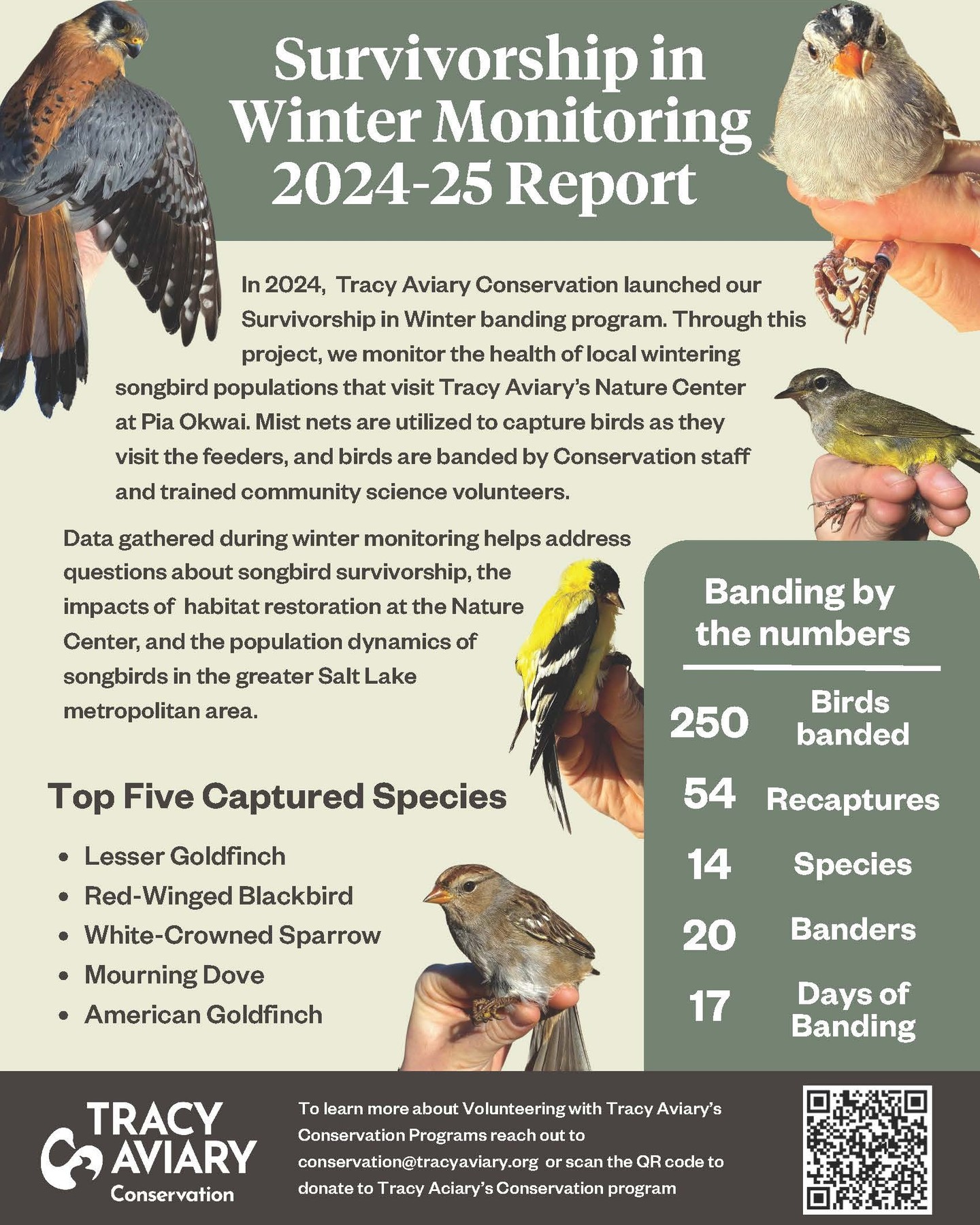
- Overview of the Survivorship in Winter banding program and its goals.
- Importance of winter monitoring for songbird conservation.
- Impact of habitat restoration on bird populations at the Nature Center.
- Understanding songbird population dynamics in Salt Lake City.
- Key findings and implications for conservation efforts.
In 2024, Tracy Aviary Conservation unveiled the Survivorship in Winter banding program, a pivotal initiative focused on songbird conservation during the challenging winter months. This program plays a critical role in understanding the survival rates of these delicate creatures and their responses to environmental changes. By focusing on how songbirds endure winter, the program seeks to provide actionable insights for conservationists working to enhance the wellbeing of these vital components of ecosystems.
The primary goal of the Survivorship in Winter banding program is to gather detailed data on songbird activity and survivorship during winter. By collecting and analyzing this data, researchers aim to answer key questions about how these birds cope with reduced resources and harsh conditions. Banding birds involves placing a small, uniquely numbered band around a bird’s leg, allowing researchers to track individual birds over time. This crucial method provides a wealth of information about migration patterns, longevity, and breeding success.
Winter monitoring is a cornerstone of the program as it reveals much about the resilience and adaptability of songbirds. These insights are achieved by systematically capturing, banding, and releasing birds. The data collected helps scientists comprehend survival strategies, which are vital for developing effective conservation strategies. By studying survival rates, researchers can determine which species are most at risk during winter, enabling targeted conservation efforts.
A significant aspect of the program is its focus on the impact of habitat restoration at the Nature Center. Restoration projects are designed to improve habitats for local wildlife, including songbirds. Understanding how these efforts affect bird populations is crucial; the data gathered can inform future restoration projects, ensuring they are as beneficial as possible. By monitoring bird populations before and after restoration, researchers can assess changes in species diversity and abundance, providing valuable feedback on the effectiveness of habitat management practices.
The program also delves into the population dynamics of songbirds in the greater Salt Lake City area. Understanding these dynamics is essential for regional conservation planning. Population studies help identify trends in bird numbers, which can indicate broader environmental changes. These trends are particularly important in urban and suburban settings, where human activities heavily impact local ecosystems. Data from the program aids in crafting informed public policies and conservation plans to support these avian communities.
Key findings from the Survivorship in Winter banding program have already started to shape conservation efforts. For instance, preliminary data suggest certain species are more resilient than others to harsh winter conditions. These insights help prioritize resource allocation for species at greater risk. The program also highlights the importance of local green spaces, illustrating their role as critical habitats for overwintering birds. By raising awareness of these findings, the program fosters community support for green space conservation and enhancement.
In terms of broader implications, the program underscores the interconnectedness of ecosystems. Songbirds are integral to their environments, aiding in seed dispersal and insect control. Their wellbeing reflects the health of their habitats. As such, the program’s findings emphasize the need for comprehensive conservation strategies that integrate habitat protection, restoration, and community engagement.
The Survivorship in Winter banding program stands as a testament to Tracy Aviary Conservation’s commitment to advancing scientific understanding and promoting biodiversity. By focusing on the challenges faced by songbirds during winter, the program delivers crucial insights that inform and enhance conservation efforts both locally and beyond. As research continues to unfold, the initiative promises to yield further valuable data, guiding sustainable management of natural resources and helping secure a future for songbirds amidst ever-changing environmental conditions.
*****
Source Description
In 2024, Tracy Aviary Conservation launched our Survivorship in Winter banding program.
Data gathered during winter monitoring helps address questions about songbird survivorship, the impacts of habitat restoration at the Nature Center, and the population dynamics of songbirds in the greater Salt Lake metropolitan area.
