
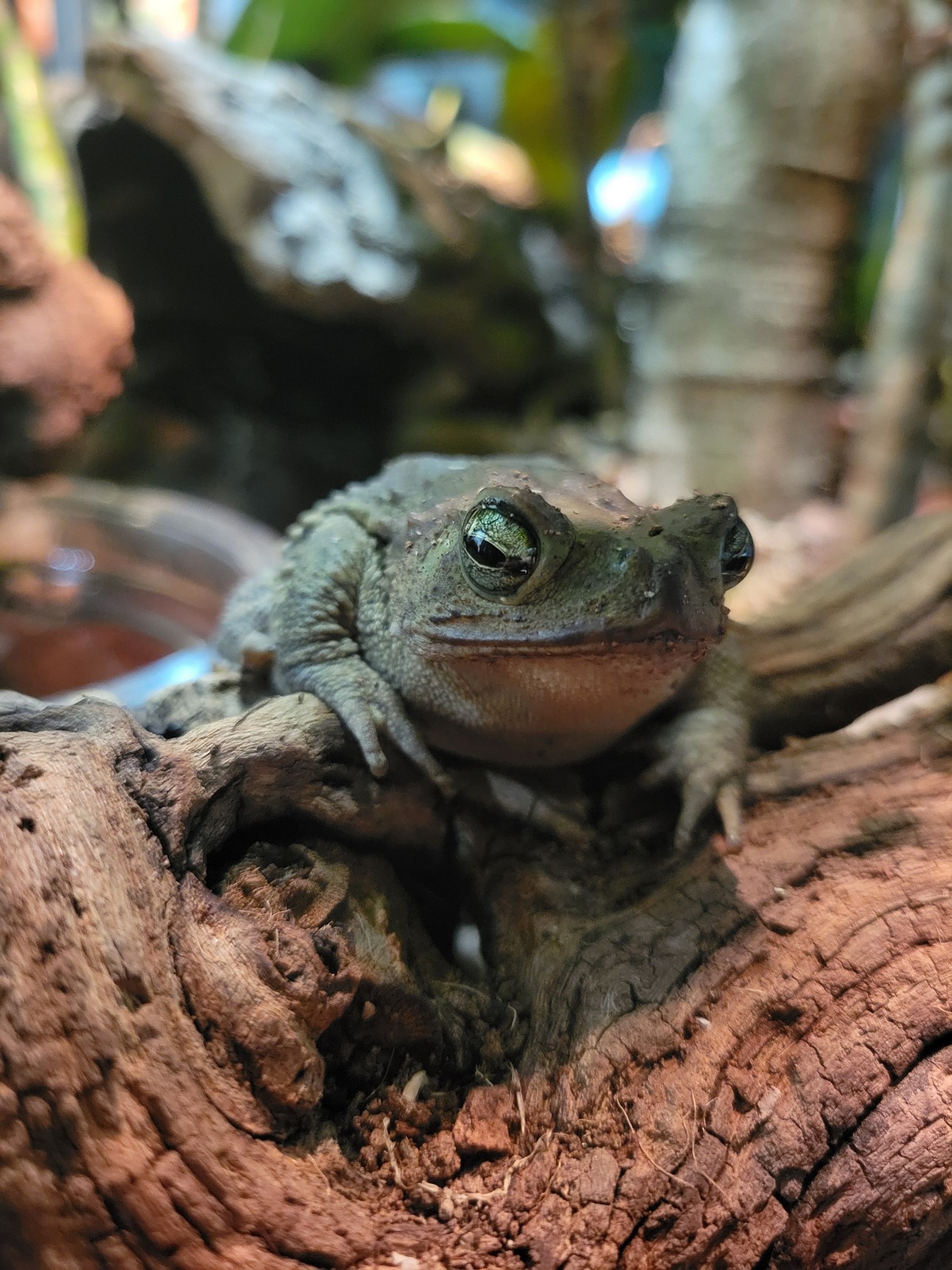
Summary of No two the same: the high-climbing evergreen toad:
The content discusses the evergreen toad, a small to medium-sized member of the Bufonidae family found in Central and South America. Known for their unique camouflage patterns, they inhabit humid forests and are semi-arboreal, often climbing trees. Evergreen toads feed on worms and insects and display sexual dimorphism in size, with males measuring 2-2.5 inches and females 3-3.5 inches.
During breeding season, males call in freshwater pools to attract females. The breeding process, called amplexus, involves males fertilizing the eggs as females lay them in gelatinous strands. A female can lay 200-600 eggs that hatch into tadpoles, which eventually undergo metamorphosis to become adult toads over 20-70 days.
The text encourages visitors to see the evergreen toads at Zoo Atlanta in their designated habitat, reminding them to look up into the branches to spot these climbing toads.
- The geographical distribution and habitat preferences of the evergreen toad.
- Distinctive camouflage patterns and their significance in survival.
- Reproductive behaviors and breeding cycles of the evergreen toad.
- Developmental stages from tadpole to adult toad.
- Conservation concerns and efforts related to the evergreen toad’s habitat.
The evergreen toad, scientifically categorized within the Bufonidae family, captures attention not only for its engaging ecological adaptations but also for its behavioral intricacies. Native to humid lowland forests in Central and South America, these remarkable amphibians thrive in several countries, including Colombia, Costa Rica, Ecuador, Nicaragua, and Panama. They prefer diverse environments, ranging from lush rainforests to urban gardens, thriving in areas near freshwater sources such as rivers, streams, and pools. This adaptability to various ecosystems contributes to their semi-arboreal lifestyle, which sets them apart from many other toads that typically remain close to the ground.
Evergreen toads are particularly renowned for their climbing ability. Unlike their predominantly terrestrial counterparts, these toads ascend trees and vines with agility, often several feet above the forest floor. This unique behavior extends their foraging range and helps them evade predators lurking below. Providing insight into their biological adaptations, this semi-arboreal nature highlights the evergreen toad’s resilience and skill in navigating its ecosystem.
One of the most fascinating aspects of the evergreen toad is its striking camouflage. Each individual boasts a distinctive coloration and pattern that serves as a vital survival tool. The backs of these toads exhibit a plethora of colors – from browns to grays, and vibrant greens to yellows. This variation in appearance functions as a form of cryptic coloration, allowing them to blend seamlessly with the surrounding foliage and effectively avoid detection by potential predators. Much like a natural fingerprint, the differences in patterns between individual toads affirm their uniqueness, providing an evolutionary advantage as they adapt to their environment.
Understanding the evergreen toad’s dietary habits sheds light on its role in the ecosystem. These toads primarily feed on worms and insects, including spiders, ants, and crickets. Their diet underscores their ecological niche as important predators within the food web, helping to maintain the population balance of these insects. This predation role highlights their importance in their habitat, where they contribute to biodiversity and the overall health of the ecosystem.
During the breeding season, the evergreen toad exhibits intriguing reproductive behaviors. Males typically migrate to freshwater pools or slow-moving streams, congregating at these sites as dusk falls. At night, males begin calling vocally in an effort to attract females. This calling serves to announce their presence and establish their readiness for mating. Each male’s call is distinctive, contributing to the chorus that fills the night air in their natural habitats.
Once a female approaches, the male will climb onto her back, gripping her with his front legs. This behavior, known as amplexus, is common among many amphibian species. While the female lays her eggs, the male follows closely, fertilizing them in real-time. Evergreen toad females can lay anywhere between 200 to 600 eggs during a single breeding event, depositing long gelatinous strands. These strands are often likened to tiny black pearl necklaces, attached to submerged vegetation to keep them hydrated and safe from environmental fluctuations.
After several days, the eggs hatch, releasing tadpoles into their aquatic surroundings. These young toads engage in herbivorous feeding, consuming various types of vegetation as they develop. The process of metamorphosis then begins—a transformative journey toward adulthood. Initially, hind limbs develop, followed by the emergence of front limbs. During this phase, tadpoles will absorb their tails, and their lungs will undergo development, enabling their transition to terrestrial life. This metamorphic process typically lasts between 20 to 70 days, depending on environmental conditions such as water temperature and resource availability.
Once fully developed, the juvenile toads venture onto land in search of food. Their diet shifts to include insects, complementing their role as predators. As they mature, these emerging adults will demonstrate the same climbing behavior seen in their predecessors, solidifying their position in the tree canopies of their forest homes.
Conservation of the evergreen toad is a pressing concern amid growing environmental challenges. Habitat destruction, pollution, and climate change all pose threats to their natural environments. As urban areas expand into previously wild spaces and agricultural practices intensify, these toads face significant pressures. The loss of humid forests and freshwater habitats jeopardizes their survival and disrupts the intricate ecological balances in which they play a crucial role.
Efforts to preserve the evergreen toad’s habitat can facilitate a broader conversation about protecting amphibian populations globally. Some organizations focus on habitat restoration, while others emphasize implementing sustainable agricultural practices that minimize environmental impact. Public education campaigns also play a critical role in raising awareness about amphibian conservation. By fostering appreciation for these unique creatures and their ecological importance, we can encourage proactive measures that support their preservation and the overall health of our ecosystems.
Aquariums and zoos, such as Zoo Atlanta, serve as critical allies in conservation efforts. By showcasing the evergreen toad and other amphibians, these institutions help cultivate public interest and understanding. They often engage in breeding programs aimed at enhancing genetic diversity, which is essential for the long-term survival of species in captivity. Moreover, educational exhibits heighten awareness about the challenges amphibians face in their natural habitats.
As visitors to places like Zoo Atlanta observe the evergreen toad, it becomes evident that these creatures are not simply subjects of fascination. Instead, they embody a pivotal role in maintaining environmental equilibrium. Their remarkable climbing abilities, reproductive behaviors, and unique adaptations showcase the complexities of life within humid tropical ecosystems.
In summary, the evergreen toad exemplifies the intricate interplay of behavior, adaptation, and survival in nature. From their ability to climb and evade predators to their distinctive camouflage and complex breeding rituals, these toads serve as a critical reminder of the delicate balance in ecosystems. Protecting their habitats and fostering a deeper understanding of their importance will contribute to ensuring that these resilient amphibians continue to thrive in the wild. As we delve deeper into the intricacies of their lives, it becomes increasingly vital to advocate for the preservation of their environments and the unique biodiversity they represent.
