
- Fredericksburg, TX offers a rare safari-style wildlife encounter in Texas that combines close animal viewing with strong safety protocols and guided education.
- Longneck Manor provides structured interactions with species such as giraffes and rhinos, while also supporting animal care, visitor instruction, and conservation awareness.
- The experience differs from a traditional zoo because it emphasizes small-group access, controlled feeding opportunities, and on-site lodging that places guests near the animals without compromising welfare.
- Wildlife tourism can support conservation when facilities prioritize husbandry, habitat design, veterinary care, and responsible guest behavior.
- Visitors can improve their experience by planning ahead, dressing for the weather, and understanding how human-animal interactions affect animal stress and safety.
Fredericksburg, TX is known for wine country, German heritage, and Hill Country scenery, but it also offers something many travelers do not expect: a safari-style wildlife experience centered on large African species in a Texas setting. The most talked-about example is Longneck Manor, a destination that has drawn wide attention for giraffe feeding, rhino encounters, and overnight stays close to the animals. The idea sounds unusual because it is unusual. A guest in Fredericksburg, TX can learn about giraffe behavior, see hoofed mammals at close range, and hear staff explain how diet, enclosure design, and daily husbandry support animal health.
This kind of attraction sits between zoo education, private wildlife facility management, and hospitality. That combination can work well when the operation follows animal welfare standards and visitor rules are strict. It can also fail if entertainment is placed above welfare. For that reason, the value of a safari-style attraction depends on the quality of the animal care program, the training of the staff, and the clarity of the conservation message. In Fredericksburg, TX, Longneck Manor has become a case study in how visitors respond to direct, guided contact with exotic animals when the setting is controlled and the presentation is educational.
Giraffes are one of the main draws. They are browsing herbivores that naturally feed on leaves, shoots, and twigs. Their long necks do not mean they eat at a height that every plant can reach. Instead, they are adapted to forage across a broad vertical range in savanna habitats. In managed care, giraffe diets must be carefully balanced. Keepers use hay, browse, pelleted feeds, and sometimes produce items in limited amounts. The digestive system of a giraffe is complex and depends on microbial fermentation in a multi-compartment stomach. A sudden diet change can cause health problems. That is one reason reputable facilities limit feeding to approved items and supervise each interaction.
Visitors often ask why giraffe feeding is allowed at all. The answer is that well-managed feeding sessions can be part of animal training and public education. They allow guests to see tongue structure, prehensile feeding behavior, and social responses up close. Giraffe tongues are highly adapted for grasping vegetation. They are long, muscular, and resilient. That adaptation also helps explain why feeding sessions must be controlled. Guests should follow staff instructions, hold food only as directed, and avoid fast movements. In a facility like Longneck Manor, a trained team can monitor distance, pace, and animal response. That protects both the animals and the guests.
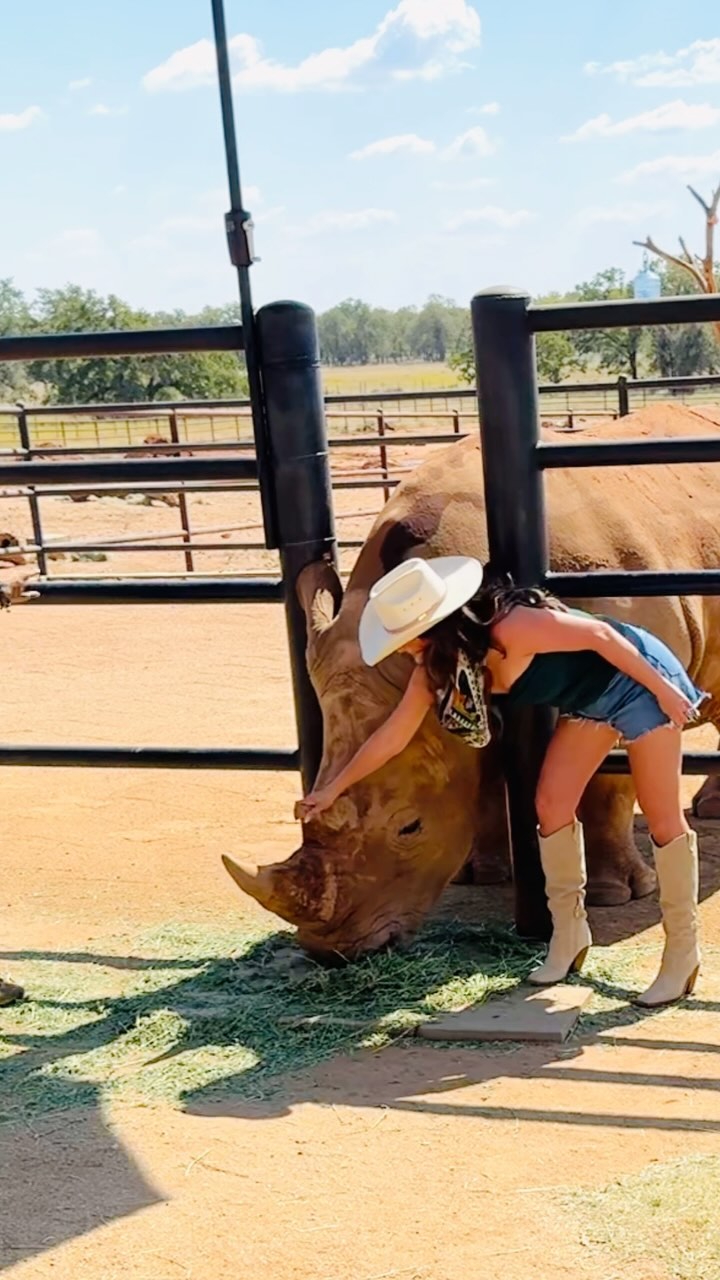
Rhino encounters generate even more attention because rhinoceroses are large, powerful animals with a reputation that often overshadows their actual behavior. Rhinos are not aggressive by default, but they are strong, fast, and capable of serious injury if startled or crowded. In a safe wildlife facility, direct rhino contact is never casual. It occurs under strict supervision, with barriers, controlled approach routes, and trained staff who read the animal’s posture and movement. A visitor may be allowed to pet a rhino in a managed setting, but that action only happens because the animal has been conditioned for calm, voluntary participation. Positive reinforcement training is common in modern animal management. It helps reduce stress during routine care, foot inspections, weighing, and medical checks.
This matters from an animal welfare perspective. Training can give keepers a way to examine an animal without sedation. It also creates predictable routines. Rhinos do better when care is consistent. Their skin, feet, and diet all require close monitoring. Skin condition can be affected by sun exposure, mud wallows, insect irritation, and enclosure environment. Foot health is especially important because captive rhinos can develop lameness if substrate, movement patterns, or body weight management are not handled properly. A serious facility pays close attention to these details. That is the difference between a display and professional zoological care.
The safari-style model in Fredericksburg, TX also raises the question of what makes this experience different from a standard zoo visit. The difference is scale, access, and atmosphere. Traditional zoos often present many species across a large campus with general viewing. A smaller wildlife lodge or manor-style operation may offer fewer species but deeper interaction. Guests can hear keeper explanations, spend more time with each animal, and observe behavior in a less crowded environment. That can improve learning. It can also create stronger emotional attachment, which is useful if that attachment leads to better support for wildlife conservation.
Longneck Manor has also gained attention for its overnight accommodations, including cottages and a giraffe suite that has become widely discussed online. Lodging near wildlife can be appealing, but it also adds management complexity. Noise control, guest movement, feeding schedules, and nighttime lighting all affect animals. Good design reduces disturbance. That means placing sleeping areas at a proper distance, using barriers, and controlling access after hours. Guests may enjoy the novelty, but the facility must still prioritize animal routines. Species housed near lodging areas should have access to retreat spaces where they can avoid constant view and interaction. Privacy matters in captive wildlife care. It lowers stress and supports normal rest cycles.
For families, this type of wildlife tourism can be especially effective as an educational tool. Children learn quickly when they can connect animal anatomy with real observation. A giraffe’s height, tongue, and patterned coat become more than facts in a book. They become visible traits linked to survival. A rhino’s skin texture, mass, and movement show how large herbivores depend on strength, not speed alone. Staff education is central to that learning. A good guide does more than point out species names. The guide explains habitat needs, diet, social structure, conservation status, and the reason certain rules exist. That level of communication turns a visit into a lesson in zoology.
Safety is a major theme in any close-contact wildlife program. Guests should arrive on time because tours follow fixed schedules. Staff need time to brief visitors, manage feeding materials, and position the group. Closed-toe shoes, hats for sun protection, water, and charged phones are practical choices in the Texas Hill Country climate. Heat stress affects both humans and animals. In hot weather, visitors should move calmly, avoid crowding, and listen to staff instructions without interruption. Phones should be used for photos only when they do not interfere with the animals’ comfort. Flash, loud sounds, and fast gestures can alter animal behavior. Responsible visitor behavior is part of the welfare system.
Wildlife facilities like this also sit within a broader conservation conversation. Conservation is not only about protected land in Africa or Asia. It also depends on public awareness, funding, and the next generation’s understanding of species loss. Giraffes, for example, have experienced range reductions and population pressures from habitat conversion, fragmentation, and local threats. Rhino species face even more severe problems, including poaching and habitat decline. When a facility uses close encounters to explain these pressures accurately, it can increase support for conservation groups, accredited breeding programs, habitat protection, and anti-poaching work. Guests who leave with more respect for the animals may also become more likely to donate, volunteer, or support policy action.
Zoo management principles apply directly here. Diet control, preventive veterinary care, behavioral monitoring, and environmental enrichment all matter. Enrichment includes objects or experiences that encourage natural behavior. For giraffes, that can mean browse placement, feeding variation, and social grouping. For rhinos, it can mean mud wallows, terrain variation, scent-based enrichment, and opportunities for movement. Enrichment is not decoration. It is a welfare requirement that reduces boredom and supports species-appropriate activity. Good facilities also track fecal output, body condition, appetite, and interaction patterns. Those data help staff spot illness early. Animal care is strongest when observation becomes a daily habit.
The visitor experience in Fredericksburg, TX works because it combines emotion with education. Guests are drawn in by the novelty of petting a rhino and feeding giraffes. They stay interested because the experience is framed by expert staff and clear safety procedures. That structure matters. Without it, close animal contact can become unsafe and ethically weak. With it, the visit becomes a practical example of how wildlife tourism can support education and animal care. The setting also benefits from the appeal of the Texas Hill Country itself. Visitors often combine the wildlife tour with other local activities, which helps spread tourism income across the area.
A responsible traveler should think about animal welfare before arrival. Do the animals have visible shade, clean water, and space to move away from guests? Are interactions supervised? Is the facility transparent about species care? Those questions are useful. They help distinguish a conservation-minded attraction from one that relies on spectacle alone. In Fredericksburg, TX, Longneck Manor has attracted attention because it appears to meet the public’s desire for memorable animal contact while maintaining a guided and controlled environment. That balance is hard to achieve.
The souvenir shop and donation option also matter more than they may first appear. Purchases and donations can help support food, veterinary supplies, enclosure maintenance, and staff training. Wildlife care is expensive. Large herbivores consume significant amounts of forage. Veterinary oversight requires skilled personnel and equipment. Heating, cooling, fencing, waste management, and water systems all carry ongoing costs. Visitor spending can contribute to those expenses when it is directed toward legitimate care operations. Guests who want to help can support the facility in practical ways, but they should still ask where funds go and how animal welfare is measured.
Fredericksburg, TX now stands out for more than its wineries and historic downtown. It also offers a safari-like Texas experience that brings people close to giraffes and rhinos in a structured setting. That makes it especially useful for public education. A well-run encounter teaches anatomy, behavior, diet, enclosure design, conservation, and the ethics of captive wildlife care. It can also inspire lasting interest in wildlife stewardship. The most memorable part is not only the photo or the novelty. It is the chance to see how professional animal management turns an unusual attraction into an educational encounter with real scientific value.
*****
Source Description
✨UNIQUE safari like Texas experience in Fredericksburg, TX!!
🦏 Who knew that in hill country Texas you could experience something like this!!! I pet a rhino and fed giraffes yesterday at the incredible @longneckmanor with @visitfredtx !!!
🏡 On site cottages are available for over night accommodations along with a giraffe suite which went viral online(has to be booked at least a year in advance!!) I couldn’t film it since someone was staying in it.
🦒 This was hands down one of my the most memorable experiences in Fredericksburg, TX to date and one I will never forget. 🥹
Bring the kids and make this a fun family experience.. the staff is super knowledgeable and do a fantastic job making sure the animals and guests are kept safe throughout the whole tour.
Tip:
-wear a hat if sunny
-bring water
-make sure your phone is charged for photo ops
-plan for about 75mins
-and make sure you plan to arrive 15-20mins before your starts
-pick up some cute souvenirs at their gift shop or make a donation
