
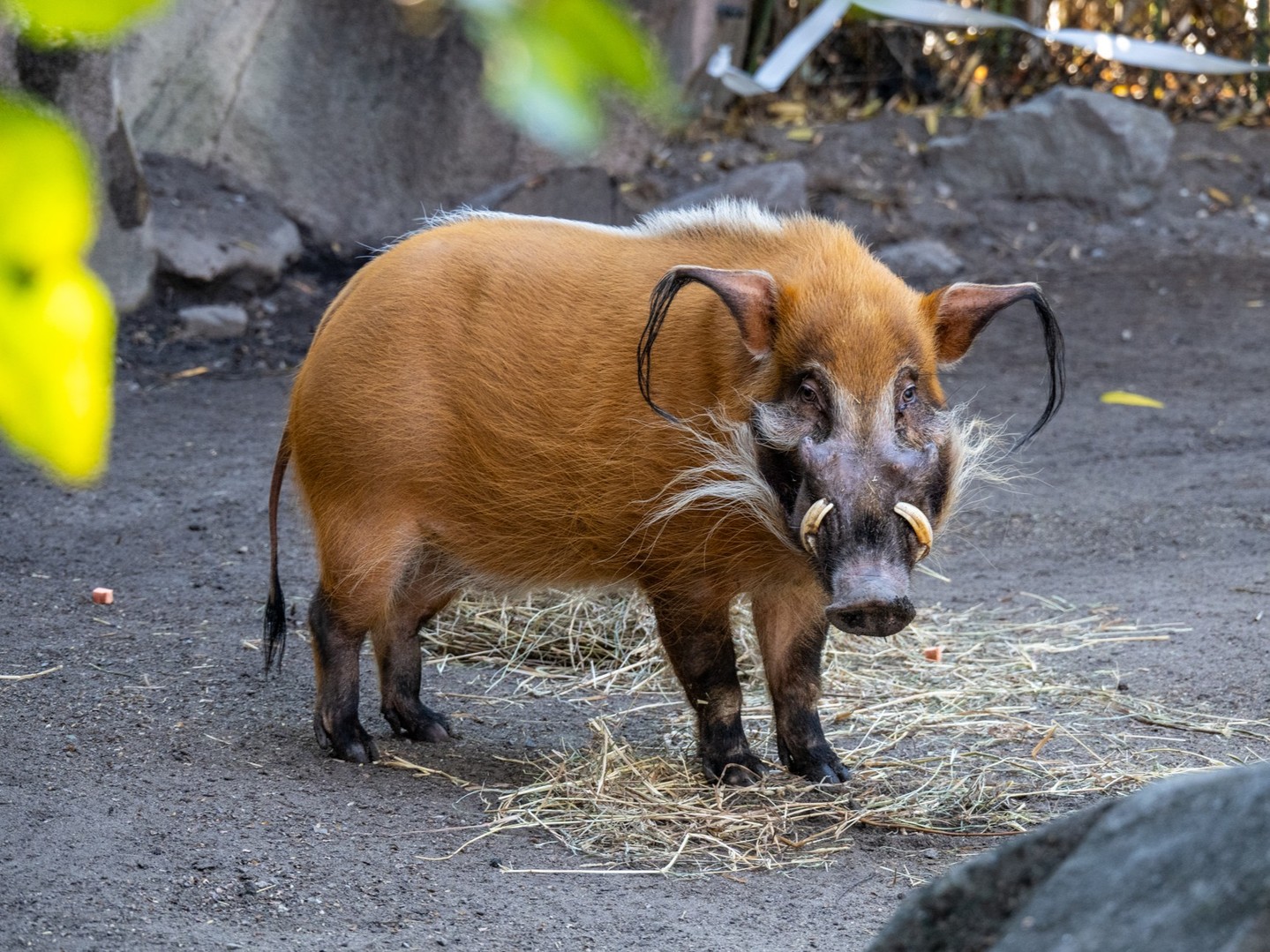
- Hampton the red river hog: Overview of species characteristics
- The role of Species Survival Plans (SSPs) in managing animal populations
- Importance of social structures in red river hog species
- Hampton’s introduction and acclimatization to his new habitat
- Zoo management and animal care strategies for integrating new animals
Hampton, the red river hog, is a fascinating addition to our African Safari Trail. Red river hogs (Potamochoerus porcus) are known for their distinctive reddish-brown coats, white facial markings, and tufted tails. These hogs are native to sub-Saharan Africa and typically inhabit forests and bushlands. As omnivores, they have a varied diet that includes fruits, roots, tubers, and small invertebrates, allowing them to adapt to different environments.
Hampton is 12 years old and joins us as an important member of our zoo community, previously residing at another AZA-accredited facility. His keepers describe him as a rockstar, eager for attention and engagement from both his caretakers and visitors. This enthusiastic disposition highlights not only the social nature of red river hogs but also the need for interaction and stimulation that these animals thrive on.
Species Survival Plans (SSPs) play a significant role in managing the populations of various species in accredited zoos. While many animals receive recommendations for breeding to strengthen genetic diversity, not all are selected for this purpose. In Hampton’s case, his arrival was motivated by social needs rather than breeding opportunities. He has been designated as a companion for our female red river hogs, Remi and Tiki. Hogs typically live in groups consisting of one male and multiple females. The integration of these social structures is vital for their mental and physical well-being.
Hampton’s introduction to our facility is a critical phase for both him and the female hogs. As he becomes familiar with his new living conditions, his visibility may be limited. Initially, he can be seen early in the morning as he adjusts to his surroundings. This acclimatization is a proactive step we take to reduce stress in the animals, allowing Hampton to explore and understand his habitat without feeling overwhelmed.
Zoo management strategies play an important role in ensuring that animals like Hampton adapt successfully to their new environments. This includes considering their behavioral and psychological needs, especially when introducing new companions. The planning involves gradual exposure to the habitat and the other animals. Being aware of stress indicators will help the keepers determine the right timing for introducing Hampton to Remi and Tiki.
Social structures are crucial in the lives of red river hogs. These animals are known for their gregarious behavior and strong bonds within their groups. Male hogs often exhibit dominant behaviors and establish hierarchies. Understanding these dynamics is essential for zoo staff. It ensures a harmonious environment, mitigating potential conflicts. Careful monitoring during this introduction phase helps to foster positive relationships, resulting in a stable social group.
Murphy’s law does not apply; it’s necessary to modify care routines based on the individual animal’s personality and history. Each encounter they have together is an opportunity for behavioral observation and trust-building. It’s imperative that signs of aggression or stress be addressed promptly. Proper animal welfare practices limit the need for veterinary interventions down the line and facilitate more natural social interactions.
Understanding the biology and ecology of the red river hog provides valuable insights into Hampton’s needs. Native to dense forests and riverine areas in Africa, these hogs use their keen sense of smell to forage for food in the underbrush. They are notably agile and can navigate complex terrains while rooting for food. Their physical adaptations, like strong legs and sharp snouts, allow them to dig effectively to unearth tubers and roots.
Their omnivorous diet is critical not only for their health but also for maintaining the biodiversity of their native ecosystems. Red river hogs contribute to the dispersal of seeds, playing a key role in forest regeneration. The decisions taken in zoos regarding feeding must reflect a natural diet closely, ensuring they receive a variety of fruits, vegetables, and proteins, which can mimic their foraging experiences in the wild.
The introduction of Hampton to the female hogs is a significant event. It is not only about physical proximity but also about forming mutual trust. The keepers will observe their interactions closely to ensure that each animal feels secure and valued. This is vital for mental health and overall quality of life. Allowing the hogs to establish their social hierarchy naturally can also lead to more balanced group dynamics.
Animal care practices extend beyond diet and social structure. Enrichment is crucial. Providing elements that stimulate physical activity or cognitive challenges can prevent boredom and promote overall welfare. For Hampton, this may include items like logs to dig under, puzzle feeders, or even scents from other animals to encourage natural foraging behaviors. The goal is to create an environment that reflects their natural habitat as closely as possible while also considering their well-being in a zoo setting.
The partnership between zoos and accredited facilities plays a crucial role in the conservation of species like the red river hog. Many of these animals face threats in their natural habitats, including habitat destruction and poaching. By participating in Species Survival Plans, zoos contribute to global conservation efforts. They not only work on population management but also lend expertise in breeding programs, education, and research.
As a source of information and advocacy, zoos host educational programs that emphasize the importance of conservation in their visitors. Understanding animals like Hampton can inspire future generations to value biodiversity. The excitement surrounding his arrival is not just about him as an individual, but what he represents for his entire species.
The combination of community engagement, education, and research mobilizes efforts to protect threatened habitats and species. Hampton and his companions will be part of conversations that promote awareness of wildlife conservation. This educates the public about the critical need for protecting native ecosystems, ensuring a future for species that face decline in wild populations.
Hampton’s story exemplifies thoughtful animal care, conservation strategies, and the dynamics of social structures in the animal kingdom. His safe transition into our zoo not only enriches our animal family but also offers an opportunity for the community to learn and participate in conservation efforts. Observing his interactions with Remi and Tiki will undoubtedly be a rewarding experience for both visitors and staff. In every sense, Hampton embodies the spirit of connection between wildlife and humanity, which is central to our mission in preserving animal species and their habitats.
*****
Source Description
There’s another new face on our African Safari Trail.. welcome Hampton the red river hog! 🐷
Hampton is 12 years old and comes to us from another AZA-accredited facility. His keepers say he’s been a rockstar since arriving at the Zoo and he LOVES attention.
While we often discuss breeding recommendations from Species Survival Plans (SSPs) for many of our animals, it is important to note that not all animals that call the Zoo home receive these recommendations. However, it’s interesting to note that SSPs will also recommend animals for companionship instead of breeding. Hampton and our female red river hogs, Remi and Tiki, are an example of this because he was sent here as a companion animal for our girls since these hogs normally will live in groups of a male and several females.
Right now, Hampton is becoming accustomed to his new habitat and may only be visible occasionally first thing in the morning. As he becomes more comfortable, he will be introduced to the girls and all 3 will be on habitat together. We can’t wait for you all to meet him!
