
- The significance of greater kudu in wildlife conservation and biodiversity.
- Details about the greater kudu population, habitat, and threats they face.
- The role of zoos in animal husbandry and species preservation.
- Insights into the mother-calf bond and early behavior of greater kudu calves.
- The importance of naming and education in fostering a connection with wildlife.
Welcoming a new greater kudu calf to the zoo is not just an event; it symbolizes the ongoing efforts of wildlife conservation. Greater kudus (Tragelaphus strepsiceros) are remarkable animals, both for their distinct appearance and their ecological importance. Each new addition to their population plays a vital role in broader conservation initiatives aimed at preserving biodiversity.
Greater kudus are known for their striking physical characteristics. Males typically have long, spiral horns that can reach up to 72 inches in length, while females are hornless and exhibit more slender bodies. These herbivorous antelopes inhabit dry savannas and bushlands across eastern and southern Africa. They are especially adept at navigating dense vegetation, thanks to their remarkable agility and camouflage capabilities. This adaptability is essential for avoiding predators and foraging for food in their natural habitat.
Despite their impressive adaptations, greater kudus face numerous threats in the wild. Habitat loss due to agriculture and urbanization, poaching, and human-wildlife conflict have led to significant declines in their population. Conservationists are dedicated to raising awareness about these challenges and advocating for measures to protect these animals and their ecosystems.
Zoos play a crucial role in the preservation of greater kudus. They provide not only a safe environment for these animals but also facilitate breeding programs aimed at boosting population numbers. These programs are designed with a focus on genetic diversity, which helps enhance resilience and adaptability in the species. By managing breeding carefully, zoos can contribute to the statistical viability of greater kudu populations, ensuring that they thrive in captivity and potentially amongst varying natural habitats.
In addition to improving population dynamics, zoos offer valuable opportunities for education. Visitors can view species up close, providing them with a tangible connection to wildlife. This engagement fosters an understanding of the importance of conservation efforts. The unveiling of the calf, the first female at the zoo, highlights this educational mission. Through programs that include naming the calf, zoos encourage visitors to form emotional bonds with the animals, reinforcing the relevance of conservation.
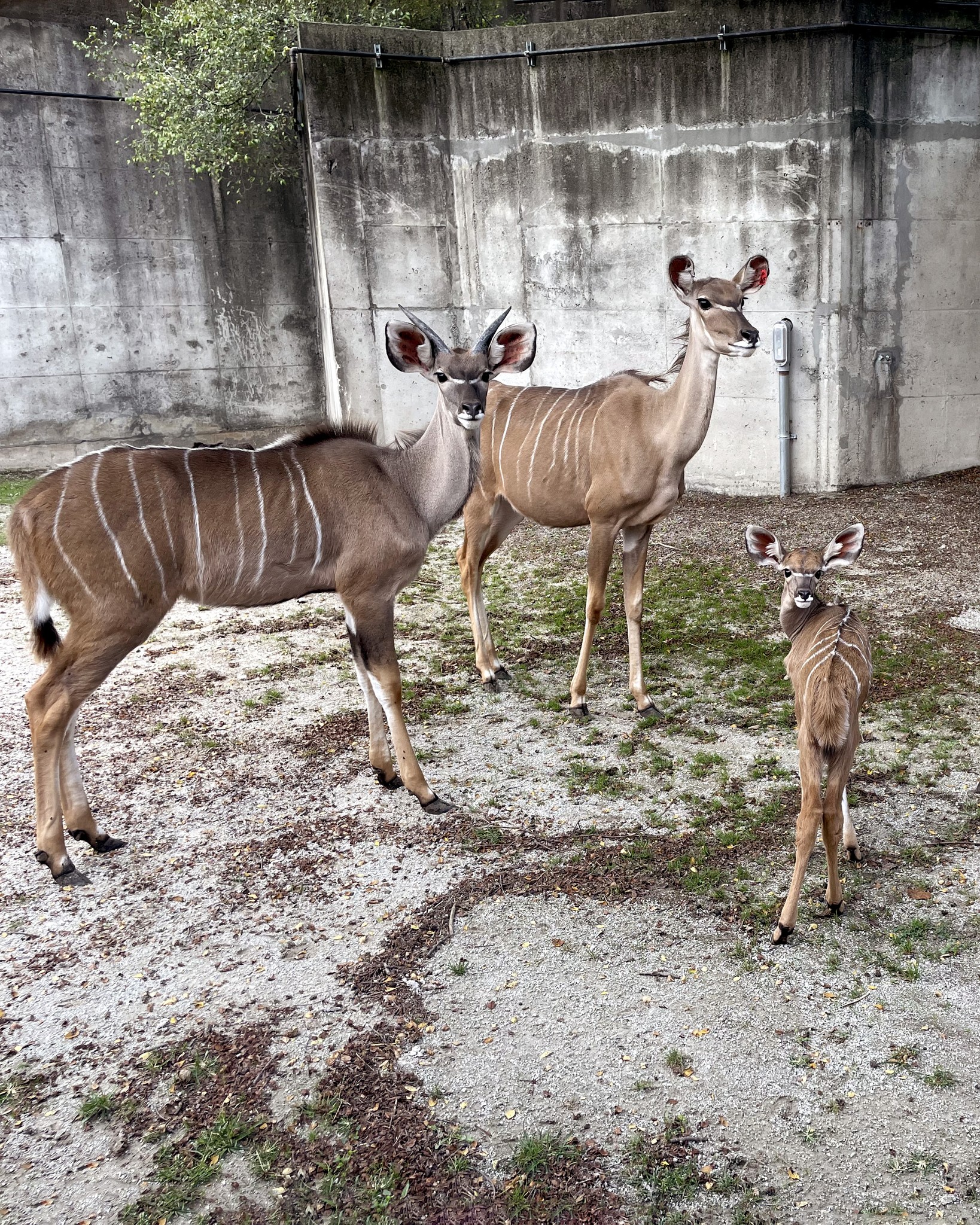
Newborn greater kudu calves, like our latest addition born on September 8, typically exhibit specific behavioral traits that enhance their survival. At birth, they weigh around 30 pounds and display a spotted coat that helps them blend into the environment. This camouflage is crucial in avoiding predation during their vulnerable early days. The calf remains close to its mother, Neva, who plays a significant role in its development. In the initial weeks, the mother cautiously guides her newborn, teaching essential skills for survival in the wild.
The bond between the mother and calf is pivotal. Neva’s nurturing instincts are seen in her protective behavior. She will select safe locations for her calf while allowing it to explore their surroundings gradually. This learning process is vital for the calf’s growth as it begins to venture into the larger yard with its brother, Katavi. Such interactions not only strengthen their social skills but also help them prepare for a life in a more expansive landscape.
Awareness and education about greater kudus extend beyond the immediate connection formed through zoo visits. Understanding the ecology of the species enriches knowledge about broader environmental issues. For instance, greater kudus help maintain the vegetation dynamics of their habitats. Their browsing habits encourage plant diversity, which is crucial for the stability of their ecosystems. When their populations decline, the negative effects ripple through the environment, affecting other species and the overall health of the ecosystem.
Efforts to conserve the greater kudu and educate the public about their importance exemplify a proactive approach to biodiversity. Programs that emphasize habitat conservation, community education, and sustainable practices are pivotal. By engaging local communities, conservationists can foster a sense of shared responsibility toward wildlife preservation. Empowering communities to participate in conservation initiatives is essential for creating lasting change.
Naming the new calf adds another layer to the connection between the zoo and its visitors. This practice not only personalizes the animal but also encourages ongoing interest and enthusiasm for animal care and wildlife conservation. When individuals feel a personal link to an animal, they are often more inclined to support conservation efforts, whether by visiting the zoo or participating in advocacy.
The new greater kudu calf represents a hopeful narrative in the fight for wildlife conservation. The story encompasses the challenges faced by these magnificent animals and the collaborative efforts undertaken by zoos, conservation organizations, and the public. The ongoing dedication to ensuring a future for greater kudus is essential.
While our focus is on this exciting new addition, broader conservation initiatives continue to be vital. Protecting the fragile ecosystems where greater kudus thrive is urgent. This includes not only safeguarding their habitats but also tackling the interconnected issues of climate change, poaching, and illegal wildlife trade. Each of these challenges requires strategic, multifaceted approaches to promote long-term sustainability.
Zoos serve as ambassadors for wildlife conservation. By highlighting the significance of species such as the greater kudu, zoos foster a culture of respect and understanding toward all wildlife. Through informative exhibits, active engagement, and educational presentations, they create a platform from which the importance of biodiversity is championed.
As the greater kudu becomes increasingly recognized through initiatives like naming our new calf, the dialogue around conservation becomes more pronounced. The narrative of greater kudus is one that deserves attention; their story is one of resilience, adaptation, and the collective responsibility we share toward wildlife.
Our new greater kudu calf symbolizes not only a contribution to her species’ population but also an entry point for discussions about conservation. Through every interaction, whether direct or indirect, the chance to teach future generations about these magnificent animals can arise. As we watch her grow, we remain committed to advancing understanding and action in the interest of preserving wildlife for years to come.
By welcoming a new greater kudu calf into the world, we are reminded of our responsibility to protect such incredible creatures. Through continued education, community involvement, and effective conservation strategies, we can work towards a future where greater kudus—and many other species—thrive in their natural habitats and captivity alike. Each new life is a victory, a testament to resilience against the odds, and a beacon of hope for all who are dedicated to the cause of wildlife conservation.
*****
Source Description
We are so happy to welcome our third greater kudu calf to the Zoo, and our first girl! This little one was born to mother Neva and father Tumaini on September 8. She’s recently started bravely venturing out into the big yard with her mom (no horns) and brother, Katavi (little horns). She doesn’t have a name yet, but we’ll let you know as soon as she does!
