
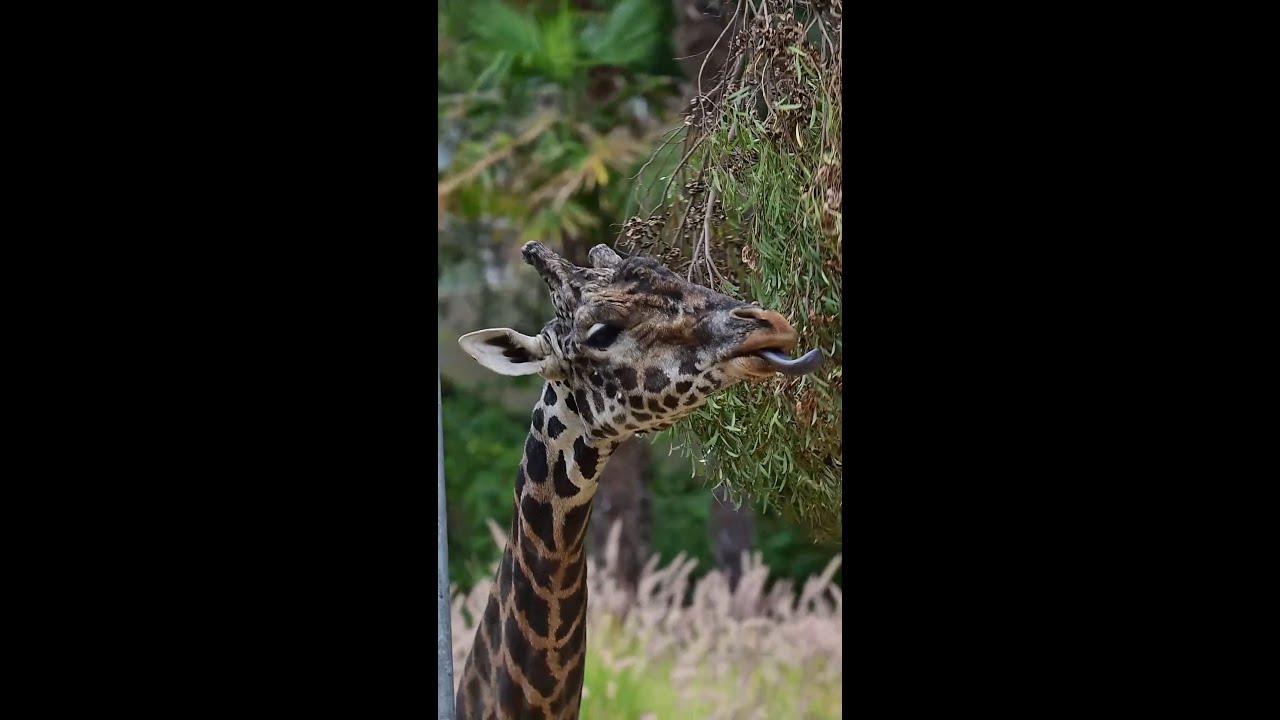
- Giraffes have black tongues to protect them from sunburn and their unique diet.
- Their long necks and unique circulatory system allow giraffes to eat from treetops.
- Giraffes exhibit fascinating social structures and behaviors.
- Conservation efforts are critical for giraffe survival under threat from habitat loss.
- Giraffes play a crucial role in their ecosystems and biodiversity maintenance.
Giraffes, with their towering necks and striking spots, are iconic creatures of the African savannah. Among their many distinctive features, their black tongues are particularly intriguing. These remarkable appendages serve an essential function and are a testament to the wonders of evolution.
Black tongues play a significant role in giraffe survival. Their dark pigmentation is crucial, offering protection against intense sunlight as giraffes feed on treetops for hours each day. This adaptation is key, considering their diet mainly comprises acacia leaves. These trees not only grow tall but are also often crowned with thorns and exposed to direct sunlight. The melanocytes in the tongue protect against ultraviolet radiation, minimizing the risk of sunburn.
Moreover, giraffes utilize these robust, prehensile tongues, approximately 18 to 20 inches long, to skillfully navigate around thorns. Their tongues are coated with tough papillae, which allow them to strip leaves from branches efficiently while avoiding injury. This adaptation is a fine example of evolution’s handiwork—animals perfectly suited to their environments and survival needs.
Giraffes’ long necks complement their feeding habits. This anatomical feature allows them to reach vegetation beyond the reach of other terrestrial animals, effectively reducing food competition. However, a long neck presents unique challenges, particularly concerning blood flow. To address this, giraffes have a specialized cardiovascular system. They possess a large heart, up to two feet long, generating twice the blood pressure of most mammals. This system ensures that adequate blood reaches the brain, even when their head is lifted high.
The giraffe’s circulatory system is sophisticated, incorporating valves to regulate blood flow, particularly when the head is lowered. Special adaptations in the vessels near the brain prevent blood from rushing back when they bend down to drink water. This system not only exemplifies natural engineering but also showcases the giraffe’s capacity to thrive in its unique ecological niche.
Social structures are another facet of giraffe life that captivates zoologists. Giraffes are social animals, often forming loose herds. These groups typically lack a solid hierarchy, characterized instead by fluid dynamics where individuals come and go. This lack of fixed social structure is advantageous, enabling giraffes to adjust group sizes based on predation pressure and resource availability.
Calves are often nurtured in nursery herds where they are protected and overseen by a few adults while mothers forage. This social cooperation is vital for calf survival, as it reduces individual predation risks. Female giraffes, or cows, display maternal investment, returning regularly to feed their young.
Giraffe conservation has gained prominence as their populations face severe threats. Habitat fragmentation, illegal hunting, and human encroachment are significant issues. Certain subspecies, like the Rothschild’s giraffe, have been classified as endangered. Conservation scientists are working tirelessly to protect these animals through habitat preservation and anti-poaching measures.
Efforts also include captive breeding programs within zoos, which play an essential role in preserving genetic diversity. Zoo management prioritizes breeding programs for threatened species, ensuring that population numbers remain stable while maintaining healthy gene pools.
Giraffes are vital to their ecosystems, serving as keystone species. Their feeding habits encourage seed dispersal, promoting vegetation growth. By pruning tree canopies, they allow sunlight to reach lower plants, fostering diversified plant communities. These activities illustrate their critical role in maintaining the ecological balance and supporting biodiversity.
Interactions with other species also underline giraffes’ environmental importance. They often attract tick-eating birds, which helps control parasite populations. Their presence can also affect predation dynamics, influencing the behavior of lions and other predators.
Understanding giraffes provides insight into the broader complexities of ecological systems. Conservation efforts to protect these gentle giants extend beyond preserving a single species; they aim to safeguard an entire habitat. This holistic approach underscores the need for supportive collaborations between governments, NGOs, and local communities.
In conclusion, giraffes are a testament to evolutionary ingenuity. Their black tongues are just one of many adaptations that enable them to thrive. As we continue to explore the intricacies of giraffe biology and behavior, it becomes increasingly evident how interwoven their survival is with broader conservation efforts. Each discovery furthers our understanding of their role within the ecosystems and highlights the steps necessary to protect these magnificent creatures for future generations.
*****
Source Description
The L.A. Zoo is home to a “tower” of Masai giraffes: Phillip, Zainabu (“Bu”), and SOFIE. 🦒🦒🦒
These gentle giants can reach 18 feet tall, yet have the same number of neck bones as humans — just seven, each over 10 inches long! Their long prehensile blue tongues help them skillfully strip thorny acacia leaves, and the dark pigment protects against sunburn under the African sun. At birth, calves are already 6 feet tall and stand within 30 minutes, ready to go! 🏃
But these incredible animals are in trouble. In what’s been called a “silent extinction,” Masai giraffe populations have dropped by 50% in the last 30 years due to habitat loss, illegal hunting, and prolonged drought. The L.A. Zoo proudly participates in the Masai Giraffe Species Survival Plan, a cooperative breeding program among AZA-accredited zoos to maintain genetic diversity and sustainability in the North American zoo population.
Today — and every day — we stand tall for giraffes. 🫶
#WorldGiraffeDay #Giraffe #StandTallForGiraffe
