
- Understanding the Natural Habitat and Behavior of Wood Bison
- Importance and Methods of Enrichment in Captivity
- Impact of Enrichment Activities on Welfare and Conservation
- Role of the Wood Bison Activity Centre in Education and Conservation
- Integration of Scientific Research in Enrichment Practices
The Wood Bison, an iconic species of North America, represents much more than just a symbol of wilderness. As the largest terrestrial mammal on the continent, understanding their natural behavior and habitat needs is crucial for effective conservation efforts. In a captive environment, such as that of a zoo or an activity center, simulating their natural conditions necessitates innovative enrichment strategies to promote well-being and facilitate educational experiences for visitors.
Understanding the Natural Habitat and Behavior of Wood Bison
Wood Bison are adapted to the boreal forests and grasslands of northern Canada and Alaska. These massive creatures thrive in regions where they have access to a variety of vegetation for grazing. Their diet comprises grasses, sedges, and other plant matter, and they are known to travel long distances. Seasonal migrations reflect their need to access food as environmental conditions change throughout the year.
In the wild, Wood Bison exhibit complex social structures often dictated by matriarchal hierarchies within herds. Their social interactions, breeding behaviors, and habitat usage patterns are integral aspects of their ecology. To preserve these behaviors in captivity, understanding and replicating their natural settings is paramount.
Importance and Methods of Enrichment in Captivity
Enrichment in zoos and sanctuaries is essential to maintain the physical and psychological health of captive animals. For Wood Bison, the primary aim of enrichment is to mimic the mental and physical challenges of their natural environment. This involves creating opportunities for foraging, exploration, and social interaction, all of which are crucial for their overall well-being.
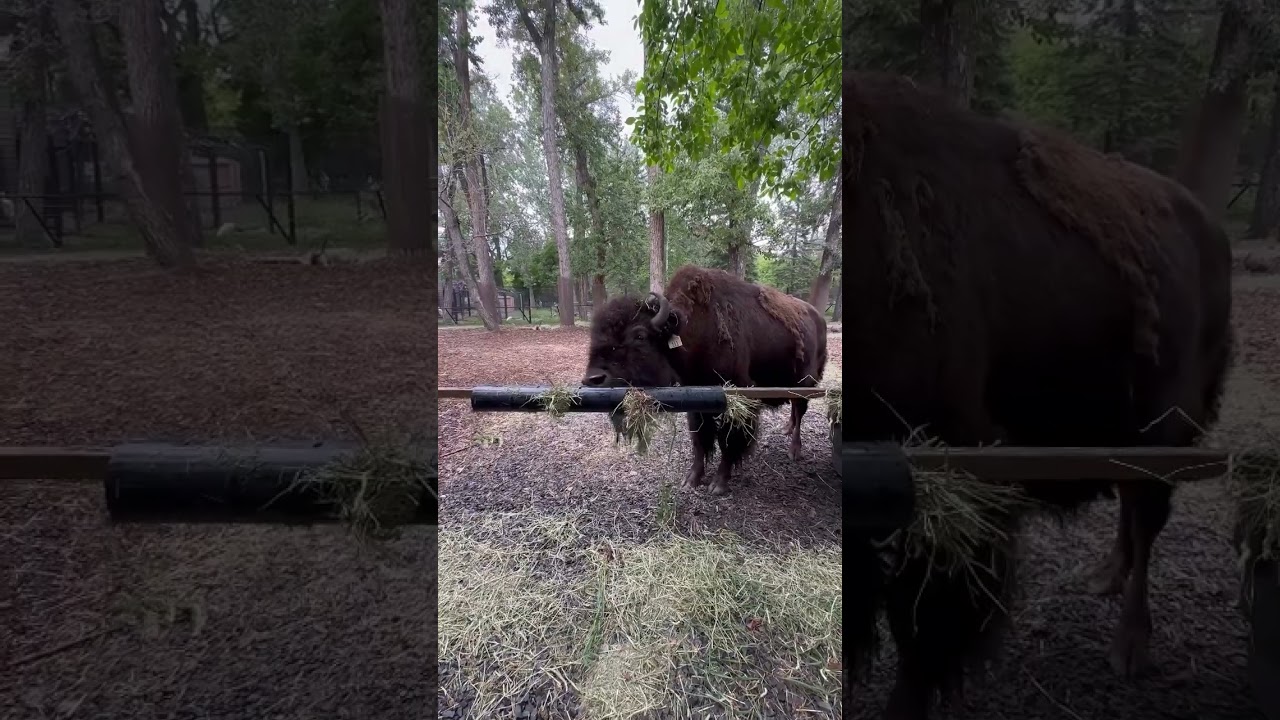
Common enrichment methods used for Wood Bison include scatter feeding, engaging puzzles, and habitat alterations that encourage natural behaviors. Preparation of varied food items promotes foraging skills while structural modifications like varying terrain and water features can enhance exploration and physical activity.
Impact of Enrichment Activities on Welfare and Conservation
Effective enrichment programs don’t just improve the lives of animals in captivity; they also contribute to larger conservation goals. Enrichment helps mitigate stress, reduce stereotypic behaviors, and improve reproductive success in captive populations. By fostering physical fitness, mental stimulation, and natural behavior exhibition, enrichment activities can enhance the genetic pool and health of bison populations that might someday play a role in rewilding efforts.
Furthermore, enriched environments in zoos offer visitors a glimpse into the dynamic lives of animals, fostering empathy and support for conservation initiatives. Educational programs that show these activities can inspire future conservationists and increase public engagement in wildlife preservation.
Role of the Wood Bison Activity Centre in Education and Conservation
The Wood Bison Activity Centre functions beyond mere entertainment; it serves as a hub for education and conservation advocacy. By integrating enrichment practices, it allows visitors to observe natural bison behaviors, providing a platform for education on the species’ ecological role and conservation challenges. Interactive exhibits and informational sessions target a broad audience, encouraging a deeper understanding of the importance of wildlife conservation.
The center’s commitment to conservation extends to collaborating with researchers to innovate enrichment methods and monitor their effectiveness. By aligning its efforts with scientific research, the center enhances its educational impact and contributes valuable data to the field of wildlife management.
Integration of Scientific Research in Enrichment Practices
Scientific research underpins the development of effective enrichment strategies. Detailed studies on bison behavior and physiology help refine techniques that are both stimulating and beneficial. Research collaborations with universities and conservation organizations foster a deeper understanding of habitat needs and stress reduction strategies.
Adaptive management of enrichment practices, informed by ongoing research, ensures practices evolve in line with new findings. These collaborations not only fine-tune current methodologies but also contribute to broader wildlife conservation science.
The Wood Bison Activity Centre represents an innovative approach to wildlife conservation and education. By aligning enrichment strategies with the animals’ natural behaviors and ongoing scientific research, the center enhances the well-being of its residents while promoting public awareness and engagement. Through these efforts, it contributes significantly to the conservation of an iconic North American species.
*****
Source Description
Our Animal Care, Health & Welfare team is always finding creative ways to keep our animals engaged – and this enrichment activity centre for wood bison mom ‘Taiga’ proved to be a hit! 😋
#YourZooYYC #Enrichment #woodbison
