
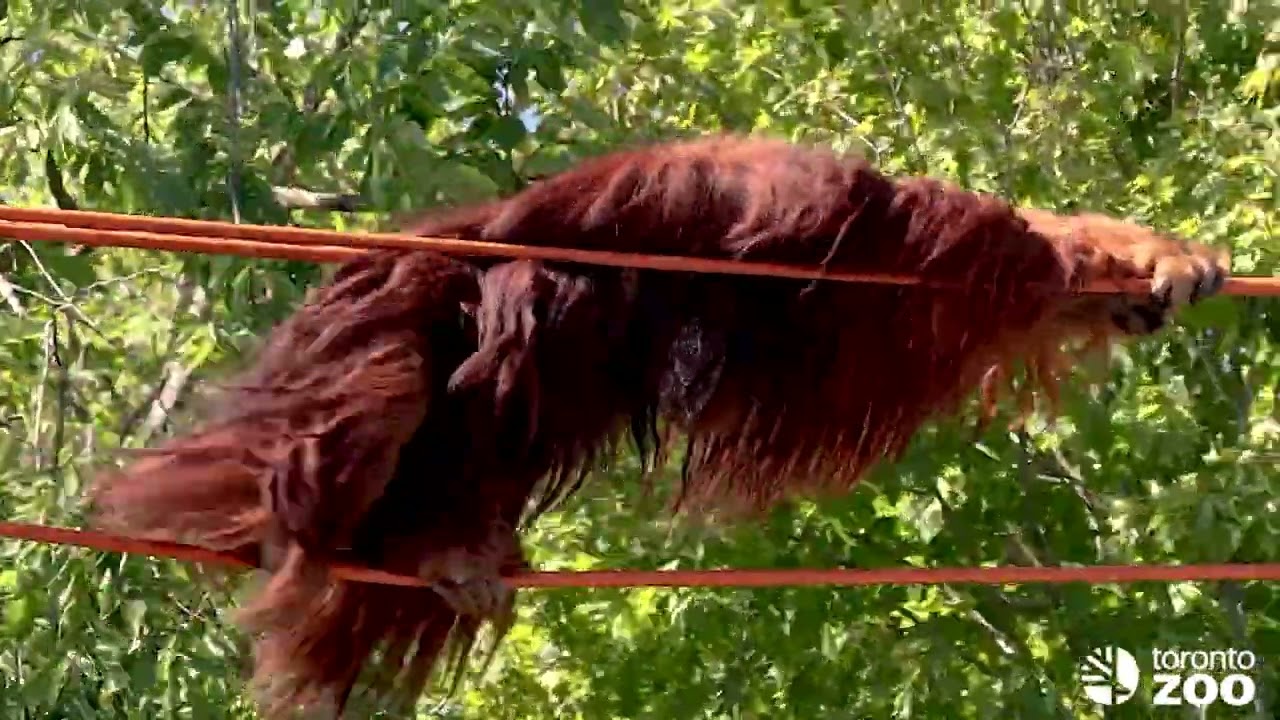
- Introduction to Budi on the O-Lines and its ecological significance.
- Details on orangutan biology and behavior.
- Conservation efforts and challenges faced by orangutans.
- The role of zoos in wildlife conservation and education.
- Insights into the production of educational content involving orangutans.
Budi on the O-Lines represents a profound example of how orangutans live and interact within their environments. The “O-Lines” refer to an innovative setup that allows Budi, an orangutan, to traverse overhead lines in the zoo, mimicking the arboreal pathways of native rainforest habitats. This system is part of a broader effort by wildlife conservancies and zoos to recreate natural settings that encourage physical activity, exploration, and behavioral enrichment for zoo residents.
Orangutans, scientifically known as Pongo, are great apes with incredible cognitive abilities. They are native to the rainforests of Borneo and Sumatra and are recognized for their human-like emotions and high levels of intelligence. The word “orangutan” itself means “person of the forest” in the Malay language, attesting to their anthropomorphic features and behaviors.
Budi’s existence and activities on the O-Lines highlight important aspects of orangutan biology. These primates are primarily arboreal, spending up to 90% of their life in trees. They possess strong, long arms necessary for brachiation, a form of movement that involves swinging from tree limb to tree limb. This behavior is effectively simulated in a zoo environment through the O-Lines. Engaging in such activities helps maintain Budi’s physical health and psychological well-being, reducing stress and encouraging natural behaviors.
Budi’s activities also provide valuable opportunities for research. Zoos often collaborate with scientists to study orangutans’ patterns and preferences, offering insights into their cognitive processes and social interactions. These studies are crucial for understanding the needs and challenges faced by wild populations.
Orangutans are critically endangered due to habitat loss, poaching, and the illegal pet trade. Their rainforest habitats are rapidly declining because of logging, mining, and oil palm agriculture. In response to these threats, conservation organizations work tirelessly to preserve and restore natural habitats while implementing breeding programs in captivity to bolster population numbers.
The role of zoos, including the one housing Budi, is crucial in these conservation efforts. Modern zoos strive to be centers of conservation, education, and research—not just entertainment. They provide safe havens for endangered species, facilitate breeding and release programs, and educate the public about the importance of biodiversity and the impact of human activities on wildlife.
Zoos are also instrumental in raising awareness about species like Budi. Interactive exhibits and educational programs inform visitors about the specific challenges orangutans face, inspiring people to contribute to conservation efforts. This educational aspect is vital for shaping public attitudes and fostering a commitment to conservation.
The creation of videos and other educational content that feature Budi and the O-Lines serves a dual purpose. They entertain and educate audiences worldwide about orangutan behaviors and conservation needs. Insightful content production requires collaboration between zoologists, filmmakers, and educators to accurately depict Budi’s environment and experiences while effectively conveying conservation messages.
Additionally, video content featuring Budi on the O-Lines can aid in scientific research by documenting behaviors and interactions over time. These records are invaluable for longitudinal studies on orangutan behavior, adaptation, and learning processes.
In crafting such content, it is important to balance storytelling with factual accuracy, ensuring that the audience gains an understanding of not only the wonder of orangutans but also the critical issues they face. By capturing Budi’s world, creators can spark a greater interest in wildlife conservation and encourage proactive engagement from the public.
Budi on the O-Lines exemplifies the evolving strategies of wildlife conservation in zoos. It highlights how innovative designs and programs can simulate natural behaviors, encourage public education, and support scientific research. The stories of individual animals like Budi can inspire conservation action and promote an understanding of the complexities of wildlife conservation and management.
*****
Source Description
Have you been looking up? 👀
When travelling across the bridge that connects guests at Malayan Woods with the Indo-Malaya Pavilion, you may be treated to viewings of Budi, Kembali and other critically endangered Sumatran orangutans in the tower directly above. In the case of Budi, he was out exploring the o-lines at the beginning of the week.
Thus far, a number of the Sumatran orangutans in our care have continued exploring the research station and enjoying their outdoor home, as weather permits.
Are you aware? Letting the animals set the pace for moments like these, in addition to giving them as much choice and control in their lives as possible, is critical to their growth and wellbeing. This is all thanks to a very encouraging and highly-skilled Wildlife Care team who give each orangutan the opportunity to explore spaces at their own pace and effort.
Each orangutan continues having different experiences to date – some heading out straight away, and others preferring to just have a peek. This is all part of the process, demonstrating your Zoo’s commitment to welfare and ensuring that the animals’ wellbeing is always the first consideration. #TORangutans #SeeThemSaveThem
