
- The training science used in modern zoos: methods, learning theory, and application.
- How keeper-animal relationships build welfare, cooperation, and voluntary medical care.
- Program design and operational practices that support safe, effective training across species.
- Public education and conservation outcomes from the new video series, Training Tales from Around the Zoo.
Training Tales from Around the Zoo introduces viewers to the practical science and daily practice of animal training at a working zoological institution. Each episode spotlights keeper-animal interactions that facilitate health care, husbandry, and enrichment. The series opens a window into precise, repeatable techniques grounded in learning theory. That transparency allows professionals and the public to grasp the purpose behind particular behaviors and procedures.
Learning theory guides the work shown in Training Tales from Around the Zoo. Operant conditioning sits at the center of modern zoo training. Positive reinforcement increases the frequency of desired behavior by rewarding an animal when it offers that behavior. Trainers break complex tasks into small steps. They reinforce successive approximations, a process known as shaping. Targeting—teaching an animal to touch or follow an object—serves as a simple, clear cue. Over time, shaped responses become reliable behaviors that animals perform willingly. This is the basis for cooperative care, where animals present body parts, enter transport crates, or stand still for medical inspection.
Classical conditioning and desensitization are additional tools. Classical conditioning links neutral stimuli with a pleasant outcome, reducing stress when the cue appears. Desensitization reduces fear of novel or aversive stimuli by exposing animals slowly and predictably. Trainers monitor body language closely and stop or slow progress when stress indicators appear. The work shown in Training Tales from Around the Zoo emphasizes voluntary participation; animals are never forced into procedures. Voluntary behavior reduces risk for staff and animals and improves long-term welfare.
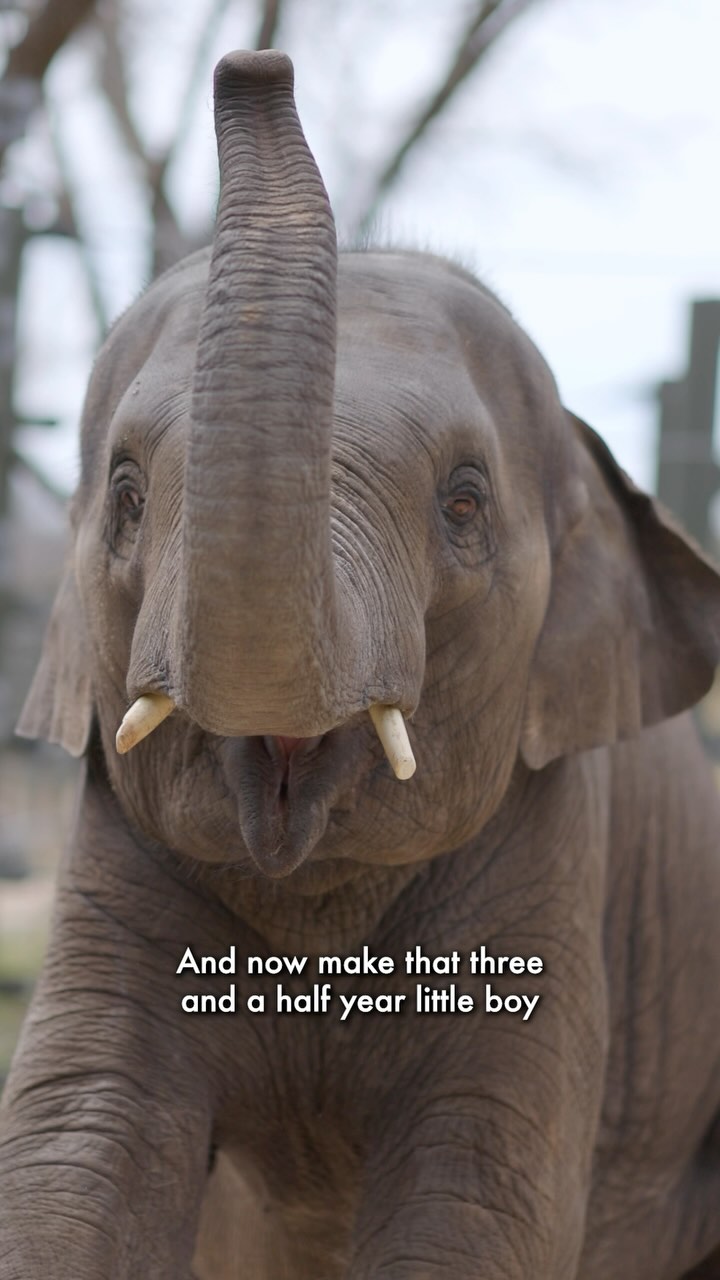
Elephants are among the most cognitively complex species cared for in zoos. Asian elephants (Elephas maximus) exhibit advanced social cognition, long-term memory, and problem-solving skills. These traits make them both excellent candidates for positive reinforcement training and sensitive indicators of welfare. Brazos, a 3.5-year-old Asian elephant calf featured in the first episode, offers a clear example. At this age, calves engage in rapid social learning. They form strong bonds with caretakers and peers. Training goals for young elephants emphasize basic husbandry cooperation, desensitization to medical equipment, and enrichment behaviors that support natural movement and foraging patterns.
Training for elephants often includes stationing—teaching an elephant to stand in a specific location—and foot care routines, which allow keepers to inspect and treat feet without restraint. Trainers also teach trunk-specific behaviors, like presenting the trunk for inspection or voluntarily placing it through an opening to receive a cuff for blood sampling when necessary. These behaviors reduce the need for sedation and minimize stress during veterinary interventions. The episode with Gabby and Brazos demonstrates how consistent cues, short sessions, and high-value reinforcement build trust. Gabby’s team records each training session in behavioral logs to track progress and adjust reinforcement schedules.
Keeper-animal bonds are foundational for successful training. Trust is earned through predictable interactions, consistent staff presence, and clear communication. Keepers act as both training partners and observers. Their daily interactions form a continuous data stream about each animal’s health, mood, and social relationships. Behavioral indicators—such as appetite changes, social withdrawal, stereotypic behavior, or altered movement—signal welfare concerns. Training is both a preventive and diagnostic tool. When animals participate voluntarily in weight checks, blood draws, or noninvasive exams, keepers gain frequent, low-stress access to health metrics. This continuous monitoring can detect illness earlier than intermittent examinations alone.
Multi-keeper teams contribute to consistency and redundancy. Trained staff use standardized cues and reinforcement hierarchies so animals learn a single set of associations regardless of which keeper works with them. Team-based training also reduces risk; when an animal moves unexpectedly during a session, other experienced keepers can respond calmly. Documentation supports team coherence. Behavioral targets, success criteria, and stepwise plans are recorded and shared. These records allow new staff to pick up progress quickly and help veterinary staff interpret behavioral history during medical cases.
Training programs are part of zoo management systems that integrate animal care, veterinary services, and conservation education. Program design begins with species-specific ethograms—catalogs of normal behaviors—and evidence-based husbandry standards. Trainers develop measurable objectives. For example: “Elephant calf will voluntarily lift a forefoot onto a block and hold for 10 seconds, 80% of trials across three consecutive days.” Such specificity supports clear evaluation. Positive reinforcement schedules are chosen to maintain motivation and learning rate. Early sessions use continuous reinforcement. Once a behavior is reliable, trainers shift to intermittent reinforcement to maintain behavior under variable conditions.
Risk management is central to operational planning. Training sessions include safety protocols for keepers and animals, choreographed escape routes, and communication signals. Facilities must support training goals. For large species, yards, chutes, and safe holding areas are designed to permit voluntary movement and protect staff. Equipment selection avoids physical coercion and prioritizes stable, simple targets and cradles that animals can use comfortably. All decisions follow welfare science and legal standards.
Training programs link directly to conservation outcomes. When zoos teach audiences about species biology, behavior, and threats, they create pathways to conservation action. The new series, Training Tales from Around the Zoo, translates technical work into everyday stories that viewers can understand and act upon. Episodes show practical examples of how husbandry supports long-term species survival—by maintaining genetic health, by modeling natural behaviors, and by participating in managed breeding and reintroduction programs when appropriate. Viewers learn that animal care in a zoo setting is part of a broader conservation strategy.
Ethics and transparency guide production of educational media. Filming must avoid sensationalism or staging that could misrepresent animal welfare. Camera crews coordinate with keepers to minimize disturbance. Shots are planned to document genuine training sessions rather than create artificial drama. Editing choices aim for accuracy and clarity. In Training Tales from Around the Zoo, narration explains the science behind each behavior and states clearly when behaviors are voluntary. The series also avoids anthropomorphism that could mislead the public about animal motivations and needs.
Measuring impact is essential for both training programs and public education. For training, success metrics include behavioral compliance rates, reduced use of chemical restraint, frequency of voluntary health checks, and physiological stress markers such as fecal glucocorticoid metabolites. For public outreach, metrics include viewer engagement, changes in knowledge and attitudes measured through surveys, and follow-up actions such as donations or participation in conservation initiatives. The production team sets key performance indicators before release. Early episodes, like the one with Brazos, can be used as case studies for peer review and staff training.
Scientific collaboration strengthens program outcomes. Zoos partner with universities, behaviorists, and conservation organizations to evaluate methods and publish findings. Controlled studies can compare reinforcement schedules, session lengths, or enrichment types to determine effectiveness. Shared data improve best practices across institutions. Training Tales from Around the Zoo can highlight these collaborations by showing how research informs daily care and how zoo data feed into broader conservation science.
Animal welfare science provides objective frameworks to evaluate training programs. The Five Domains model is commonly used: nutrition, environment, health, behavior, and mental state. Training impacts several domains. It supports health by facilitating veterinary care. It improves behavior by increasing opportunities for goal-directed activity. It influences mental state by reducing fear through predictable routines and by offering cognitive challenges. The series describes these relationships plainly, using Brazos as an example: voluntary foot-lifting and trunk behaviors grant easier access to veterinary exams, reduce the need for sedation, and offer cognitive stimulation that matches an elephant calf’s developmental needs.
Young animals require special consideration in training plans. Developmental psychology and ethology inform age-appropriate goals. For a 3.5-year-old Asian elephant, sessions must respect attention span and physical maturation. Calves learn at different paces. Trainers set conservative success criteria and increase complexity gradually. Social learning is leveraged; calves observe adult elephants performing behaviors and often imitate them. The video series captures social learning moments, showing how peer and adult models accelerate skill acquisition.
Keeper well-being affects training outcomes. High-quality programs invest in staff training, mental health resources, and opportunities for professional development. Staff turnover disrupts animal routines and can slow progress. Documenting training protocols, creating clear handover processes, and maintaining institutional memory are practical steps to mitigate that risk. Training Tales from Around the Zoo acknowledges the people behind the scenes while focusing on scientific practice.
Public engagement through storytelling raises awareness of species threats. Asian elephants face habitat loss, human-wildlife conflict, and illegal trade. The series connects on-site training to in situ conservation by explaining how zoo programs support habitat protection, local community projects, and anti-poaching efforts. Viewers learn that zoo-based care is often linked to field conservation through funding, research collaboration, and education that shapes public policy and behavior.
Production choices in documentary work can highlight science effectively. Short segments focused on a single behavior allow deep explanation without losing viewer attention. Combining footage with on-screen graphics—such as diagrams of reinforcement schedules or simple ethograms—helps translate technical concepts. Interviews with keepers, veterinarians, and researchers provide multiple perspectives. Training Tales from Around the Zoo mixes observational footage with explanatory elements so audiences gain both emotional connection and factual understanding.
Transparency about limitations is part of ethical communication. The series clarifies that training cannot erase natural needs or replace habitat protection. It describes what captive care can and cannot achieve. For example, while cooperative behaviors allow more frequent health checks, they do not substitute for large, species-appropriate environments outside of the facility. Accurate messaging prevents complacency and encourages informed support for conservation priorities.
Practical takeaways for other institutions and enthusiasts appear throughout the series. Segments cover session planning, reinforcement selection, record keeping, and indicators of stress and success. The show encourages institutions to adopt science-based practices and to share data openly. Training Tales from Around the Zoo thus functions as both public outreach and professional resource.
Case data strengthen credibility. When available, the series includes quantitative results: session counts, percentages of voluntary participation, reductions in sedation events, or changes in stress hormones tied to training milestones. Presenting measurable outcomes supports replication. In Brazos’s case, documented steps show how short, frequent sessions with high-value reinforcement produced measurable improvements in voluntary cooperation for foot inspection over a six-month period.
Finally, the series models responsible conservation advocacy. It asks viewers to support habitat protection, ethical policy, and community engagement programs. It suggests practical actions: supporting accredited zoos, participating in citizen science, reducing demand for illegal wildlife products, and advocating for policies that protect species and ecosystems. Training Tales from Around the Zoo links everyday training work to these larger conservation goals, showing that small, evidence-based actions at the enclosure level can ripple outward to broader impact.
Training in modern zoos is rigorous and scientific. It is also humane and preventive. The series exposes the techniques and reasoning behind daily practice. It shows clear examples, like Gabby and Brazos, in which training increases voluntary participation in medical and husbandry tasks and improves welfare. Viewers come away with an understanding of learning theory, operational practice, ethical production, and conservation implications. Training Tales from Around the Zoo frames animal care as an intersection of science, compassion, and public education—an approachable model for anyone interested in zoology and environmental stewardship.
*****
Source Description
Introducing our new video series, “Training Tales from Around the Zoo”! 🐾✨
This series highlights the incredible bonds between keepers and animals, showcasing how trust and teamwork lead to training successes that enhance animal care. We’ll travel around the Zoo as we give you a behind-the-scenes glimpse at the dedication and effort our keepers put into building these important relationships.
In our first feature, Gabby, one of our elephant keepers, shares her experience training Brazos, our 3.5-year-old Asian elephant calf. Through positive reinforcement and consistent training with Gabby and his other keepers, Brazos has learned behaviors that help facilitate daily and medical care. His voluntary participation is a true testament to the trust between animal and keeper! 🐘💙
