
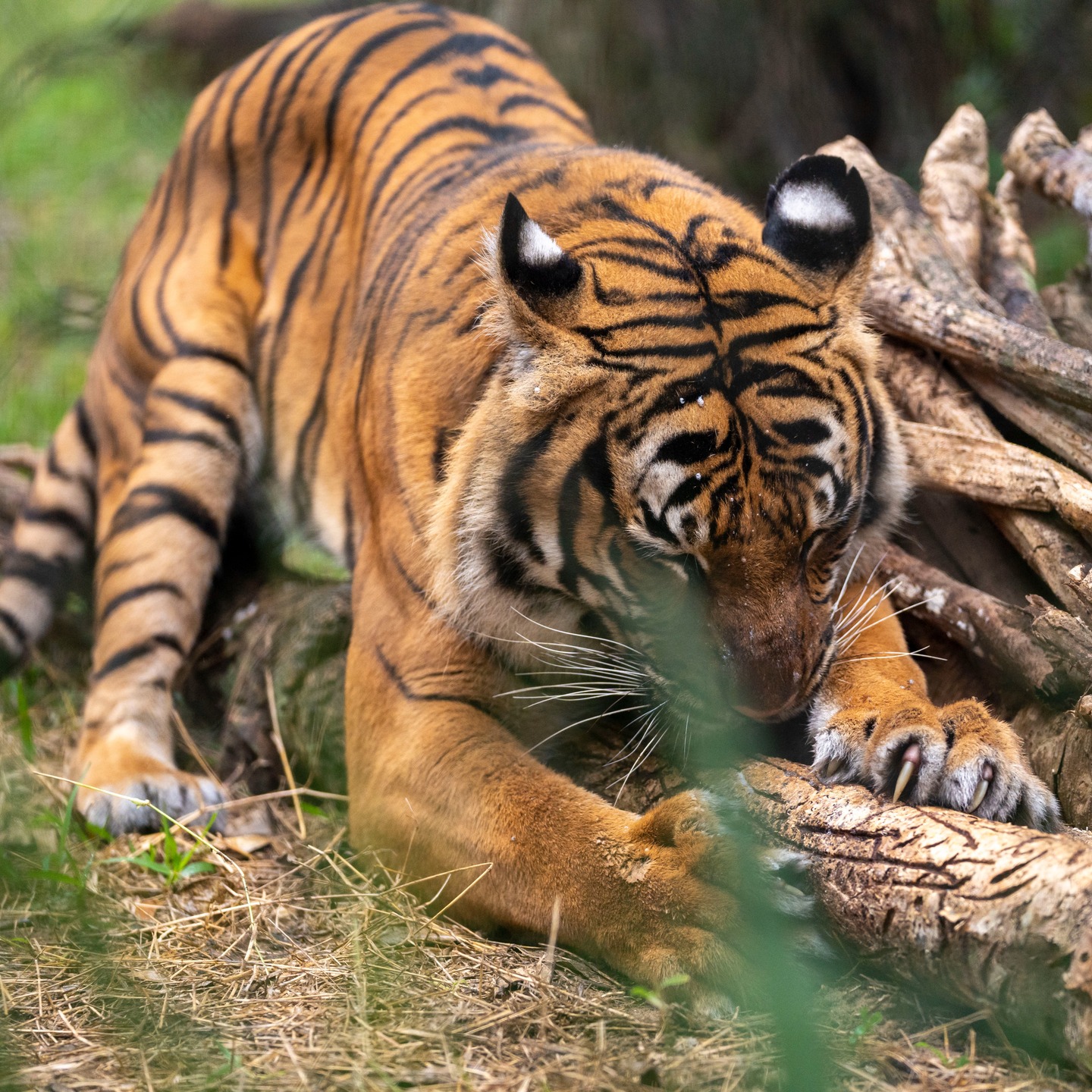
- The importance of scratching behavior in big cats.
- Designing effective scratching posts for big cats in captivity.
- Impacts of scratching on big cat health and well-being.
- Conservation and ethical considerations in providing for captive big cats.
- Real-world applications and examples in zoo management.
Big cats, with their dominant presence and powerful physicality, engage in a variety of natural behaviors that are essential for their well-being. Among these, scratching stands out. It is not merely a way for cats to maintain their claws but a crucial aspect of their behavioral repertoire.
The importance of scratching behavior in big cats
Scratching serves multiple biological and psychological functions. For big cats, it marks territory by depositing scent and visual markers. The action of scratching involves extending the claws and retracting them as they rake over a surface. This movement helps maintain the sharpness of their claws, a key factor for hunting and defense in the wild. Moreover, it stretches the muscles in their limbs and back, promoting physical fitness and reducing the risk of injury.
In captive environments, providing opportunities for scratching can prevent stress-related behaviors. When big cats lack natural outlets for their instincts, they might develop stereotypic behaviors like pacing or excessive grooming. Understanding these needs is foundational in creating a habitat that supports their health.
Designing effective scratching posts for big cats in captivity
Creating suitable scratching posts for big cats involves thoughtful design. The post must withstand their powerful physicality and meet their instinctual needs. Materials should be durable, such as hardwood or reinforced structures wrapped in sisal rope, which can endure repeated use. The height and stability of the post are also crucial. It should allow the cat to stretch fully, mimicking natural tree trunks they might encounter in the wild.
Innovative designs include incorporating logs or artificial trees into the habitat. These can be positioned to encourage climbing and scratching, simulating a more natural environment. Engaging zoo visitors with these structures not only enriches the cats’ lives but educates the public about their natural behaviors and needs.
Impacts of scratching on big cat health and well-being
Scratching is directly linked to the physical health of big cats. Healthy claws are vital for their overall well-being, aiding in natural behaviors such as climbing, hunting (in simulated environments), and self-defense. Moreover, the act of scratching provides mental stimulation. It allows cats to express natural behaviors, reducing the stress and boredom that can occur in captivity.
Zoological institutions often collaborate with veterinary experts to monitor the health impacts of scratching facilities. Regular assessments ensure that the materials and structures are effective and safe, fostering an environment where big cats can thrive.
Conservation and ethical considerations in providing for captive big cats
From a conservation standpoint, it is important to provide environments that enable natural behaviors. Ethical zoo management recognizes the significance of this and strives to replicate aspects of the wild. By facilitating scratching and other instinctive behaviors, zoos play a key role in the conservation of big cats, ensuring they maintain a good quality of life. This, in turn, supports their potential for breeding programs aimed at protecting endangered species.
Real-world applications and examples in zoo management
Many zoos worldwide are implementing innovative strategies to accommodate the scratching needs of big cats. The Bronx Zoo, for instance, has incorporated naturalistic habitats that include large logs and customizable scratching structures. These designs not only cater to the cats’ needs but also engage the public by providing insight into their natural behaviors.
Similarly, the San Diego Zoo has designed habitats with a focus on enrichment and functionality. Scratching posts are integrated into larger structures that offer climbing, perching, and hiding opportunities. This holistic approach ensures that all aspects of the animals’ needs are considered, from physical health to psychological well-being.
Balancing the interests of conservation, education, and animal welfare is an ongoing challenge in zoo management. However, by prioritizing natural behaviors like scratching, institutions can improve the quality of life for captive big cats, contribute to conservation efforts, and foster public appreciation for these majestic animals.
Understanding and supporting the scratching needs of big cats in captivity is more than a simple task; it is an integral component of modern zoo management. By addressing these needs comprehensively, we acknowledge the importance of preserving not only the physical but also the psychological health of these extraordinary creatures.
*****
Source Description
Big cats need big scratching posts.
