
- The intelligence and problem-solving abilities of eastern indigo snakes and other colubrids.
- The role of puzzle feeders in enriching the lives of captive reptiles.
- The significance of cognitive enrichment in zoo management and wildlife conservation.
- The broader implications for animal welfare and species-specific care.
- Contributions of educational caregivers in advancing reptile enrichment.
The Intelligence of Eastern Indigo Snakes
Eastern indigo snakes (Drymarchon couperi) are celebrated for their intellectual capabilities within the colubrid family. These snakes, native to the southeastern United States, are non-venomous and dominate their ecosystems as apex predators. In captivity, their intelligence is both a challenge and an opportunity for enrichment.
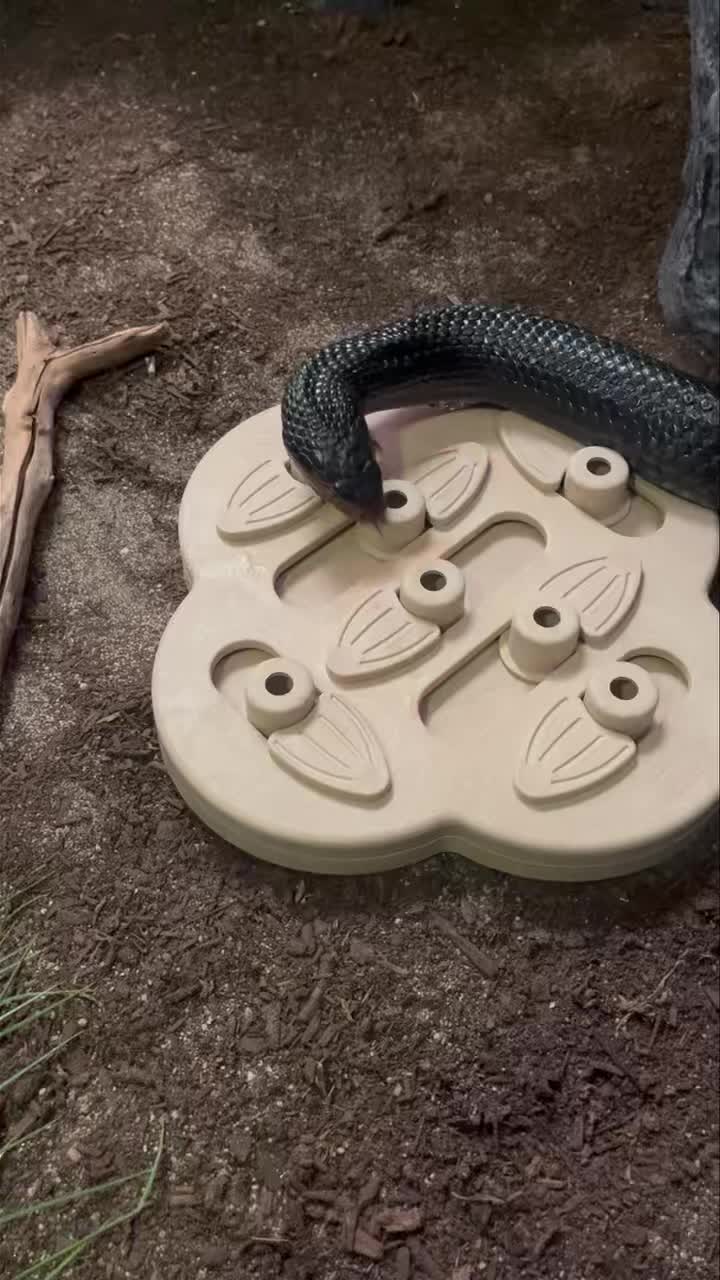
This species uses cognitive skills to hunt and interact with its environment. Observing Montoya, an eastern indigo, solving a puzzle feeder demonstrates its advanced problem-solving abilities. Such feeders are typically associated with domestic pets, yet they play a crucial role in engaging the brains of captive reptiles. This interaction is not whimsical; it is deeply rooted in the snake’s natural behavior of exploring and manipulating its environment.
Eastern indigos are large snakes, often exceeding seven feet in length, and require extensive space to thrive. Their cognitive abilities are comparable to some mammals, necessitating innovative enrichment to maintain mental and physical health. Engaging reptiles like Montoya in problem-solving tasks is vital to stimulate their intellect and behavioral repertoire.
The Role of Puzzle Feeders
Puzzle feeders serve as an essential tool for mental stimulation. They are designed to exploit the natural instincts and intelligence of the snakes, transforming daily feeding into an enriching activity. When used with reptiles, these devices often incorporate hidden compartments or require specific manipulations to access food.
For captive eastern indigos, puzzle feeders help mitigate boredom and prevent stereotypical behaviors often associated with confinement. By challenging their cognitive faculties, feeders enhance the behavioral wellness of these snakes. This interactive feeding approach encourages curiosity and mimics the complexity of finding food in the wild.
At zoos and wildlife parks, puzzle feeders provide practical benefits for both animals and caregivers. They encourage natural hunting behaviors and allow for closer observation of the animal’s problem-solving capabilities. Such tasks can reduce stress and enhance the overall well-being of captive reptiles.
Cognitive Enrichment in Zoo Management
Zoo management has evolved to emphasize cognitive enrichment, especially for intelligent species like the eastern indigo snake. Modern zoos are tasked with creating environments that stimulate natural behaviors and support the psychological health of their inhabitants. Implementing puzzle feeders and other enrichment techniques underscores this commitment.
The goal is to offer diverse stimuli that cater to the species-specific needs of each animal. By integrating cognitive challenges, zoos contribute to the animals’ mental stimulation, thereby promoting positive welfare outcomes. For eastern indigos, this translates to an interactive habitat that fosters exploration and engagement.
Enrichment programs driven by evidence-based practices are crucial. They rely on the scientific understanding of reptile cognition and behavior, guided by ongoing research and documented success stories. This collaborative effort often involves zoologists, veterinarians, and educators working together to optimize the living conditions of captive reptiles.
Implications for Animal Welfare
Enhancing animal welfare is a primary concern in conservation and captivity. Offering cognitive challenges through puzzle feeders is a proactive measure to improve the quality of life for reptiles. Eastern indigo snakes benefit from these activities, revealing broader insights into their complex nature.
The implications are wide-reaching. Effective enrichment can reduce stress-related behaviors and support the physical and mental health of captive animals. It promotes natural behaviors that are essential for their biological and psychological well-being. Ensuring reptiles have access to mentally stimulating environments is crucial for their long-term welfare.
Cognitively enriched environments can also enhance reproductive success by providing conditions that closely mimic their natural habitats. This is particularly important for conservation programs aiming to boost population numbers of threatened species like the eastern indigo snake.
Contributions of Educational Caregivers
The dedication of educational caregivers, like Abbey, plays an instrumental role in developing and implementing enrichment strategies for reptiles. These individuals are often the backbone of animal care and advocacy within zoos, combining hands-on experience with scientific research to advance enrichment practices.
Lead Education Caregiver Abbey’s work with Montoya exemplifies the positive impact of dedicated professionals in this field. Their efforts provide invaluable insights into the capabilities and needs of the reptiles, fostering environments that support their natural instincts and cognitive growth.
Education caregivers collaborate with researchers to design activities that are both challenging and enjoyable for the animals. Through careful observation and documentation, they tailor enrichment to align with each species’ unique behavioral needs. Their contributions are vital in advancing the standards of care and enriching the lives of reptiles in captivity.
In researching and implementing cognitive enrichment strategies, caregivers serve as advocates for animal welfare, ensuring that every reptile, like the eastern indigo snake, receives comprehensive care and stimulation. These practices contribute to a more informed public and foster a deeper appreciation for the complexities of reptile behavior and conservation.
*****
Source Description
Who said puzzle feeders are just for your pets at home?🧐
Watch as Montoya, the eastern indigo snake, solves this puzzle feeder in less than 20 seconds! Eastern indigos are a species belonging to the colubrid family of snakes. This family is known for their complex intelligence and ability to solve puzzles!
📸Thank you to Lead Education Caregiver Abbey for this video
