
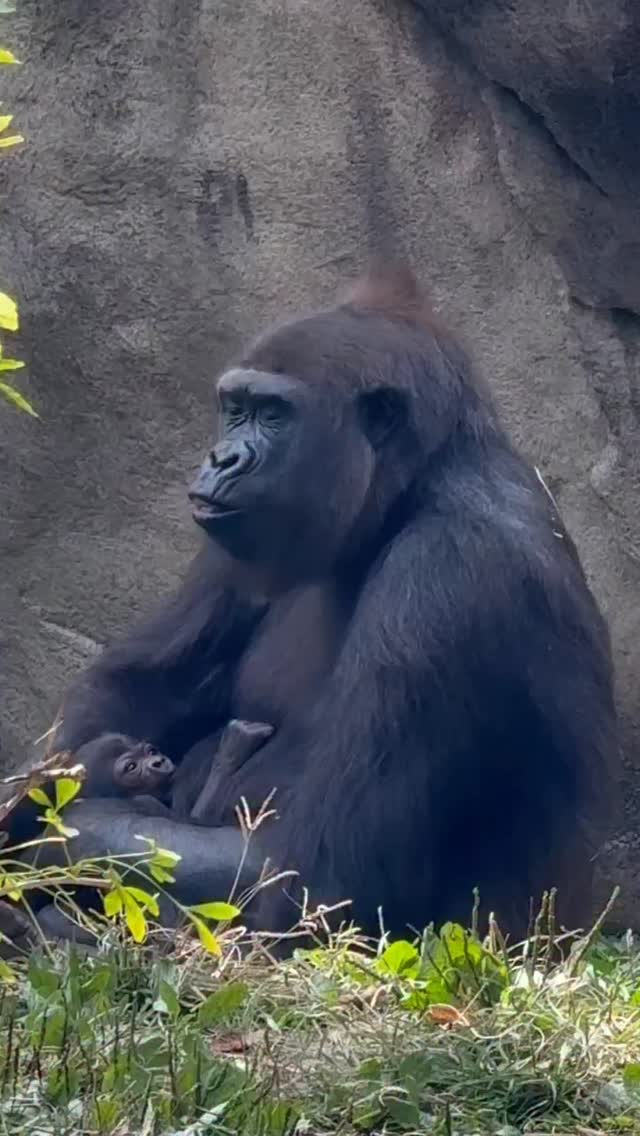
- The significance of the baby gorilla’s outdoor experience for early development.
- The maternal behavior of Gladys and its implications for gorilla rearing.
- The role of zoos in wildlife conservation and education.
- The importance of public engagement with animal care.
- Understanding the biological and social aspects of gorilla behavior.
The significance of the baby gorilla’s outdoor experience for early development is profound. Infants in the wild often have various interactions that contribute to their growth. Exposure to natural environments affects their physical, sensory, and psychological development. For three-day-old baby gorillas, the outside world introduces them to diverse weather conditions, natural light, sounds, and scents that are crucial for their early sensory experiences. These stimuli play a vital role in developing their motor skills and social behaviors. As they explore their surroundings, they begin to develop a sense of their place within the family unit and the larger social group.
Gladys, the new mother, is demonstrating remarkable maternal skills for a first-time mom. Gorilla mothers are predominantly attentive, nursing their young frequently while also providing a safe environment. The bond between Gladys and her baby is critical for emotional and social development. Research shows that gorilla mothers frequently groom and cuddle their infants, which helps establish a strong attachment. This nurturing behavior fosters trust and reduces anxiety in the baby, making it easier for them to explore their surroundings. Gladys’s instincts not only promote the baby’s growth but also ensure that he develops essential social skills that will be important as he matures.
The role of zoos in wildlife conservation and education cannot be overstated. Animal facilities serve as both sanctuaries for endangered species and centers for learning. Through responsible breeding programs, zoos help increase population numbers for critically endangered species, like gorillas. Education programs aimed at the public raise awareness about conservation issues and the need to protect natural habitats. By observing animals such as Gladys and her baby, visitors gain understanding and appreciation, which often translates into support for conservation initiatives. In this case, the attention given to baby gorillas can promote funding for gorilla conservation efforts in the wild.
Public engagement with animal care is paramount in today’s conservation landscape. The excitement surrounding the birth of a baby gorilla serves as an excellent entry point for discussions about the challenges gorillas face in the wild. Increased visitor interest can lead to more comprehensive educational programs and interactive experiences. These engagements highlight the efforts made by zookeepers and wildlife professionals who work tirelessly to ensure animal welfare and promote ethical practices. Letting the public visit Gorilla World allows them to witness the behaviors and challenges of gorilla families, enhancing their understanding and empathic responses toward wildlife.
Understanding the biological and social aspects of gorilla behavior is essential for fostering healthy environments in captive settings. Gorillas are highly social animals that live in familial groups and exhibit complex relationships among their members. Social structures can vary, often led by a dominant male, while females usually bond closely with their offspring. These social bonds are critical for juvenile development, as young gorillas learn the nuances of social interaction, play, and conflict resolution. Watching how baby gorillas interact with their mothers and other family members can provide insight into their natural behaviors.
Today, baby gorillas are not just thrilling spectacles for zoo visitors; they symbolize broader issues in wildlife conservation. As species populations dwindle due to habitat loss and poaching, each new birth in captivity is a potential beacon of hope. The attention given to baby gorillas like the one outdoors today can galvanize people to support conservation policy changes. Funding research and habitat protection initiatives are essential aspects to maintain the survival of gorillas in their native environments. Continuous education on these topics can encourage active participation from the public.
As the baby gorilla grows stronger and begins to pull himself up for nursing, his motor development is on display. Strength training from nursing, coupled with the newly discovered outdoor environment, allows this infant to gradually gain independence. This process often mirrors the milestones observed in human infants, fostering an understanding of the parallels between species. That early strength development is necessary for later climbing and social interactions, and it carries far-reaching implications for the gorilla’s future life.
Furthermore, early social interactions are pivotal. Observing Gladys as she interacts with her baby will provide insight into the development of social behavior, something particularly relevant to people interested in both animal behavior and conservation science. The frequency with which the gorilla baby interacts with both its mother and the zoo staff can provide valuable data. Not only does this encourage robust maternal instincts, but it also reinforces the bonds that are critical for social learning.
Visitors to Gorilla World should not be discouraged if they do not see the baby gorilla on a schedule. The unpredictability of animal behaviors and interactions enriches the visitor experience, making it unique each time. Watching how these beautiful creatures adapt to new environments and challenges drives deeper engagement with the conservation message. Those coming to the zoo can appreciate the balance of the gorilla’s life within the monitored yet enriching environment that zoos strive to create.
Gladys and her baby contribute significantly to the zoo’s educational goals. Behind closed doors, zookeepers carefully plan the best ways to present the animals to visitors. Prizes include not only seeing the baby gorilla but also educating the public about the habitat, diet, and behaviors of these magnificent creatures. Interactive learning stations and informative signage help to impart knowledge about gorillas and the environmental issues they face. The new gorilla baby serves as a catalyst for learning, encouraging conservation-minded attitudes among visitors.
In addition to the immediate joy of seeing a new baby gorilla, there are longer-term educational goals. With increased interest in gorillas comes the responsibility to educate about the threats they face, including deforestation and illegal poaching. By sharing stories of the baby and his family, zoos convey complex information in an accessible way. Visitors often leave with an increased sense of responsibility toward conservation and wildlife protection, transforming their enjoyment into action.
As the baby gorilla continues to grow, observing his journey helps to provide a clearer picture of the complexities of animal life. Every day presents a chance to learn more about social structures, communication methods, and physical development in gorillas. Engaging with the gorilla family allows visitors to appreciate their cognitive abilities, emotional depths, and the intricacies of their interactions. Through caretaking and observation, both zookeepers and visitors gain valuable insights that are applicable not just to gorillas but to wildlife conservation efforts as a whole.
The experience of witnessing a baby gorilla’s interactions in a zoo setting is a powerful testament to wildlife conservation work. Not only does every sighting evoke awe and joy, but it also serves as an important stepping stone toward education, awareness, and action in conservation efforts. Gladys, as a first-time mother, and her baby symbolize hope and resilience. The public’s growing interest will ideally lead to increased support for gorilla conservation efforts, raising awareness about their plight and inspiring advocacy.
In summary, the emergence of the baby gorilla into the outdoor habitat serves as a pivotal moment for both animal and observer. The significance of maternal care, social learning, and public engagement plays an integral role in shaping perspectives about gorillas and their environments. As interactions unfold, the legacy of captive breeding, education, and conservation unfolds, emphasizing the interconnectedness of all creatures and the natural world. The lessons learned from observing these animals can play a part in ensuring their survival, making every visit to see the baby gorilla an opportunity for deeper understanding and connection.
*****
Source Description
The 3-day-old baby gorilla went outside today for the first time. Gladys may be a first-time mom, but she’s already a natural. Baby is growing stronger each day. He’s now able to pull himself upwards for nursing. Visitors can stop by Gorilla World on their next visit in hopes to get a glimpse of the new baby, but they will not be on a set schedule of when they will be out.
