
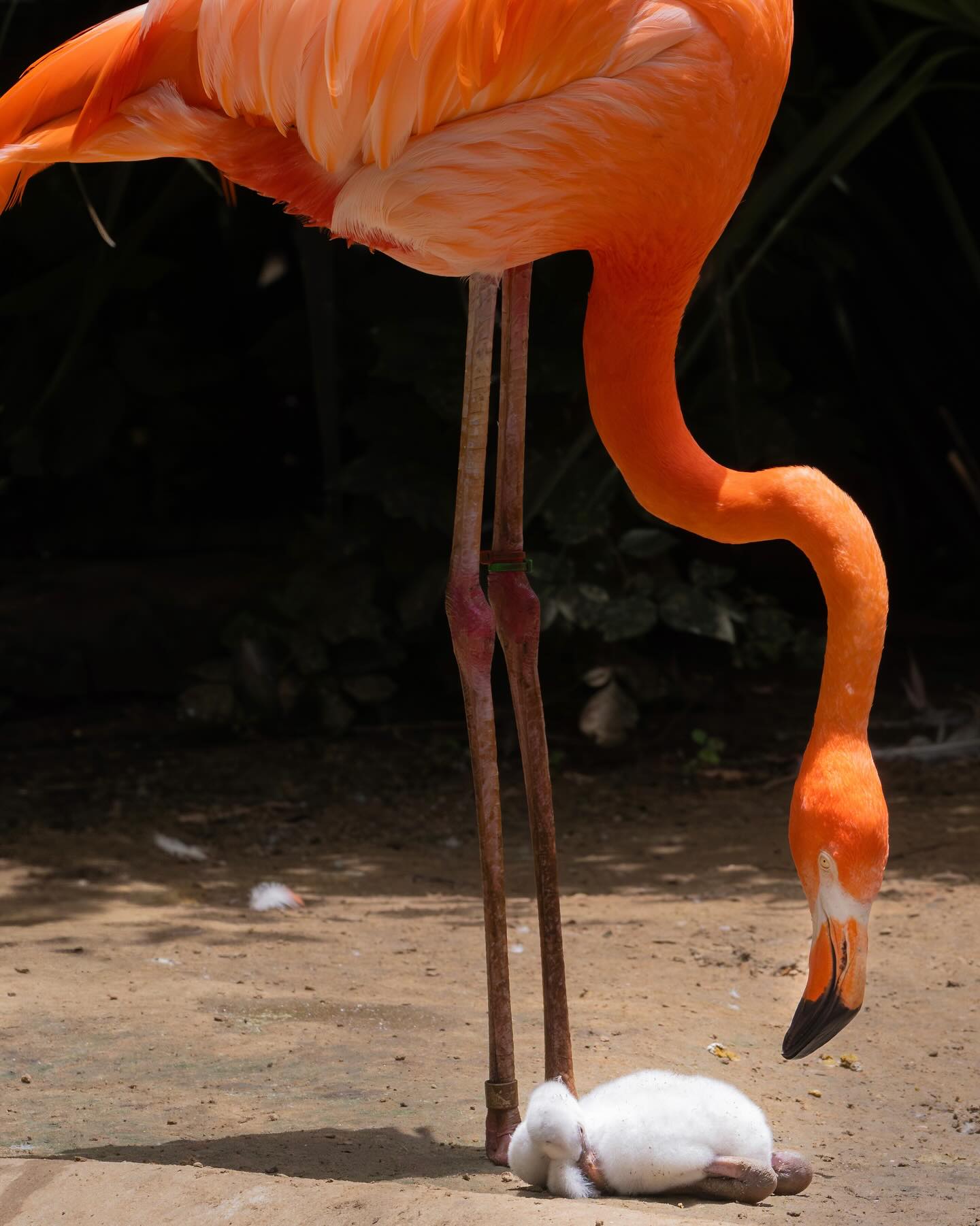
- Newly hatched Caribbean flamingo chicks are highly dependent on their parents and the colony’s social structure during their earliest days.
- Flamingo Bay offers a strong example of how zoo habitat design, breeding management, and public viewing can support welfare and education.
- The mud mounds and shallow water at flamingo exhibits serve real biological functions tied to nesting, thermoregulation, and chick safety.
- Conservation programs for Caribbean flamingos connect zoo breeding success with field protection, habitat stewardship, and population monitoring.
- Careful visitor interpretation can turn a hide-and-seek moment into a clear lesson in avian behavior, reproduction, and conservation.
An adorable game of hide-and-seek awaits you at the Zoo! The phrase fits Flamingo Bay well, because Caribbean flamingo chicks do not stand out at first glance. They are small, gray-white, and often pressed low against the mud. Their plumage differs sharply from the vivid pink of the adults. That contrast is not cosmetic. It reflects age, diet, and physiology. The newly hatched birds are still developing the body systems that allow adult flamingos to maintain their famous coloration and specialized feeding behavior.
The Caribbean flamingo, Phoenicopterus ruber, is the most brightly colored flamingo species in the Americas. It is native to the Caribbean region, parts of northern South America, the Yucatán Peninsula, and coastal islands and lagoons in the wider tropical Atlantic zone. In the wild, the species uses shallow saline or hypersaline wetlands, mudflats, and lagoons. These habitats provide the conditions needed for feeding, breeding, and predator detection. Zoo exhibits that recreate these features can give visitors an accurate view of how the birds live. Flamingo Bay does this by placing chicks among mud mounds that resemble nesting islands. That setting is not ornamental. It is functional.
Flamingos are colonial breeders. They nest in large groups, often with hundreds or even thousands of pairs. A breeding colony gives several advantages. Many birds can monitor the environment at once. The colony also helps dilute predation risk. Nest mounds are built from mud and shaped into low cones or cylinders. Each mound elevates the egg above shallow water and saturated ground. That reduces flooding and protects the egg from some ground-based threats. The nest platform also helps regulate temperature and humidity around the developing embryo. In zoo management, staff must manage mud quality, water depth, and space availability to support this nesting behavior. These conditions matter for chick survival.
A Caribbean flamingo chick hatches with open eyes and a coat of soft down. It leaves the nest soon after hatching and can move on its own, though it remains dependent on adult care. This stage is called precocial development. Precocial birds hatch in a more advanced state than altricial birds such as songbirds. They can walk, follow parents, and respond to colony cues early in life. Yet they still need warmth, food, and protection. Flamingo parents feed chicks with crop milk, a nutrient-rich secretion produced in the upper digestive tract. Both male and female flamingos provide this substance. It contains fats, proteins, and antibodies. This is one reason chick care requires close parental contact during the first weeks.
The body of a chick changes fast. Leg growth is especially important in flamingos. Adults are famous for their long legs, and those limbs are central to locomotion in shallow water. Young birds start with shorter, less stable legs. They must gain strength before they can join adults in wading and synchronized movement. Their bills also change shape and function as they grow. Flamingo bills are specialized filter-feeding tools. The upper and lower jaws form a structure that works with the tongue to separate tiny food items from water and sediment. Adults feed on algae, diatoms, small crustaceans, and other microscopic organisms. Chicks do not filter feed at first. They rely on parents until their feeding apparatus and digestive system mature enough for independent foraging.
The color of young flamingos is another point of public interest. Chicks are not born pink. The familiar hue develops gradually from pigments called carotenoids. These compounds come from the diet, especially from organisms in saline wetlands. The birds metabolize and deposit the pigments into feathers and skin tissues. Good nutrition supports this process. In managed care, avian nutrition teams monitor feed formulation carefully, because carotenoid intake affects more than color. It supports health, feather quality, and reproductive condition. For a zoo, the appearance of pink plumage is a visible sign of proper husbandry, but it does not tell the full story. Diet balance, enclosure conditions, and social stability all matter.
Flamingo Bay also gives visitors a lesson in animal concealment. The chicks blend into mud tones and low vegetation. They are hard to see from a distance. That is useful in nature. Camouflage reduces detection by predators and helps chicks remain safer while they are still weak and vulnerable. The mud mounds add more than height. They break up sight lines and create separate zones where adults can attend to nests without constant disturbance from neighboring birds. Zoo teams use careful exhibit design to preserve these visual barriers. They also plan viewing areas so guests can observe without overwhelming the colony. Controlled access matters. Repeated human disturbance can disrupt feeding, resting, and nest attendance.
A well-managed flamingo exhibit supports both welfare and breeding. Keepers monitor water salinity, substrate depth, sanitation, and social grouping. Flamingos are sensitive to changes in flock composition. Too much crowding can cause aggression or nest displacement. Too little social density can reduce breeding motivation in some species. The right balance is important. Behavioral cues matter as well. Courtship in flamingos includes synchronized marching, head flagging, wing display, and vocalization. These group displays help coordinate reproduction. Zoo staff often observe these behaviors to assess breeding readiness. If pairs begin nest building, staff can adjust the habitat to reduce disruption. These practices reflect modern zoo management, where reproductive success depends on behavior, environment, and preventive care.
The timing of chick rearing also shapes operations. Staff must track hatch dates, feeding frequency, weight gain, and development of standing and walking behavior. Veterinary teams may use visual checks, body condition scoring, and occasional hands-on assessments when needed. Because flamingo chicks often stay near the nest area, the exhibit must allow them to move safely while limiting access to hazards. Flooring, water edges, and mud consistency all matter. A chick that sinks too deeply can tire quickly. A chick that cannot reach warm dry areas may lose body heat. These are practical concerns, not minor details. Small changes in habitat conditions can affect growth.
From a conservation standpoint, the sight of newly hatched Caribbean flamingo chicks carries larger meaning. The species has been affected by historical hunting, egg collection, habitat alteration, and wetland disturbance. Although some populations are stable or recovering in parts of their range, wetlands remain vulnerable to development, pollution, altered salinity, and climate-driven changes in water availability. Protected breeding colonies are essential. Zoos support this effort through cooperative population management, record keeping, and public education. Breeding success in managed care can help maintain genetic diversity and build awareness for wetland protection.
Species survival planning is a key part of modern zoo work. Institutions participating in Caribbean flamingo programs coordinate breeding recommendations, transfers, and genetic analysis through regional networks. These decisions are based on pedigree data and demographic needs. The goal is to preserve a healthy population over time. This is especially important for species that depend on precise habitat conditions. A zoo breeding group is not a substitute for wild habitat. It is a support system that can reduce pressure on wild populations and provide educational value. Visitors who learn the connection between a chick in Flamingo Bay and a wetland in the Caribbean leave with a clearer picture of conservation.
The educational value of Flamingo Bay comes from visible behavior. A hiding chick invites questions. Why is it so hard to spot? Why do adults gather in such large groups? Why are the nests made of mud? Each answer points to an adaptation shaped by wetland life. Mud mounds protect eggs. Colony nesting reduces risk. Crop milk supports early growth. Carotenoids produce color. Shallow water enables feeding. These are interconnected traits, not isolated curiosities. A strong zoo exhibit helps guests connect each trait to survival.
Visitor interpretation can strengthen that learning. Clear signage, keeper talks, and educational graphics help guests understand what they are seeing. A sign that identifies the chick’s age, diet, and developmental stage can be more useful than a decorative label. Interactive interpretation can also explain that flamingos are filter feeders, that chicks rely on parents, and that habitat loss affects breeding success. Good interpretation does more than attract attention. It turns observation into understanding. That is the educational value of an exhibit like Flamingo Bay.
Animal welfare should remain central. Chicks need calm surroundings, stable social conditions, and protection from excessive handling. Flamingo colonies can be sensitive during nesting and hatching. Zoo staff balance access with animal needs. They may use barriers, concealed service routes, and off-exhibit management to reduce stress. They also monitor for abnormal behaviors such as nest abandonment, excessive aggression, or reduced feeding. These practices reflect professional standards in avian care. Healthy chicks are active, responsive, and steadily gaining weight. They should have access to warmth, food, and space without chronic disturbance.
The public often connects with flamingos through appearance, but the species offers much more than color. Flamingos are highly specialized birds with a long evolutionary history and a strong dependence on wetland ecology. Their social systems, feeding adaptations, and breeding structures are all finely linked to habitat quality. A newly hatched chick in a mud mound is a concentrated example of that biology. It shows development, parental care, and environmental fit in one scene.
An adorable game of hide-and-seek awaits you at the Zoo! and Flamingo Bay makes that experience useful. It invites close observation, but it also rewards careful thinking. The chick hidden among the mud is not simply cute. It is evidence of successful breeding, sound habitat management, and a living connection to Caribbean wetland conservation. Seeing that chick encourages a better understanding of how zoos support animal welfare, how flamingos reproduce, and why healthy wetlands remain essential for the species’ future.
*****
Source Description
An adorable game of hide-and-seek awaits you at the Zoo! 👀🦩
Come and spot the newly-hatched Caribbean flamingo chicks among the mounds of mud in Flamingo Bay!
