
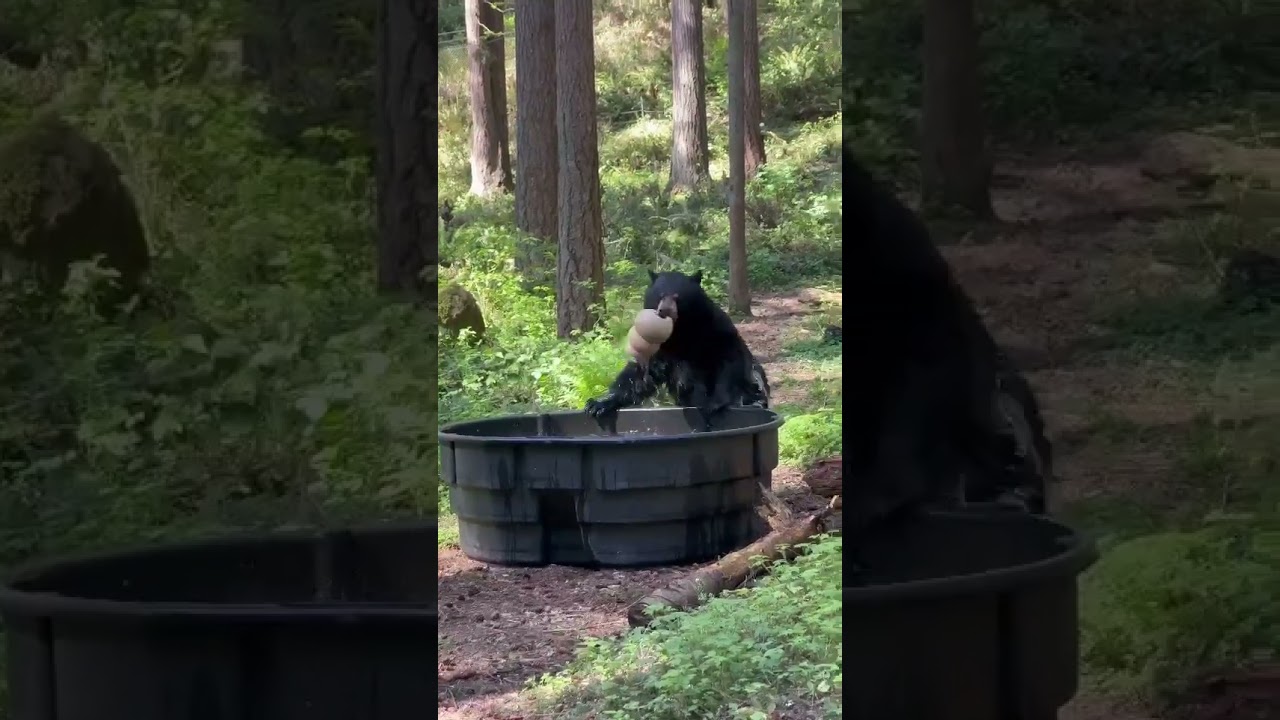
- Understanding the behavior and play activities of Black bears in captivity.
- Exploring enrichment strategies and their impact on animal welfare.
- Examining the role of zoo management in fostering wildlife conservation.
- Highlighting the significance of environmental enrichment tools like the giant Kong.
- Discussing the importance of public education and awareness in conservation efforts.
Black bears, known scientifically as Ursus americanus, display a range of fascinating behaviors both in the wild and in captivity. Observing a black bear like Fern engaging playfully with a giant Kong toy in a tub offers an enlightening glimpse into bear behavior and the critical role of environmental enrichment.
Behavior and Play Activities of Black Bears
Black bears are inherently curious creatures. This curiosity drives their interaction with various objects in their environment, such as the giant Kong. Play is integral to their development and psychological welfare, facilitating the enhancement of their physical and mental skills. In captivity, providing opportunities for play is essential to prevent boredom and encourage natural behaviors.
When Fern engages with the Kong in a tub, she’s not only playing but also exercising her problem-solving abilities. This behavior, similar to patterns observed in the wild, showcases the bear’s ingenuity and adaptability. Using enrichment tools like the giant Kong serves multiple purposes: it stimulates the bear’s mind, encourages physical activity, and provides a semblance of the challenges they would face in their natural habitat.
Enrichment Strategies and Animal Welfare
Environmental enrichment is a cornerstone of modern zoo management, aiming to enhance the quality of life for animals like black bears. Different enrichment strategies are employed, including cognitive challenges, physical exercise opportunities, and sensory stimulation. These strategies help meet the complex needs of animals in captivity, preventing stereotypical behaviors that often arise from stress or boredom.
For black bears, enrichment objects like the giant Kong are crucial. They provide a dynamic and interactive platform that encourages exploratory and play behavior. The design of such toys takes into account the bears’ strength and intelligence, ensuring they can manipulate the toy in varied and stimulating ways.
Implementing diverse enrichment techniques fosters improved psychological and physical health among captive animals. It encourages natural behaviors and reduces the likelihood of negative health outcomes linked with confinement. Observations of Fern playing with the Kong highlight the success of these strategies.
Role of Zoo Management in Wildlife Conservation
Zoo management plays a pivotal role in wildlife conservation, focusing on education, research, and the well-being of the animals. By maintaining environments that are conducive to natural behaviors, zoos contribute to the preservation of various species, including black bears. They work tirelessly to provide conditions that mirror the animals’ natural habitats as closely as possible.
Effective zoo management involves interdisciplinary expertise, combining zoology, veterinary care, and behavioral studies to advance conservation goals. By fostering environments where animals can thrive and engage in natural behaviors, zoos are instrumental in educating the public about wildlife conservation issues. The implementation of enrichment tools like the Kong for Fern demonstrates a commitment to optimizing animal welfare while supporting broader conservation efforts.
Significance of Environmental Enrichment Tools
The use of enrichment tools such as the giant Kong is imperative for maintaining the well-being of captive animals. These tools are designed to be both engaging and resilient, capable of withstanding the strength and curiosity of a black bear. By encouraging active and stimulating play, these tools promote healthy behaviors and reduce stress.
The presence of a Kong in a bear’s enclosure serves more than just a recreational purpose. It enables researchers and caretakers to observe and study bear behavior, drawing parallels to wild environments. Such observations can inform better practices and innovations in animal care across zoos globally.
Public Education and Awareness in Conservation
One of the most significant contributions of zoos is their role in public education. Watching Fern play with a Kong offers visitors a tangible connection to wildlife, fostering empathy and a deeper understanding of conservation issues. Engaging the public through informative exhibits and interactive experiences helps instill the importance of conserving natural habitats and the species that inhabit them.
Educational programs and demonstrations that elucidate the needs and behaviors of animals like black bears serve to inspire conservation action. By showcasing the playful and engaging nature of bears, zoos can drive home the urgent need to protect these creatures and their environments. The exposure to such activities can spark interest and support for conservation initiatives, highlighting the interconnectedness of human actions and wildlife preservation.
In summary, the playful interaction of a black bear like Fern with a giant Kong in a tub provides an insightful look into the broader scope of animal behavior, enrichment practices, and conservation education. Understanding these dynamics is crucial in promoting a sustainable future for wildlife, one that harmonizes captive care with active conservation efforts.
*****
Source Description
Meet Fern the black bear! 🐻 She has access to a perfectly nice freshwater pool but prefers the oversized splash tub with her favorite giant Kong to throw around instead. 💦
📹: Keeper Caroline
