
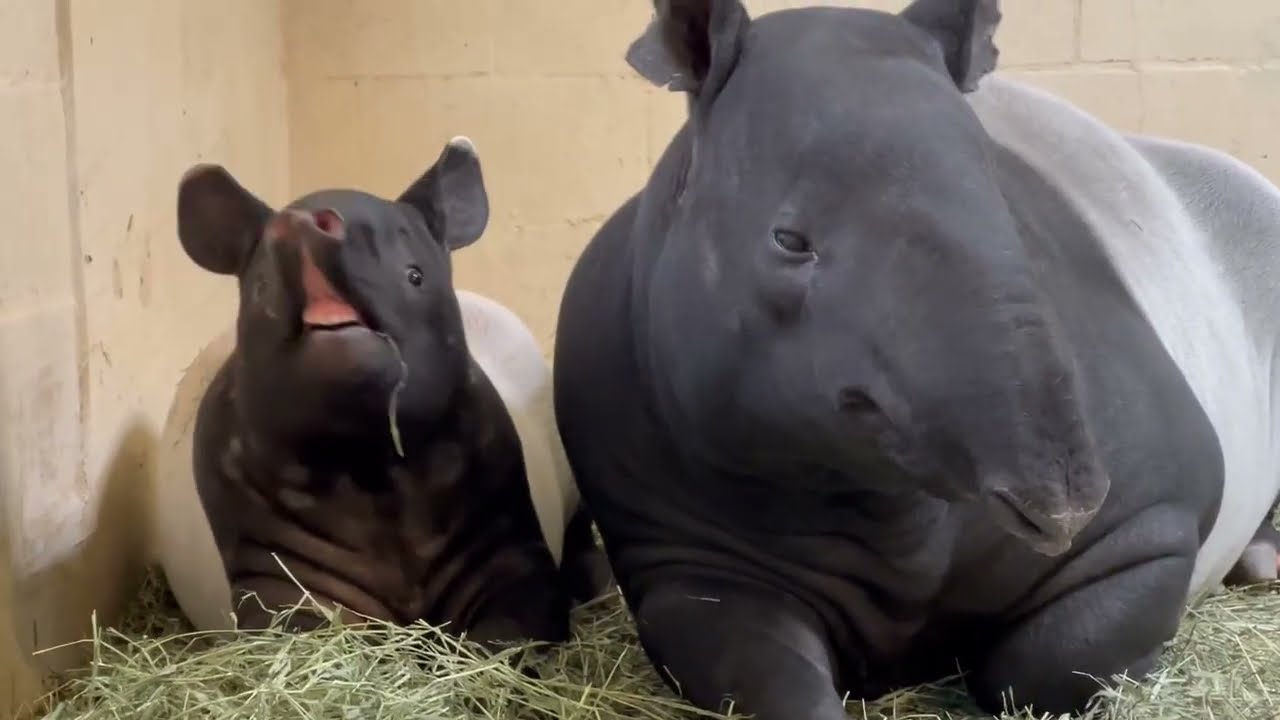
- The birth and early life of Baby Ume the tapir calf, highlighting important milestones and care practices.
- Zoology and behavior of tapirs, discussing their unique characteristics and adaptations.
- The role of zoo management in caring for tapir calves and the challenges involved.
- The significance of wildlife conservation efforts in tapir protection.
- Insights into public education and the impact of videos on conservation awareness.
The birth of Baby Ume, a tapir calf, has generated excitement and interest amongst zoology enthusiasts and conservationists. Baby Ume’s early days are a fascinating chapter of research, care, and public engagement. Tapirs, known for their distinctive features, require specialized attention from a young age. The journey begins at birth, with Baby Ume stepping into a carefully curated world where her survival is a top priority.
In the initial weeks, a tapir calf is closely monitored for health indicators like weight gain and feeding habits. This period is crucial for assessing the calf’s development and ensuring she receives adequate nutrition, primarily from her mother’s milk. Zoo veterinarians collaborate with keepers, tracking every aspect of Ume’s growth. Observations focus on her ability to bond with her mother, a vital behavior for social learning and emotional stability. As tapirs are born with camouflage-like stripes and spots, these markings gradually fade, a testament to their adaptability to forest environments.
Tapirs are extraordinary animals displaying fascinating zoological traits. With origins tracing back millions of years, they are considered living fossils. Found primarily in the jungles of Central and South America, some species also inhabit parts of Asia. Tapirs possess a prehensile snout, an adaptation for reaching leaves and fruit in dense forest canopies. Their robust body, designed for maneuvering through thick underbrush, complements their semi-aquatic habits. Tapirs often retreat to water bodies, a behavior that not only cools them but also offers protection from predators.
Despite their size, tapirs are remarkably agile, capable of swift, quiet movement through dense vegetation. Their behavior is largely solitary, except for mothers with young calves. They communicate through high-pitched whistles and have acute hearing and smell senses, indispensable tools for scouting food and avoiding predators.
Zoo management plays a pivotal role in supporting baby tapirs like Ume. A delicate balance between human care and promoting natural behaviors is essential. This involves enriching the calf’s environment with stimuli that encourage exploration and play, promoting both physical and mental development. The installation of obstacles and feeding puzzles mimics challenges faced in the wild, honing problem-solving skills and dexterity.
Training and conditioning are integrated into daily routines, fostering cooperation during health check-ups and feeding times. This approach minimizes stress and builds trust between human caregivers and animals. Zoos dedicate extensive resources to research, understanding the tapir’s specific needs, and replicating natural habitats as closely as possible.
The conservation of tapirs, such as Ume, underscores the broader commitment to wildlife preservation. Tapirs face several threats in the wild, including habitat loss and hunting. Efforts to protect these creatures involve habitat restoration and legal protection, alongside breeding programs in zoos that bolster population numbers. Conservationists are focused on raising awareness about the tapir’s ecological role as seed dispersers, crucial for maintaining forest health.
Public education through videos and interactive exhibits can amplify conservation messages. These storytelling tools captivate audiences, creating emotional connections and fostering a sense of responsibility toward wildlife protection. Seeing a video of Baby Ume is not just delightful; it offers a glimpse into the complex care and dedication that underpin these efforts. It can inspire greater support for conservation initiatives, motivating the public to participate in preservation actions.
In this way, Ume’s story becomes a beacon for advocacy, highlighting the interconnectedness of zoo management, wildlife conservation, and public engagement. This rich tapestry of care, education, and action offers hope for the future of tapirs and their continued coexistence with humans.
*****
Source Description
Behind the scenes with five-month-old baby Ume! After a big day of exploring her outdoor habitats, our sweet tapir calf is all snuggles and snoozes with mom Yuna. Ume’s curiosity keeps growing, and so does her bond with Mom! 💗
📹: Keeper Katie
