
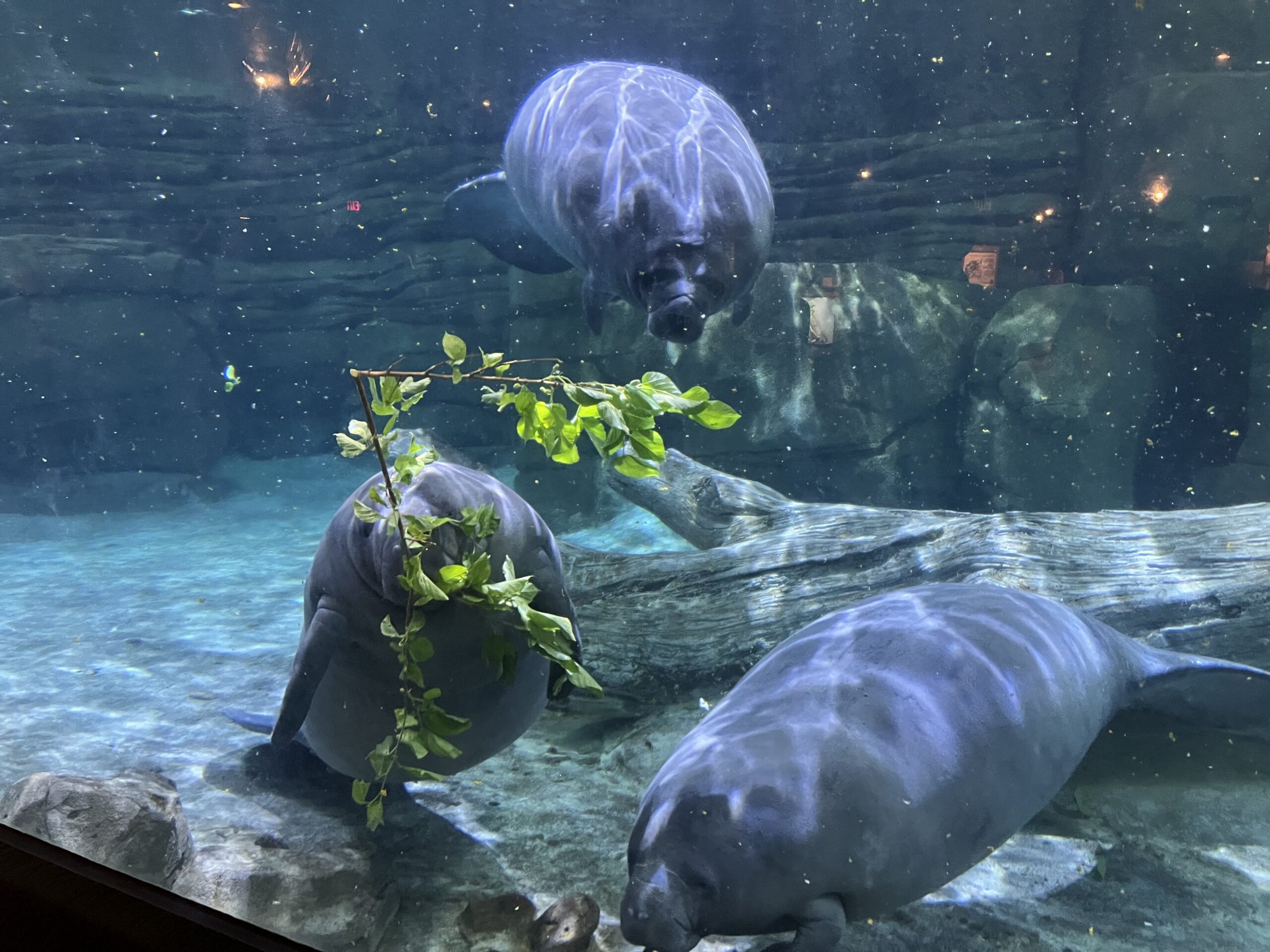
Summary of Calliope’s Remarkable Journey – Cincinnati Zoo & Botanical Garden:
Calliope, an orphaned manatee calf, arrived at ZooTampa weighing just 62 pounds. After initial care, she was moved to the Cincinnati Zoo and later released at Three Sisters Springs on February 13, 2024, weighing 920 pounds. However, she was rescued again shortly after for remaining in the release area. Following additional care at ZooTampa and pre-release conditioning at Welaka National Fish Hatchery, a new release site was chosen to enhance her survival chances. Calliope was successfully released into Florida waters at Blue Spring State Park on February 11, 2025, weighing 1,080 pounds.
- Calliope’s early life and challenges as an orphaned manatee calf.
- The care she received at ZooTampa and the Cincinnati Zoo.
- Her release into the wild and subsequent rescue.
- The transition back to rehabilitation and new release strategies.
- The importance of wildlife conservation and manatee protection.
Calliope’s remarkable journey begins at ZooTampa, where she was discovered as an orphaned manatee calf. When staff found her, she was just 62 pounds and still had her umbilical cord partially attached. This size made her one of the smallest manatee calves ever treated at ZooTampa’s Critical Care Center. Manatees, often referred to as sea cows, are large, gentle marine mammals that require a stable environment to thrive. Being separated from their mothers at such a young age poses significant risks, making rehabilitation critical for survival.
At ZooTampa, Calliope received round-the-clock care. The veterinary team closely monitored her health status, administering a diet tailored to meet her nutritional needs. Manatee rehabilitation is essential because these animals often face threats in their natural habitats, such as habitat loss and boat collisions. The dedicated team worked to increase her weight and strength, with the hope of eventually releasing her back into the wild.
After her initial recovery, Calliope was transferred to the Cincinnati Zoo for continued care. This transition was vital for maintaining her well-being and helping her adapt to different surroundings. In a zoo environment, the importance of a quality habitat cannot be overstated. Enrichment activities and social interactions are crucial for the development of any animal. At Cincinnati Zoo, Calliope had access to various resources that contributed to her physical and emotional health.
By February 13, 2024, Calliope was ready for her release into the wild at Three Sisters Springs. Her weight had increased to an impressive 920 pounds. The release was a significant milestone, not just for Calliope but also for the rehabilitation teams who had dedicated so much time and energy to her recovery. The hope was that Calliope would thrive in her natural habitat, but a twist in her story soon emerged.
Shortly after her return to the wild, Calliope was spotted in the area where she had been released. However, her presence raised concerns. Wildlife experts and rescue teams evaluated the situation and decided to bring her back for further assessment. She was rescued again in late March, demonstrating the challenges faced by rehabilitated wildlife. The ability of animals to adapt to the wild varies widely, and not every individual can successfully navigate their new environment.
Upon returning to ZooTampa, Calliope underwent another evaluation. The team realized she was struggling to integrate into the wild life, prompting discussions about her future. Cooperation among organizations like the Florida Fish and Wildlife Conservation Commission and wildlife rescue teams is crucial in cases where animals need additional support. They deliberated on the best course of action to improve her chances of survival.
Following this assessment, Calliope was relocated to Welaka National Fish Hatchery. This facility specializes in pre-release conditioning for rehabilitated wildlife. The aim was to prepare her for another attempt at living in the wild. The process involved providing an environment that mimicked her natural habitat as closely as possible. It also included ongoing monitoring of her health and adaptation strategies. Calliope’s journey illustrates the vast network of wildlife care providers dedicated to ensuring her rehabilitation.
As the teams prepared for another release, they continued working closely with various experts. Strategies for her next release site were evaluated, and the decision was made to return her to Florida waters at Blue Spring State Park on February 11, 2025. Calliope now weighed an impressive 1,080 pounds, reflecting her successful recovery journey.
Releasing manatees back into the wild comes with inherent risks and challenges. Wildlife experts assess the conditions of potential release sites for their safety and suitability. Factors such as water temperature, food availability, and the presence of human activity are all scrutinized. Manatees are herbivores requiring a diet primarily composed of seagrass and other aquatic vegetation, making access to these food sources critical.
The ongoing efforts to rehabilitate and release Calliope provide insights into broader wildlife conservation initiatives. Each rescue and rehabilitation case contributes to a greater understanding of the threats faced by manatees. Increased human activity, such as boating and urban development, poses a significant obstacle to their survival. Conservation groups advocate for protection measures to safeguard these gentle creatures and their habitats.
Moreover, manatees are considered a “keystone species” in their ecosystems. Their feeding habits help maintain healthy seagrass beds, which are vital for numerous marine organisms. The health of these environments is crucial not just for manatees but for the overall health of marine ecosystems. This interconnectedness highlights the importance of ongoing conservation work—not only for manatees but for the broader ecological landscape.
The journey of Calliope represents one of many stories unfolding in the realm of wildlife care and rehabilitation. Every individual case helps inform the strategies used for future rescues and conservation efforts. By learning more about the behaviors, needs, and challenges faced by these animals, wildlife specialists can refine their approaches. Continuous research and collaboration in the field lead to improved outcomes for other orphaned or injured wildlife.
The emotional impact of Calliope’s journey extends to the community as well. Stories like hers help raise awareness and inspire involvement in wildlife conservation initiatives. Public education campaigns highlight the importance of protecting man’s habitats, emphasizing responsible boating and reducing pollution. By fostering stewardship among the public, organizations can bolster conservation efforts and create a unified front for protecting marine life.
Moreover, the existence of sanctuaries and rehabilitation facilities like ZooTampa and the Cincinnati Zoo plays a vital role in these initiatives. Such facilities provide an opportunity for education and engagement. Visitors learn about the challenges faced by manatees and how they can contribute to conservation. These experiences can spark a passion for wildlife protection among community members, resulting in a ripple effect of advocacy.
Calliope’s remarkable journey is not just a tale of individual survival. It encapsulates a larger narrative about human responsibility towards wildlife. Each rescue effort reflects a commitment to understanding and mitigating the threats that manatees face. The importance of collaboration among various organizations serves as a reminder that collective efforts often yield the best outcomes.
The significance of manatee rehabilitation and successful release cannot be overstated, particularly as their populations recover. Ongoing protection of their habitats is vital to ensure that future generations of manatees can thrive. Through education, advocacy, and scientific research, wildlife conservation efforts will continue to evolve, adapting to the needs of these magnificent animals and their environments.
Calliope’s story reinforces the essential work being done by wildlife rehabilitators and conservationists. It serves as a powerful illustration of hope, resilience, and the collaborative spirit that drives conservation efforts forward. With continued dedication, experts believe that it is possible to create a safer, more sustainable world for manatees and for all wildlife. By sharing such inspiring stories, we can advocate for better protections and ensure that creatures like Calliope have a fighting chance to flourish in their natural habitats.
