
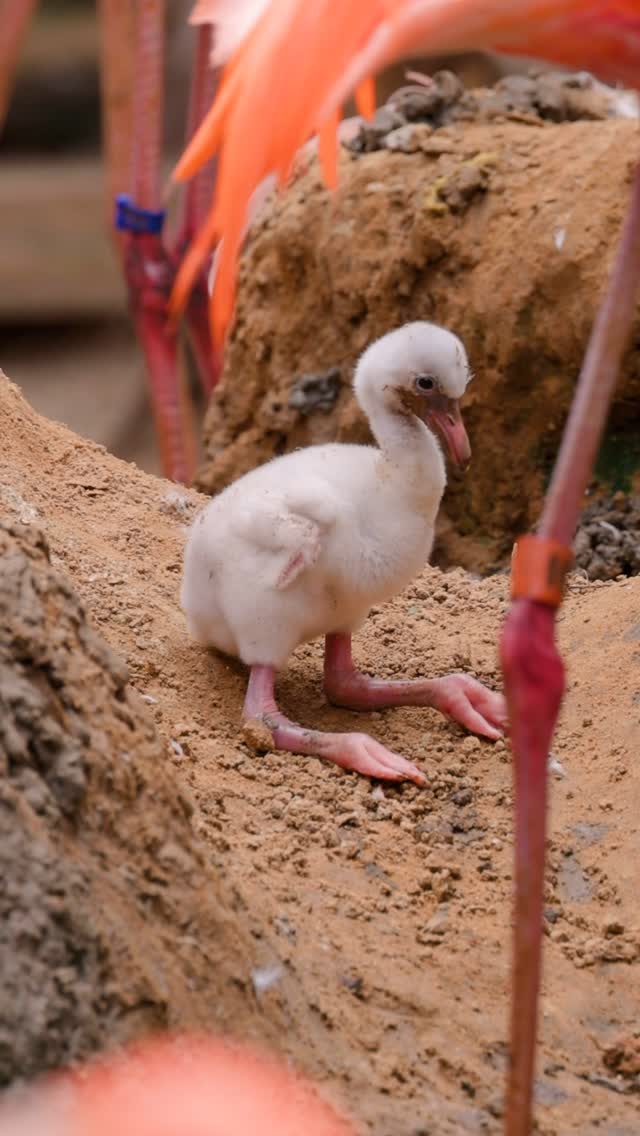
- Chick development and the pigment-driven transition from white down to vivid adult plumage
- Parental behavior, colony breeding strategies, and captive care practices used by zoos
- Nutrition, veterinary protocols, and preventive health measures for flamingo chicks
- Conservation status, threats to Caribbean flamingo populations, and the role of captive breeding and public engagement
We’re tickled pink by our little Caribbean flamingo chicks! This human reaction mirrors a set of biological and management processes that transform a tiny, fluffy chick into the flamboyant, specialized adult known for intense pink and red hues. This article explains those processes in scientific detail, and it outlines how modern zoos support chick survival while contributing to species conservation.
Chick appearance and color development
Caribbean flamingo chicks hatch with a soft, white or grayish down that masks the adult plumage beneath. The down insulates and protects them in the first weeks of life. The phrase We’re tickled pink by our little Caribbean flamingo chicks! captures the contrast between juvenile neutrality and adult brilliance; that change is driven almost entirely by diet-derived pigments called carotenoids. Flamingos cannot synthesize carotenoids; they obtain them from their food—mainly algae, cyanobacteria, small crustaceans, and other invertebrates. Key carotenoids include astaxanthin and canthaxanthin. These pigments are metabolized and deposited in feathers, skin, and the preen gland oils. Over months, progressive deposition produces the pink-to-red shift characteristic of the Caribbean flamingo (Phoenicopterus ruber), identified as the most intensely colored of the six recognized flamingo species.
Timeline of development
Growth proceeds through discrete phases. The hatchling phase (week 0–3) is dominated by down and rapid body growth. Parents supply crop milk, a protein- and fat-rich secretion, which fuels early growth. By about one month of age, juvenile contour feathers begin to appear, typically dull gray or buff. From month two to year one, juveniles develop flight feathers and gain size; their plumage remains largely gray-pinkish. Color intensification accelerates between year one and year three as dietary carotenoids accumulate. Most Caribbean flamingos reach recognizable adult coloration and partial sexual maturity between two and four years, though full reproductive maturity and peak coloration can take longer, influenced by diet quality and social status within the colony.
Feather structure and pigment deposition
Flamingo feathers have barbs and barbules similar to other birds, but the vivid color depends on carotenoid integration into keratin during feather growth. When feathers are synthesized in the follicle, carotenoids circulate in the blood and are sequestered into developing feather tissues. Repeated molting and replacement of feathers allows color to build over time. Feather wear and preening behavior also affect visible color; lipids from the uropygial gland help distribute pigments and maintain feather condition.
Breeding ecology and parental care
Caribbean flamingos are highly social breeders. They nest in dense colonies that can number from dozens to many thousands of pairs. Nests are mud mounds built by both parents, usually on shallow saline flats or islands. The nest cup elevates the single egg—eggs are usually one per clutch—to reduce flooding risk and temperature variability. Incubation is shared by both parents and typically lasts around 27 to 31 days. Cooperation extends to chick rearing. Both adults feed chicks with crop milk for the first several weeks. This nutritive fluid originates from epithelial cells sloughed in the upper digestive tract; it is rich in proteins and fats and contains immune factors.
Creche formation
At around one to three weeks of age, chicks aggregate into creches—large groups guarded and monitored by a subset of adults. Creches provide thermoregulation and predator protection while parents forage farther afield. This communal strategy increases chick survival at the colony scale. Creche dynamics are complex: adults recognize chicks by specific vocalizations and may feed only their own, while the group benefits from collective vigilance. In captive settings, managers replicate creche conditions to reduce stress and risk for chicks while allowing parents to maintain normal behavior.
Zoo management practices for breeding success
Modern zoos apply a combination of behavioral, nutritional, and veterinary techniques to optimize chick survival. Site selection and habitat design mimic natural breeding substrates: shallow saline pools, mud flats, and ample space to form colonies. Nesting material and mound-building areas are provided to encourage natural behaviors. Heat, humidity, and water levels are controlled to reduce egg loss due to flooding or temperature extremes.
Dietary management is central. In captivity, flamingo diets consist of formulated pellets, supplemented with carotenoid-rich components such as shrimp meal, spirulina, and specially prepared carotenoid additives when necessary. Zoos use analytical feeding protocols to supply measured quantities of astaxanthin and canthaxanthin that match what wild birds receive from diverse natural prey. Balanced nutrition supports feather development, immune function, and normal growth rates. Managers record feed intake carefully. When hand-rearing is required, diet formulations mimic crop milk composition in macronutrient balance and include carotenoid precursors to promote normal color development later.
Minimizing human imprinting
Hand-rearing is sometimes necessary after abandonment or loss of parents. When staff intervene, minimizing imprinting is crucial so birds retain species-typical behavior. Techniques include using puppets that resemble adult flamingo heads and limiting human visual and vocal contact. Remote feeding systems and discrete observation reduce the chance of human-directed socialization. These practices preserve the birds’ capacity for integration into flocks and eventual breeding.
Behavioral enrichment and social structure
Behavioral enrichment supports physical and psychological health. Flamingos engage in ritualized displays—head-flagging, marching, and synchronized preening—that maintain pair bonds and social cohesion. Zoos provide space and stimuli that encourage natural courtship. Structured groupings and visual barriers reduce aggression. Regular behavioral monitoring detects stress signals early, enabling adjustments to husbandry that protect chicks and parents.
Veterinary care and preventive medicine
Preventive veterinary protocols protect colonies from infectious and environmental threats. Routine health checks include body condition scoring, blood chemistry panels, and parasite screening. Nest hygiene and water quality monitoring reduce bacterial and fungal risks. Poultry vaccine protocols are used selectively, based on regional disease risk and veterinary guidance. For viruses of concern—avian influenza and Newcastle disease—biosecurity measures such as restricted access, protective clothing, and rigorous disinfection protocols limit exposure. Because flamingos are sensitive to heavy metals and chemical pollutants, environmental sampling of water and sediment is standard in captive and wild sites.
Common health issues in chicks
Chicks face several specific threats: dehydration, hypothermia, nutritional deficiencies, and infectious disease. Crop stasis and aspiration can occur in hand-reared chicks if feeding techniques are incorrect. Vitamin A and calcium deficiencies impair growth and skeletal development. Metabolic bone disease is possible if calcium-phosphorus balance is wrong. Veterinary teams use diagnostic imaging, blood chemistry, and nutritional interventions to treat such conditions. Early detection is critical because fledging and long-term survival depend on resolving growth issues during the first months.
Identification and recordkeeping
Individual identification matters for long-term management and genetic monitoring. Zoos use leg bands, color-coded markers, and internal microchips for reliable identification. Detailed records track parentage, hatch date, growth metrics, health treatments, and diet history. Genetic sampling—feathers or blood—helps managers monitor diversity within captive populations and plan breeding recommendations that minimize inbreeding.
Nutrition and pigmentation science
Understanding the biochemistry of pigmentation is necessary to explain why chicks are initially white and later pink. Carotenoids absorbed in the gut are transported by lipoproteins in the bloodstream to tissues. Enzymatic transformations modify some carotenoids into forms better suited for feather deposition. Dietary studies show dose-dependent relationships: when sufficient carotenoid precursors are present, plumage color develops more rapidly and with greater saturation. In captive settings, laboratory assays quantify carotenoid levels in feed and occasionally in plasma samples from birds to refine supplementation protocols.
Ecological context and threats in the wild
We’re tickled pink by our little Caribbean flamingo chicks! is a sentiment that can translate into conservation action because breeding success in captivity and in the wild face similar constraints. Habitat loss is the principal long-term threat. Coastal development, draining of wetlands for agriculture or salt production, and pollution reduce the availability of shallow saline habitats flamingos require for nesting and feeding. Climate change compounds these pressures through sea-level rise and altered precipitation patterns that shift water salinity and hydroperiods. Hurricane events can inundate nesting flats and cause abrupt chick mortality. Human disturbance, such as tourism near breeding sites, increases nest abandonment risk.
Population status and monitoring
The American or Caribbean flamingo (Phoenicopterus ruber) is currently assessed as Least Concern by IUCN at a global level, but local population trends vary. Some island and coastal populations are stable or increasing due to protected areas and wetland restoration. Others show declines tied to habitat degradation. Long-term monitoring uses aerial surveys, band-recapture data, and remote sensing of habitat conditions to estimate population size, reproductive success, and distribution shifts. These data guide conservation priorities and resource allocation.
Role of zoos in conservation
Zoos contribute to conservation through husbandry knowledge, research, and public education. Captive breeding programs create assurance populations against catastrophic wild losses. Research on diet, reproductive physiology, and disease management in zoos informs field interventions. For example, understanding carotenoid requirements from captive studies helps prioritize conservation of feeding habitats in the wild that supply those pigments. Public-facing exhibits and social media posts—often accompanied by messages such as We’re tickled pink by our little Caribbean flamingo chicks!—raise awareness about wetland conservation and can mobilize support for habitat protection.
Community engagement and education
Education programs link visitors to tangible conservation actions. Interpretive signage and keeper talks explain how flamingo color is an indicator of diet and habitat quality. Citizen science initiatives engage the public in monitoring local wetlands and reporting flamingo sightings. Such involvement builds local stewardship and fosters policies that protect breeding sites. Zoos partner with conservation NGOs and government agencies to support field projects that restore salinas, control pollution, and improve waterflow regimes essential for high-quality flamingo habitat.
Ethical considerations and release programs
When captive-bred birds are considered for release, ethical and practical issues must be addressed. Genetic compatibility with local populations, disease risk, and the availability of suitable habitat are critical factors. Soft-release approaches—where birds are acclimated at a release site in pens and provided supplemental food—can improve integration. Post-release monitoring using tags or telemetry assesses survival and breeding integration. These efforts require rigorous planning and collaboration with local stakeholders.
Behavioral indicators of health and welfare
Behavioral patterns provide rapid, noninvasive indicators of chick wellbeing. Healthy chicks display alertness, upright posture, steady growth, and appropriate begging behavior toward parents. Lethargy, abnormal feathering, solitary behavior, or failure to join creches signal problems that prompt veterinary and behavioral intervention. Regular ethograms—systematic behavior records—help staff detect deviations from normal development early.
Research priorities
Key research areas that improve chick outcomes include detailed studies of carotenoid metabolism, longitudinal assessments of captive rearing versus parent-reared survival, and epidemiological surveillance for emerging pathogens. Advances in noninvasive sampling—such as fecal hormone assays—allow reproductive and stress monitoring without capturing chicks. Genetic studies using next-generation sequencing reveal relatedness patterns and can guide pairings to preserve genetic health across captive populations.
Public messaging and conservation advocacy
Social posts and press releases that celebrate hatchlings are powerful tools. When messages include scientifically grounded information—how diet shapes color, why wetlands matter, and how people can help—public interest translates into measurable support for conservation initiatives. Posts that say We’re tickled pink by our little Caribbean flamingo chicks! can be complemented with calls to action: support wetland protections, reduce chemical runoff, and report disturbances at local breeding sites.
Practical takeaways for wildlife stewards
For field biologists and managers working with flamingo populations, priority actions include protecting key breeding flats from development, maintaining appropriate water regimes, and minimizing human disturbance during nesting. Regular monitoring of carotenoid-rich prey populations helps predict breeding success and inform adaptive management. In captive settings, replicate natural social groupings, provide carotenoid-appropriate diets, limit human imprinting during hand-rearing, and maintain strict biosecurity.
We’re tickled pink by our little Caribbean flamingo chicks! is more than a celebratory line; it reflects an intersection of biology, husbandry, and conservation. Those fluffy, white chicks represent a chain of ecological relationships and management practices that, if supported, produce thriving birds and healthy wetlands.
Call to action for readers and institutions
Readers can contribute by supporting wetland conservation organizations, promoting policies that protect coastal and saline habitats, and participating in citizen science monitoring. Institutions that house breeding programs are encouraged to share best practices, standardize dietary protocols for pigmentation, and collaborate on genetic management. Public enthusiasm for flamingo chicks is valuable; converting that enthusiasm into targeted conservation measures is the next vital step.
We’re tickled pink by our little Caribbean flamingo chicks! Use that reaction as a prompt for learning, advocacy, and action to protect the habitats and ecological processes that sustain both chicks and adults across the Caribbean and adjacent regions.
*****
Source Description
We’re tickled pink by our little Caribbean flamingo chicks! 🥹🦩
The chicks are fluffy & white now, but will eventually grow into the signature reddish-pink Caribbean flamingo plumage – the most vibrant of all 6 flamingo species!
