
- Happy International Hoofcare Month focuses on the importance of hoof health across various animal species.
- Hoof care practices for rhinos and other wildlife are essential for their overall well-being.
- The role of zoo management and animal training in facilitating hoof care.
- Highlighting the connection between hoof health and conservation efforts.
- Engaging the public in the conversation about animal care and wildlife conservation.
Happy International Hoofcare Month shines a spotlight on an often-overlooked aspect of animal care: hoof health. While it’s easy to think of hoof care as strictly related to domesticated species like horses, many wild animals, including rhinos, also require regular maintenance for their feet. Proper hoof care can prevent a host of health issues and contribute to the overall well-being of the animals.
Hoof care is not just a cosmetic concern; it is vital for the animal’s mobility and quality of life. In the wild, animals may naturally wear down their hooves through movement across varied terrains. However, animals living in zoos or sanctuaries may not have the same opportunities, which can make regular hoof care even more critical. For species like rhinos, whose feet may appear tough and resilient, regular check-ups are essential to monitor their condition and prevent complications.
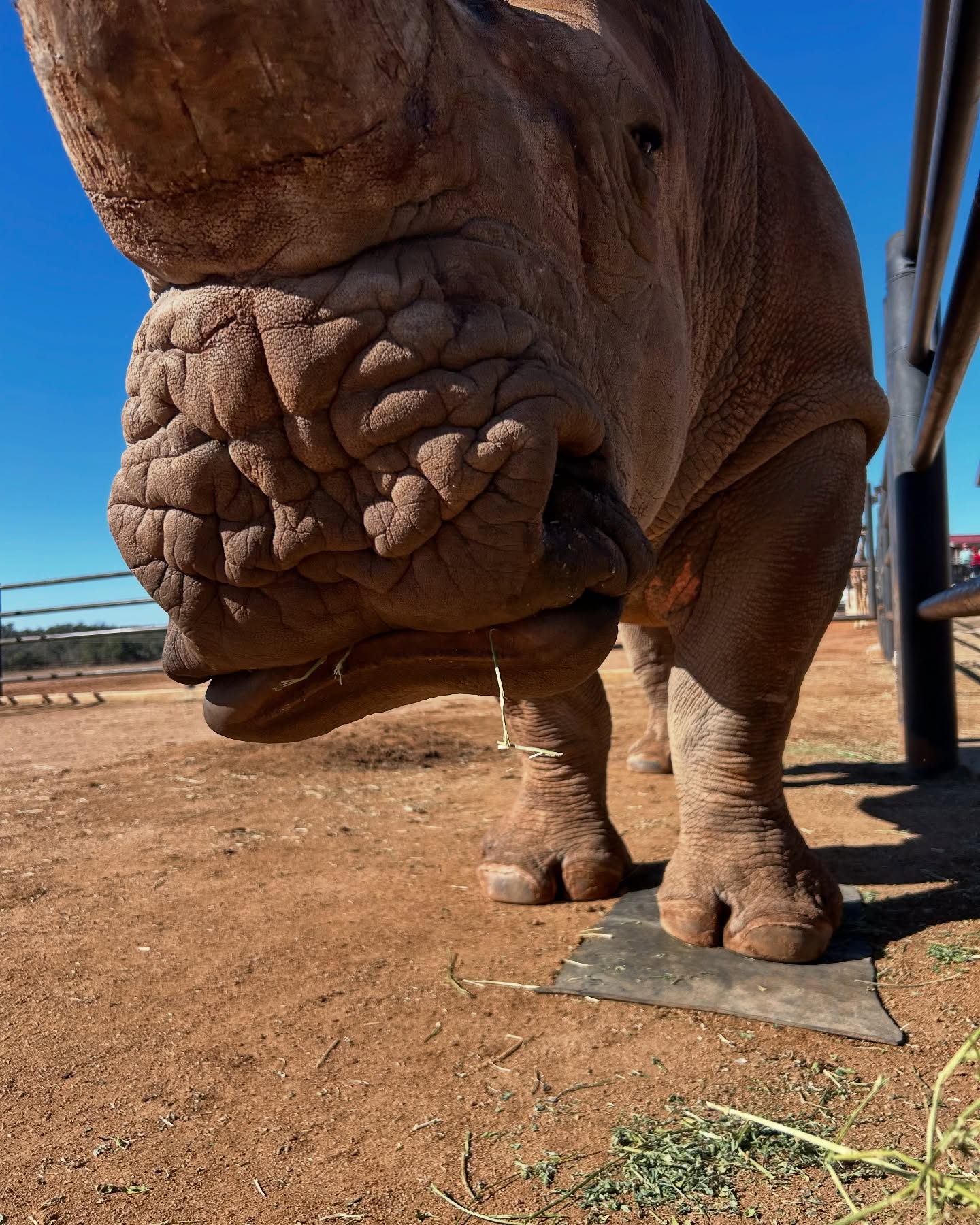
At places like Longneck Manor, zoo staff emphasize the importance of hoof care. One of their primary goals is to prepare animals like Fred, the rhino, to voluntarily participate in their own health care routines, including hoof trims. This approach not only enhances animal welfare but also allows caregivers to perform necessary checks without causing stress to the animal. This voluntary participation begins with simple training, such as encouraging Fred to step onto a black mat. This mat serves as a familiar platform that prepares him to elevate his foot for inspection.
Training animals to cooperate during procedures like hoof trimming requires considerable patience and skill. Caregivers use positive reinforcement techniques—rewarding desired behaviors to encourage participation. This method builds trust between the animals and their handlers, leading to a more fruitful healthcare routine. The ultimate goal is to ensure that Fred’s feet remain in optimal condition, which is crucial for his mobility and overall happiness.
The relationship between hoof health and conservation is also noteworthy. Healthy animals can engage more actively in their environments, which fosters natural behaviors. For mobile species like rhinos, this mobility is essential for their social interactions and feeding habits. As a result, promoting hoof care aligns with broader conservation goals. These include maintaining the genetic diversity of populations and preserving their habitats.
Hoof health is a pressing concern in various zoos, particularly because it can influence breeding programs. For example, if an animal is unable to walk due to hoof problems, it may not be able to mate, which could have long-term consequences for the species. Thus, a dedicated focus on hoof health can help ensure sustainable populations of endangered species.
Public awareness plays a crucial role in both zoo management and conservation efforts. Happy International Hoofcare Month serves as a reminder that all species can benefit from proper hoof care. By sharing stories like Fred’s, zoos can engage the community and emphasize the importance of animal care. Education efforts may include interactive activities, informative social media campaigns, or onsite demonstrations during this month dedicated to hoof care.
Additionally, the impact of good hoof care extends beyond the individual animal. In the case of elephants, for instance, their feet carry a significant amount of weight. Regular foot examinations and maintenance can prevent painful conditions like foot ulcers or infections, which could potentially shorten their lifespan. Case studies have demonstrated that elephants with proper hoof care display healthier behaviors, becoming more active and social. This not only enhances their welfare but also offers visitors a more dynamic experience while observing them.
Veterinarians specializing in zoological medicine often use advanced techniques to assess hoof health. From radiographs to ultrasound imaging, these technologies help provide a detailed examination of the foot’s structure. Understanding the anatomy and biomechanics of hoofed animals is crucial for effective care. Each species has its own set of challenges—some may experience laminitis or chronic foot ailments due to various factors, from diet to environmental stressors.
The variability among species necessitates customized hoof care regimes. For example, zebras and horses require different approaches compared to rhinos, due to their distinct foot structures and living conditions. While horses have a more traditional hoof shape, rhinos have a more rounded foot, comprised of a tough outer shell and soft sole. These differences also reflect their natural habitats, showcasing the diversity of evolutionary adaptations across mammalian classes.
Zoos often collaborate with researchers and conservationists to spread knowledge around hoof care. Scientific research continues to illuminate the links between hoof health, animal behavior, and environmental factors. This information aids in creating better habitats that can accommodate the unique needs of various species, thereby enhancing their overall health and longevity within captivity.
On the local level, community outreach initiatives also educate the public about the importance of hoof care. Events during Happy International Hoofcare Month may include seminars, guided tours, and hands-on demonstrations designed to spread awareness among visitors. This direct engagement allows zoo staff to explain how proper hoof care plays an essential role in animal welfare and conservation efforts, effectively connecting the public with the mission of wildlife preservation.
Corporate partnerships can also extend the reach of these educational programs. By working with businesses who support conservation efforts, zoos can enhance their hoof care initiatives and create more resources for veterinary care and infrastructure. Collaborative efforts not only amplify awareness but also encourage individuals to contribute to conservation efforts.
Hoof care extends beyond simply maintaining healthy feet; it also encompasses a holistic approach. Diet, environmental management, and stress reduction all play pivotal roles in keeping the hooves healthy. For instance, ensuring that animals receive a balanced diet with appropriate minerals can prevent hoof-related issues. Additionally, a natural habitat environment can help animals manage their hoof wear more efficiently.
Regular workshops for zookeepers and animal care staff are an important part of this educational effort. Continuous learning opportunities allow caregivers to stay aware of the latest hoof care protocols and techniques based on current research. This environment fosters a culture of excellence where animal welfare remains a top priority.
Engaging the community involves sharing stories about animals, like the efforts being made for Fred’s hoof care. These narratives highlight the dedication of caregivers and the animals’ candid participation, drawing in public interest. When the community feels invested in these stories, it becomes a shared mission to promote animal welfare and conservation.
As Happy International Hoofcare Month continues to evolve, it promotes the idea that harmonic coexistence between humans and animals is achievable through education, awareness, and proactive care. By taking small yet impactful steps in caring for the hooves of various species, we contribute to a larger movement in animal welfare and conservation.
With every hoof care initiative, zoos like Longneck Manor exemplify how intricate and critical the process can be. By embracing animal training, public outreach, and research-based strategies, they pave the way for healthier animals, enhancing the relationship between humans and wildlife. By promoting Happy International Hoofcare Month, we recognize these tireless efforts, shedding light on the importance of this often-overlooked aspect of animal care. Animal well-being should always be a communal endeavor. It is a path toward sustainability, where every life matters and holistic health is a shared responsibility.
*****
Source Description
Happy International Hoofcare Month! 🦏💙
Did you know rhinos need hoof care just like horses? While their feet may look tough, regular maintenance is key to keeping them healthy.
At Longneck Manor, our rhino boys voluntarily participate in their own healthcare—including blood draws, vaccines, and even opening their mouths for dental checks! Now, we’re working on training Fred to allow voluntary hoof trims. He’s in the early stages, learning to step onto a black mat, with the goal of eventually stepping up onto a block so we can check the bottom of his feet.
Every small step (literally!) helps ensure Fred’s feet stay in top shape. Stay tuned for updates on his progress! 👣
