
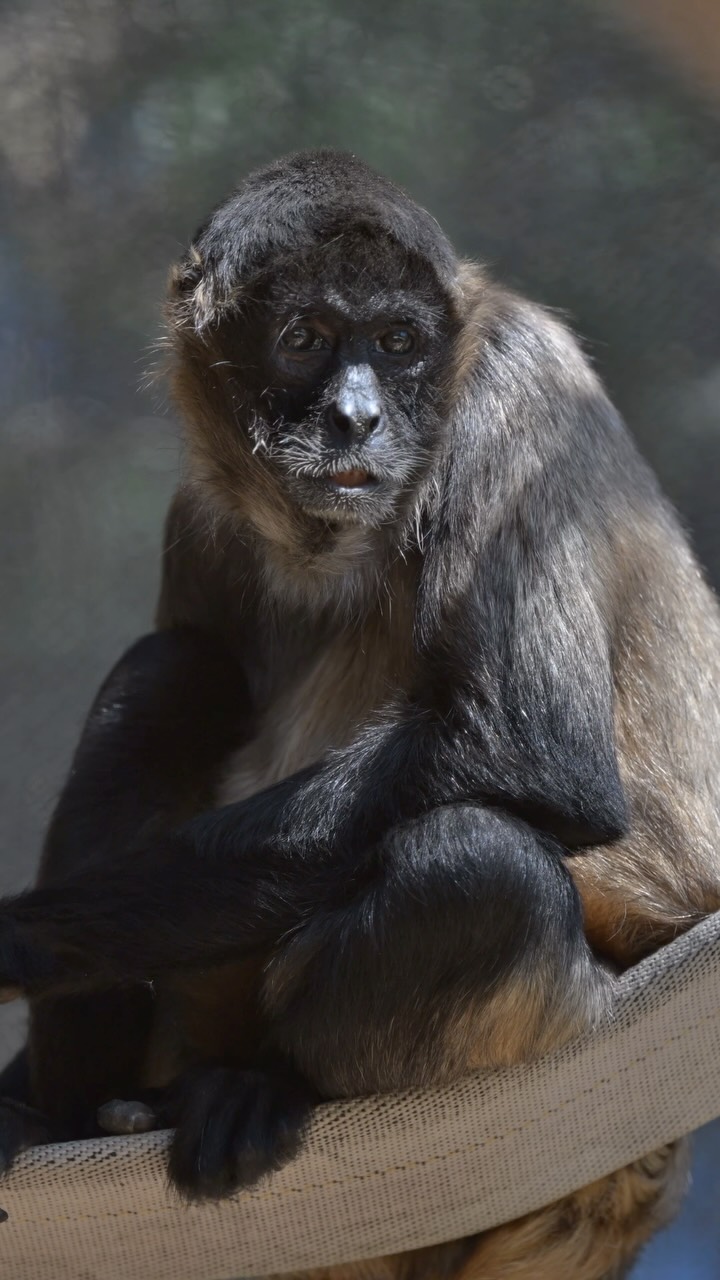
- Overview of black-handed spider monkeys and their habitat
- Notable characteristics of Bruno, the black-handed spider monkey
- The significance of prehensile tails in spider monkeys
- Conservation efforts for spider monkeys and their habitats
- The life spans and birthdays of black-handed spider monkeys in captivity versus the wild
Black-handed spider monkeys, or Atelidae, are highly nimble primates native to the tropical forests of Central and South America. These primates are fascinating not just for their agility but also for their social structures and behaviors. They thrive in areas of dense foliage, where they live in social groups that exhibit complex communication and relationships. Their diet primarily consists of fruits, nuts, and flowers, making them vital players in their ecosystem through seed dispersal.
Bruno, the celebrated black-handed spider monkey, turned 30 last week, a significant milestone for any primate, especially in the context of wildlife conservation. In captivity, these monkeys can live up to 40 years, but their wild counterparts usually face many challenges that shorten their life spans. Bruno’s birthday represents not just a personal achievement but also highlights the importance of animal care in zoological settings.
Physical characteristics also define Bruno and other black-handed spider monkeys. They possess long limbs, which help them swing gracefully through trees, and a prehensile tail, which is longer than their bodies. This tail allows them to grasp branches as they traverse their habitats. Prehensile tails serve as a fifth appendage, enhancing their ability to balance while climbing, giving them a distinct advantage in navigating their arboreal world. Bruno and his companion Renetta are often seen utilizing their tails skillfully to hold onto branches and maintain stability, thus showcasing their extraordinary adaptation to their environment.
In addition to their physical adaptations, black-handed spider monkeys are known for their complex social dynamics. Living in groups ranging from 10 to 30 individuals, they form intricate relationships based on cooperation and communication. Vocalizations play a crucial role in their social interactions. They produce a range of sounds, including howls, grunts, and chatters, to convey emotions and information. These calls serve several purposes: maintaining group cohesion, warning of predators, or signaling food availability. Observing Bruno’s interactions can provide valuable insights into the social lives of these primates.
Conservation efforts aimed at protecting spider monkeys are critical due to their declining populations in the wild. Habitat destruction, primarily due to logging and agricultural expansion, heavily impacts their natural environment. As tree cover diminishes, so does their ability to find food and safe spaces for living. Various organizations highlight the importance of preserving forests not only for spider monkeys but for the many species that rely on these ecosystems. Rehabilitation programs work to rescue and rehabilitate these monkeys, aiming to reintroduce them into their natural habitats. Additionally, educational campaigns strive to raise awareness about the need for sustainable practices to protect not only the spider monkeys but also the biodiversity they represent.
Black-handed spider monkeys exhibit fascinating reproductive behaviors. Typically, females give birth to a single offspring every two to four years. The young depend on their mothers for nutrition and protection during their early stages of life. This long maturation period allows for strong social bonds between mothers and their young, essential for learning survival skills. Observing Bruno, who has likely experienced various parenting roles over his lifetime, provides an opportunity to understand these nurturing relationships.
The life spans of black-handed spider monkeys, both in captivity and the wild, vary significantly. In the wild, they often confront threats such as poaching, habitat loss, and predation, which can lead to shorter lives—often around 20 years. In contrast, those in zoological care typically receive regular veterinary attention and well-planned nutrition, allowing them to reach 30 years or more, as in Bruno’s case. Birthdays in captivity often become special events celebrated by zoo staff and visitors alike, creating moments of engagement and education about the species.
Birthday celebrations for animals like Bruno raise awareness and foster a connection between the public and wildlife. They offer opportunities for zoos and conservation organizations to communicate their missions to audiences, emphasizing the importance of animal welfare and habitat protection. Such events encourage visitors to establish a deeper understanding of the lives of these primates beyond the confines of a zoo.
To further increase public interest, zoos often create engaging educational programs that include interactive exhibits and informative talks. Learning about the daily habits of spider monkeys, including their foraging and social behavior, can enhance the visitor experience and foster a protective attitude toward wildlife. By sharing Bruno’s story, zoos can inspire people to think about how their actions impact the environment, driving home the point that every individual has a role in conservation efforts.
The black-handed spider monkey’s prehensile tail not only aids in climbing but also plays a significant role in its feeding habits. These monkeys are frugivores, meaning their diet mainly consists of fruit, and their tails help them reach food high in the canopy. They exhibit a behavior called "punctuated foraging," where they selectively feed on certain fruit types based on availability and ripeness, displaying sophisticated foraging strategies. This adaptability showcases their intelligence and need for a diverse diet, both crucial for their health and survival.
Conservationists advocate for regulations that protect habitats essential for spider monkeys and other forest-dwelling species. Initiatives aimed at sustainable forestry practices help maintain ecological balance and preserve the habitats where these monkeys thrive. When forests are managed responsibly, they can continue to provide shelter for various species, including black-handed spider monkeys.
In summary, the story of Bruno, the black-handed spider monkey, exemplifies the rich narrative woven through the lives of these fascinating creatures. From their dexterous physical attributes, such as that prehensile tail, to the crucial role they play in their ecosystems, black-handed spider monkeys are essential to tropical forest health. Their social structures and behaviors provide insights into primate life, while conservation efforts underscore the ongoing fight to protect their habitats. Bruno’s recent 30th birthday serves as a remarkable reminder of what can be achieved through dedicated animal care, education, and conservation initiatives.
Bruno and Renetta’s agility while climbing and playing among the branches is a reflection of not just their individual prowess, but also the intricate web of life that these monkeys represent. By advocating for better protection measures and increased public awareness, we can contribute to safeguarding their future and celebrating milestones like Bruno’s life for generations to come. Understanding these elements helps cultivate a culture of respect and responsibility toward wildlife—all essential for preserving biodiversity on our planet.
*****
Source Description
We love to talk about Bruno, the black-handed spider monkey, who turned 30 last week! 🎂
Fun fact: their tail is prehensile (meaning they can grasp things with it) and it is longer than their body. You can see Bruno and Renetta use their tails to navigate around their habitat, holding onto branches above them to keep balance while climbing!
