
- Understanding the Biology of the Burmese Python
- Chief’s New Habitat in Tropical Wonders
- The Importance of Environmental Enrichment for Captive Animals
- Benefits of Species like Burmese Pythons in Ecosystems
- Conservation Concerns and Efforts for Burmese Pythons
Burmese pythons are fascinating creatures that exemplify the remarkable adaptations of reptiles. Known for their impressive size and striking patterns, these snakes can grow over 20 feet long and weigh hundreds of pounds. Chief, the Burmese python, showcases this species’ traits beautifully in his new habitat at Tropical Wonders. Observing Chief’s natural behaviors can enhance our understanding of pythons while emphasizing the importance of conservation and species protection.
Chief’s new home is constructed to simulate the humid, tropical environments where Burmese pythons thrive in the wild. The habitat features a large pool, ample enrichment items, and a diverse range of plants. These design elements aim to mimic the conditions of Southeast Asian jungles, where Burmese pythons are native. The combination of land and water enables Chief to engage in natural behaviors like swimming, climbing, and basking.
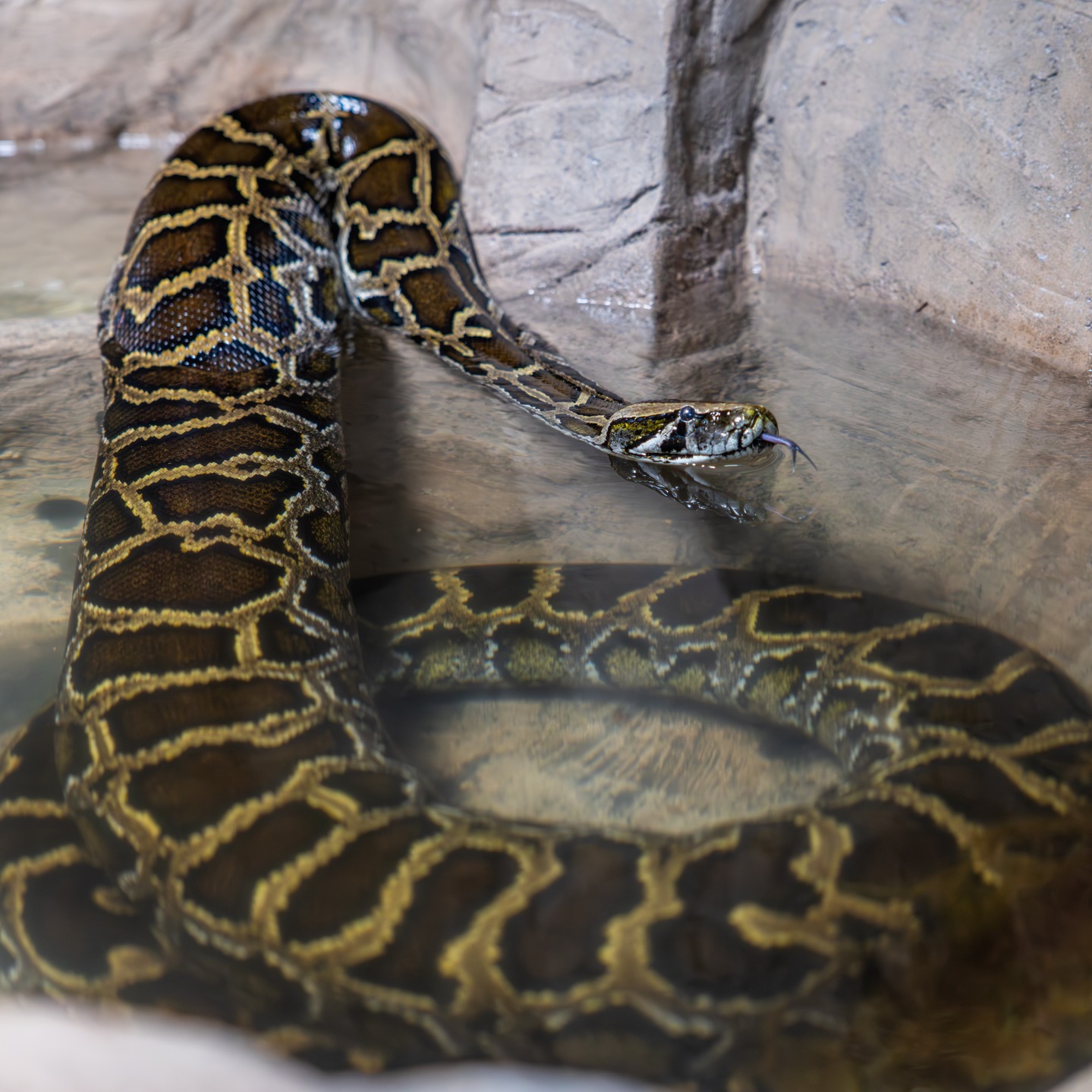
One of the most captivating aspects of Burmese pythons, including Chief, is their method of sensing their surroundings. The forked tongue of a snake is an instrumental tool in gathering information. When Chief flicks his tongue in and out, he captures scent molecules in the air. These molecules are transported to the Jacobson’s organ located in the roof of the mouth. From there, the information is relayed to the brain, enabling the snake to detect potential prey, mates, or even predators. This olfactory system is remarkably efficient, making snakes adept at locating food in their environments.
The large pool within Chief’s habitat offers not only a place for swimming but also serves as a sensory experience. Water is a critical component of life for many snake species, and Burmese pythons are no exception. They are known to be excellent swimmers, often found near water bodies in the wild. The pool allows Chief to engage with his environment actively, demonstrating behaviors that occur naturally in the wild.
Environmental enrichment is essential for the psychological and physical well-being of animals in captivity. Public spaces that house exotic animals, like Tropical Wonders, are increasingly aware of the need to create stimulating environments. This need not only enhances the quality of life for the animals but also improves visitor engagement. By observing Chief as he explores his habitat, visitors can gain insights into the species’ natural behaviors and ecology. Facilities that prioritize enrichment encourage animals to exhibit naturalistic behaviors rather than merely existing in a static environment.
Burmese pythons play a significant role in their ecosystems. As ambush predators, they control populations of small mammals and birds. Their presence helps to maintain ecological balance. However, this snake species faces numerous threats, including habitat loss due to urban development and climate change. In some regions, Burmese pythons are considered an invasive species, leading to significant ecological disruption. Efforts to manage populations and educate the public about their biological importance are critical.
Tropical Wonders aims to raise awareness about the ecological role of species like Chief. The facility implements educational programs to inform visitors about the complexity of ecosystems and the importance of conservation efforts. By focusing on the biological characteristics of the Burmese python, the facility emphasizes their unique adaptations and the human-induced threats they face.
Chief’s habitat also reflects a key tenet of modern zoo management: the importance of creating spaces that encourage species to flourish. The physical layout allows for climbing structures made of natural materials, providing vertical spaces that facilitate climbing behaviors. When animals have the opportunity to engage in instinctive activities, their overall well-being improves, reducing stress and promoting healthier lifestyles.
As Chief slithers out of the pool and explores his surroundings, he engages in investigative behaviors essential for his species. The new habitat allows Chief to explore different substrates, interact with enrichment items, and investigate new scents in a safe environment. These experiences mimic the challenges and discoveries that wild Burmese pythons encounter daily.
The emphasis on proper habitats extends beyond aesthetics; it plays a crucial part in animal health. Proper humidity levels, temperature gradients, and environmental structures facilitate the natural behaviors essential for maintaining physiological homeostasis. Specialized lighting that mimics sunlight can also help regulate the circadian rhythms of creatures like Chief, promoting natural patterns of activity.
Understanding the biology of the Burmese python further highlights the necessity for conservation. Their reproductive cycle is vital for population sustainability. In captivity, the breeding process must replicate natural patterns as closely as possible. Professionals at Tropical Wonders study these factors to ensure they can contribute to the knowledge base surrounding the species and improve breeding success when needed.
Furthermore, awareness of invasive species is vital as Burmese pythons have been introduced to non-native habitats, such as the Florida Everglades. The exponential growth of their populations poses severe risks to native wildlife. Educational initiatives about this phenomenon are crucial in mitigating human impact and understanding the consequences of introducing non-native species to delicate ecosystems.
Tropical Wonders not only showcases animals like Chief but also serves as a repository for knowledge about reptilian biology and conservation. Its educational programs aim to foster a connection between the public and the ecosystem, illuminating the interdependence of species. Through lectures, workshops, and interactive exhibits, visitors gain insights that are essential for promoting environmental stewardship.
As Chief settles into his new digs, he contributes to a broader dialogue about biodiversity. Each animal in the facility represents intricacies of nature and the importance of conserving habitats in the wild. Recognizing the need for coexistence among species is a message that resonates well beyond the walls of Tropical Wonders.
As the facility opens its doors to the public, excitement builds around the chance to learn from Chief. The opportunity for visitors to watch him explore fosters interest in the plight of Burmese pythons and other reptiles. Interactive elements in Chief’s new habitat invite questions and discussions, turning passive observation into an educational experience.
Chief the Burmese python in his new digs at Tropical Wonders exemplifies how well-managed zoological facilities can inspire learning and commitment to conservation. His existence as a captivating and educational animal showcases the vital roles that snakes have in their ecosystems. Proper habitat design, enrichment, and public engagement are fundamental in shaping perceptions of wildlife.
Modern zoos serve as bridges connecting urban populations with the complexities of nature. By understanding Chief and species like him, we begin to appreciate the rich tapestry of life on this planet. This understanding fosters empathy and encourages proactive steps toward preservation, benefiting both wildlife and humans alike.
As Tropical Wonders opens its doors this July 25, it marks a new beginning not just for Chief, but also for the educational journey awaiting all who visit. Every flick of his forked tongue and sway of his long body has the potential to ignite curiosity about the natural world. The experience at Tropical Wonders invites everyone to explore nature’s wonders and reflect on their roles in fostering a sustainable future.
*****
Source Description
Chief the Burmese python is enjoying this in his new digs in Tropical Wonders! 🌴👅🐍
Snakes like Burmese pythons flick their forked tongues in and out of their mouth to pick up odors. They grab smell molecules with their tongue and transmit them to the Jacobson’s organ in the roof of the mouth that connects to their brain to smell.
See Chief explore his new home when Tropical Wonders opens to the public this Friday, July 25!
Alt-text: Chief the Burmese python sticks out his forked tongue as he keeps his head above the surface of the water of his Tropical Wonders habitat pool in the first picture. In the second, Chief slithers out of the pool and heads to the other side of his habitat as he explores the space.
