
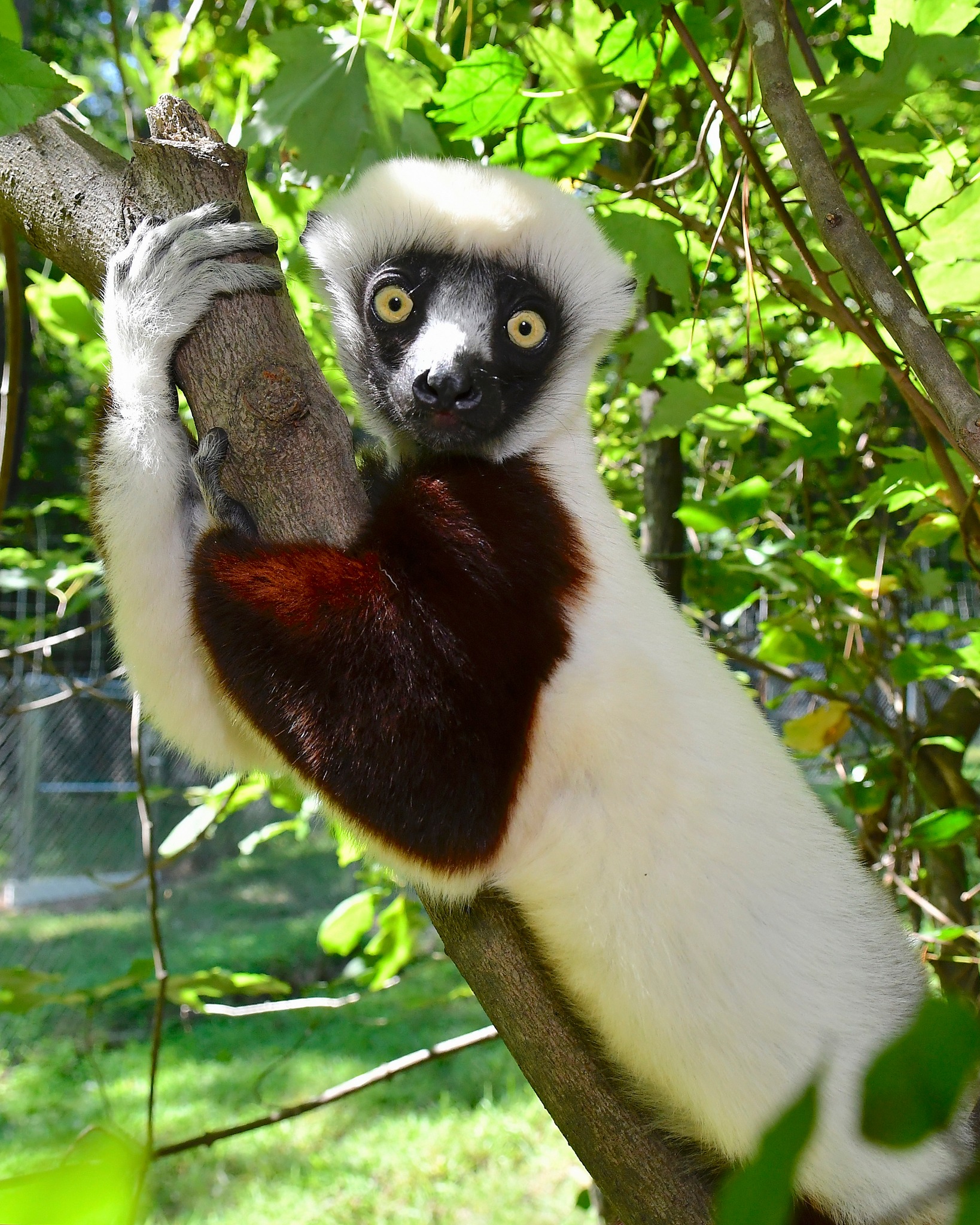
- Coquerel’s sifaka: Understanding Arcadius and his behavior
- The significance of family dynamics in sifaka social structures
- Conservation efforts and opportunities for engagement
- The role of symbolic adoptions in wildlife care and funding
- The connection between Arcadius and his lineage
Coquerel’s sifaka, particularly the young Arcadius, has become a delightful figure among wildlife enthusiasts and zoology students. The sifaka species, a type of lemur native to Madagascar, captures attention not only for its striking appearance but also its intriguing behaviors. Arcadius, at almost 10 months of age, has already begun to exhibit activities that show his growth into independence. This emerging independence makes him a candidate for exhibiting behaviors typical of adult sifakas, such as posing elegantly, reminiscent of a model. With his charming looks, one can see where he might inherit his camera-ready traits—his grandfather, Jovian, also known more affectionately as Zoboomafoo, was quite the character in his own right.
Arcadius represents a snapshot of lemur behavior and biology, making him an essential subject for study. Sifakas are known for their unique locomotion, which involves leaping between trees. Arcadius’s growth both physically and socially coincide with key developmental stages for sifakas, allowing us to understand how these animals adapt as they mature. Sifakas live in family groups and rely heavily on social interactions. As Arcadius spends time separately while his family searches for food, he is learning vital skills for foraging and navigation in the dense canopies of Madagascar.
Understanding the dynamics of sifaka families is crucial. Female sifakas often play a central role in the familial structure. The matriarch leads foraging efforts, guides social interactions, and protects the young. In Arcadius’s case, his mother Gisela’s influence is pivotal. A young sifaka, especially one who is developing as quickly as Arcadius, benefits immensely from maternal teaching. Observing Gisela’s behaviors provides insights into animal motherhood and early-childhood development in primates.
A significant part of understanding Coquerel’s sifaka and the broader context of lemur conservation sits within the scope of conservation efforts in Madagascar. The lemurs of this island, including Coquerel’s sifaka, face numerous threats such as habitat destruction, hunting, and climate change. Conservation groups actively seek to create strategies that not only protect these animals but also aid in sustaining their environments. Testifying to the urgency of these efforts, lemur populations continue to decline and thus require robust initiatives to boost their numbers and preserve their habitats.
Community participation is a vital aspect of conservation. Symbolic adoption programs have become increasingly popular as a means of engaging the public in wildlife conservation. Through the adoption of individual animals, like Arcadius’s mother Gisela, members of the community can receive updates on the family group while providing essential resources for their care. These contributions support the daily needs of animals like Arcadius and also assist in broader programs aimed at sustaining lemur populations in Madagascar. Adoptions can feel personal, offering a deeper connection to the species and fostering a sense of responsibility and stewardship for their conservation.
The link between Arcadius and his lineage further emphasizes the importance of genetic diversity and family structures in conservation. Sifakas belong to the larger family of lemurs, a group that showcases remarkable evolutionary adaptations and diversity. Understanding these relationships helps illuminate the path for future studies and conservation efforts. Protecting these species entails safeguarding their genetic backgrounds and maintaining diverse populations. As public interest grows, so does the urgency to contribute to these animals’ survival.
Arcadius embodies a blend of charm and animal behavior crucial for understanding anthropoid primates. His ability to engage with his environment, even at a young age, speaks volumes about lemur adaptability and intelligence. Moreover, Arcadius’s experiences in the wild have scientific value. Observations of his movement patterns, social interactions, and feeding strategies can enrich the body of knowledge regarding not just Coquerel’s sifaka but also other members of the lemur family.
Research efforts focusing on sifakas and their habitats are imperative in an era where habitat loss overwhelms wildlife. Evaluating how arboreal animals navigate their environments and interact with their surroundings contributes to a broader understanding of forest ecosystems. Arboreal species face specific survival challenges, as they depend on the integrity of tree canopies for mobility, food, and safety from predators. Studying Arcadius in his natural habitat offers insights into how specific species adapt behaviors based on environmental stresses.
The significance of recognizing Arcadius’s lineage cannot be understated. With genetics lying at the center of conservation biology, understanding which traits are preserved in his family tree can inform breeding programs and habitat restoration efforts. As the world shifts toward more conservation-focused initiatives, the precedence placed on protecting specific animal rosters—and Arcadius’s genetics—becomes prominent. This understanding fosters a well-rounded perspective on both immediate actions needed for animal welfare and long-term strategies for species viability.
Sharing information and promoting awareness about Coquerel’s sifaka, especially through the character of Arcadius, engages many spectators who desire to learn about wildlife. Whether through social media or educational programs, these activities help raise awareness about the plight of lemurs. They drive home the point that conservation is not a solitary enterprise but one that must involve coordinated global efforts.
Educational endeavors centered on lemurs can be powerful tools. Arcadius serves as a focal point not just for educational materials but also encourages dialogue about conservation. Engaging communities can facilitate an increase in public knowledge about the environmental impacts and the necessity of preserving biodiversity. Workshops, school programs, and online courses can all incorporate Arcadius’s life, utilizing a compelling narrative to attract attention and interest.
The ability of young animals to connect with people, through their charming behaviors and physical attributes, amplifies urgency in conservation messaging. Encouraging the public to see lemurs like Arcadius fosters a sense of personal connection to wildlife, resulting in increased support for conservation initiatives. Programs that focus on engaging individuals through delightful narratives often yield substantial results.
Public support stands as a crucial pillar of successful conservation strategies. By participating in symbolic adoptions, individuals can make a tangible difference while fostering a love for wildlife. The financial support derived from these adoptions feeds directly into necessary care programs, ensuring that animals like Arcadius and his family receive adequate resources. This system fosters a feedback loop, where community involvement nurtures wildlife, while simultaneously educating society about the importance of conservation.
Education is further reinforced through media representations, where figures like Arcadius, modeled to be relatable and engaging, can capture public consciousness. Videos, social media posts, and documentaries featuring young lemurs can entice interest and promote empathy for wildlife, leading to increased support for conservation activities. A charismatic figure like Arcadius stands to serve as an ambassador for his species, potentially reaching audiences that may not ordinarily engage with wildlife conservation.
Moreover, learning institutions can play a pivotal role in facilitating access to knowledge about lemurs and the intricacies of their behaviors through study programs and research placements. Universities can offer programs focusing on primatology and conservation biology, allowing students to engage with living subjects in natural settings. Engaging students through real-world experiences, such as observatory work with sifakas, can cultivate a new generation of conservationists.
The documentation of behaviors displayed by Arcadius further builds an academic database for future inquiries and enhances public understanding. Researchers, conservationists, and students can cultivate documentation of various behaviors, from porpoising through the trees to social interactions, creating a foundation for ongoing discourse in the scientific community.
In the end, Coquerel’s sifaka, as embodied by Arcadius, serves as a reminder that wildlife conservation is multifaceted. From understanding family dynamics and individual behaviors to engaging the public through adoption programs and educational initiatives, every aspect of conservation interlinks to bolster the survival of these unique species. Arcadius continues to charm and educate, proving that even the youngest members of the animal kingdom have a significant role to play in the quest for sustainable coexistence.
*****
Source Description
If there’s one thing Coquerel’s sifaka Arcadius is going to do, it’s pose like a model 😎
Can you believe that this handsome sifaka is almost 10 months old? He probably gets his camera-ready charm from his grandpa, Jovian aka Zoboomafoo. Arcadius has become much more independent, sometimes spending time all by himself while his family members forage in a nearby tree. At this point, he’s not much smaller than older brother Silas! 🥰
➡️ lemur.duke.edu/adopt
Want to stay up-to-date with Arcadius and his family? You can symbolically adopt his mom, Gisela, through our Adopt a Lemur program to receive quarterly updates on the group! Adoptions are available at two annual levels ($50 and $100) and help fund the care of Arcadius and his fellow DLC residents, as well as the conservation of his wild relatives in Madagascar. Symbolic adoptions make great gifts for hard-to-shop-for friends and family and are a great way to stay connected with the DLC on a more personal level 💙
📸: David Haring
