
Summary of Tiny Tapir, Big Personality – The Houston Zoo:
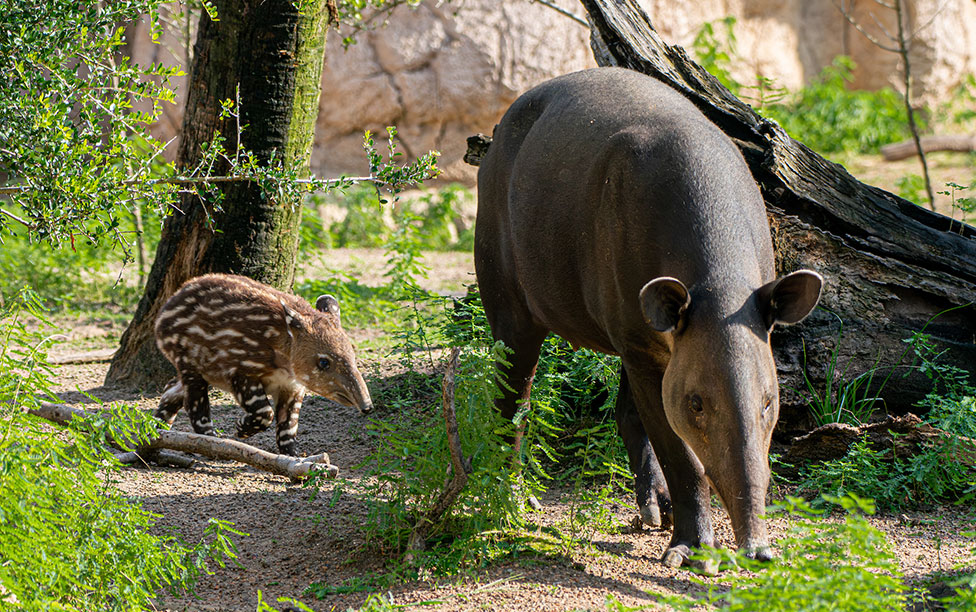
The Houston Zoo recently welcomed a baby Baird’s tapir born to parents Moli and Noah. This female calf, born on July 23, now weighs 30 pounds and gains about two pounds daily. Visitors can see her in the mixed-species habitat alongside giant anteaters, capybaras, and rheas. The calf is playful and curious, favoring water and showing bursts of energy. Her distinctive spots and stripes will fade as she matures. Baird’s tapirs are large land mammals related to horses and rhinoceroses. Zoo visitors contribute to conservation efforts in South America, supporting the Lowland Tapir Conservation Initiative’s study of 85 monitored tapirs.
- The birth of a Baird’s tapir at the Houston Zoo adds a new attraction and supports conservation efforts.
- Detailed information about Baird’s tapirs, their characteristics, and life cycle.
- Overview of the Houston Zoo’s habitat and how it supports animal well-being.
- Conservation efforts funded by zoo visitors that aid tapir studies in South America.
- Educational insights into the role of zoos in preserving endangered species.
The Houston Zoo’s latest addition, a baby Baird’s tapir, has captured the hearts of visitors and exemplifies the role zoos play in conservation. Born on July 23, the young tapir already displays a robust personality, drawing attention to the vital work done by zoological institutions. Her arrival offers a unique opportunity to explore the complex interconnections between zoo animal management, conservation, and education.
Baird’s tapirs are fascinating creatures, often referred to as “living fossils” due to their ancient lineage. Closely related to horses and rhinoceroses, these large mammals are among the most substantial land dwellers in South America. Adult females can weigh up to 700 pounds, and this calf, already 30 pounds and growing, is on her way to reaching such impressive sizes. Her juvenile markings of spots and stripes, resembling a watermelon, serve as camouflage in the wild, providing protection from predators. Over the next few months, these patterns will fade, replaced by the solid coloration of adulthood.
In terms of habitat, the Houston Zoo’s South America’s Pantanal exhibit provides an ideal environment for this young tapir. Sharing her space with giant anteaters, capybaras, and rheas, she experiences a stimulating and rich environment. This mixed-species habitat mimics the biodiversity of her native range, offering guests an immersive experience that highlights the interdependence of different species.
Animal care at the zoo focuses on nurturing the tapir’s development. Early care includes monitoring her diet, where she’s begun nibbling on solids while continuing to nurse for several more months. Her curious and vocal nature is evident as she engages with her mom and neighbors, sometimes expressing herself with joyful “zoomies.” Such behaviors not only entertain visitors but are critical indicators of her mental and physical health.
Visitors to the Houston Zoo play a tangible role in wildlife conservation. A portion of every ticket and membership funds projects like the Lowland Tapir Conservation Initiative (LTCI) in Brazil. This initiative involves monitoring satellite-collared tapirs to understand their movements and contribute to developing conservation strategies. Currently, the monitoring of 85 tapirs makes it the largest study of its kind globally. This data is invaluable for creating effective conservation protocols, ensuring the tapir’s survival in the wild.
The conservation message extends beyond on-site visits. Educating the public about the significance of these creatures and their habitats is crucial for long-term success. Baird’s tapirs are listed as endangered due to habitat loss and hunting. By providing an engaging and educational context, the Houston Zoo encourages advocacy and support for wildlife conservation efforts.
Zoos like the one in Houston stand at the forefront of preserving endangered species. They offer refuge for animals like Baird’s tapirs and foster an appreciation for biodiversity. Through carefully curated exhibits and conservation partnerships, they transform curiosity into action. The zoo’s ability to balance the immediate care of individual animals with broader environmental goals exemplifies the dual role of conservation and education.
In conclusion, the birth of the baby tapir at the Houston Zoo is more than just a celebratory event; it is a tangible expression of dedicated conservation work and education. By visiting the zoo, people directly support these efforts and become part of a broader movement to protect our planet’s natural heritage.
