
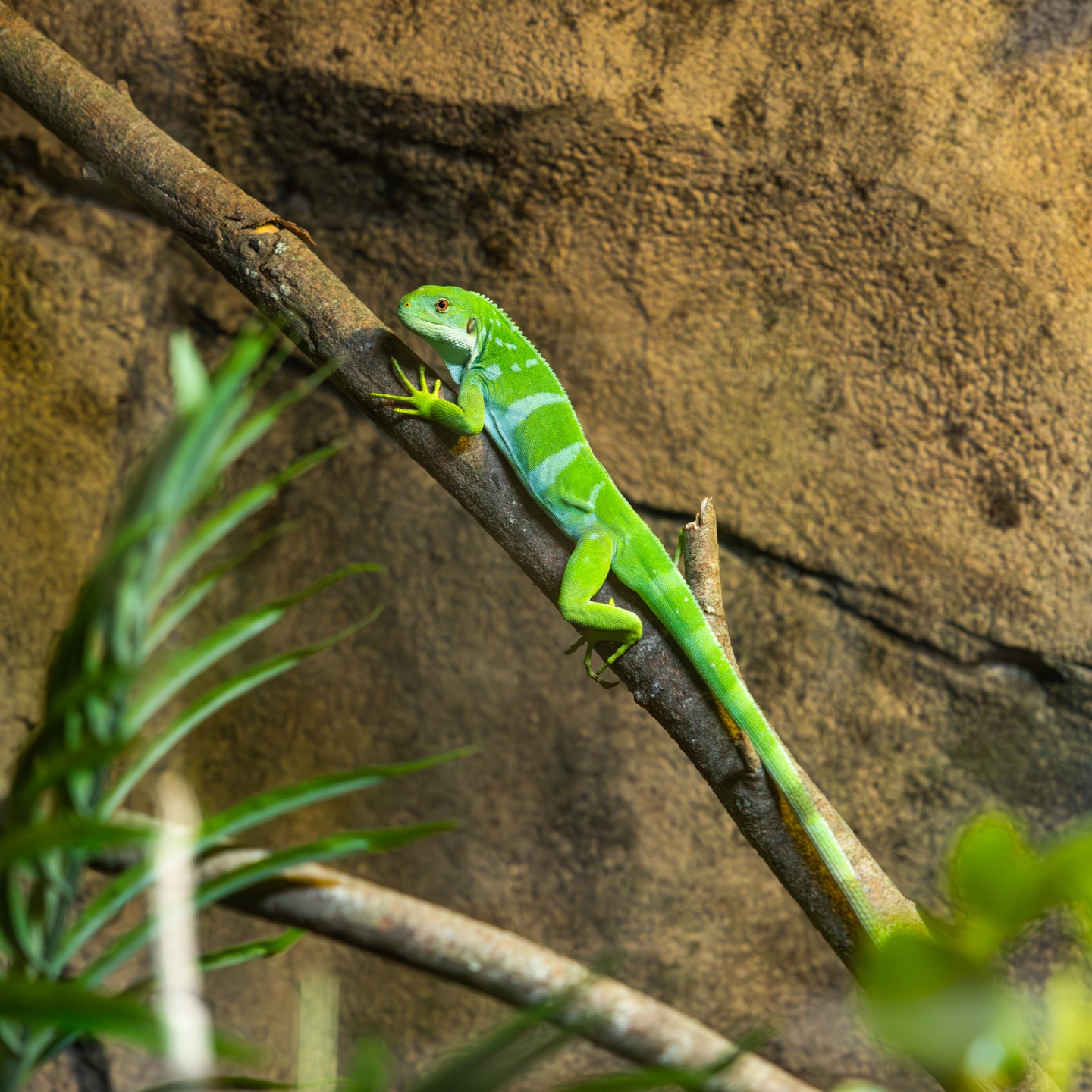
- Overview of the Fiji banded iguana’s habitat and distribution
- Physical characteristics and behavior of the Fiji banded iguana
- Diet and feeding habits of the Fiji banded iguana
- Conservation status and efforts for the Fiji banded iguana
- Importance of the Fiji banded iguana in its ecosystem
The Fiji banded iguana (Brachylophus vitiensis) is native to the lush Fijian Islands, primarily found on the islands of Viti Levu and Vanua Levu. These habitats include moist, tropical forests where vegetation flourishes. Their presence highlights the biodiversity of these islands. The Fiji banded iguana has adapted to both terrestrial and arboreal lifestyles. They typically inhabit areas rich in trees where they can bask in the sun while also having access to their primary food sources.
In terms of physical characteristics, adult males display distinctive bluish-green bands, while females and juveniles exhibit a more uniform green coloration. These bands serve a dual purpose: they help with camouflage among the leaves of their habitat and play a role in sexual signaling during mating season. The Fiji banded iguana possesses a long tail, which aids in balance as they navigate the branches of trees. Their eyes are particularly notable; the vibrant red-orange sclera provides an arresting contrast to their body color. This adaptive feature enhances their vision in low light conditions, which is integral to their survival in the dense canopy.
Dietarily, the Fiji banded iguana is herbivorous, primarily feeding on leaves, fruits, and flowers. This diet not only contributes to their growth but also supports the dispersal of seeds in their ecosystem. They are known to feed on various native plants, some of which have co-evolved with them. Interestingly, Fiji banded iguanas are good swimmers, allowing them to traverse between islands in search of food or mates, further expanding their potential habitat range.
Sadly, the Fiji banded iguana is classified as endangered, with their population declining due to habitat loss and human interference. Deforestation for agriculture, urban development, and logging threatens their natural environment. Invasive species, including rats and feral cats, pose significant risks as predators. Conservation efforts are underway, and organizations are working to safeguard their habitats while promoting breeding programs. Educating local communities about the importance of these iguanas is crucial for conservation success.
The Fiji banded iguana plays a vital role in its ecosystem. As a herbivore, it helps maintain the health of forest ecosystems by controlling plant growth. By dispersing seeds, it contributes to the regeneration of flora, thus supporting other wildlife. The loss of this species can lead to imbalances in the ecosystem, making conservation efforts crucial not just for the Fiji banded iguana but for the overall health of the Fijian environment.
The upcoming opening of Tropical Wonders offers a unique opportunity for the public to learn about the Fiji banded iguana first-hand. Visitors can observe their behaviors and understand their significance in an interactive setting. It is not only a chance for education but a catalyst for inspiring change in how we address the challenges facing endangered species. By fostering awareness and conservation efforts, more individuals can contribute to protecting these remarkable reptiles and their habitats.
*****
Source Description
Meet one of the residents of Tropical Wonders: The Fiji banded iguana! 🤩👋🦎
The Fiji banded iguana is an endangered lizard native to the Fijian Islands. They get their name from the bluish-green stripes present on males of the species.
Arboreal by nature, Fiji banded iguanas eat mostly leaves, fruits, and flowers. Though they spend most of their time in the trees, they are also excellent swimmers!
Check them out for yourself when Tropical Wonders opens to the public this Friday, July 25!
Alt-text: A Fiji banded iguana wraps itself around a branch in its Tropical Wonders habitat. The bright green lizard’s long tail hangs behind it as it points its visible red-orange eye at our camera.
