
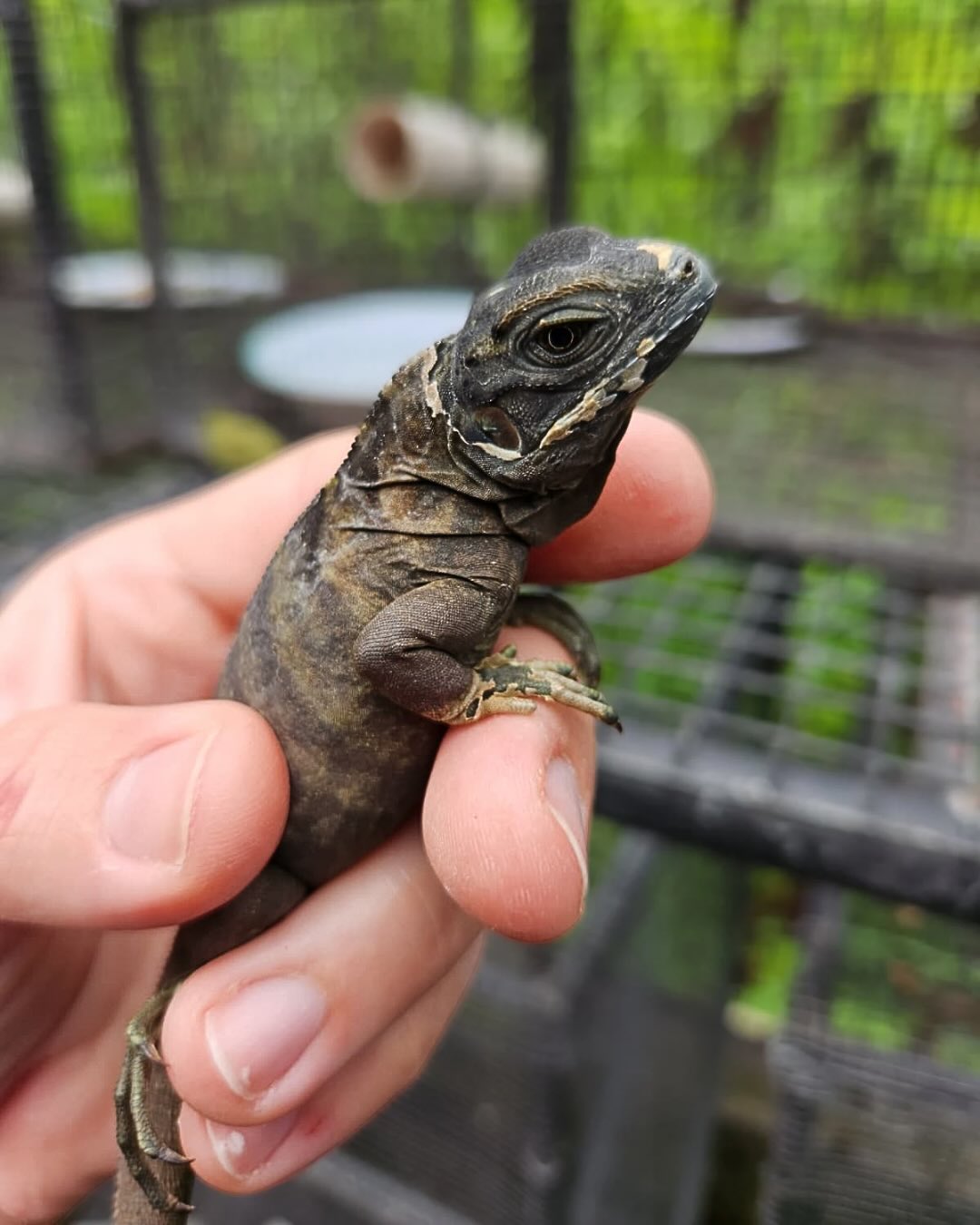
- Field health assessments: comprehensive exams, imaging, and laboratory diagnostics performed on more than 500 Jamaican iguanas to evaluate fitness for release.
- Headstart and release protocol: care, growth benchmarks, and behavioral conditioning at Hope Zoo Kingston that prepare 110 iguanas for reintroduction.
- Infectious disease surveillance and biosecurity: new testing funded by project partners to detect pathogens and reduce disease risk in wild populations.
- Conservation integration: habitat protection, predator control, genetics, monitoring, and community engagement that support long-term recovery.
Just in from Jamaica — a conservation update from the field! The Zoo’s Dr. Kim Rainwater, Director of Veterinary Services, and conservation biologist Stesha Pasachnik returned after intensive field work with the Jamaican Iguana Recovery Group. Their trip combined clinical veterinary practice, field epidemiology, and hands-on conservation management at the Hope Zoo Kingston headstart facility. Over 500 captive iguanas received health assessments; 110 of those are scheduled for release later this month. This update describes what was done, why it matters, and how these actions contribute to rebuilding a self-sustaining wild population.
Field health assessments: scope and clinical methods
Health screening of reptiles requires species-specific protocols adapted to stress sensitivity and physiology. The veterinary team conducted physical exams on more than 500 iguanas, following standardized checklists that covered body condition, musculoskeletal status, skin integrity, oral and cloacal inspections, and behavior. Physical exam findings are essential for spotting trauma, bite wounds, malformations, or signs of chronic malnutrition.
Diagnostic imaging played a key role. Portable ultrasound units were used to assess internal organs and reproductive condition. Ultrasound helps detect egg development in females, identify organ enlargement, and evaluate soft-tissue injuries without invasive procedures. Imaging is also valuable for monitoring post-surgical recovery when needed.
Blood sampling and laboratory work provided quantitative measures of health. Hematology and plasma biochemistry panels yield data on hydration, renal and hepatic function, electrolytes, and markers of infection or inflammation. Blood cell counts can reveal anemia, leukocytosis, or other hematologic abnormalities. Collecting these baseline values for a large cohort improves the project’s ability to set release criteria based on objective health parameters.
Handling protocols emphasized minimal stress. Reptiles show physiological stress responses that can affect blood parameters and recovery. The team used gentle restraint, temperature management, and appropriate analgesia or sedation only when required for advanced procedures. All samples and findings were recorded in the project’s health database to support longitudinal tracking of individuals and cohorts.
Pre-release protocol at Hope Zoo Kingston: headstart strategy and animal conditioning
Headstart programs raise hatchlings or juveniles in protected environments until they reach sizes less vulnerable to predation. Hope Zoo Kingston’s headstart facility provides controlled nutrition, veterinary care, and social experiences that promote natural behaviors. The 110 iguanas slated for release were evaluated against clear benchmarks: stable weight gain, normal feeding behavior, absence of active disease, and appropriate escape responses.
Nutrition is tailored to the species’ herbivorous diet, with emphasis on calcium-to-phosphorus balance and vitamin D3 exposure to support bone growth. Growth curves are monitored so that animals reach target sizes before release. Diet composition also affects gut flora and immune competence; therefore, dietary consistency and quality are part of pre-release health planning.
Behavioral conditioning prepares animals for the wild. This includes gradual exposure to natural substrates, live plant cover, and opportunities to forage. Conditioning aims to maintain natural wariness of potential predators while allowing animals to express normal foraging and thermoregulatory behaviors. The team measured behavioral competency through feeding trials and response-to-threat tests that are minimally invasive.
Tagging and identification are integrated into release plans. Each iguana receives a unique marker—typically PIT tags and visual markers—so post-release monitoring can link survival and movement data back to pre-release health records. These records are essential for adaptive management and measuring the headstart program’s contribution to population recovery.
Infectious disease surveillance: testing, risks, and biosecurity
Disease is one of the most significant threats to reintroduction programs. For that reason, the Jamaican Iguana Recovery Group expanded infectious disease testing during this mission. New testing, funded by partners including the Iguana Foundation, allowed screening for viral, bacterial, and parasitic agents using current molecular and culture-based assays.
Typical pathogen screening priorities for reptile programs include PCR for viral pathogens known to impact reptiles, bacterial cultures for clinically relevant enteric organisms, and parasitology for ecto- and endoparasites. Screening helps detect asymptomatic carriers that could introduce pathogens to wild populations. All testing was conducted under strict chain-of-custody and cold-chain protocols to preserve sample integrity.
Biosecurity measures were enforced at the headstart facility and during transport. These measures included controlled access to housing areas, dedicated footwear and clothing, disinfection stations, and equipment sterilization. Personnel training covered sample handling, quarantine procedures, and protocols for isolating animals with suspect clinical signs.
When infections were detected, targeted interventions were applied. These ranged from antiparasitic treatments to antimicrobial therapy guided by culture and sensitivity results. Treatment choices prioritized agents with known efficacy and safety in Cyclura species. Decisions balanced individual clinical needs with population-level considerations, such as antimicrobial stewardship and potential impacts on microbiomes.
Testing also supports broader epidemiology. By compiling pathogen prevalence data, the project can map disease risk across cohorts and over time. That information guides release timing and informs habitat management decisions, such as staging releases in areas with lower pathogen load or implementing post-release health surveillance.
Genetics and population management
Genetic diversity is critical for long-term resilience. The Zoo and recovery partners have supported genetic assessments for decades. DNA sampling conducted during health checks adds to the genetic database used to manage breeding pairs and avoid inbreeding. Maintaining genetic variation reduces the risk of inbreeding depression, increases adaptive potential, and improves chances of population persistence.
Captive breeding programs follow managed pairing protocols based on pedigree and genetic data. This reduces relatedness between mates. Genetic monitoring also helps identify whether released cohorts are contributing to gene flow in the wild. Noninvasive genetic monitoring—collecting shed skin, fecal samples, or opportunistic tissue samples—can document breeding events post-release without repeated captures.
Habitat, threats, and predator control
Reintroduction succeeds only when threats in the release area are reduced. Jamaican iguanas historically suffered from habitat loss and invasive predators. The Hellshire Hills and surrounding areas include the key remaining native dry limestone forest habitats. Conservation work involves securing and rehabilitating these habitats, limiting agricultural encroachment, and restoring native vegetation the iguanas depend on.
Invasive mammalian predators, including feral dogs, cats, and introduced mongooses, continue to pose a risk to juvenile and adult iguanas. Predator control and exclusion measures are part of site management. Techniques include targeted removal, community-based livestock and pet management strategies, and installation of predator-proof release enclosures for high-risk cohorts.
Fire management is another concern in dry forest systems. Controlled fire suppression, community fire prevention education, and creation of fire breaks contribute to habitat protection. Restoring native plant communities increases food availability and shelter, which raises survival odds for released iguanas.
Post-release monitoring and adaptive management
Tracking outcomes after release is essential to evaluate program success. The team uses a combination of radio telemetry, visual encounter surveys, and remote camera traps to monitor survival, movement, and habitat use. Tagged animals provide data on dispersal distances, home range sizes, and mortality causes.
Data feed into adaptive management cycles. If survival is lower than expected, managers assess whether the limiting factors are predation, disease, nutrition, or habitat quality. Interventions are then adjusted. For example, if predation is the primary issue, managers can increase predator control near release sites or delay future releases until predator densities decline.
Long-term monitoring extends beyond the initial post-release year. Reproductive success in the wild, juvenile recruitment, and population growth rate are the ultimate measures of recovery. The recovery group compiles multi-year datasets to detect trends and modify strategies accordingly.
Capacity building, partnerships, and local engagement
Conservation beyond a single trip depends on local capacity and community buy-in. The Zoo’s long-term support—over 30 years—has emphasized training local veterinarians, technicians, and field biologists. Building local diagnostic and husbandry skills reduces dependency on external teams and fosters sustainable stewardship.
Community engagement reduces human-wildlife conflict and cultivates local champions for the species. Education programs highlight the iguana’s ecological role as a seed disperser and its conservation status. Partnerships with local NGOs, schools, and landowners create incentives for habitat protection and reduce threats like poaching or habitat conversion.
Funding partners such as the Iguana Foundation enable the expansion of technical capabilities, like the new infectious disease testing. Donor support also finances materials, telemetry units, and community outreach. Transparent reporting and shared outcomes reinforce partner commitment.
Science integration and data management
A successful reintroduction is data-driven. Health records, genetic data, telemetry datasets, and ecological surveys are integrated into centralized databases. This infrastructure allows cross-disciplinary analyses that link pre-release condition to survival, or genetic makeup to dispersal patterns.
Standardized data protocols promote comparability across cohorts and over time. Data sharing among recovery partners accelerates learning and helps align strategies with international best practices. Peer-reviewed publications and technical reports translate field experience into evidence that informs other reptile conservation programs.
Risk management and ethical considerations
Ethical practice guides every step of the process. Animal welfare considerations influence handling, transport, and release timing. Veterinarians make decisions balancing individual health against population goals. When disease is detected at levels that could harm wild populations, the ethical choice may be to postpone release.
Risk assessment frameworks evaluate potential negative outcomes, such as pathogen introduction or genetic swamping of remnant wild lineages. Decisions are documented and reviewed by multidisciplinary teams. Transparency with stakeholders maintains trust and supports informed decision-making.
Outcomes, progress, and next steps
Just in from Jamaica — a conservation update from the field! The recent mission produced concrete results: over 500 iguanas assessed, targeted treatments applied, and 110 individuals cleared for release under established health criteria. The expanded infectious disease testing funded by partners provides a stronger epidemiological baseline for future cohorts.
These actions support the larger recovery trajectory for the Jamaican iguana. Headstarting reduces early mortality and accelerates population growth when releases are followed by effective habitat and threat management. Genetic monitoring and adaptive management improve the likelihood that released animals will survive and reproduce.
Follow-up monitoring in the release zone will determine actual survival and integration into wild breeding populations. Data from this cohort will inform modifications to husbandry, release timing, and site selection for future releases. The continued collaboration between veterinarians, conservation biologists, local staff, and funders remains vital.
Just in from Jamaica — a conservation update from the field! The team’s clinical work, disease screening, and operational planning together move the project toward the goal of a sustainable wild population. These measures reduce immediate risks associated with release and generate data that refine long-term tactics.
The project’s success depends on sustained funding, ongoing community engagement, and rigorous science. Continued investment in diagnostics, telemetry, and training will strengthen the recovery program and allow rapid response to emerging threats. Partnerships that support both field operations and laboratory capacity are especially valuable.
Just in from Jamaica — a conservation update from the field! Field teams, lab partners, and local allies are working in concert to give these animals the best possible chance. Each health check, each blood result, and each telemetry signal contributes to the evidence base that guides conservation action.
Go little lizards, go!
*****
Source Description
Just in from Jamaica — a conservation update from the field!
The Zoo’s Dr. Kim Rainwater, Director of Veterinary Services, and Conservation Biologist Stesha Pasachnik just returned from a trip to Jamaica as part of the Jamaican Iguana Recovery Group — a project the Zoo has proudly supported for over 30 years.
The team completed health checks on 500+ Jamaican iguanas, including exams, ultrasounds, blood work and new infectious diseases testing funded by project partners @iguana_foundation. These assessments evaluate the overall health of the breeding lizards at the headstart facility @hopezookingston and serve as a pre-release checkup for the 110 iguanas that are set to released back into their native range starting later this month.
These health checks are an important part of the overall conservation project that is working to give this species the best change to rebuild a sustainable wild population. Go little lizards, go! 🦎
