
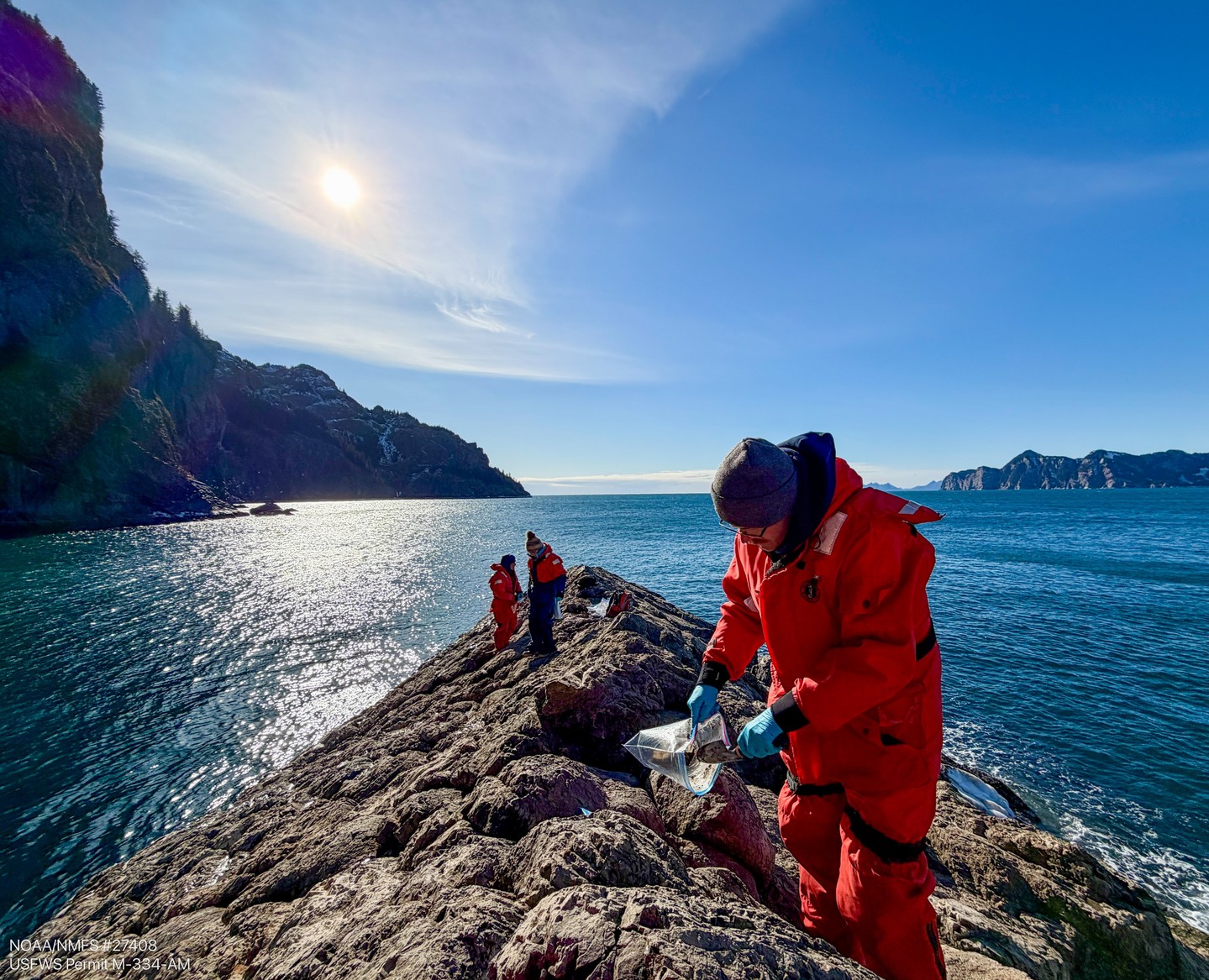
- Steller sea lion scat provides direct evidence of diet, feeding behavior, and seasonal prey use.
- Post-marine-heatwave diet shifts can indicate changing ocean conditions and prey availability.
- Field collection in Alaska supplies samples that support long-term monitoring of population health.
- Scat studies complement counts of pups and adult animals, helping link nutrition to reproduction and survival.
- Steller sea lion scat is a practical conservation tool for assessing ecosystem change without invasive handling.
Emma’s field story about joining the ASLC research team in Alaska shows how demanding field biology can be. It also shows why fecal sampling matters. Steller sea lion scat gives researchers a direct, non-lethal window into what these animals eat and how their foraging patterns change over time. That information matters for wildlife managers, zoo professionals, and conservation scientists because diet is tied to body condition, reproduction, pup survival, and population trend. For a marine predator like the Steller sea lion, scat can reveal how the health of the ocean is reflected in the health of the species.
Steller sea lions are large otariids, or eared seals, found across the North Pacific. They depend on prey that they can catch in cold coastal waters. Their diet often includes fishes such as pollock, cod, herring, salmon, flatfish, and octopus. The exact mix changes by region, season, prey abundance, and age class. Adults, subadults, lactating females, and juveniles may forage differently. That is why a scat sample is so valuable. It records recent meals in a way that can be analyzed across space and time.
Researchers collect Steller sea lion scat from haulouts and rookeries where animals rest, nurse pups, and molt. Field teams work around tides, weather, surf, and steep rock. They must identify fresh samples and avoid contamination. They may note date, location, age class, and surrounding conditions before preservation. In laboratory work, scientists can wash the sample, isolate hard remains such as fish bones, otoliths, scales, squid beaks, and crustacean parts, and then identify prey. Modern studies may also use DNA methods to detect prey species that leave little hard material. Stable isotope analysis can add another layer by showing longer-term diet patterns.
This is where Steller sea lion scat becomes more than a sample. It becomes a record of feeding ecology. Fish otoliths are especially useful because these ear stones have species-specific shapes and can be measured to estimate prey size. Scales and vertebrae can also help with identification. When DNA barcoding is added, researchers can detect prey that may be underrepresented in hard remains. The result is a more complete picture of what the animals consumed. That picture can be compared across years, among colonies, and before and after major ocean events.
A 2023 ASLC publication reported that after the Pacific marine heatwave years, Steller sea lions appeared to shift away from preferred prey species. That finding matters because marine heatwaves can alter food webs across broad areas. Warm water affects plankton communities, which affects forage fish, which affects top predators. If preferred prey decline or move, sea lions may have to search longer, dive deeper, or target lower-quality prey. Those changes can increase energy costs. For a central-place forager that must return to haulouts or rookeries, higher travel and dive demands can reduce the energy left for growth, lactation, and reproduction.
Diet shifts are important because not all prey provide the same energetic payoff. A fish that is abundant but smaller, harder to catch, or lower in fat content may not support the same nutritional return as a larger or richer prey species. If sea lions spend more time hunting and less time resting, the whole energy budget changes. Adult females nursing pups are especially sensitive to that imbalance. Lactation is energetically expensive. If prey fields shift farther offshore or into deeper water, mothers may take longer trips and spend less time with young. That can affect pup growth and survival.
The ASLC Chiswell Island team documented fewer sea lions and fewer pups being born during the same broad period. That pattern aligns with the concern that ocean conditions and prey availability can influence reproductive output. Population counts do not prove cause by themselves, but they are important indicators when paired with diet data. If scat samples show prey change and field counts show fewer animals and fewer pups, researchers have a stronger basis for tracking ecosystem stress. This kind of evidence is central to marine conservation because it links prey, predator, and habitat conditions in a measurable way.
The value of scat analysis extends beyond one colony. Steller sea lion scat can help compare diet across different regions of Alaska and across years with different ocean states. That lets scientists ask practical questions. Are sea lions switching prey only in certain areas? Are young animals eating different prey than adults? Are winter diets more variable than summer diets? Are some colonies buffered better than others because local prey communities are more stable? These questions support better management decisions for protected marine mammals and for the fisheries that share the same ocean space.
Wildlife biology often depends on indirect evidence. For marine mammals, direct observation of feeding is difficult. Scat fills that gap. It is a non-invasive tool. Researchers do not need to capture or tag every animal to gain insight. That matters for species conservation because lower-disturbance methods reduce stress on animals and may allow broader sampling. It also means long-term projects can continue with limited field impact. In remote Alaska, where access is difficult and weather windows are short, collecting and preserving scat can be one of the most efficient ways to build a diet dataset.
Field work itself is demanding. Emma’s account highlights the practical side of science that is often overlooked. Teams often travel by boat to exposed shorelines. They may carry gear across uneven rock, dodge waves, and work quickly between tide changes. Samples must be labeled correctly. Storage has to be reliable. Small errors can affect downstream analysis. In zoo management and wildlife conservation, those details matter because data quality drives decisions. Good field methods produce strong evidence. Strong evidence supports credible management.
Steller sea lion scat studies also help interpret broader ecosystem events. A marine heatwave is not a single change. It can alter water temperature, prey distribution, predator behavior, and reproductive success over multiple seasons. The signal often appears first in diet. If preferred prey become scarce, sea lions may broaden their diet. That may sound adaptive, but a diet expansion can also indicate stress. A generalist option may keep animals fed, yet still yield lower energy intake than their preferred foods. Over time, that can affect body condition and calf or pup production.
For zoo and aquarium professionals, this kind of research has practical relevance. Marine mammal care depends on understanding nutrition, prey quality, and physiological demand. While captive and wild conditions differ greatly, the basic principles remain the same. Energy intake, prey composition, and reproductive status all influence health. Research on Steller sea lion scat informs how scientists think about foraging efficiency and nutritional ecology in pinnipeds. That knowledge can support education programs and strengthen public understanding of marine conservation.
The conservation message is clear. Scat data are not trivial. They are evidence. They show what prey are present in the diet, how those prey change with climate stress, and how feeding shifts may line up with changes in abundance and reproduction. When scientists see fewer pups and fewer adults at a colony, and scat data show a move away from preferred prey after warm-water events, the combined pattern suggests a tightly linked system. Ocean conditions affect prey. Prey affect sea lions. Sea lions reflect the state of the marine environment.
Steller sea lion scat has therefore become a key tool for assessing risk and resilience. It helps scientists track whether the species is responding to short-term prey fluctuations or to longer-lasting changes in the food web. It also helps guide future monitoring. If the same trends continue, managers will want to know whether certain colonies are more vulnerable, whether seasonal prey bottlenecks are emerging, and whether climate-linked habitat shifts are changing foraging effort.
The most useful part of this work is its long view. One sample can identify a meal. Many samples across years can show a trend. In a changing North Pacific, that trend is essential. It links field observations, lab analysis, oceanography, and population monitoring into one coherent evidence base. That is why the work described in Emma’s field story matters. It is not just about collecting scat on a rugged Alaska shoreline. It is about using that material to understand how Steller sea lion scat reflects the condition of a predator and the marine system that supports it.
*****
Source Description
We hope you had the chance to read Emma’s new blog sharing what it’s like to join the ASLC research team in the rugged field of Alaska to collect Steller sea lion scat!
But what exactly can sea lion scat tell researchers? Quite a lot, actually. 💩
A 2023 ASLC publication found that after the Pacific marine heatwave years, Steller sea lions appeared to shift away from preferred prey species, potentially forcing them to dive deeper and travel farther for lower energy food sources. At the same time, the ASLC Chiswell Island team documented fewer sea lions and fewer pups being born, highlighting how closely ocean conditions, prey availability, and population health may be connected.
Read more about that Steller sea lion scat has shown us: https://stories.alaskasealife.org/2023/05/01/changes-in-ssl-winter-diets/
If you missed it, read Emma’s fieldwork story here:
The Good, the Bad, and the Smelly: An Educator’s Experience Participating in Field Research
