
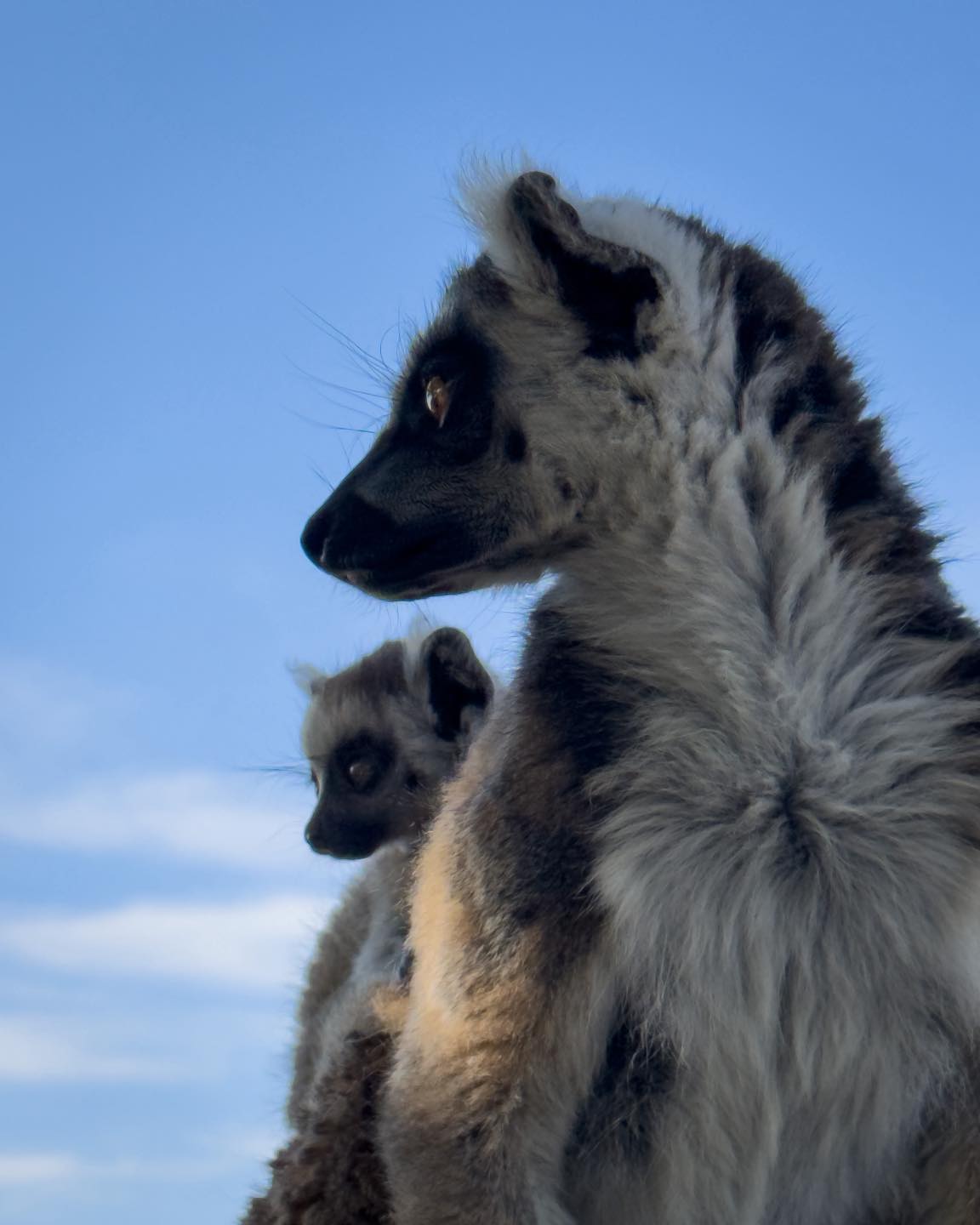
- Lemur infants depend on close maternal contact during the earliest weeks, and family members often play a protective role around them.
- Lemur social systems shape infant care, with group structure, grooming, carrying, and alarm responses influencing survival.
- Captive management of lemurs requires careful attention to diet, enclosure design, social grouping, and neonatal monitoring.
- Conservation of lemurs depends on habitat protection, anti-poaching action, and support for scientifically managed breeding programs.
- The phrase En la familia de los lémures siempre hay alguien cuidando al más pequeño. reflects a real biological pattern of shared vigilance and infant-centered behavior in many lemur species.
En la family of the lemurs, the youngest animal often receives constant attention from adults and older juveniles. This pattern is a major feature of lemur social life. It is also a practical survival strategy. Lemur infants are born with limited mobility, limited thermoregulation, and a high dependence on maternal milk. During the first days and weeks, they stay pressed against the mother’s body. They cling to her fur. They ride along as she moves through the canopy. This is exactly what the phrase En la familia de los lémures siempre hay alguien cuidando al más pequeño. 🖤✨ captures in simple form. The baby stays close, and the group stays alert.
Lemurs belong to the primate order and occur naturally only in Madagascar and some nearby islands. Their diversity is striking. More than 100 species and subspecies have been described, ranging from the tiny mouse lemurs to the large indri. Their social behavior varies by species, but infant care is a central theme across much of the group. In many species, females are the primary caregivers. Mothers carry, nurse, groom, and defend their young. In others, fathers or other group members contribute by keeping watch, allowing access to resting sites, or responding to threats. The degree of alloparental care, which means care by individuals other than the mother, differs by species and social structure.
Lemur infants are born after a gestation period that is short compared with many other primates. Litter size also varies. Some species commonly produce single offspring, while others may give birth to twins or more. At birth, infants are small and physically immature. Their eyes are open in many species, but they still depend heavily on the mother for warmth and nutrition. The mother’s body acts as a heat source. This matters because neonatal primates can lose body heat fast, especially in cooler forest microclimates or during nocturnal activity. In captive settings, keepers monitor this stage closely because low neonatal temperature can quickly become dangerous.
During the earliest weeks, the infant’s main job is simple: hold on. Clinging behavior is essential. The newborn grips the mother’s fur with its hands and feet. This lets the mother travel, forage, and avoid danger while keeping the infant attached. As the infant grows stronger, it begins to shift posture, practice balance, and explore short distances. Locomotor development in lemurs follows a predictable path. First comes clinging. Then comes controlled movement across the mother’s body. Later the infant makes small climbs and jumps. This progression prepares the animal for life in the canopy, where agile movement is critical.
Mother-infant bonding in lemurs is shaped by sensory contact and repeated association. Nursing occurs frequently in the first phase. Grooming also matters. It removes debris and parasites, but it also reinforces social attachment. In species with group living, other adults may inspect the infant, sniff it, or groom the mother while the infant remains attached. These interactions may reduce tension and help the infant become familiar with group members. In some lemur species, fathers show interest in infants and may carry them for short periods or remain close during travel. In others, the mother is the only regular carrier. The social pattern depends on species, season, and group dynamics.
The phrase En la familia de los lémures siempre hay alguien cuidando al más pequeño. is especially useful for understanding group defense. A small infant creates risk. It attracts predators and can be vulnerable during movement. Lemurs respond with vigilance. Adults scan the surroundings. They emit alarm calls. They change positions in the tree canopy. Some species mob or harass a predator if conditions allow. Alarm signaling is important because it coordinates escape. It may also inform the infant’s later learning. Young lemurs hear the calls and associate them with threat.
Dietary development is another key part of infant care. For the first weeks, milk provides the primary source of energy and immune support. As the infant ages, it begins sampling solid food. Leaves, fruit, flowers, bark, and insects may enter the diet, depending on species. Food choice matters in management because young animals have immature digestive systems. In captive collections, nutritionists use species-specific diets that account for fiber, sugar content, protein balance, and micronutrients. Improper feeding can cause gastrointestinal disease, poor growth, and metabolic problems. These issues can be serious in young primates.
Zoo management of lemur families focuses on natural social grouping. Housing a mother alone with her infant may reduce disturbance in some cases, but many species benefit from stable group contact. Keepers observe whether the group is calm around the infant. They watch for aggression, infant rejection, excessive handling, or accidental injury during jumps and chases. Visual barriers, retreat areas, and vertical complexity help. Branches, ropes, and platforms allow mothers to move safely while maintaining infant contact. Temperature control, quiet zones, and low-stress husbandry are also important during neonatal care.
Species differences shape infant management. Ring-tailed lemurs often live in female-dominant groups, and mothers may rely on adult allies during infant rearing. Bamboo lemurs have different feeding demands and may require more specialized nutrition. Mouse lemurs are tiny and vulnerable, with different nocturnal activity patterns and thermal needs. Coquerel’s sifaka and other vertical clingers and leapers need enclosure structures that support strong jumping behavior as infants mature. Zoo staff use species biology to guide enclosure planning, enrichment, and monitoring protocols.
Health monitoring in infant lemurs includes body weight tracking, nursing observation, fecal checks, and behavioral assessment. A healthy infant should nurse regularly, cling securely, and show gradual increases in activity and coordination. Signs of concern include weak grip, low responsiveness, failure to nurse, persistent isolation, or poor weight gain. Veterinary teams may intervene if dehydration, respiratory illness, or maternal rejection appears likely. Intervention must be careful. Overhandling can increase stress. In many cases, the best support is quiet observation, husbandry adjustment, and rapid response if health declines.
Social learning begins early. An infant that watches its mother feeding gains information about which foods are safe and how to handle them. It learns movement paths through the canopy and response patterns to alarms. It also learns group structure. This matters because lemurs are not just solitary animals placed in groups by chance. They use social cues. They track relationships. Some species show strong seasonal reproductive timing, which means infants are born when environmental conditions favor survival. In wild populations, timing often aligns with food availability. In managed breeding programs, institutions use this biological information to support healthy births.
The conservation status of lemurs is a major concern. Madagascar has high endemism, but habitat loss has affected many forests. Slash-and-burn agriculture, logging, charcoal production, mining, and forest fragmentation reduce available habitat. Hunting also threatens certain species. Climate change adds pressure by altering rainfall patterns and plant growth. Infants are especially sensitive to these changes because they rely on stable resources and careful maternal investment. When adult females lose access to quality food, infant growth and survival can decline.
Conservation programs focus on habitat protection, community engagement, law enforcement, and research. Protected areas can help maintain forest structure and food resources. Local conservation initiatives often work with communities to support sustainable livelihoods and reduce dependence on forest clearing. Scientific surveys track population trends, reproductive rates, and age structure. For species with small or isolated populations, managed breeding programs in accredited zoos can support genetic diversity. These programs use studbooks, transfer planning, and demographic analysis. Infant survival in these programs contributes directly to species preservation.
The care dynamics described by En la familia de los lémures siempre hay alguien cuidando al más pequeño. also have educational value for visitors. Zoo interpretation can show how primate infants develop, why maternal care matters, and how habitat loss affects family behavior. Good interpretation uses clear language and direct observation. It avoids exaggeration. It explains that lemur families are shaped by evolutionary history, food availability, predator pressure, and social organization. Visitors often connect strongly with infants. That interest can support broader conservation awareness if the information is accurate and concrete.
For wildlife professionals, lemur infant care is a reminder that animal welfare and conservation are linked. A healthy infant requires a healthy mother, a stable social setting, and a secure habitat. In the wild, this means intact forest and low disturbance. In captivity, it means correct diet, appropriate social housing, and skilled veterinary oversight. Every detail affects outcomes. Temperature, light exposure, perch spacing, diet texture, and group stability all matter. Small errors can create large problems in a fragile neonate.
Lemurs offer an important case study in primate development. Their infant-rearing behavior shows how biology and social structure work together. Mothers provide the core of care. Group members often add vigilance or tolerance. Infants respond by clinging, observing, and gradually expanding their movement repertoire. The result is a slow transition from dependence to independence. That transition depends on forest safety, food access, and social cohesion.
En la familia de los lémures siempre hay alguien cuidando al más pequeño. 🖤✨ is more than a phrase. It reflects a real pattern of care, adaptation, and survival strategy in primates that face intense ecological pressure. The baby remains close. The mother stays attentive. The group helps by watching, warning, and keeping social space stable. This is how many lemur species give their youngest members the best chance to grow, learn, and eventually move with confidence through the forest canopy.
*****
Source Description
En la familia de los lémures siempre hay alguien cuidando al más pequeño. 🖤✨
Los bebés pasan sus primeras semanas pegaditos a mamá, aprendiendo poco a poco a trepar, brincar y descubrir el mundo junto a toda su familia.
