
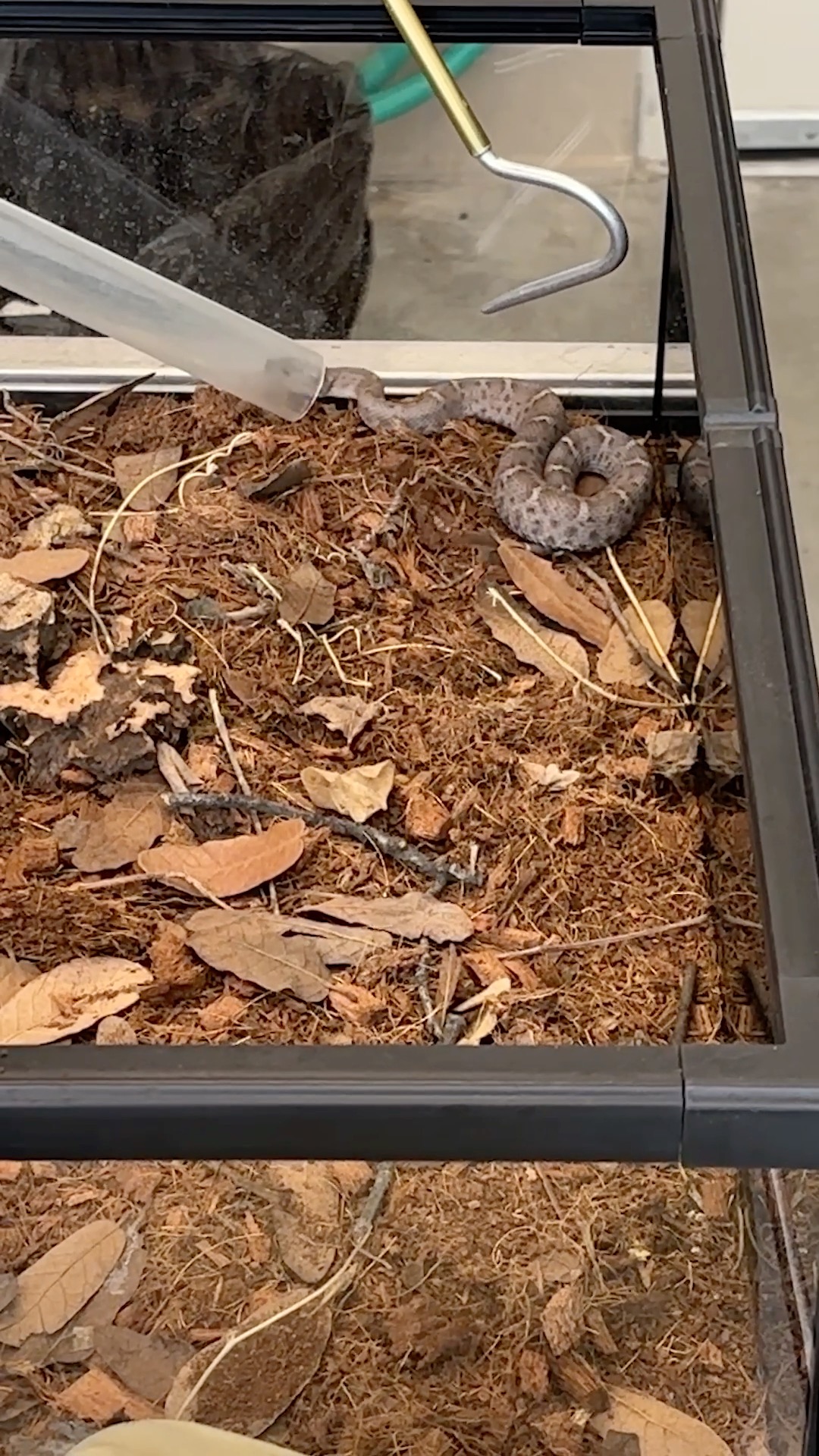
- The New Mexico ridge-nosed rattlesnake is a small, highly localized pit viper with narrow habitat needs and a limited natural range.
- Husbandry in conservation care requires precise handling, weighing, and sampling methods that reduce stress and preserve animal welfare.
- Genetic data collection supports population management, pairing decisions, and future reintroduction planning for this rare subspecies.
- The Peloncillo Mountains juveniles in human care represent a critical resource for conservation breeding and long-term recovery planning.
- Project Obscurus shows how zoos, conservation groups, and researchers can coordinate to support a species with very small wild and managed populations.
Watch as we speed through tubing, sampling, and weighing our New Mexico ridge-nosed rattlesnake is more than a husbandry update. It is a record of applied conservation biology. The work shown in the video reflects a coordinated effort to support a rare rattlesnake subspecies, gather data that matter for management, and maintain the health of animals held in human care. The species involved, Crotalus willardi obscurus, is the New Mexico ridge-nosed rattlesnake, a small viper with a restricted distribution and a conservation status that demands careful, data-driven action.
The New Mexico ridge-nosed rattlesnake is a member of the pit viper family, Viperidae. Like other pit vipers, it has heat-sensing facial pits that help it detect warm-bodied prey. Adults are relatively small compared with many North American rattlesnakes. They are typically adapted to rugged montane habitat, where rocky slopes, woodland edges, and cooler microclimates offer shelter and hunting opportunities. That habitat specialization is one reason the subspecies is so vulnerable. A narrow geographic range means that local changes in climate, land use, fire patterns, prey availability, or disease can have outsized effects on the population.
This is where the work highlighted in Watch as we speed through tubing, sampling, and weighing our New Mexico ridge-nosed rattlesnake becomes important. Every step serves a function. Tubing allows handlers to control the snake safely. Sampling provides biological data. Weighing records body condition. These are routine in professional reptile management, but they become especially meaningful when the animals are among the last representatives of their population in human care. In this case, the team is not just caring for individual snakes. It is helping manage a conservation population.
Tubing is a standard handling method used for many venomous snakes. A clear tube is placed over part of the snake’s body, allowing staff to guide the animal without direct contact with the head. This reduces risk to people and lowers the chance of injury to the snake. It also provides better control during brief procedures such as examination, sampling, identification, or transfer. For a venomous species like Crotalus willardi obscurus, safe handling is not optional. It is part of the welfare framework that supports both personnel safety and animal health. When done correctly, tubing can minimize stress compared with more forceful restraint techniques.
Weighing is equally important. Body mass gives keepers and veterinarians a basic measure of condition. Changes in weight can indicate growth in juveniles, successful feeding, seasonal shifts, hydration status, or a need for closer monitoring. In conservation breeding programs, body mass data help staff schedule feeding, assess development, and compare animals over time. A single measurement is useful, but repeated records build a profile. That profile can show whether a snake is thriving, stable, or in need of intervention. For rare reptiles, that information supports better day-to-day care and long-term planning.
Sampling adds another layer of value. In the video and accompanying program notes, the team is collecting genetic data. That data helps researchers measure diversity within the managed group and compare it with wild populations. Genetic variation is a core conservation metric. Low diversity can increase the risk of inbreeding and may reduce population resilience over time. For a taxon with a small number of founders and a limited population base, genetic monitoring is central to management. It informs pairing decisions and helps prevent the loss of alleles that may be important for the species’ future.
The three juvenile snakes from southeastern Arizona’s Peloncillo Mountains are especially significant. They are the only representatives of that population currently in human care. That fact carries practical and scientific weight. From a husbandry standpoint, each juvenile requires individualized monitoring. From a conservation standpoint, they represent a geographic lineage that can contribute to the broader recovery effort. Preserving the genetic and demographic integrity of this group matters. If managed correctly, these juveniles may help maintain diversity that would otherwise be at risk of disappearing from the conservation program.
The Peloncillo Mountains population is part of the species’ broader natural history, and its inclusion in managed care strengthens the scope of Project Obscurus. The Rattlesnake Conservancy’s Project Obscurus focuses on recovery support for this rare small viper subspecies. That support may include coordinated breeding recommendations, data sharing, health monitoring, and planning for future release work. In species recovery, no single institution can solve every problem alone. Success depends on collaboration among zoos, conservation organizations, field biologists, veterinarians, and geneticists. Project Obscurus reflects that model.
Genetic data collection is not a side task. It is one of the main tools for modern conservation management. Tissue, scale, or other biological samples can be analyzed to assess relatedness among individuals. Researchers can then identify which pairings are most likely to preserve diversity. In a small managed group, mating closely related animals can raise the risk of inbreeding depression. That can affect fertility, hatch success, juvenile survival, and overall population strength. By contrast, a breeding plan informed by genetic analysis can slow the erosion of variation. That is especially important for reptiles with slow life histories and limited reproductive output.
The New Mexico ridge-nosed rattlesnake also illustrates why ex situ conservation, meaning care in human facilities, can matter for species recovery. Ex situ programs are not substitutes for habitat protection. They are support systems. They provide a buffer when wild populations are very small, fragmented, or exposed to unusual threats. They can also create opportunities for health screening, behavioral observation, and reproductive planning that are difficult to achieve in the field. For a subspecies with few managed representatives, ex situ care may be the only way to maintain a viable conservation reservoir while field efforts continue.
At the same time, these programs must stay grounded in biological reality. Captive care for venomous reptiles demands species-specific environmental parameters. Temperature gradients, humidity, shelter options, feeding schedules, and seasonal cycles should reflect the animal’s natural ecology as closely as possible. If the goal is eventual reintroduction, the snakes must remain behaviorally and physiologically capable of living in the wild. That means more than simply keeping them alive. It means maintaining appropriate body condition, minimizing habituation to human presence, and tracking reproductive readiness. The work shown in Watch as we speed through tubing, sampling, and weighing our New Mexico ridge-nosed rattlesnake fits into that larger framework.
Juveniles merit special attention. Early life stages can be sensitive to environmental changes, feeding issues, and stress. Growth in young rattlesnakes must be tracked carefully because body size, mass, and feeding response can influence future reproductive potential. Juvenile data are useful for husbandry records and for comparing development among individuals from different populations. In a rare subspecies, even a small set of juveniles can carry substantial management value. Their progress may help shape future breeding decisions for years.
The care of venomous snakes also requires highly trained personnel. Staff must understand species behavior, safe restraint methods, emergency protocols, and the clinical signs of stress or illness. That expertise protects the animals and the team. It also allows conservation work to continue without unnecessary interruption. Facilities that hold venomous reptiles often maintain specialized equipment and protocols for transport, quarantine, record keeping, and veterinary support. These systems are part of professional zoological medicine. They are not extras. They are core infrastructure for responsible care.
Another key point is documentation. Every weigh-in, sample, and handling event becomes part of an animal’s record. Those records support husbandry decisions and can reveal trends that would otherwise be missed. For example, a consistent decline in mass may signal a feeding issue, parasite burden, or another health concern. Pairing records can show whether certain lineages are overrepresented. Sampling records can reveal whether genetic goals are being met. Good records turn individual events into population-level insight. In conservation, that is often where the real progress comes from.
The collaboration with The Rattlesnake Conservancy also reflects a broader change in how snake conservation is approached. Rattlesnakes have often been overlooked or feared, even though they play important ecological roles. They help regulate prey populations and contribute to ecosystem balance. Conservation work for a species like Crotalus willardi obscurus therefore has value beyond the species itself. It preserves a component of biodiversity that interacts with other parts of the landscape. It also demonstrates that venomous snakes can be subjects of rigorous science, careful husbandry, and public education.
The phrase Watch as we speed through tubing, sampling, and weighing our New Mexico ridge-nosed rattlesnake captures the pace of the procedure, but the significance lies in what the procedure enables. In a short handling session, staff can gather information that supports genetics, veterinary oversight, and breeding management. That is efficient conservation. It uses brief, controlled interventions to create long-term benefits. For a rare subspecies with a precarious status, that kind of efficiency matters.
The presence of the only three juveniles from the Peloncillo Mountains in human care also underscores the narrow margin within which this work operates. Each animal carries value that exceeds its individual identity. Each one is part of a genetically meaningful subset of the population. Their care requires planning that accounts for lineage, growth, welfare, and future use in recovery efforts. A managed population with so few founders demands caution at every step. One poor pairing, one avoidable health problem, or one gap in data can affect future options.
Recovery work for a subspecies like Crotalus willardi obscurus is slow by nature. Reptiles often mature later than many other vertebrates and may reproduce less frequently. That means population gains do not happen overnight. Conservation teams must think in years, not weeks. They must build records, preserve lines, and avoid unnecessary losses. The recent additions to the program are important because they expand the available managed stock and provide new data points for the recovery plan.
The most valuable outcome of this kind of work is coordination. Field populations, managed care, genetic analysis, and breeding strategy all need to align. The New Mexico ridge-nosed rattlesnake benefits when institutions share goals and data. Project Obscurus gives that coordination a framework. The video shows the practical side of that framework: safe restraint, measurement, sampling, and recording. The science behind it is straightforward, but the conservation value is substantial.
For readers interested in zoology and wildlife stewardship, this case shows how modern reptile conservation operates. It is hands-on. It is technical. It depends on restraint methods that protect venomous animals and handlers alike. It relies on genetics, not guesswork. It treats each juvenile as a source of information and future potential. And it recognizes that a rare subspecies can only recover if husbandry, research, and field conservation move in the same direction.
The New Mexico ridge-nosed rattlesnake remains a demanding conservation subject because of its rarity, restricted distribution, and need for specialized management. The work seen in Watch as we speed through tubing, sampling, and weighing our New Mexico ridge-nosed rattlesnake demonstrates how zoological institutions can contribute directly to recovery. Through careful handling, body-mass monitoring, and genetic sampling, the team is building the biological foundation needed for sound breeding and future reintroduction planning.
*****
Source Description
Watch as we speed through tubing, sampling, and weighing our New Mexico ridge-nosed rattlesnake (Crotalus willardi obscurus) as part of our collaboration with The Rattlesnake Conservancy’s Project Obscurus, which supports recovery of this rare small viper subspecies. 🐍
Key, recent additions to the program are these three juvenile snakes from southeastern Arizona’s Peloncillo Mountains—the only representatives of this population currently in human care!
In this video, our team is collecting genetic data that will help researchers better understand diversity, refine breeding pairings, and guide future reintroduction efforts.
