
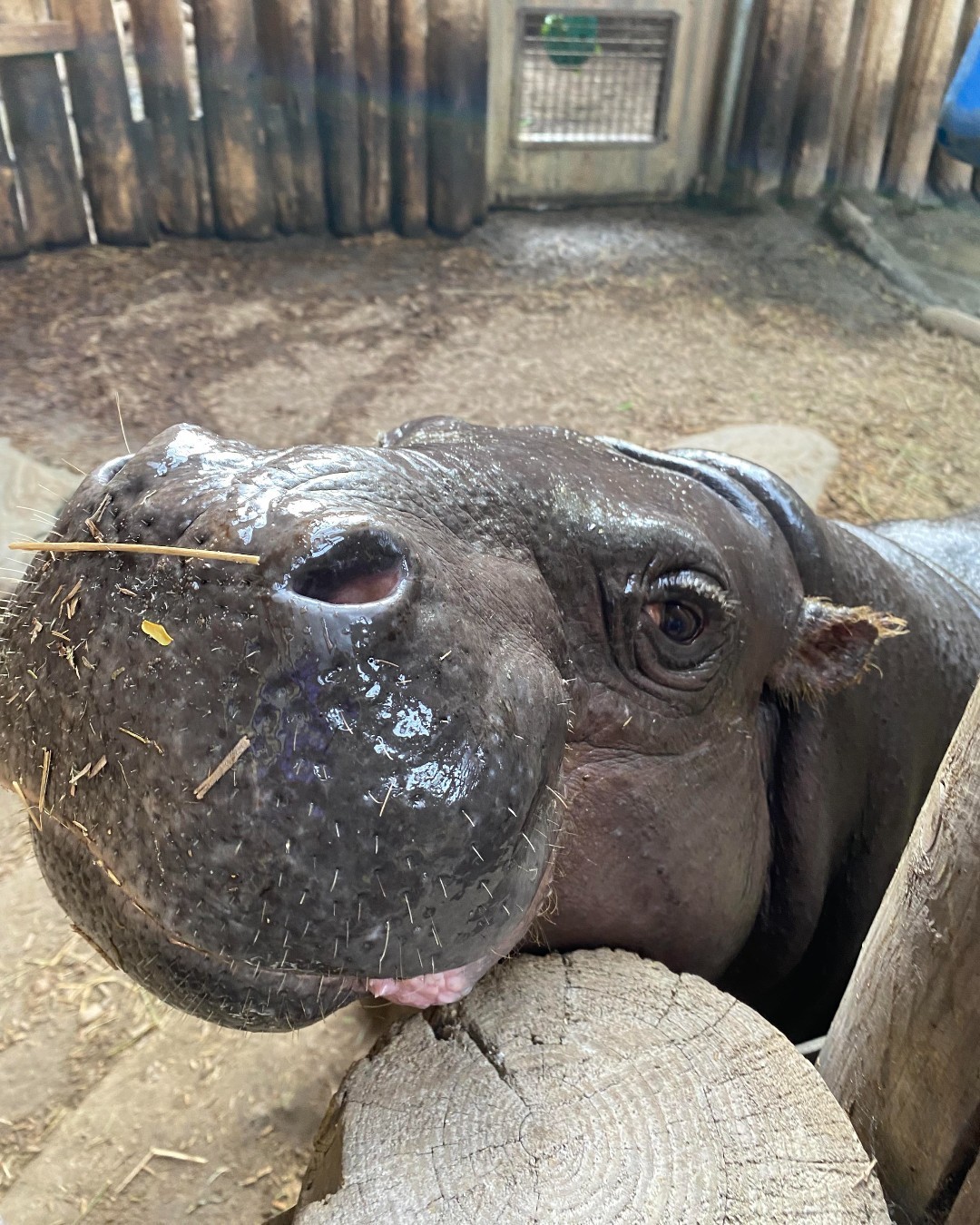
- Kindia’s pregnancy and its significance for the Pygmy hippos at Toronto Zoo
- The status of Pygmy hippos in the wild and conservation challenges
- The role of conservation organizations in protecting Pygmy hippos
- The importance of Species Survival Plans (SSP) for endangered wildlife
- The impact of habitat destruction on Pygmy hippo populations
Kindia, a 20-year-old female pygmy hippopotamus residing in the African Rainforest Pavilion of the Toronto Zoo, is expecting a calf. This news serves as an exciting development for both the zoo and conservation efforts for this vulnerable species. Kindia was paired with Harvey, a 31-year-old male pygmy hippo, for four days in January to facilitate breeding. Their time together was productive, and now we are approaching the halfway point of Kindia’s gestation, which lasts less than seven months. If everything goes as planned, the arrival of a calf is anticipated in late July.
Caring for a pregnant pygmy hippo like Kindia is ridden with both excitement and caution. Although she successfully reared her daughter, Penelope, in 2018, calf mortality is notably challenging for this species. Factors such as maternal stress and environmental influences can affect the health of the calf. To address these concerns, the Toronto Zoo’s Wildlife Care and Health teams are maintaining close observation of Kindia. They are utilizing behavioral monitoring and conducting ultrasounds to assess her health and any signs of the calf’s development. This thorough approach aims to prepare the support teams for any eventualities during the crucial proceed of her pregnancy.
Pygmy hippos, despite their charming appearance, are classified as endangered on the International Union for Conservation of Nature (IUCN) Red List. Fewer than 3,000 individuals are believed to exist in their natural habitats of West Africa, including dense forests and swamps. These areas are integral for the survival of pygmy hippos; they provide essential resources like food and shelter. Unfortunately, human activities such as logging, agriculture, and mining have severely disrupted these habitats. The encroachment of human settlements further fragments their living spaces, negatively impacting their ability to thrive. Additionally, hunting poses another significant threat, as hunting pressure continues to reduce their numbers in the wild.
Recognizing the importance of collaboration in conservation, the Toronto Zoo actively participates in the Association of Zoos and Aquariums (AZA) Pygmy Hippo Species Survival Plan® (SSP). This program brings together accredited zoos and conservation groups across North America to manage the population of pygmy hippos in captivity. The SSP employs data-driven methods to pair animals based on genetic diversity, health, and sustainability. Such collaborative measures help to maintain a robust and varied population, contributing to the species’ long-term survival.
The need for conservation action extends to the broader scope of habitat preservation. The Endangered Species Reserve Fund, supported by the Toronto Zoo, aids in developing a conservation action management plan addressing the challenges faced by pygmy hippos. One notable initiative is the “Ivory Coast Pygmy Hippo Program: Bending the Curve,” which aims to address both environmental and conservation needs in regions where pygmy hippos exist. This initiative emphasizes the need for habitat restoration and protection measures, working toward reversing the trends leading to the species’ decline.
As stakeholders in conservation, zoos also play a vital role in raising public awareness about endangered animals. Educational programs, outreach efforts, and community involvement can lead to increased support for conservation initiatives. Knowledge regarding the plight of pygmy hippos and their habitat fosters a sense of responsibility among zoo visitors and the community. Informative sessions are crucial for translating scientific data into everyday actions, whether it involves reducing deforestation, supporting sustainable farming practices, or advocating against poaching.
The role of zoos extends beyond captivating displays of wildlife. They are increasingly recognized as vital components in global conservation efforts. The participation of the Toronto Zoo in SSP and similar initiatives showcases the importance of responsible management of species in human care. With each successful breeding program, valuable genetic diversity is maintained, which is crucial for the resilience of the population.
Challenges to pygmy hippos are exacerbated by international issues like climate change and global trade. Rising temperatures and altered rainfall patterns can lead to habitat degradation that further stresses these animals. Conservation organizations must adapt their strategies to address changing environmental conditions. Proactive measures may include habitat restoration, community education, and regional policies aimed at promoting sustainable land use.
In addition to direct conservation efforts, researchers and wildlife biologists are working to better understand pygmy hippo behavior and ecology. This knowledge is vital for developing effective management plans. Field studies provide insights into their social structures, dietary needs, and reproductive behaviors, all of which can inform captive breeding programs and habitat restoration efforts. The more we learn about these fascinating creatures, the better equipped we are to protect them.
While Kindia’s pregnancy at the Toronto Zoo brings excitement, it also serves as a reminder of the ongoing work required to safeguard pygmy hippos. The challenges they face in the wild echo the urgent need for sustained conservation efforts. By bringing attention to their plight, the Toronto Zoo and other organizations help galvanize public support for these initiatives.
In summary, the news of Kindia’s pregnancy highlights the critical role zoos play in conservation. While it provides a glimmer of hope for the pygmy hippo population, it also emphasizes the challenges that remain. Habitat destruction, hunting, and environmental changes continue to threaten these animals in the wild. As conservationists develop strategies to mitigate these threats, every pregnancy like Kindia’s presents an opportunity for renewed commitment to these endangered animals and their habitats.
Ultimately, the synergistic relations between zoos, conservation organizations, and the public are key to establishing effective conservation strategies. Kindia and her future calf represent not just a continuation of her lineage, but a broader movement toward safeguarding a species that has much to lose. By working together, we can strive to change the narrative for pygmy hippos from one of decline to one of recovery and sustainability.
*****
Source Description
We’ve got a truly hippo-tastic update from your Toronto Zoo 🦛
Kindia, a 20-year-old female pygmy hippopotamus in your African Rainforest Pavilion, is pregnant 🍼
She was introduced to 31-year-old male pygmy hippo Harvey for four days in January, and they certainly made the most of their time together. Pygmy hippos have a short gestation period (less than 7 months), and we’re now approaching the halfway point of her pregnancy. If all goes well, we will welcome a calf in late July.
Caring for a pregnant pygmy hippo comes with both hope and caution. While Kindia successfully raised her daughter Penelope in 2018, calf survival for this species can be challenging. Our dedicated Wildlife Care and Health teams are closely monitoring her through behavioural observations and ultrasounds, and are ready to support her every step of the way.
Did you know? Pygmy hippos are listed as Endangered on the IUCN Red List, with fewer than 3,000 individuals believed to remain in the wild. Native to the forests and swamps of West Africa, they rely on dense, undisturbed habitats to survive. Unfortunately, these habitats are under threat due to logging, mining, agriculture, and human settlement, which fragment the landscape and make it harder for wildlife to thrive. Hunting pressures also continue to impact wild populations.
That’s why conservation collaboration is so important. Your Toronto Zoo is proud to participate in the Association of Zoos and Aquariums (AZA) Pygmy Hippo Species Survival Plan® (SSP), a cooperative program that brings together accredited zoos and conservation organizations across North America. The SSP works to carefully manage the population in human care, ensuring animals are paired based on genetics, health, and long-term sustainability to help maintain a strong and diverse population for the future. Through the Endangered Species Reserve Fund, your Toronto Zoo is supporting the development of a conservation action management plan through the “Ivory Coast Pygmy Hippo Program: Bending the Curve.”
