
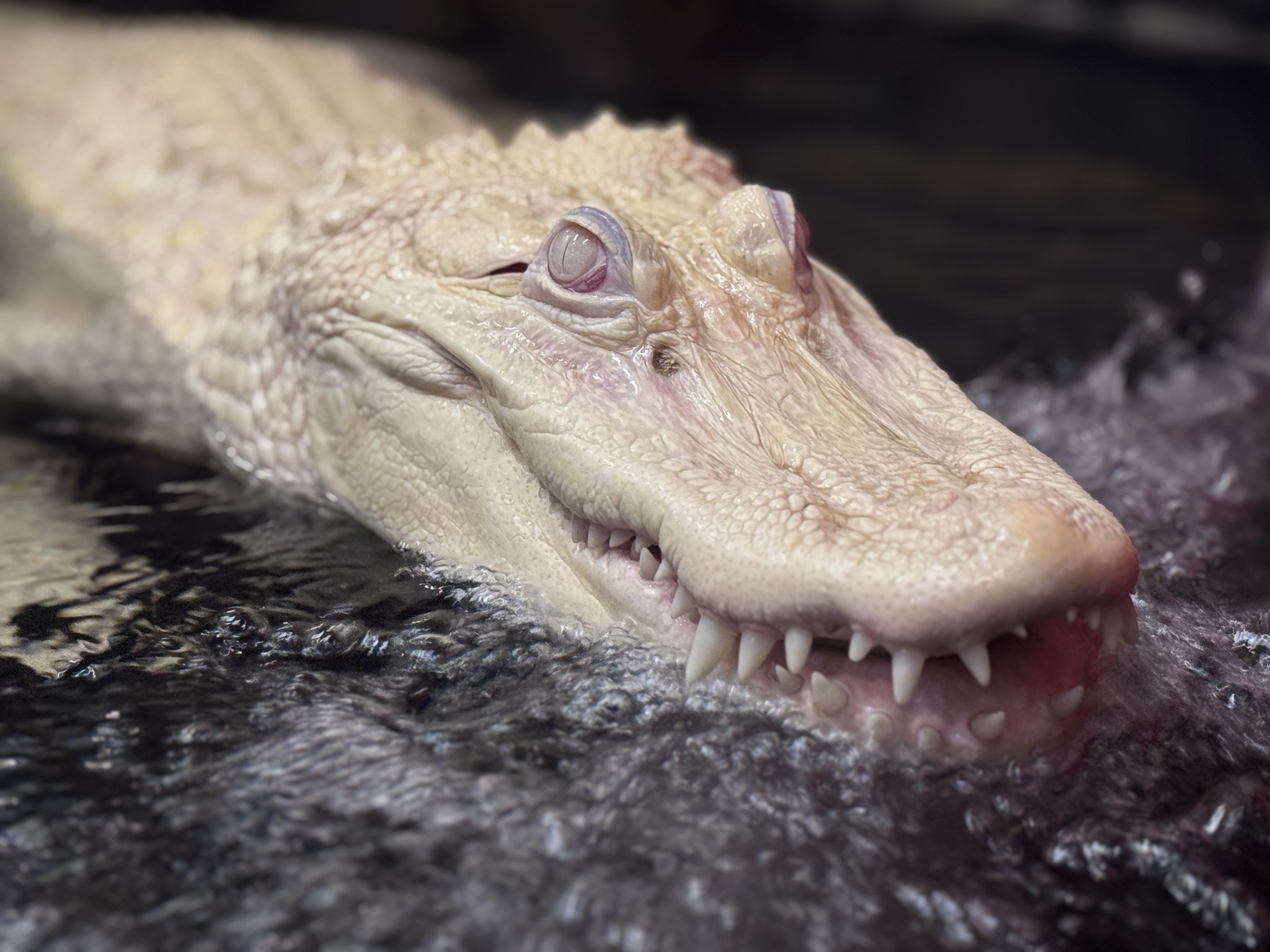
- Albinism and its genetic basis in American alligators
- The challenges faced by albino alligators in the wild
- Luna’s indoor habitat and care at the zoo
- The role of zoos in wildlife conservation and education
- Opportunities for visitors to learn about Luna and albinism
Albinism is a genetic condition that arises from a mutation in genes responsible for producing melanin, the pigment that gives color to skin, scales, and eyes. In American alligators, this condition results in a lack of pigmentation across their body, presenting white or very pale scales. Additionally, albinism impacts vision, as these animals may have reduced eyesight due to the absence of melanin, which is crucial for the development of normal vision. The genetic basis of albinism is often linked to mutations in the OCA2 gene, which plays a significant role in regulating melanin production.
Understanding albinism is key in appreciating Luna’s distinct appearance. With little to no melanin present in her scales and eyes, she displays an unusual beauty. However, albinism also carries a range of drawbacks. These largely affect the individual’s ability to survive in natural settings. The lack of pigmentation contributes to a heightened sensitivity to sunlight, causing potential skin damage and making it difficult for those with albinism to hunt or evade predators effectively.
In the wild, American alligators are apex predators, exceptionally adapted to their environments with dark, mottled skin allowing them to blend seamlessly into their surroundings. This camouflage plays a crucial role in hunting prey and avoiding threats. In stark contrast, Luna’s pale coloration makes her more visible, significantly diminishing her chances of survival. With limited vision and sensitivity to bright light, an albino alligator would face considerable obstacles when trying to find food or shelter.
While Luna thrives within her controlled indoor habitat at the zoo, it provides her with a tailored environment suited to her needs. Indoor habitats for albino alligators are designed to mitigate the challenges they face in the wild. These facilities offer UV lighting that provides necessary exposure without the harmful effects of direct sunlight. In her habitat, Luna is provided with areas for basking and hiding, mimicking the natural settings of her wild counterparts but adjusted for her specific circumstances.
The care and attention Luna receives extend beyond mere habitat design. Her diet is carefully monitored, incorporating a variety of proteins, such as fish, rodents, and insects. Nutrition plays a significant role in maintaining her health and vitality. Routine check-ups by a team of veterinarians ensure that Luna remains in optimal condition. These professionals evaluate her physical health as well as behavioral traits. Observing non-verbal behavior patterns can indicate any underlying stress or discomfort, both critical to ensuring Luna’s well-being.
The role of zoos in wildlife conservation cannot be overstated, particularly when it comes to animals with special conditions like albinism. Zoos contribute to the conservation of species through various initiatives, including research, breeding programs, and educational efforts. By showcasing animals like Luna, zoos raise awareness about genetic disorders and their impacts on wildlife. They provide a unique platform for educating the public about conservation challenges facing both albino and non-albino populations alike.
Educational programs at the zoo focus on a range of topics, from genetics to ecosystem dynamics. By highlighting the significance of biodiversity and species preservation, these programs aim to inspire future generations to be active participants in conservation efforts. Luna serves as an educational ambassador, sparking curiosity in visitors of all ages. Her presence challenges misconceptions about what it means to be an alligator and emphasizes the importance of understanding genetic variations within species.
Visitors to the zoo have ample opportunities to learn about Luna and her unique traits. Interactive sessions allow them to see her up close while experienced staff share insights into her behavior and habitat requirements. Educational signage nearby offers facts and figures about albinism in alligators, helping to create a deeper understanding of this condition. By engaging with visitors, zoos can foster a connection between the public and wildlife, encouraging stewardship that supports conservation efforts.
Beyond the educational aspect, observing animals like Luna can have a profound emotional impact. Witnessing an albino alligator challenges visitors to think critically about diversity in nature. Embracing this diversity promotes empathy and a more profound respect for all creatures, encouraging people to advocate for their protection in both exotic and everyday contexts.
Research into the genetics of albinism is also vital for understanding how these traits are passed down and how they may impact various species, including alligators. Genetic studies help to quantify the frequency of albinism within populations, which can inform conservation strategies aimed at protecting vulnerable genetic traits. Investigating these patterns can lead to a better understanding of how environmental changes and human activities could affect the prevalence of genetic disorders in wildlife, including shifts in habitat and food availability.
Additionally, albinism serves as a valuable case study for understanding evolutionary biology. Looking at how alligator populations have adapted both physically and behaviorally to their environments reveals intricate associations between habitat, phenotype, and survival. The study of Luna and alligators with similar traits can inform scientists about how genetic diversity contributes to resilience and adaptability among species.
The conservation of alligators, including those with albinism, is intertwined with broader ecological challenges. Habitat loss, pollution, and climate change pose significant threats to their populations. Effective conservation requires a multifaceted approach combining habitat protection, research, and community engagement. By understanding and addressing these challenges, organizations can work towards preserving not only alligators but the ecosystems they inhabit as well.
Our interactions with wildlife, exemplified through animals like Luna, highlight the importance of awareness, understanding, and education in fostering a responsible attitude towards conservation. Every visitor who learns about Luna contributes to a larger narrative that emphasizes respect for biodiversity. As people become more informed about the challenges facing animals with conditions such as albinism, they can take action, whether through advocacy, supporting conservation programs, or simply opting for sustainable practices in their lives.
Luna’s story goes beyond her striking appearance; it embodies the challenges and triumphs of animals affected by albinism. Her existence highlights the delicate balance within ecosystems and the ongoing efforts required to navigate the complexities of wildlife conservation. Each interaction with her at the zoo is a step towards fostering a deeper connection to nature and a greater commitment to protecting all species, regardless of their differences.
Visiting Luna not only offers an opportunity to observe a rare animal but also instills a sense of responsibility towards nature. As guardians of our environment, understanding the value of all creatures, celebrating their diversity, and striving for the preservation of their habitats is essential. Every action taken today can have lasting benefits for future generations of wildlife and the ecosystems they inhabit. Thus, as we continue to learn from Luna, we also become advocates for the enduring legacy of biodiversity.
*****
Source Description
Meet Luna, our American alligator with albinism. 🤍🐊
Albinism is a genetic condition that results in little to no melanin, affecting the color of skin, scales, and even eyesight. While Luna thrives in her indoor habitat here at the zoo, alligators with albinism face real challenges in the wild, from poor vision to sun sensitivity and difficulty blending into their surroundings.
Stop by and see Luna up close and learn more about what makes her so unique.
