
- The importance of companionship in animal enrichment and behavior.
- Understanding the dietary needs and preferences of porcupines and skunks.
- Highlighting the role of zoos in wildlife conservation and education.
- Examining the seasonal significance of pumpkins in animal feeding.
- Discussing the impact of social media in raising awareness for conservation efforts.
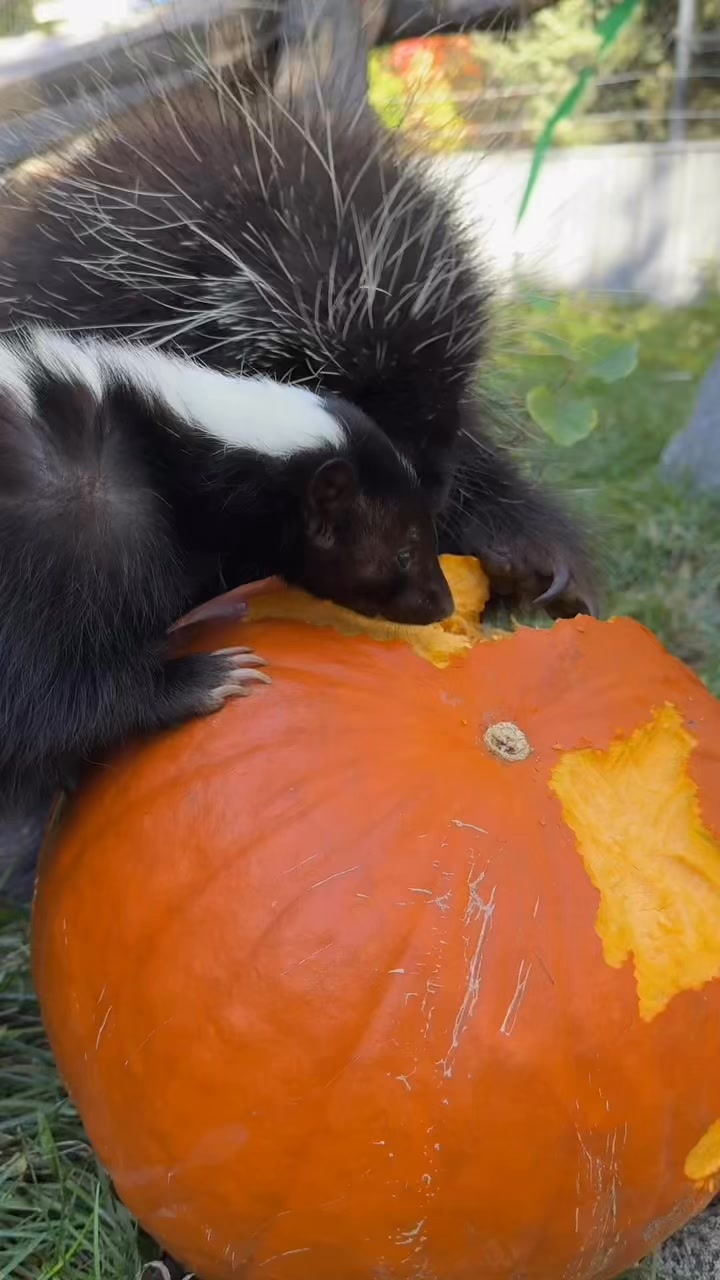
Ross the porcupine and Cody the striped skunk have captured the hearts of many, shared through an engaging Instagram post featuring the duo with a pumpkin. Their interaction is more than just a cute moment; it highlights critical aspects of animal companionship, dietary habits, the role of zoos, and the educational potential of social media.
Companionship among animals can profoundly influence their well-being. Social behavior, even in solitary species like porcupines and skunks, provides enrichment and can prevent boredom. In structured environments such as zoos, mixing different species responsibly can simulate natural ecosystems. Ross and Cody’s friendship showcases an innovative approach to animal management, promoting positive behaviors and enhancing their quality of life.
Porcupines and skunks have specific dietary requirements that need attention. Porcupines, primarily herbivorous, consume leaves, wood, and sometimes fruits and vegetables. Skunks, being omnivorous, have a varied diet that includes insects, small rodents, fruits, and vegetables. Pumpkins, rich in fiber and nutrients, serve as an excellent treat for both. The seasonal nature of pumpkins adds diversity and mimics the natural changes they would encounter in the wild.
Zoos play a pivotal role in wildlife conservation and education. They serve as sanctuaries for species that might struggle to survive in their natural habitats due to threats like habitat destruction and climate change. Moreover, zoos offer educational programs that foster awareness and inspire action in conservation efforts. Ross and Cody’s presence in a zoo highlights this commitment to species survival and public awareness.
The seasonal pumpkin symbolizes enrichment, marking a change in diet reminiscent of natural fluctuations in food availability. This change keeps animals stimulated and engaged, mimicking the wild experience where diet varies with seasons. Such strategies ensure animals maintain their natural behaviors and instincts, even in captive environments.
Social media, like Instagram, plays a tremendous role in highlighting conservation efforts and animal welfare. Platforms provide a space for zoos to share daily life and behind-the-scenes activities, engaging audiences worldwide. By sharing moments like Ross and Cody’s pumpkin adventure, social media raises awareness about species-specific needs and the importance of conservation initiatives.
In conclusion, Ross the porcupine and Cody the striped skunk offer a window into the world of animal companionship, dietary habits, and the educational reach of zoos. Their story, brought to light through social media, emphasizes the broader significance of conservation efforts and animal welfare, encouraging global audiences to engage with and support wildlife preservation.
*****
Source Description
Season’s treats are best shared with friends🦨
📸Ross the porcupine and Cody the striped skunk with a pumpkin
