
- The significance of naming in animal care and zoo management.
- An overview of the white-cheeked gibbon and its habitat.
- The birth and development of Leuco, the gibbon baby.
- The role of family dynamics in gibbon social structures.
- Conservation efforts and the importance of primate protection.
The significance of naming in animal care and zoo management is often underestimated. A name does more than identify an individual; it helps foster connections between animals and humans. This bond is crucial in zoological settings as it encourages visitors and staff to engage more deeply with the animals. Naming contests, like the one that led to the selection of Leuco, allow the public to participate in this relationship-building process. This involvement can increase awareness about the species and its conservation status. Moreover, names can reflect scientific terminology, adding educational value. Leuco, derived from the scientific name Nomascus leucogenys, connects visitors to the scientific community and the gibbon’s biological background.
An overview of the white-cheeked gibbon reveals their unique characteristics and habitat. White-cheeked gibbons, scientifically known as Nomascus leucogenys, inhabit the forests of Southeast Asia, notably in countries like Vietnam, Laos, and Cambodia. They prefer mature forests with abundant trees to swing between, as they are adept at both brachiation and climbing. With their long arms and small bodies, they are perfectly adapted for moving through the canopies. The gibbon’s striking features include light-colored cheek patches and a slender physique, making them visually appealing and a favorite among zoo visitors. However, their populations are under pressure due to habitat loss and poaching, emphasizing the need for increased conservation efforts.
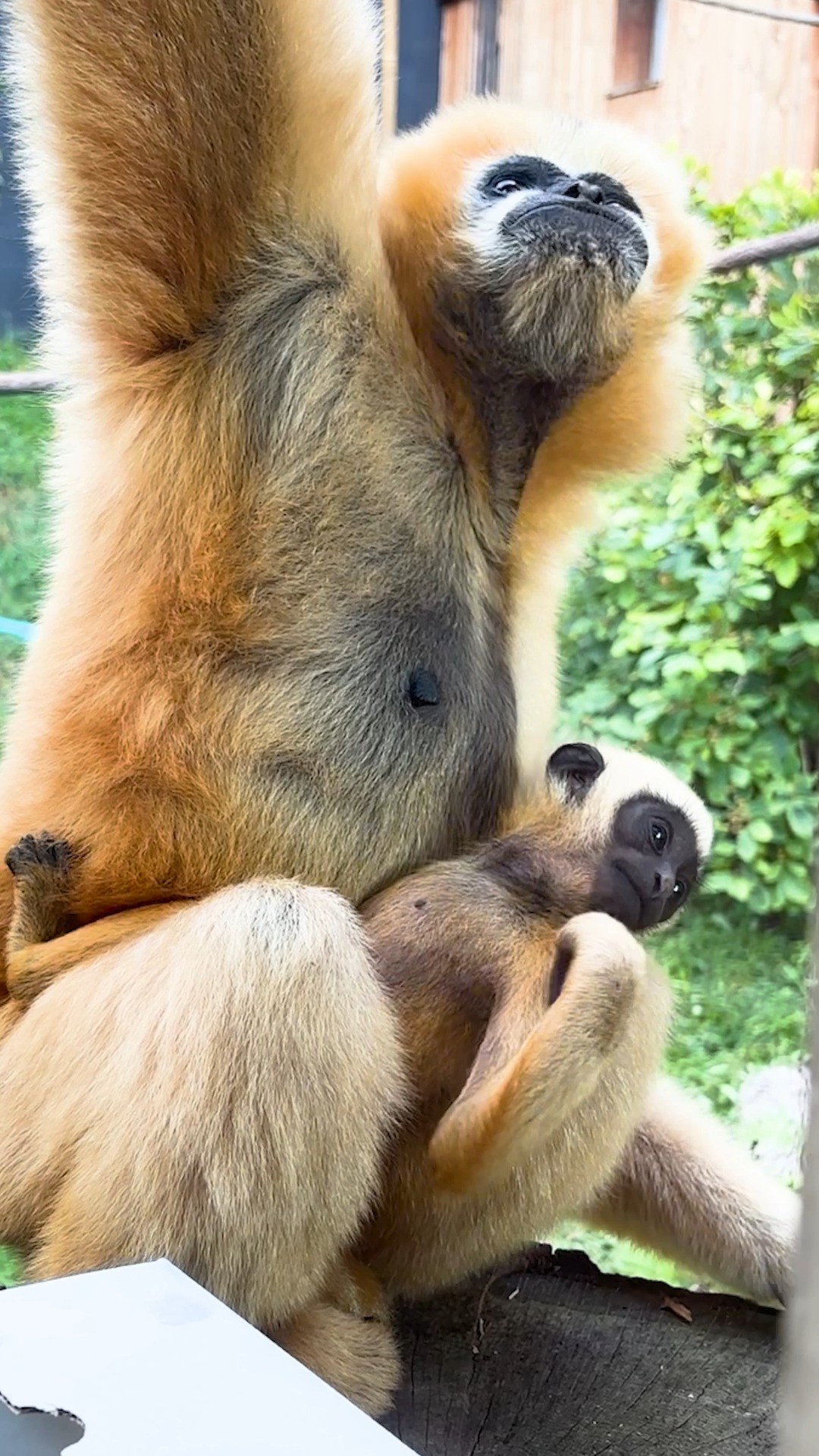
The birth and development of Leuco, the gibbon baby, offers insight into the life cycle of these primates. Born on June 27 to mother Parker, Leuco is the center of the gibbon family’s attention. Gibbons typically show excellent maternal instincts, and this is evident in Parker’s care for her newborn. The initial weeks are critical for the baby as it learns to grasp onto its mother’s fur, a skill that allows for mobility and safety in the treetops. Leuco will continue to rely on Parker for nourishment and protection while he grows stronger. Over time, he will start to develop the skills necessary for independent living, such as climbing and foraging.
The family dynamics in gibbon social structures play a significant role in their upbringing. Gibbons are generally monogamous, often forming lifelong bonds with their mates. This social structure benefits the young, as both parents are involved in raising offspring. Leuco’s father, Milo, showcases protective behaviors and plays an active role in nurturing the family unit. Older siblings like Lolani also contribute by learning to care for the younger members. Such interactions are vital for teaching social norms and behaviors. This learning environment fosters not just survival skills, but emotional and social intelligence, critical aspects of gibbon life.
Conservation efforts targeting gibbons and other primates have become increasingly important. The International Union for Conservation of Nature (IUCN) classifies the white-cheeked gibbon as endangered. Habitat destruction, primarily due to logging and agricultural expansion, has led to significant declines in populations across their range. Organizations dedicated to wildlife conservation are implementing strategies aimed at habitat protection and rehabilitation. Public education initiatives, such as naming contests and community engagement programs, enhance awareness about these efforts. The fascination around Leuco can serve as a platform to elevate discussions about the importance of conservation, urging even more robust efforts to safeguard gibbons in the wild.
Understanding the significance of Leuco’s name, gibbon development, and social dynamics provides a well-rounded view of the species’ lifestyle and challenges. Leuco symbolizes hope for a future where gibbons thrive both in captivity and the wild. As visitors interact with the gibbon family and learn about their behaviors, it becomes evident that these creatures deserve attention in conservation discussions. The efforts to protect Leuco and his family can help pave the way for greater awareness and proactive measures that benefit gibbons everywhere, shedding light on their fascinating existence and ensuring that they continue to capture our hearts for generations to come.
*****
Source Description
Our gibbon baby has a name – Leuco!
Thanks to all who voted in our naming contest. This morning, we presented the top two names, Leuco and Coda, to our gibbon family on enrichment. Dad, Milo, with an assist from big sister, Lolani, knocked over Leuco first, making that the final selection.
Leuco is pronounced Loo-koh, which is from the white-cheeked gibbon’s scientific name, Nomascus leucogenys. He was born on June 27 to mom, Parker. The gibbon family of four is on habitat daily!
